Woman with a Flower
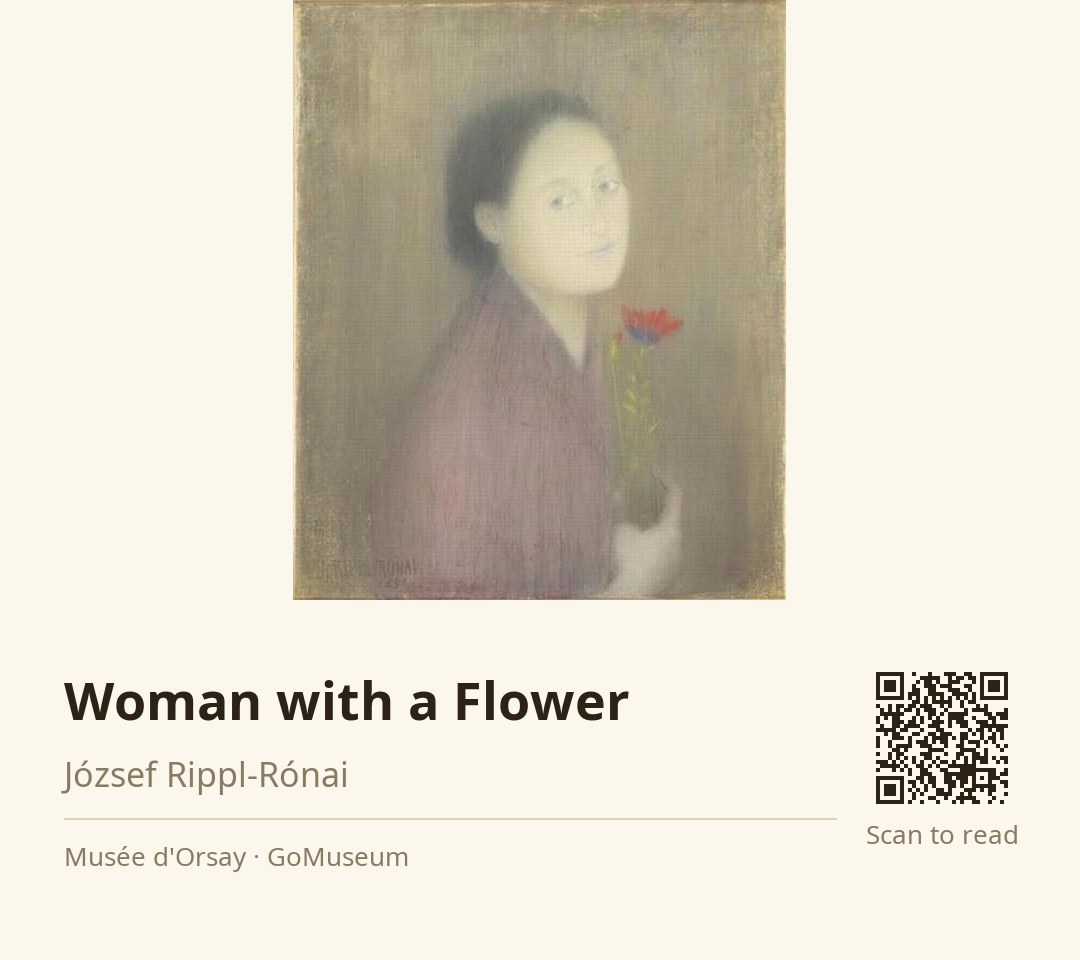
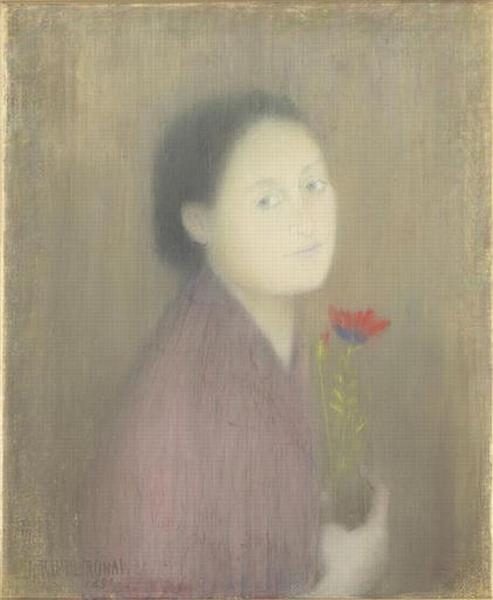
🎧 This work has audio narration — listen in the appTake a moment to really soak in the vibrant energy of "Woman with a Flower." Notice how the soft pastels create a gentle glow around the figure, almost as if she’s radiating warmth. Look closely at the flower she holds; its vivid color contrasts beautifully with her delicate features, drawing your eye and inviting you to ponder its significance. This flower isn’t just a pretty accessory; it symbolizes femininity and perhaps a deeper connection to nature, reflecting Rippl-Rónai's interest in the modernist movement that sought to explore emotion and personal experience. The artist was deeply influenced by his time in Paris and the Nabis group, who emphasized color and symbolism, and you can see that influence here in the way he captures both beauty and emotion. József Rippl-Rónai was a pioneer of modernism in Hungary, and this piece showcases his ability to blend traditional themes with contemporary techniques. He believed that art should encompass all aspects of life, even down to the clothes he wore, making his work a reflection of his own vibrant existence. As you stand here, think about what this woman might be feeling. What stories could she tell if she could speak? Let that question linger as you take in the beauty of this artwork.
József Rippl-Rónai, born on May 23, 1861, in Kaposvár, Hungary, was a pioneering figure in Hungarian modernism. Initially studying pharmacology in Budapest, he shifted his focus to painting, studying in Munich and later in Paris under Mihály Munkácsy. Influenced by the Nabis movement, he created significant works like "The Inn at Pont-Aven" and "My Grandmother," which showcased a unique blend of dark atmospheres and vibrant colors.
Despite a lukewarm reception in Hungary upon his return, his exhibition "Rippl-Rónai Impressions 1890-1900" marked a turning point in his career. He was not only a painter but also a designer, contributing to decorative arts in Hungary, including the furnishings of the Andrássy palace. His later works reflected a shift towards brighter palettes and innovative techniques, such as his distinctive "grain of corn" style.
Rippl-Rónai's legacy endures as he bridged traditional Hungarian art with modernist influences, leaving an indelible mark on the art scene until his death on November 25, 1927.
The artwork titled 'Woman with a Flower' was created by József Rippl-Rónai, a pivotal figure in Hungarian modernism. This pastel work, measuring 0.46 by 0.38 meters, reflects Rippl-Rónai's evolution as an artist during the late 19th and early 20th centuries. Although specific details about the commissioning or initial exhibition of this piece are not documented, Rippl-Rónai's career was marked by a gradual rise to prominence, particularly after his successful exhibitions in Hungary and abroad. His first major success came with 'My Grandmother' in 1894, and he later gained recognition through exhibitions in Frankfurt, Munich, and Vienna between 1911 and 1913. The reception of his work varied, with early critiques in Hungary being lukewarm, but he eventually found a devoted audience. Notably, his artistic journey included significant influences from the Nabis group in Paris, which shaped his style and approach to color and form. This piece stands as a testament to his unique vision and the broader artistic movements of his time.
As you observe 'Woman with a Flower,' pay attention to the way Rippl-Rónai employs pastels to create a soft, ethereal quality. The brushwork feels almost spontaneous, with strokes that seem to dance across the paper, lending a sense of movement to the figure. Notice how the artist layers colors, allowing them to blend subtly, which enhances the glow around the woman. The composition is intimate, drawing you into her world, while the contrasting vividness of the flower captures your attention, symbolizing vitality amidst the delicate features of the woman. The scale of the work, relatively small, invites a closer inspection, making the viewer feel connected to the subject.
Did you know that József Rippl-Rónai was not just a painter but also dabbled in design? He believed that an artist's life should reflect their work, right down to their clothing! Imagine the intricate details and personal touches he must have infused into that space, making it a true extension of his artistic vision.
Rippl-Rónai often painted women who were significant in his life, and the figure in 'Woman with a Flower' may reflect his deep appreciation for femininity and beauty, possibly inspired by his model and later wife, Lazarine Baudrion.