 Image: Shadowgate from Novara, ITALY · Jiel Beaumadier (http://jiel.b.free.fr) · Skitzomania
Liberty Enlightening the World
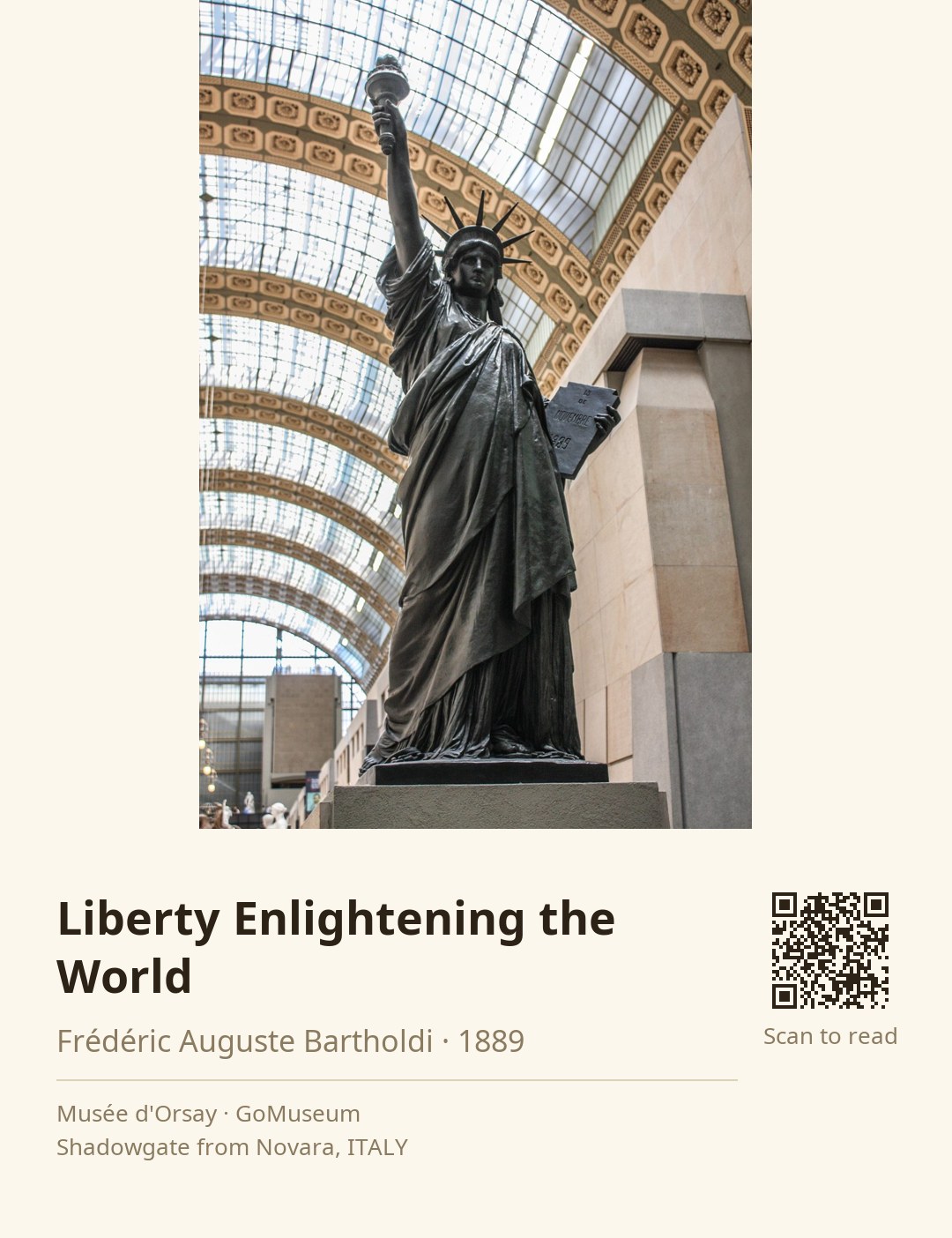
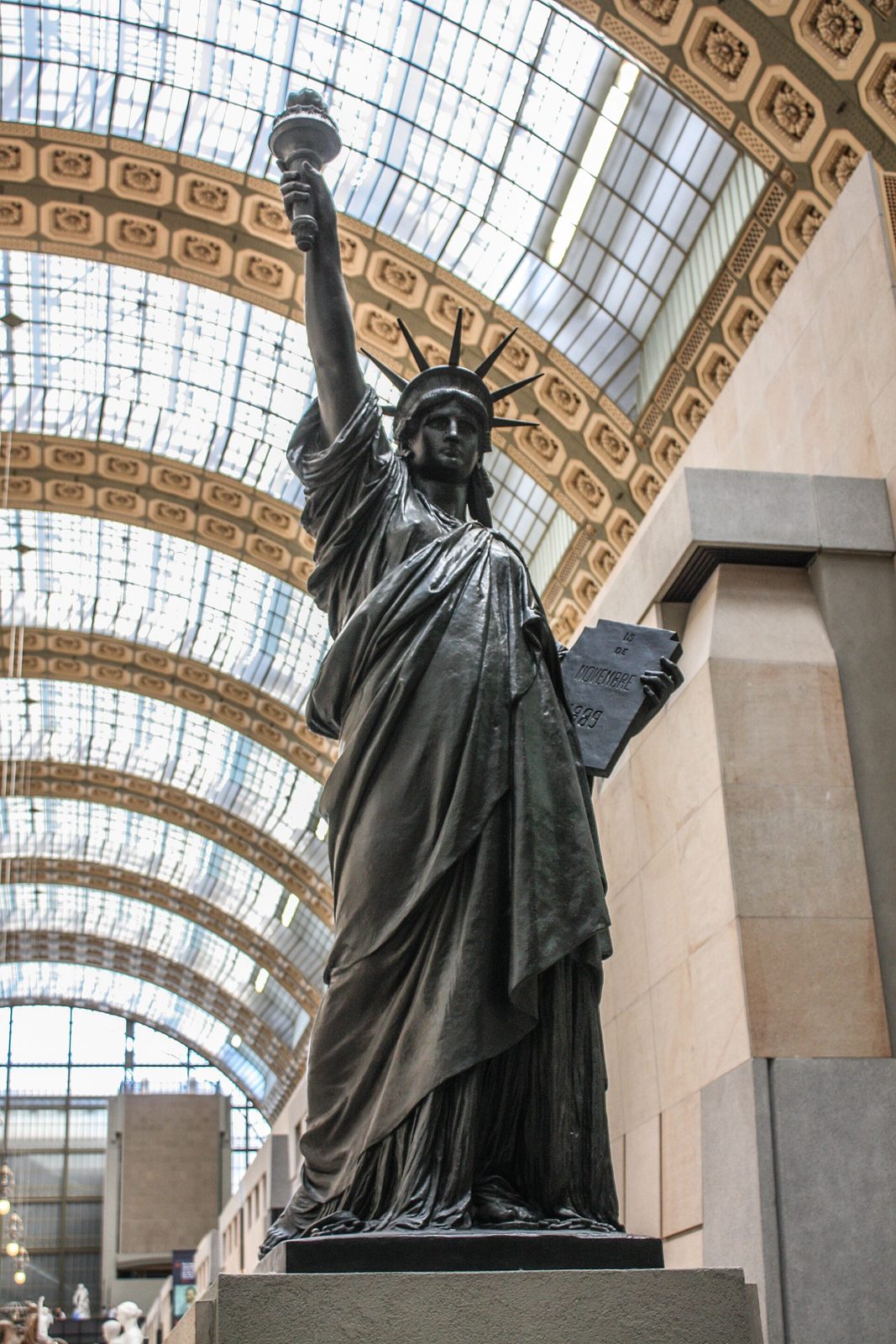
🎧 This work has audio narration — listen in the appTake a moment to really look at "Liberty Enlightening the World." Notice how the statue's face, with its serene expression, seems to radiate a sense of hope and strength. The way the light catches the folds of her robe gives her an almost ethereal quality, doesn’t it? This isn’t just a statue; it’s a symbol of freedom and democracy, a gift from France to the United States, celebrating the shared values of both nations. Bartholdi, the artist, poured his heart into this work, inspired by the ideals of liberty after witnessing the struggles of his own country. The statue stands tall, holding a torch high, representing enlightenment and the guiding light of freedom. It was completed in 1886, but the vision for it began long before, rooted in the aftermath of the Franco-Prussian War, a time when Bartholdi felt a deep need to express resilience and hope. As you stand here, think about the countless immigrants who have seen this statue as a beacon of hope upon arriving in America. What emotions do you think they felt? How does this statue resonate with your own understanding of freedom today?
Frédéric Auguste Bartholdi was a prominent French sculptor and painter, born on August 2, 1834, in Colmar. He emerged from a family of Alsatian Protestant heritage, which influenced his artistic vision and commitment to freedom. After studying sculpture and architecture in Paris, Bartholdi gained recognition for his early works, including a bronze memorial of General Jean Rapp. His travels to Egypt and Yemen inspired his fascination with monumental sculpture, leading to his most famous creation, the Statue of Liberty, a gift from France to the United States, inaugurated in 1886.
Bartholdi's career flourished during a time of political upheaval, particularly after serving in the Franco-Prussian War, which fueled his desire to celebrate French heroism through art. His monumental Lion of Belfort symbolizes resistance and resilience. A Freemason, he integrated his beliefs into his work, emphasizing universal values of liberty and democracy. Bartholdi's legacy endures as he is celebrated as one of the 19th century's most influential sculptors, bridging cultures and ideals through his art. He passed away on October 4, 1904, in Paris, leaving behind a profound impact on both French and American art history.
Take a closer look at the materials and techniques Bartholdi used to create this monumental sculpture. You can see the intricate details in the folds of her robe and the texture of her face, which reflect Bartholdi's mastery of sculptural techniques. The patina that has developed over time gives her that iconic green hue, a result of oxidation that adds character and depth to her presence.
The journey of 'Liberty Enlightening the World' began in the aftermath of the Franco-Prussian War, a time when Bartholdi felt compelled to express resilience through art. Commissioned as a gift from France to the United States, the statue was conceived in 1865, but it took years of fundraising and construction before it was finally inaugurated in 1886. Bartholdi faced numerous challenges, including securing funding and navigating the logistics of transporting such a colossal piece across the Atlantic. The statue was assembled on Liberty Island, where it quickly became a symbol of hope for immigrants arriving in New York Harbor. Its reception was mixed at first, but over time, it grew to be celebrated as a national monument.
Did you know that Bartholdi initially envisioned a similar statue to be placed at the entrance of the Suez Canal? He proposed a colossal figure called 'Egypt Carrying the Light to Asia,' but the project was ultimately rejected due to its high cost.
Bartholdi originally proposed a colossal statue called 'Egypt Carrying the Light to Asia' to be placed at the entrance of the Suez Canal, designed to resemble a massive figure holding a torch. This idea was ultimately rejected due to the project's high cost, leading him to focus on the Statue of Liberty instead.
During the Franco-Prussian War, Bartholdi served as a squadron leader and was deeply affected by the defeat of his homeland, which fueled his desire to create monuments celebrating French resilience and heroism. This sense of patriotism and the ideals of liberty directly inspired his design for the Statue of Liberty.