 Image: Phyrexian · ketrin1407 · Gautier Poupeau from Paris, France
Mercury Inventing the Caduceus
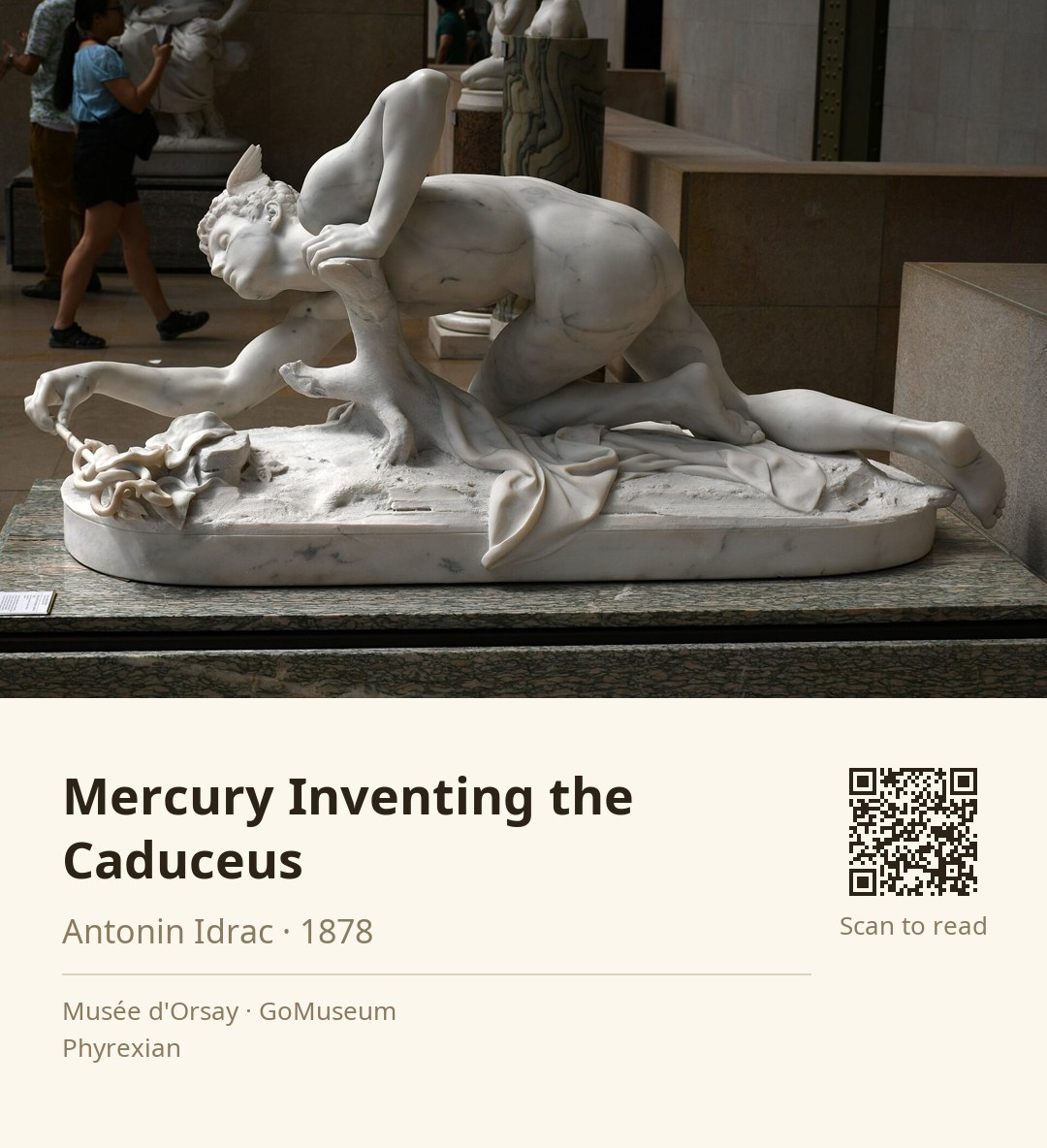
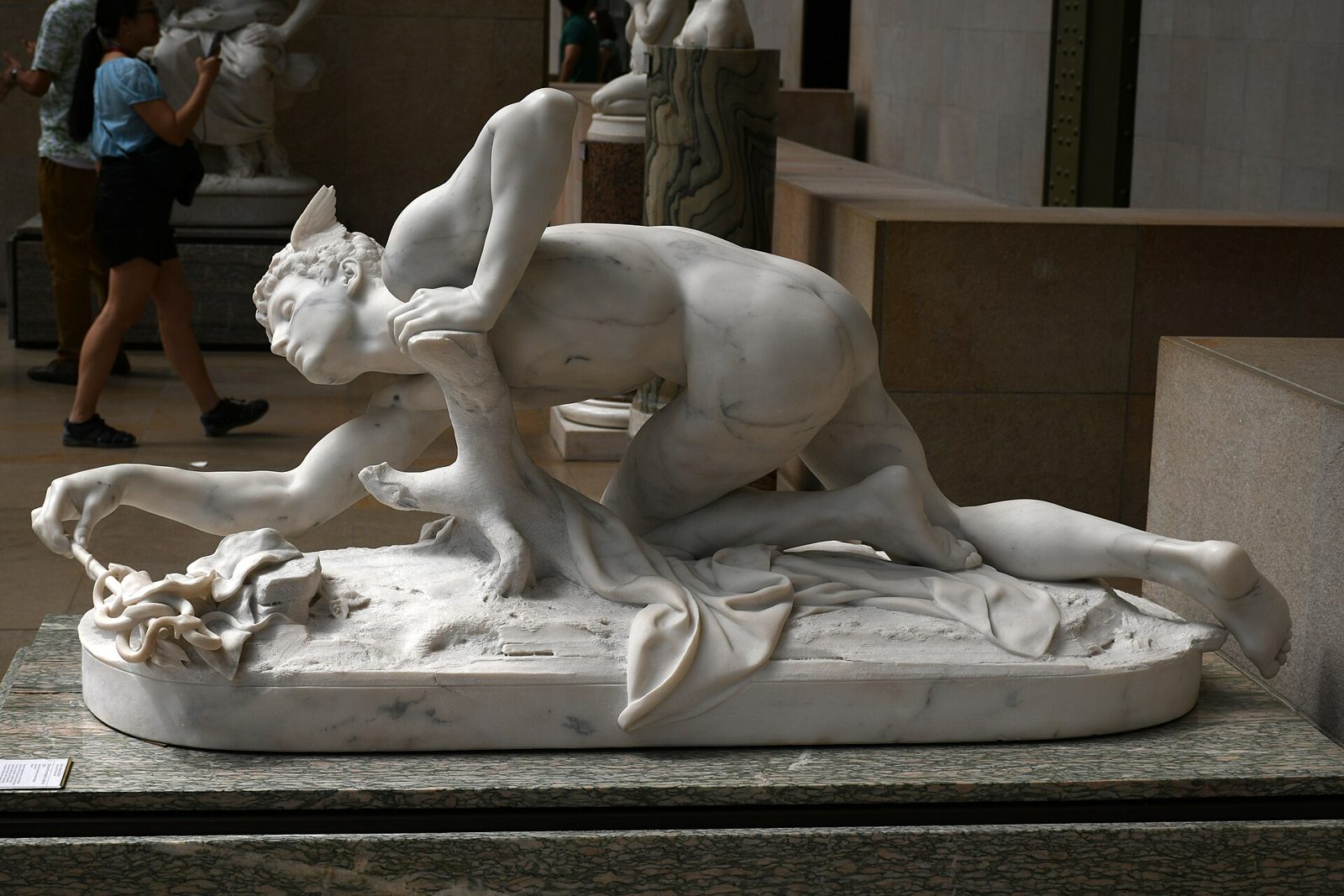
🎧 This work has audio narration — listen in the appTake a moment to really look at this sculpture, “Mercury Inventing the Caduceus.” Notice how Mercury, the Roman god, is captured mid-motion, his body twisting as if he’s about to spring into action. The intricate details of his wings and the flowing drapery of his cloak almost seem to flutter in the air.
These elements matter because they convey not just movement, but also the essence of Mercury as a messenger—swift and dynamic. The caduceus, the staff he’s creating, symbolizes trade and negotiation, which reflects the importance of communication in society. Idrac’s ability to infuse life into marble is nothing short of magical, making you feel the energy of the moment.
Idrac, a French sculptor from the late 19th century, was known for his ability to blend classical themes with a modern touch, and this piece is a perfect example of that.
Jean-Antoine-Marie Idrac, known as Antonin Idrac, was a French sculptor born in Toulouse in 1849. A student of renowned sculptors Falguière and Cavelier, he quickly made his mark in the art world, winning the prestigious Grand Prix de Rome in 1873 for his relief depicting Philoctetes. His works, such as "Salammbô," "Cupid Stung," and "Mercury Inventing the Caduceus," showcase his mastery of form and detail, with pieces displayed in prominent institutions like the Musée d'Orsay.
Idrac's career, however, was tragically short-lived; he passed away in 1884 shortly after returning from Rome, leaving behind an unfinished equestrian statue of Étienne Marcel, which was completed posthumously by Laurent Marqueste. His influence extended to later artists, notably Lord Leighton, marking his significance in the evolution of sculpture. Idrac's legacy endures, with a street named in his honor in Toulouse, and his works continue to be celebrated for their artistic merit and historical importance.
Take a closer look at the marble used in 'Mercury Inventing the Caduceus.' Idrac chose this material for its ability to capture light and shadow, giving the sculpture a lifelike quality. Notice how the smoothness of Mercury's skin contrasts with the intricate textures of his wings and the flowing drapery of his cloak. The artist's skillful carving creates a sense of movement, as if the fabric is caught in a breeze. Each detail, from the delicate feathers to the folds of his garment, showcases Idrac's mastery of the medium, inviting you to appreciate the craftsmanship that brings this figure to life.
Created in 1878, 'Mercury Inventing the Caduceus' was one of Antonin Idrac's notable works during his brief career. After winning the prestigious Grand Prix de Rome in 1873, he gained recognition for his talent, but his life was tragically cut short at just 35. This sculpture was eventually housed in the Musée d'Orsay, where it continues to be celebrated. The piece reflects the artistic trends of the late 19th century, blending classical themes with modern sensibilities.
Idrac passed away before he could complete his equestrian statue of Étienne Marcel, and it was ultimately finished in 1888 by sculptor Laurent Marqueste, highlighting the collaborative nature of artistic projects in that era.