 Image: Sailko · Gautier Poupeau from Paris, France · Gautier Poupeau from Paris, France
Fugitive Love by Auguste Rodin
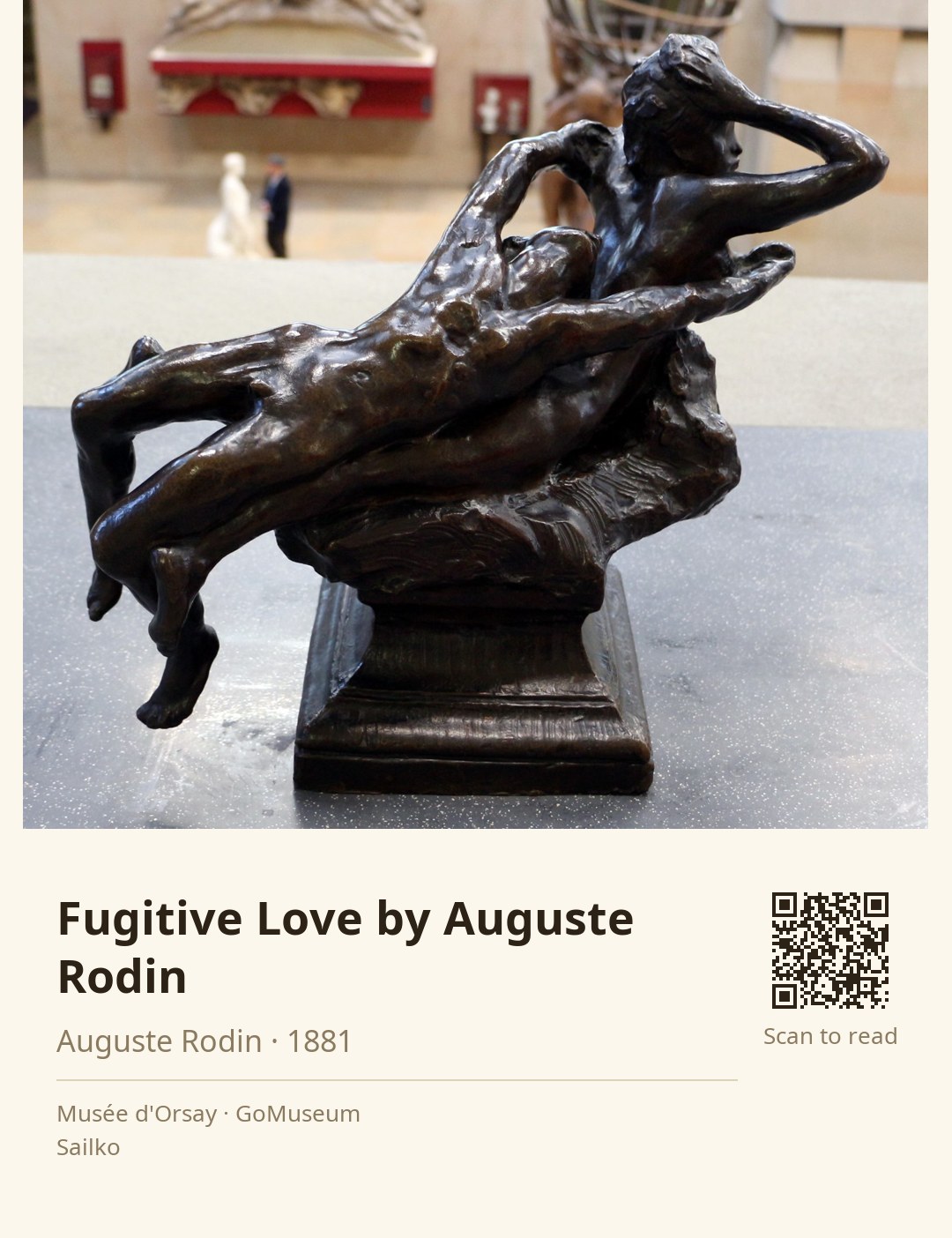
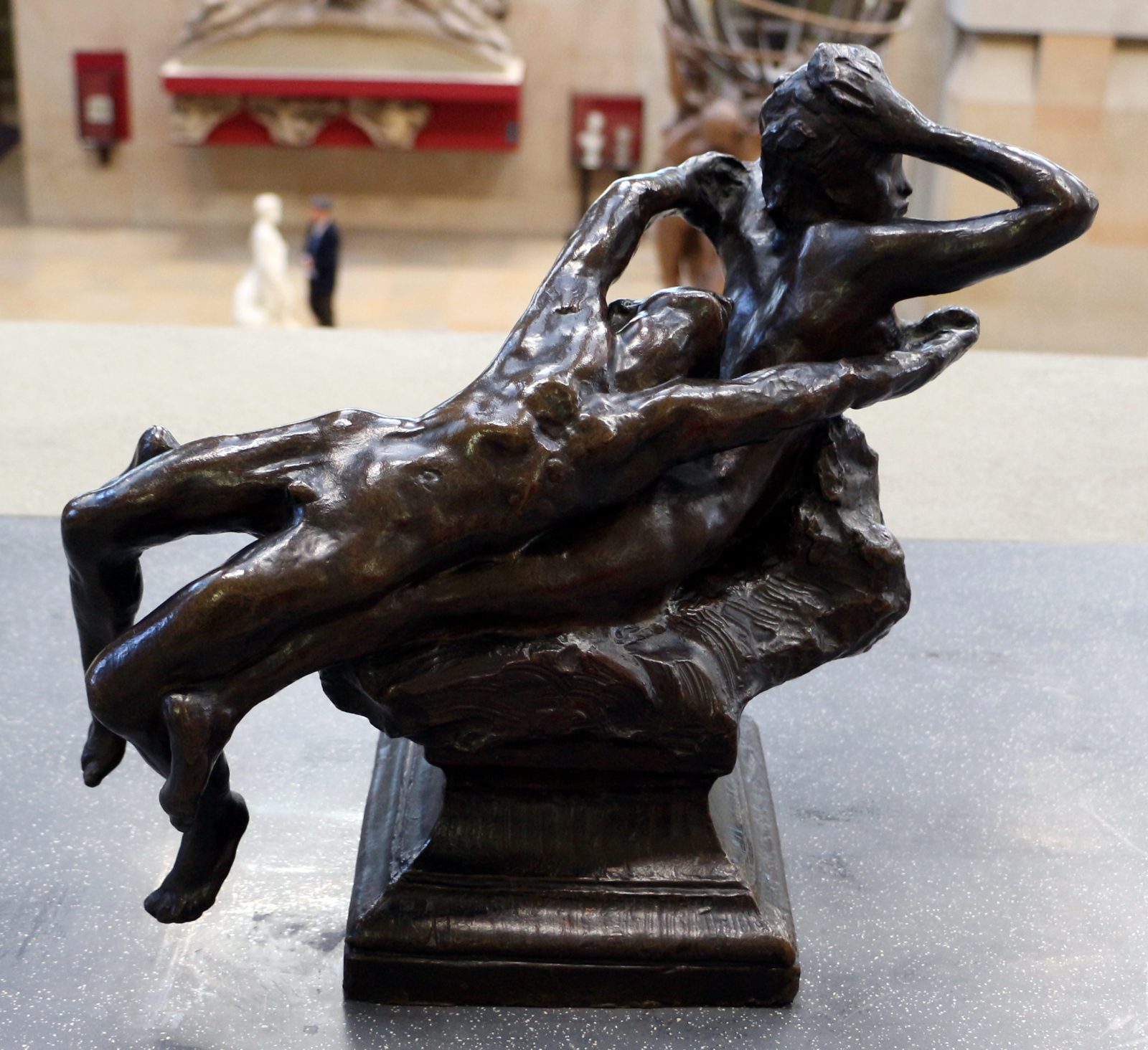
🎧 This work has audio narration — listen in the appAs you stand before "Fugitive Love," let your eyes wander over the entwined figures captured in bronze. Notice the way their bodies seem to melt into one another, the delicate tension in their poses. This isn’t just a sculpture; it’s a moment frozen in time, a passionate escape that speaks to the heart of human connection. What’s striking here is the fluidity of their forms. Look closely at the way the muscles ripple and the skin appears almost alive, as if Rodin has breathed a pulse into the metal. This attention to detail is what sets Rodin apart; he didn’t just sculpt bodies, he sculpted emotions, capturing the very essence of love and longing. Created in 1881, during a time when traditional sculpture often leaned towards the decorative and formulaic, Rodin broke the mold. He embraced the raw, unfiltered nature of human experience, and "Fugitive Love" is a perfect example of that. It’s not merely about the figures; it’s about the story they tell—the tension of desire, the urgency of escape. Rodin’s innovative approach to form and emotion was revolutionary. He was often criticized for straying from classical ideals, yet he remained steadfast, paving the way for modern sculpture. His legacy is one of passion and perseverance, forever changing how we perceive the human body in art. As you take in this piece, think about the stories of love and escape in your own life. What does love mean to you? How does it shape your journey? Let that question linger as you move on, carrying the spirit of "Fugitive Love" with you.
François Auguste René Rodin, born on November 12, 1840, in Paris, is celebrated as a pioneer of modern sculpture. His artistic journey began in a working-class family, where he developed a passion for drawing at an early age. Despite facing rejections from prestigious art schools, Rodin honed his skills through self-education and apprenticeships, notably under the influential sculptor Antoine-Louis Barye.
Rodin's work is characterized by a remarkable ability to capture the human form with naturalism and emotional depth, diverging from the decorative and formulaic styles of his contemporaries. His iconic pieces, such as The Thinker and The Kiss, reflect a profound exploration of human experience, blending elements of romanticism and impressionism. His innovative approach often sparked controversy, yet he remained steadfast in his vision.
Throughout his life, Rodin formed significant relationships, notably with sculptor Camille Claudel, who was both his student and muse. He eventually married his lifelong partner, Rose Beuret, shortly before their deaths. By the turn of the 20th century, Rodin had achieved international acclaim, becoming a sought-after artist among the elite. Although his popularity waned after his death in 1917, his legacy endured, solidifying his status as one of the most influential sculptors in art history.
As you look at 'Fugitive Love,' take a moment to appreciate the medium of bronze. Rodin used a technique called lost-wax casting, which allows for intricate details. Notice how the surface varies—from smooth, polished areas to rougher textures that evoke the rawness of emotion. The way the light plays on the figures highlights their muscular forms, creating a dynamic interplay between shadow and light. This isn't just a static piece; it feels alive, as if the figures could spring into motion at any moment.
Created in 1881, 'Fugitive Love' by Auguste Rodin is a striking bronze sculpture that captures the essence of a couple in a moment of passionate escape. This piece, measuring nearly 39 centimeters in height and 46 centimeters in length, showcases Rodin's signature ability to convey emotion through the human form. The work has been known by several titles, including 'Le Rêve' and 'La Nuit', reflecting its multifaceted nature. Initially, the sculpture was part of Rodin's broader exploration of love and intimacy, themes that were often met with mixed reactions from critics and the public alike. Despite the controversies surrounding his work, Rodin's reputation grew, and he became a prominent figure in the art world. 'Fugitive Love' has traveled through various collections, with notable provenance linked to See and Cosson, highlighting its journey through time and the appreciation it garnered from art lovers and collectors. As you stand before this sculpture, consider how Rodin's bold approach to depicting raw human emotion challenged the conventions of his time.
This work, like many of Rodin's, emphasizes the raw, emotional connection between figures, capturing the essence of love and intimacy in a way that had rarely been seen before. Rodin's ability to model the human body with such naturalism and expressiveness influenced countless artists who followed, paving the way for modern sculpture. His departure from mythological themes to focus on human experience marked a significant shift in the art world, making him a key figure in the transition to modernism. Remember, Rodin didn't just create sculptures; he transformed how we perceive the human form and emotion in art.
Did you know that 'Fugitive Love' is also known by several other titles? Among them are 'Le Rêve' and 'La Nuit.' This reflects Rodin's tendency to explore different themes and emotions through the same work, inviting viewers to interpret the piece in various ways. It's fascinating how a single sculpture can carry multiple narratives, each resonating differently with each observer.