 Image: Rama · Rama · Rama · Rama · Rama
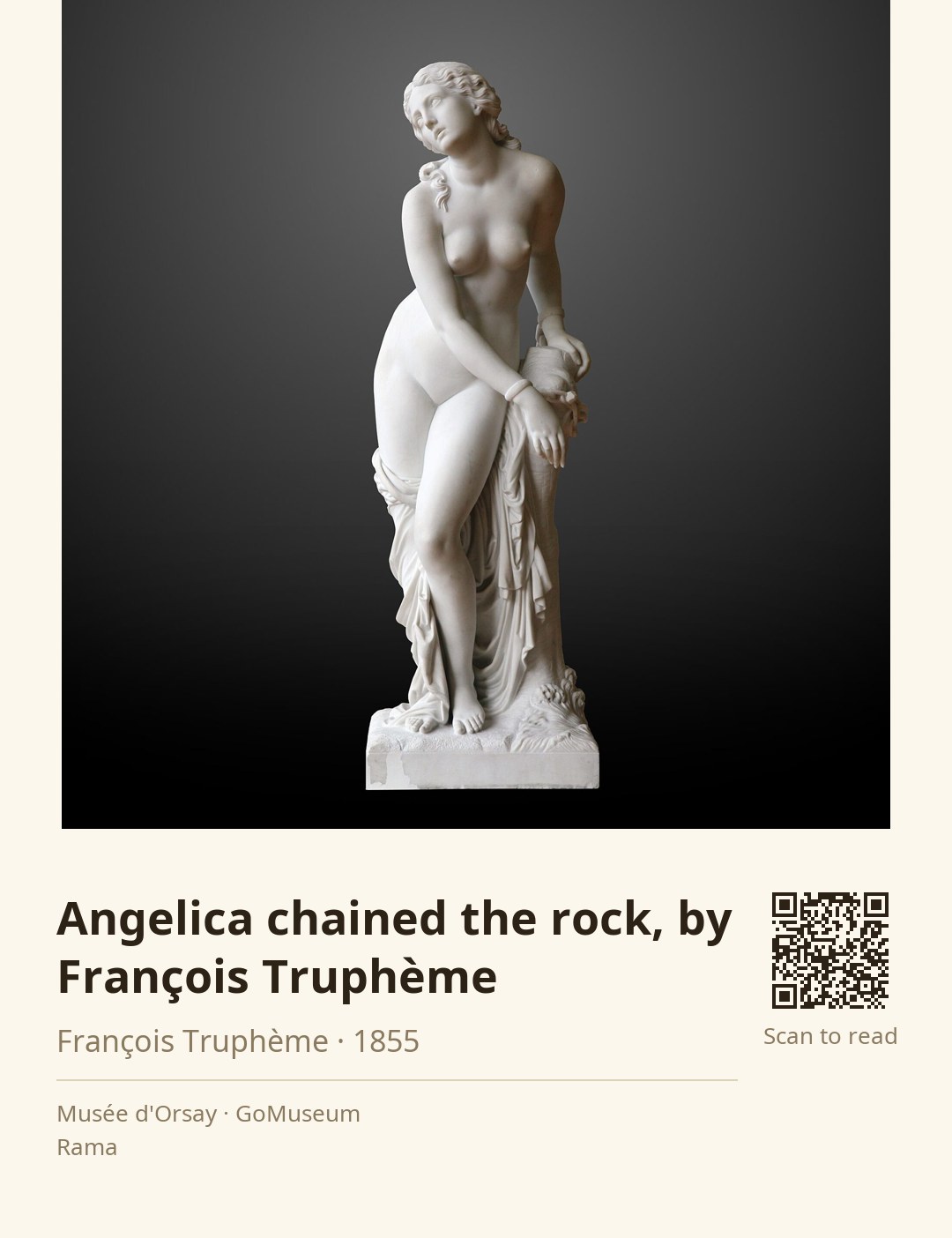
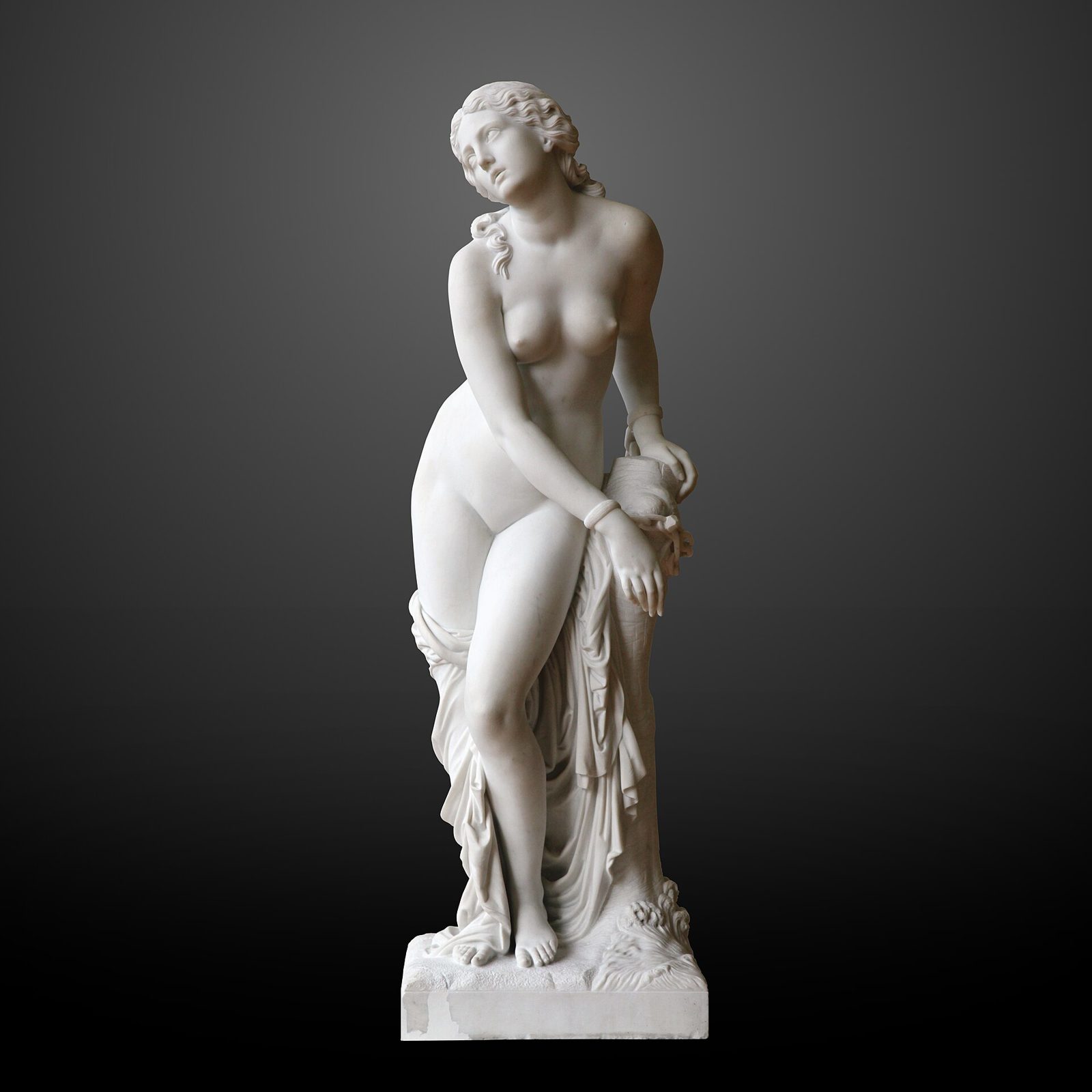
Angelica chained the rock, by François Truphème
🎧 This work has audio narration — listen in the appTake a moment to really look at "Angelica Chained to the Rock" by François Truphème. Notice how the marble seems to flow like fabric, wrapping around Angelica's form, almost as if she’s caught in a moment of despair. The intricate details of her hair and the tension in her muscles tell a story of struggle and resilience.
These details matter because they capture the essence of the mythological tale of Angelica, a character from the epic poem "Orlando Furioso." Here, she’s depicted in a moment of vulnerability, yet there’s a strength in her posture that speaks to her spirit. Truphème masterfully transforms cold marble into a warm, emotional narrative, inviting us to connect with her plight.
Created in 1855, this sculpture reflects the Romantic movement’s fascination with emotion and individual experience, a departure from the more rigid forms of Neoclassicism. Truphème, a prominent French sculptor, was known for his ability to breathe life into stone, and this piece is a perfect example of that talent.
As you stand here, think about the stories that art can tell. What emotions does Angelica evoke for you?
André François Joseph Truphème was a prominent French sculptor born on March 23, 1820, in Aix-en-Provence and passed away in Paris on January 22, 1888. As the elder brother of painter Auguste Truphème, he studied under Jean-Marie Bonnassieux at the École des beaux-arts in Paris, aided by the patronage of Mignet. Truphème began exhibiting at the Salon in 1850 and continued until his death, earning three medals for his works, including "Rêverie" and "Une jeune Fille à la source."
His legacy includes numerous public sculptures, notably in Marseille, where he created significant pieces for the Palais Longchamp and the Palais de Justice. His works often depicted themes of science and the arts, reflecting his dedication to celebrating cultural heritage. Truphème's contributions to Parisian monuments, including the Hôtel de Ville and the Palais Garnier, further solidified his place in art history. He was honored as a knight of the Legion of Honor in 1880, recognizing his impact on the artistic landscape of his time.
As you gaze upon 'Angelica Chained to the Rock,' take a closer look at the marble itself. Notice how Truphème skillfully carved the stone, allowing it to mimic the softness of fabric. The way the drapery flows around Angelica's body creates a sense of movement, almost as if she could step out of her stone prison at any moment. The intricate detailing in her hair and the tension in her muscles reveal Truphème's mastery of his craft. Each chisel mark tells a story, capturing the emotional weight of her plight in a medium that is typically cold and unyielding. Can you feel the contrast between the hard marble and the softness of her expression?
This sculpture was exhibited at the Salon, the prestigious annual art exhibition in Paris, where it was met with acclaim. Throughout his career, he was commissioned for numerous public monuments, showcasing his talent across various cities in France. His works can still be found in places like the Palais Garnier and the Palais de Justice in Marseille, making him a significant figure in the art landscape of his time.
This sculpture is part of a larger narrative, inspired by the myth of Angelica from the epic poem 'Orlando Furioso.' Truphème was known for his ability to capture emotion in marble, and this piece is no exception. The way he carves the intricate details of Angelica's expression makes you feel her struggle and resilience, almost as if she could step off the pedestal and share her story with you.
Truphème was awarded three medals at the Salon in 1859, 1864, and 1865 for his works, which showcased his growing recognition and talent in the art community.
Truphème studied under Jean-Marie Bonnassieux at the École des beaux-arts in Paris, where he honed his skills in classical sculpture, which influenced his ability to convey emotion and movement in marble.