 Image: Ibex73 · Cécile Briard · Cécile Briard · Cécile Briard · Cécile Briard
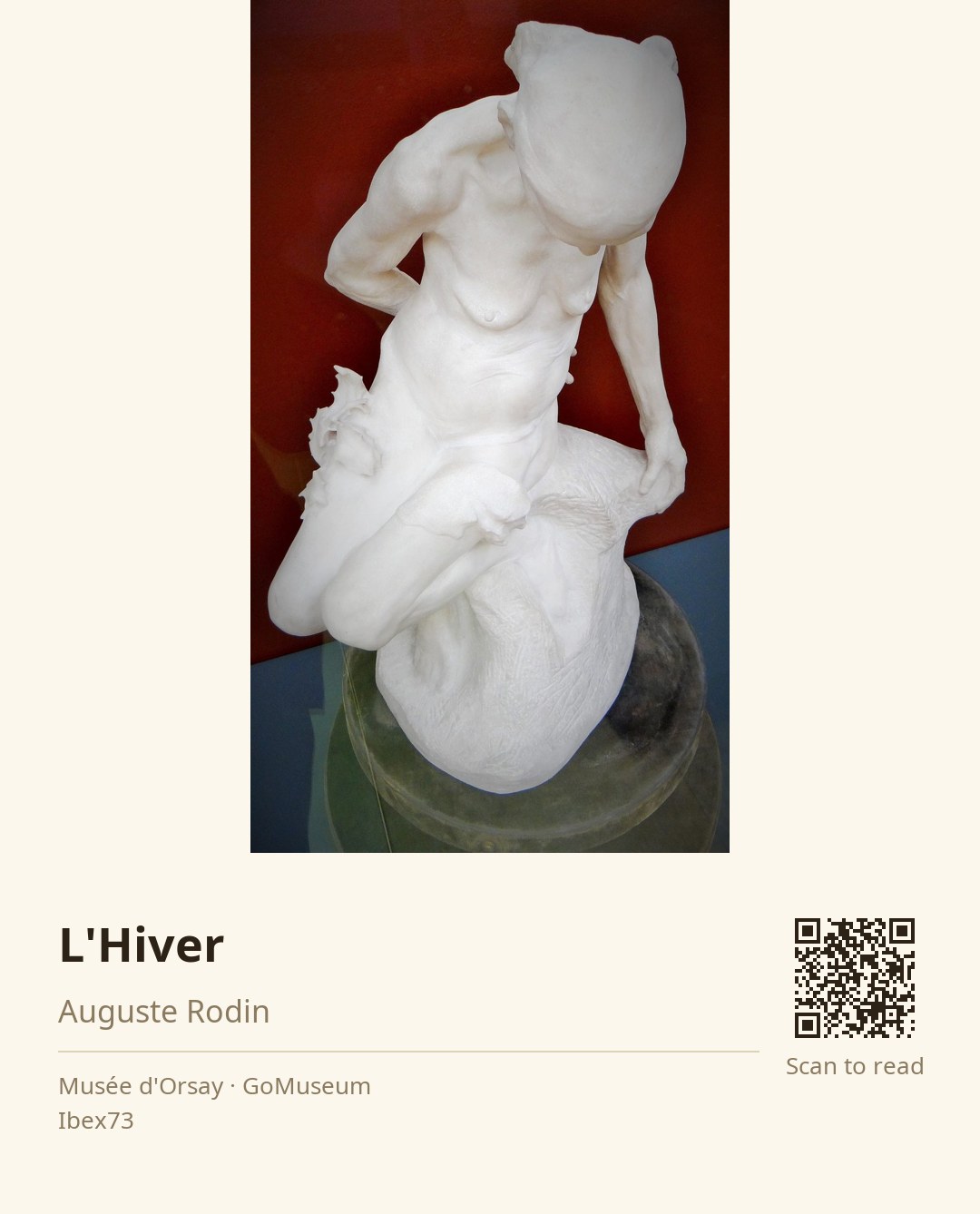
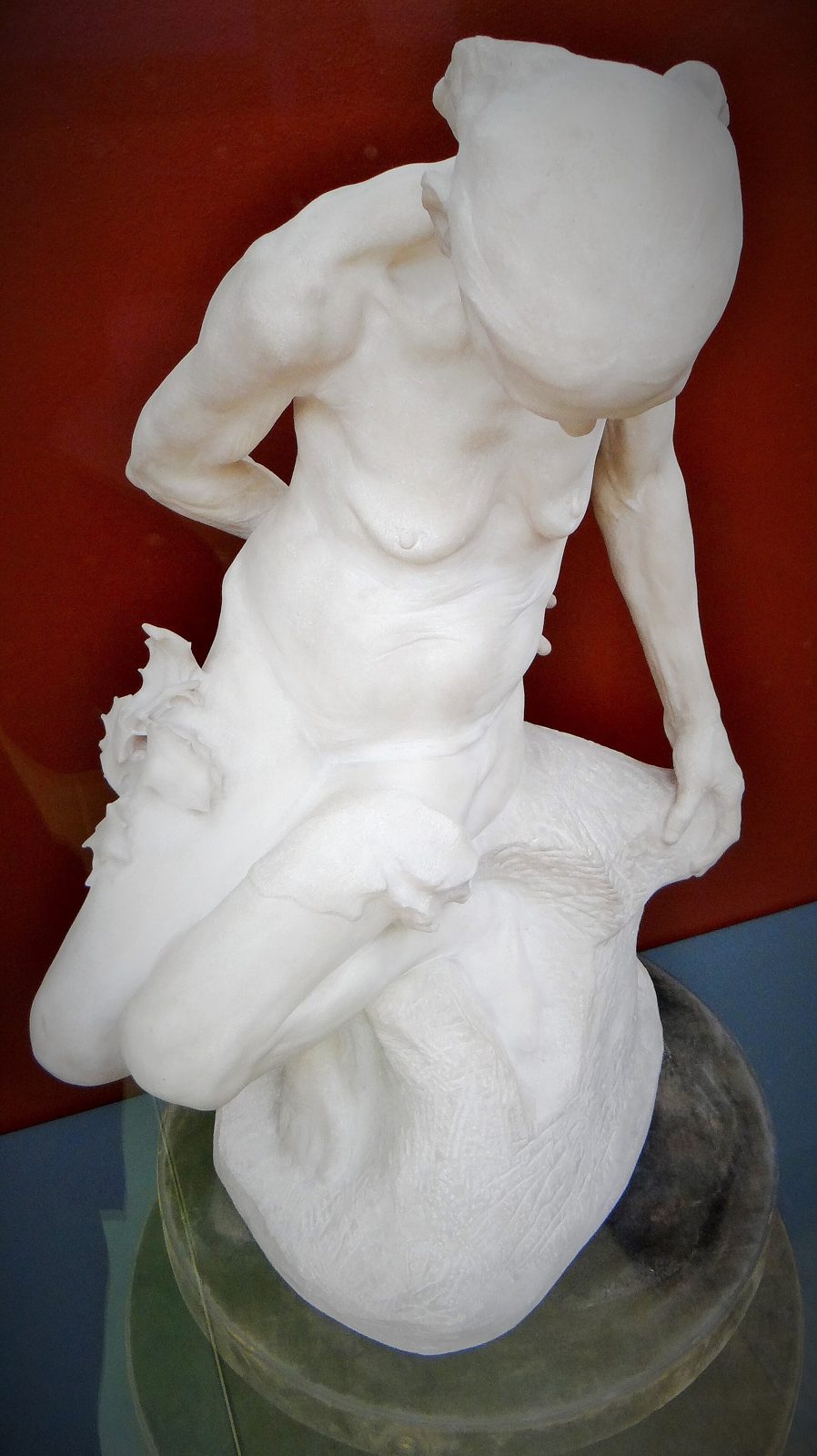
Take a moment to really look at "L'Hiver" by Auguste Rodin. Notice how the figure seems to be enveloped in a heavy cloak, almost as if the weight of winter itself is pressing down. The folds of the fabric are not just draped; they ripple and flow, capturing the chill and stillness of the season. These details matter because they reveal Rodin's mastery of texture and movement. He doesn't just depict a figure; he evokes a feeling, a sense of cold that resonates with the viewer. The way the cloak wraps around the body suggests both protection and confinement, reflecting the dual nature of winter—harsh yet beautiful. Rodin, often hailed as the father of modern sculpture, broke away from traditional forms to explore raw human emotion and experience. "L'Hiver" is a perfect example of his ability to blend realism with a deeper, almost poetic expression of nature's impact on humanity. As you stand here, think about how this sculpture captures not just the essence of winter, but also the universal feelings of solitude and introspection that come with it. What memories does this evoke for you?
François Auguste René Rodin, born on November 12, 1840, in Paris, is celebrated as a pioneer of modern sculpture. His artistic journey began in a working-class family, where he developed a passion for drawing at an early age. Despite facing rejections from prestigious art schools, Rodin honed his skills through self-education and apprenticeships, notably under the influential sculptor Antoine-Louis Barye.
Rodin's work is characterized by a remarkable ability to capture the human form with naturalism and emotional depth, diverging from the decorative and formulaic styles of his contemporaries. His iconic pieces, such as The Thinker and The Kiss, reflect a profound exploration of human experience, blending elements of romanticism and impressionism. His innovative approach often sparked controversy, yet he remained steadfast in his vision.
Throughout his life, Rodin formed significant relationships, notably with sculptor Camille Claudel, who was both his student and muse. He eventually married his lifelong partner, Rose Beuret, shortly before their deaths. By the turn of the 20th century, Rodin had achieved international acclaim, becoming a sought-after artist among the elite. Although his popularity waned after his death in 1917, his legacy endured, solidifying his status as one of the most influential sculptors in art history.
Rodin's 'L'Hiver' showcases his exceptional skill in manipulating clay to create a sense of movement and texture. Notice how the heavy cloak appears to ripple, capturing the weight of winter. This isn't just a simple draping; it's a complex interplay of light and shadow that brings the fabric to life. Rodin's technique involved layering and refining the clay, allowing him to express the nuances of the human form and the emotional weight of the season. The way he models the surface creates a tactile quality, inviting you to imagine the chill of winter against the skin.
Auguste Rodin created 'L'Hiver' during a period when he was already gaining recognition as a leading figure in modern sculpture. Although the exact date of its completion is not specified, it reflects Rodin's evolving style that broke away from traditional themes. The sculpture was part of his exploration of human emotion, which often faced criticism for its departure from classical ideals. Rodin's works, including 'L'Hiver', were shown in various exhibitions, contributing to his growing fame. His reputation soared after the 1900 World's Fair, where he showcased his masterpieces, leading to commissions from wealthy patrons and solidifying his place in art history.
Did you know that Rodin faced significant rejection early in his career? He applied three times to the prestigious École des Beaux-Arts and was turned down each time. This was a huge setback for him, especially considering the school was known for its relatively low entrance standards. It’s fascinating to think that the very institution that could have shaped his early career didn’t recognize his talent, perhaps due to their preference for Neoclassical styles, which were so different from Rodin's innovative approach.
Rose Beuret was not only Rodin's lifelong companion but also served as a model for many of his sculptures. Their relationship, marked by both commitment and complexity, influenced his artistic output and personal life significantly.