Doctor Gachet's Garden in Auvers
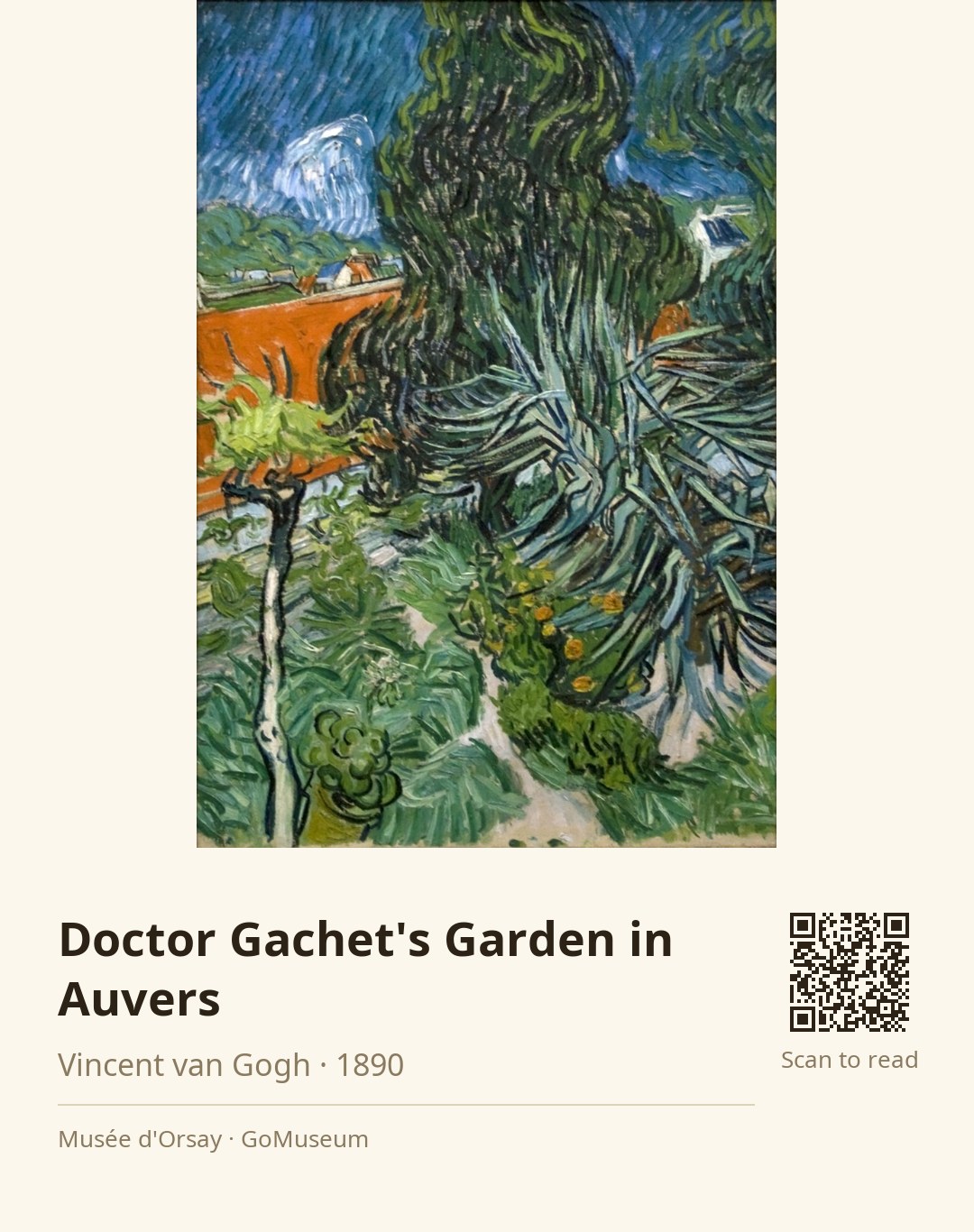
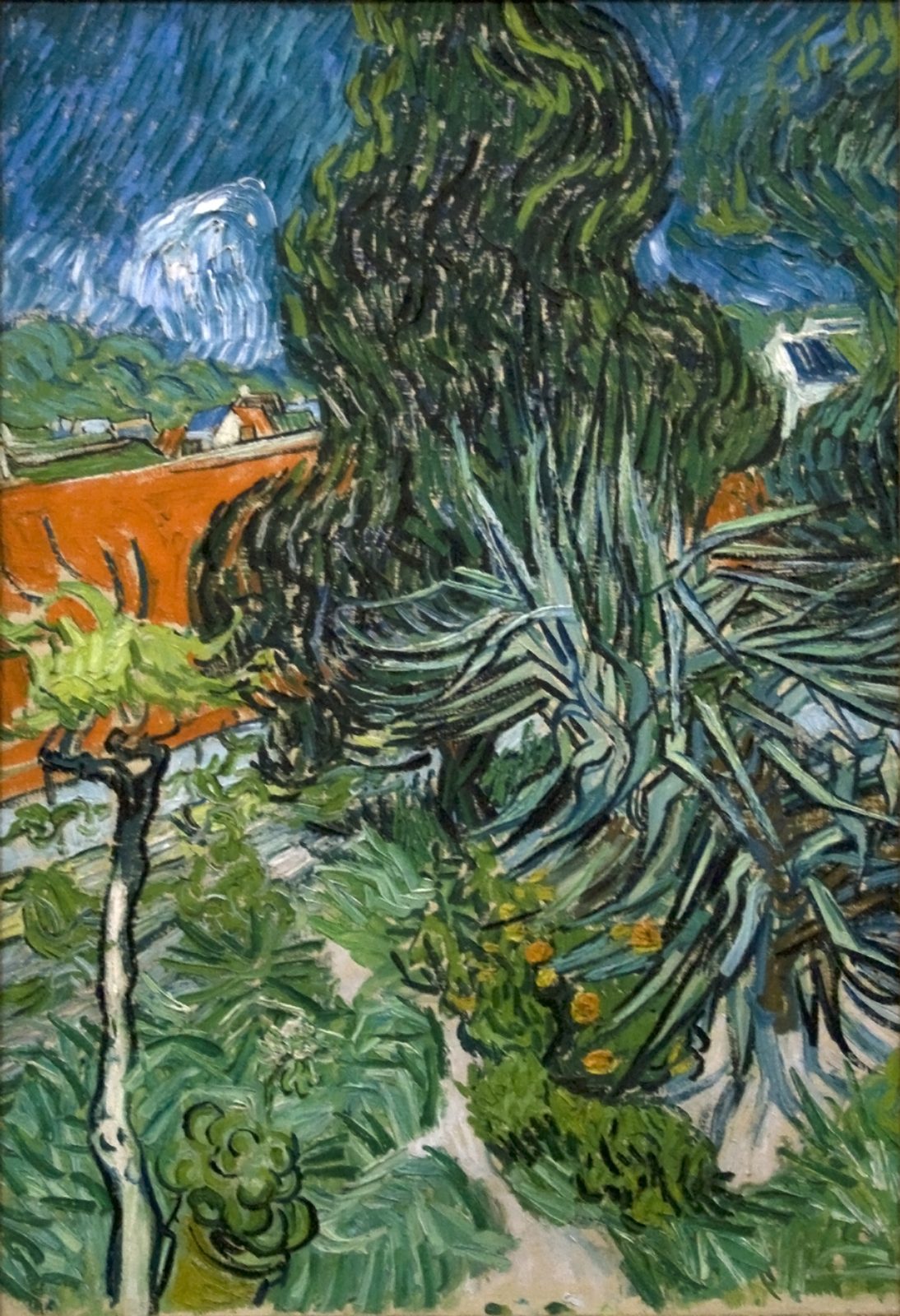
🎧 This work has audio narration — listen in the appTake a moment to really soak in the vibrant colors of "Doctor Gachet's Garden in Auvers." Notice how the lush greens and bursts of floral hues seem to dance across the canvas. Look closely at the way Van Gogh's brushstrokes create a sense of movement, almost as if the flowers are swaying in a gentle breeze.
These details matter because they reflect Van Gogh's emotional state during a turbulent time in his life. The garden, a place of solace, symbolizes his yearning for peace and connection. As he painted, he poured his feelings into the colors—each stroke a whisper of his inner turmoil and fleeting moments of joy.
Painted in 1890, just months before his tragic death, this piece captures Van Gogh's relationship with Dr. Paul Gachet, his physician and confidant. Gachet's garden was not just a backdrop; it was a refuge where Van Gogh sought healing and inspiration.
As you stand here, think about the garden's role in Van Gogh's life. What do you think he hoped to find among those flowers? Let the colors and textures of this painting linger in your mind, reminding you of the delicate balance between beauty and struggle.
Vincent van Gogh was a Dutch Post-Impressionist painter born on March 30, 1853, in Zundert. He is renowned for his vibrant use of color and expressive brushwork, which laid the groundwork for modern art. Despite creating around 2,100 artworks in just over a decade, including 860 oil paintings, he struggled with mental illness and poverty throughout his life. His early career as an art dealer was marked by disillusionment, leading him to pursue painting in 1881.
Van Gogh's intense passion for art was evident in his correspondence with his brother Theo, who provided emotional and financial support. His works evolved significantly after moving to Paris in 1886, where he mingled with avant-garde artists. His time in Arles in 1888 marked a peak in his creativity, producing iconic series like sunflowers and wheat fields.
Tragically, van Gogh's life ended in suicide at 37, after years of battling his demons. Initially unrecognized, he gained fame posthumously, becoming a symbol of the tortured artist. His legacy influenced movements like Fauvism and Expressionism, securing his place as one of the most significant figures in art history.
In the spring of 1890, Vincent van Gogh found himself in Auvers-sur-Oise, a small village just outside Paris, after a year-long stay in an asylum. He was sent there on the recommendation of his brother Theo and the artist Camille Pissarro, who introduced him to Dr. Paul Gachet, a homeopathic physician and art enthusiast. Van Gogh quickly formed a bond with Gachet, describing him as 'something like another brother.' This connection was crucial as Van Gogh sought stability in his tumultuous life. The garden depicted in this painting was not just a picturesque setting; it was a sanctuary where Van Gogh hoped to find peace amidst his struggles. The painting was created during a period of intense emotional turmoil, just months before his tragic death in July 1890.
As you gaze at 'Doctor Gachet's Garden in Auvers,' pay attention to Van Gogh's dynamic brushwork. The strokes are thick and expressive, creating a sense of movement that brings the garden to life. Notice how he uses color to evoke emotion—vibrant greens contrast with bursts of floral hues, suggesting a lively yet chaotic atmosphere. The composition is structured yet organic, with the flowers almost spilling out of the frame, inviting you into the scene. Van Gogh's technique of layering paint adds depth, making the colors feel rich and textured. This tactile quality draws you in, allowing you to feel the energy of the garden. The way he captures light, playing with shadows and highlights, creates an almost ethereal quality, as if the garden is illuminated by an inner glow. It's a masterclass in how color and form can convey not just a scene, but the artist's very soul.
Painted in the last months of his life, it reflects Van Gogh's deep connection to nature and his emotional state. This work, along with others from this period, influenced the Fauves and German Expressionists, who embraced bold colors and expressive brushwork. Van Gogh's approach to color and form laid the groundwork for future movements, making him a key figure in art history.
Gachet was so close that he even painted a portrait of him? Gachet was not only a physician but also an art lover, and he provided Van Gogh with a sense of companionship during his final months. Interestingly, Gachet's garden was filled with stray animals, including cats and a featherless rooster, which added a unique charm to the setting. This lively environment likely contributed to the vibrant energy captured in Van Gogh's paintings of the garden.
Van Gogh had a lifelong appreciation for gardens, deriving joy from them since childhood, and he often expressed his thoughts on gardening and color harmonies in letters to his brother Theo, reflecting his emotional state through the colors he chose to paint.