 Image: Rama · Sailko · Sailko · Sailko · Sailko
Les quatre parties du monde soutenant la sphère céleste
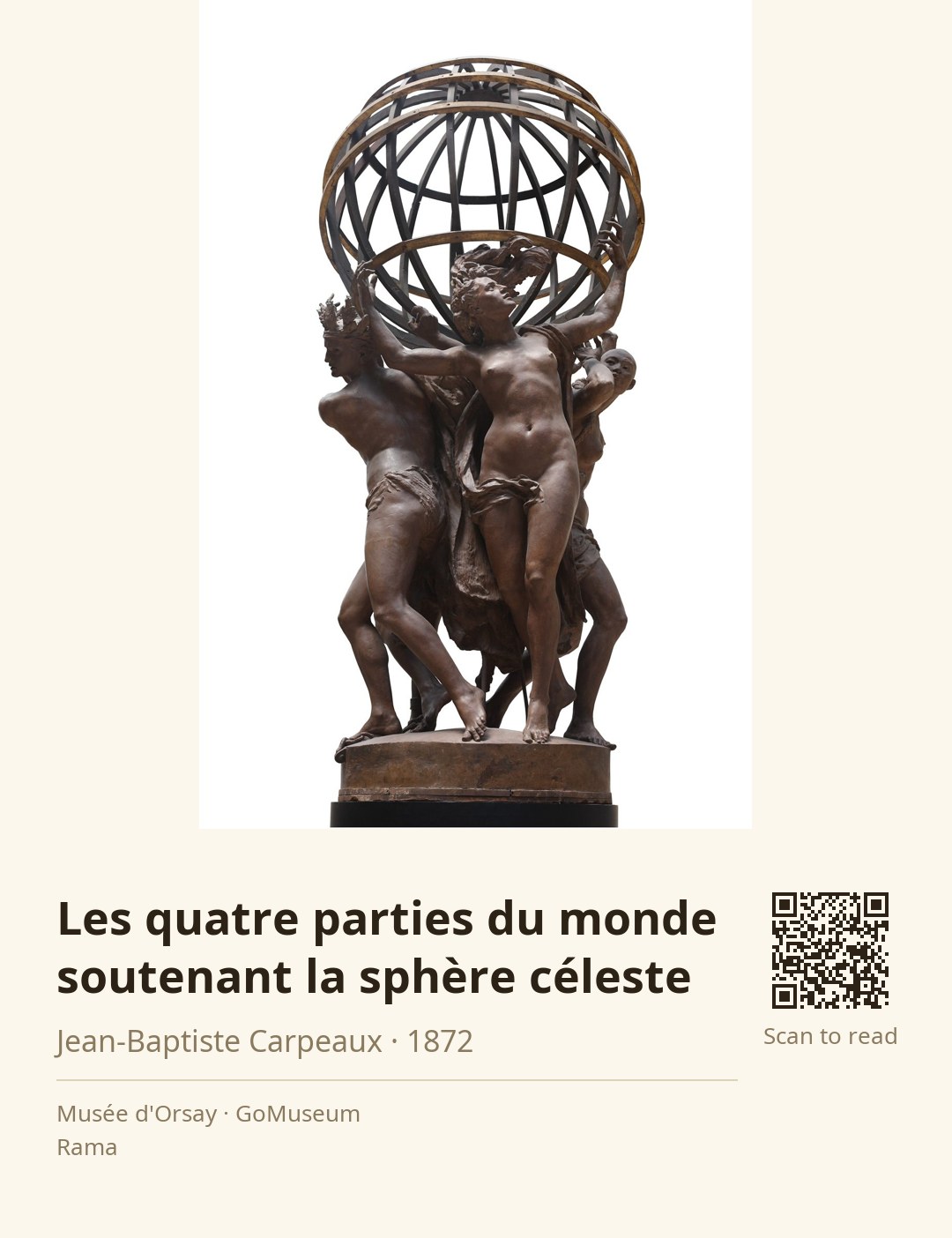
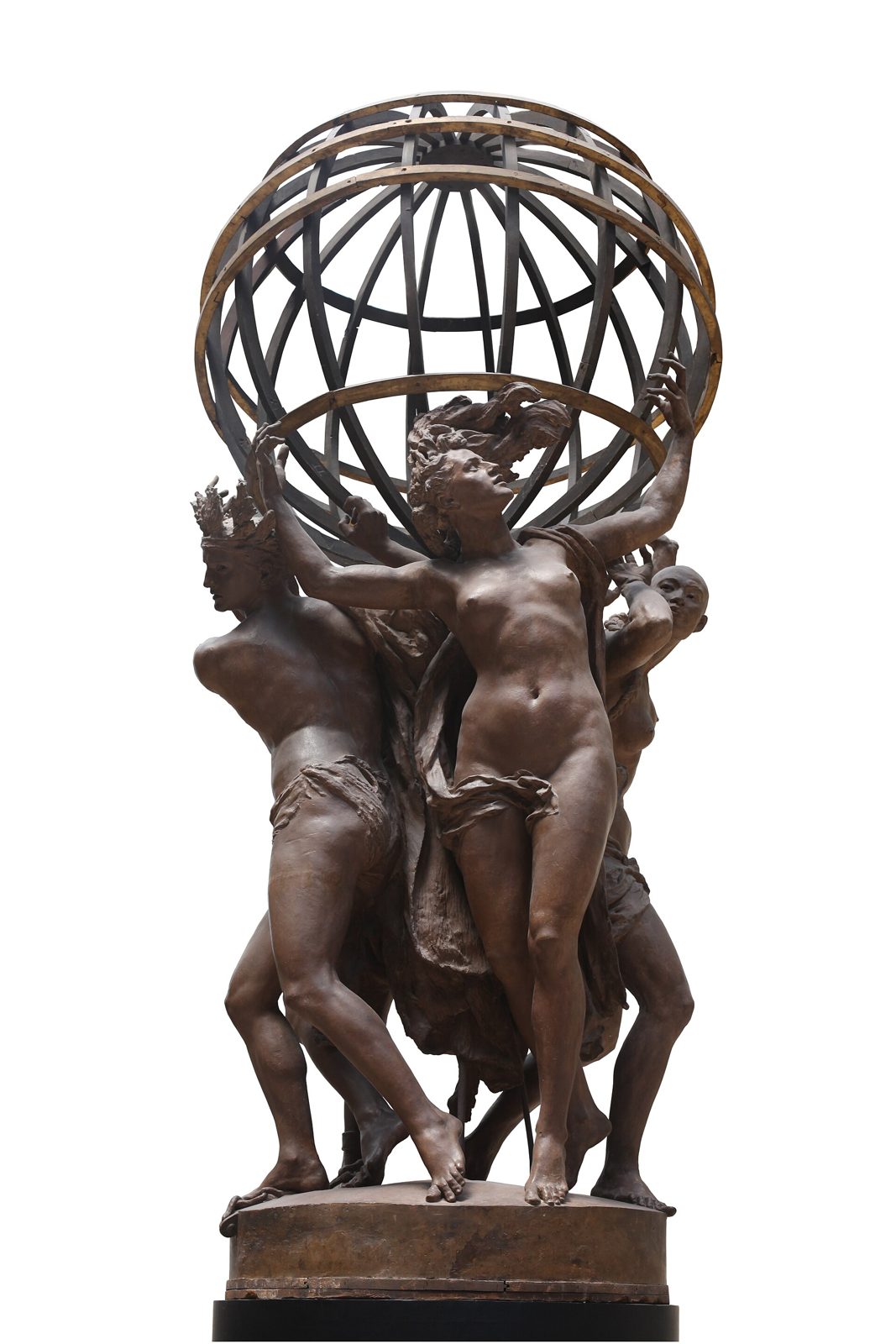
🎧 This work has audio narration — listen in the appTake a moment to really look at "Les quatre parties du monde soutenant la sphère céleste." Notice how the figures are not just standing still; they seem to pulse with life, each one embodying a different continent. The African figure, with its intricate jewelry, and the Asian figure, adorned with delicate features, draw your eye. These details matter because they represent the diversity of humanity, each figure a symbol of their respective cultures, all supporting the celestial sphere above them. Created by Jean-Baptiste Carpeaux in 1872, this sculpture reflects the artist's fascination with movement and emotion, breaking away from the rigid forms of classical art. Carpeaux was known for his ability to capture the essence of life, and here, he invites you to ponder the interconnectedness of the world. As you stand before this piece, consider what it means to support one another across cultures. How do these figures resonate with the world we live in today?
Jean-Baptiste Carpeaux was a prominent French sculptor and painter born on May 11, 1827, in Valenciennes. Coming from a humble background as the son of a mason, he pursued his passion for art against his father's wishes, studying under François Rude at the École des Beaux-Arts. His artistic journey took him to Rome after winning the Prix de Rome in 1854, where he drew inspiration from the works of Michelangelo and Donatello, embracing a style that celebrated movement and spontaneity over classical tradition.
Carpeaux's career flourished during the Second Empire, where he became known for his dynamic sculptures, including the famous "Neapolitan Fisherboy" and the allegorical group "Ugolino and His Sons." His work often reflected a blend of realism and emotional depth, which resonated with the public and earned him numerous commissions, including from Emperor Napoleon III. He was not only a celebrated artist but also a savvy entrepreneur, producing variations of his works to reach a broader audience.
Despite his success, Carpeaux struggled with the constraints of academicism and sought to break free from traditional norms. His innovative spirit and dedication to capturing the essence of life left a lasting impact on the art world. He passed away on October 12, 1875, but his legacy endures through his influential works and the artists he mentored, securing his place in art history as a key figure of the 19th century.
As you gaze upon 'Les quatre parties du monde soutenant la sphère céleste,' take a moment to appreciate the medium of plaster. Carpeaux used this material to create a sense of immediacy and fluidity, allowing each figure to convey emotion and movement. Notice the intricate details in the drapery and the textures of the figures' skin, which seem almost alive. The way the plaster captures light and shadow adds depth, making the figures feel like they could step off their pedestal at any moment. This choice of material reflects Carpeaux's desire to break away from the rigid forms of classical sculpture, embracing a more dynamic approach.
This sculpture was unveiled in 1872, a time when Paris was bustling with artistic innovation. Carpeaux, who was deeply influenced by his studies in Rome, created this work as part of a grander vision to represent the continents supporting the celestial sphere. It was first exhibited at the Salon of 1872, where it garnered attention for its emotional intensity and movement. The piece was later shown at the 1889 Exposition Universelle in Paris, a world fair that celebrated art and culture.
Jean-Baptiste Carpeaux's 'Les quatre parties du monde soutenant la sphère céleste' is a striking embodiment of 19th-century artistic ambition, merging allegory with a dynamic sense of movement. This sculpture not only showcases Carpeaux's mastery of form but also reflects the era's fascination with global identity and cultural representation. By personifying continents through figures that embody their respective traits—like the noble African and the graceful European—Carpeaux challenged traditional artistic norms and opened the door for future artists to explore themes of diversity and humanity. His work influenced a generation of sculptors who sought to capture the essence of life in their art, making him a pivotal figure in the transition from classical to modern sculpture. Remember this: Carpeaux didn't just sculpt; he sculpted ideas that resonated across cultures and time.
Did you know that Carpeaux's fascination with movement was so intense that he often sought inspiration from the streets of Rome? He would observe everyday life, capturing the spontaneity and energy of his surroundings, which he then infused into his sculptures. This practice was quite revolutionary for his time, as many artists were still adhering to the more rigid, classical styles of the past.
Carpeaux's use of plaster allowed him to create a sense of immediacy and fluidity, capturing intricate details that convey emotion and movement, making the figures appear almost lifelike.
Growing up in a modest family, Carpeaux initially faced resistance from his father regarding his artistic ambitions, but he persevered, eventually studying under notable artists and winning the Prix de Rome, which significantly shaped his career.