Lola de Valence
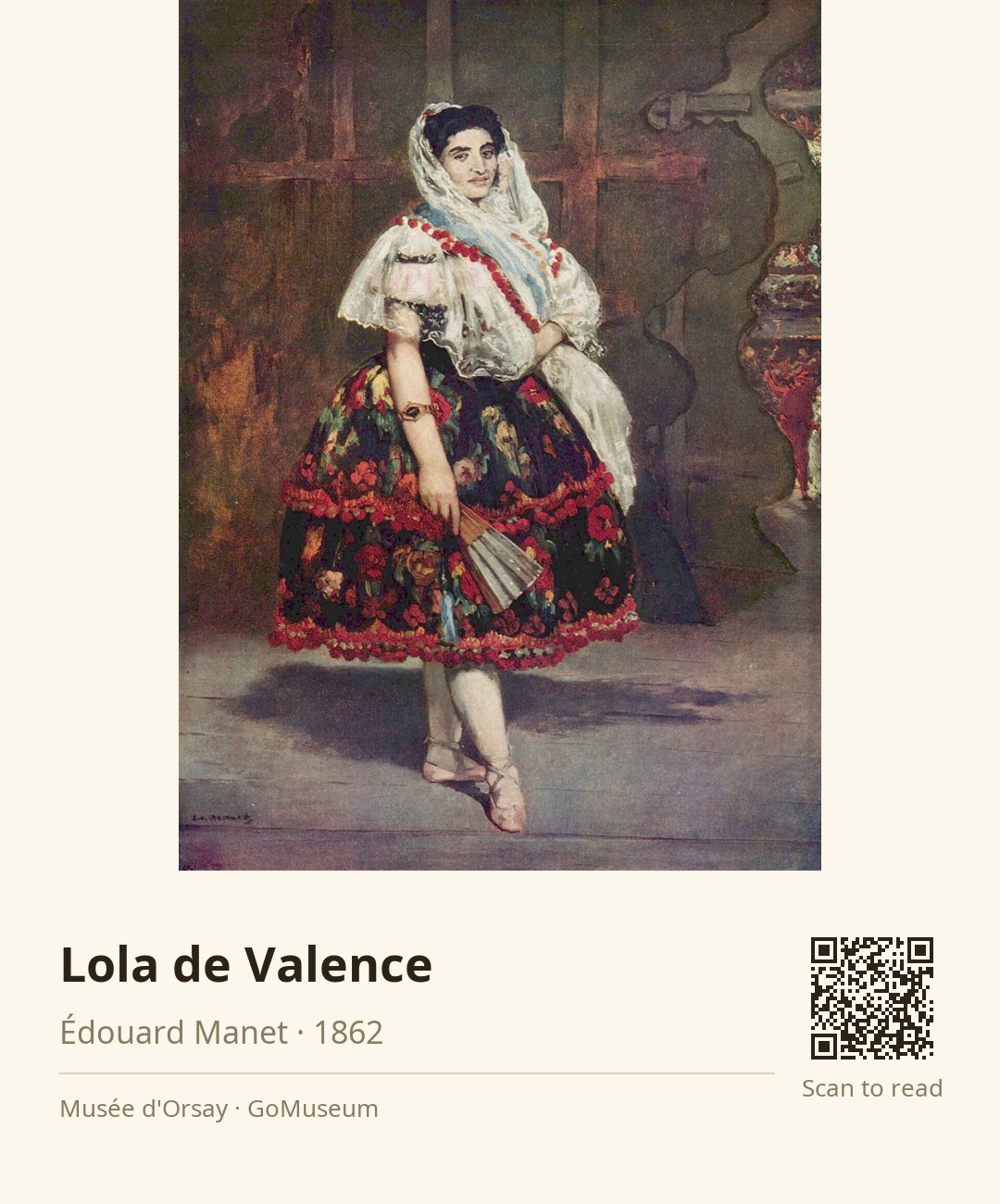
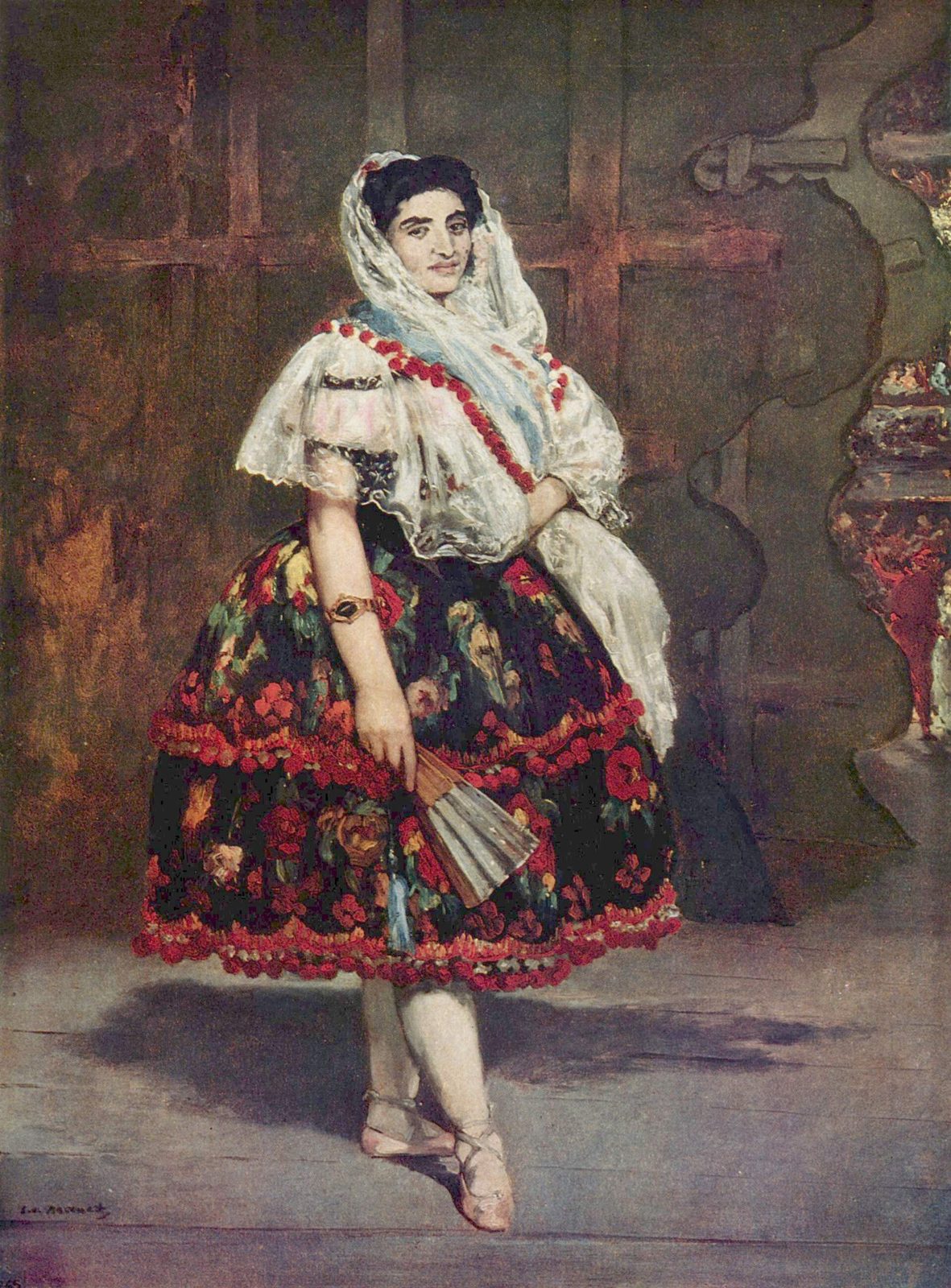
🎧 This work has audio narration — listen in the appTake a moment to really look at "Lola de Valence." Notice how the dancer's vibrant Spanish attire pops against the more muted background. The way her dress flows and swirls almost invites you to hear the music she dances to, doesn’t it? This isn’t just a pretty picture; it’s a bold statement about femininity and allure in the 19th century.
Manet painted this in 1862, and it was one of his first works to stir controversy for its erotic undertones. At a time when the art world was dominated by classical themes, Manet dared to showcase a modern woman, a dancer, exuding confidence and sensuality. This choice was revolutionary, paving the way for later scandals in his career, like "Olympia" and "Le Déjeuner sur l'herbe."
Interestingly, the poet Charles Baudelaire was so taken with this painting that he wrote a quatrain to accompany it, emphasizing its provocative nature. Imagine the buzz it created in Parisian salons!
As you stand here, think about how this piece challenged societal norms and perceptions of women. What do you think Manet was trying to say about the role of women in art and society?
Édouard Manet, born on January 23, 1832, in Paris, emerged as a pivotal figure in 19th-century art, bridging Realism and Impressionism. From an affluent family, he initially faced pressure to pursue a naval career but instead dedicated himself to painting, influenced by his uncle and the Old Masters. His early works, including "The Luncheon on the Grass" and "Olympia," sparked controversy and challenged traditional artistic norms, marking him as a revolutionary force.
Manet's style, characterized by loose brushwork and a focus on contemporary life, diverged from the meticulous techniques of his predecessors. He often depicted modern Parisian scenes, capturing the essence of leisure and social dynamics. Despite initial rejection from the art establishment, he gained recognition among progressive artists and became a mentor to the Impressionists.
Throughout his life, Manet formed connections with influential figures like Baudelaire and Zola, who defended him against critics. His later works, such as "A Bar at the Folies-Bergère," showcased his evolving style and mastery of color. Manet's contributions to art history are profound; he is celebrated not only for his innovative techniques but also for elevating still life and modern subjects to the forefront of artistic expression. He passed away on April 30, 1883, leaving behind a legacy that continues to inspire artists today.
Édouard Manet's 'Lola de Valence' was painted in 1862 and marked a pivotal moment in his career. It stirred significant controversy, being one of Manet's first works to evoke disapproval due to its erotic undertones. The painting was later shown at various prestigious venues, including the Exposition Universelle in 1889 and the Grand Palais in 1983, which helped solidify its place in art history. The reception was mixed; while some critics were outraged, others began to recognize Manet's bold departure from traditional themes, paving the way for future modernist movements.
When you look closely at 'Lola de Valence,' notice the way Manet's brushwork creates a sense of movement and life. The dancer's vibrant dress, painted with energetic strokes, contrasts sharply with the subdued background, drawing your eye directly to her. This choice of color not only highlights her but also evokes the lively atmosphere of a dance performance. Manet's use of light is particularly striking; it seems to dance across the fabric of her gown, enhancing its texture and richness. The composition is carefully structured, with the dancer positioned slightly off-center, creating a dynamic tension that invites the viewer to engage with her. This technique of placing the subject in a lively, yet ambiguous space allows for a sense of immediacy, as if she might leap off the canvas at any moment. The scale of the painting, with its impressive dimensions, further amplifies the impact, making the viewer feel almost enveloped by the scene.
This painting, with its bold portrayal of a dancer in traditional Spanish attire, not only reflects Manet's fascination with Spanish culture but also ignited discussions about eroticism in art. Its controversial reception paved the way for Manet's later masterpieces, which would challenge societal norms and provoke public outrage. Remember, this was more than just a painting; it was a catalyst for change in how art could engage with the world around it.
An intriguing tidbit about 'Lola de Valence' is that the poet Charles Baudelaire was so captivated by the painting that he wrote a quatrain to accompany it. He envisioned this verse being inscribed directly onto the frame or even within the paint itself, highlighting the painting's provocative nature. Although this idea was not fully realized, a cartouche with Baudelaire's quatrain was eventually affixed to the frame during its 1863 exhibition, turning the poem into a kind of second title for the work. This collaboration between poet and painter not only enhanced the painting's allure but also sparked conversations about the interplay between visual art and literature.
The controversy surrounding 'Lola de Valence' marked a significant shift in public perception, as it was one of the first works to provoke strong disapproval for its erotic undertones, contrasting with the more subdued reactions to his earlier pieces like 'The Spanish Singer'.