Portrait of Margot
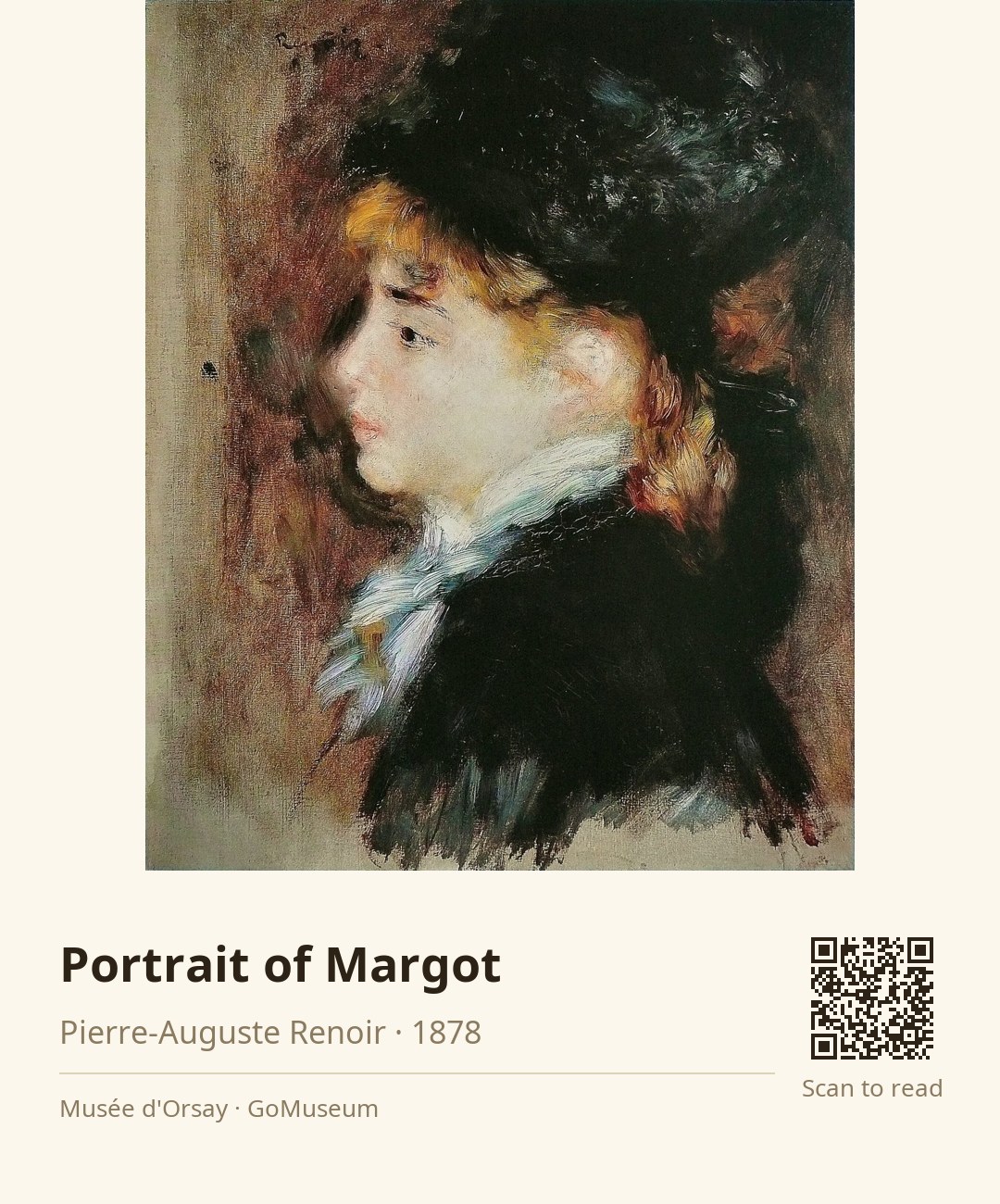
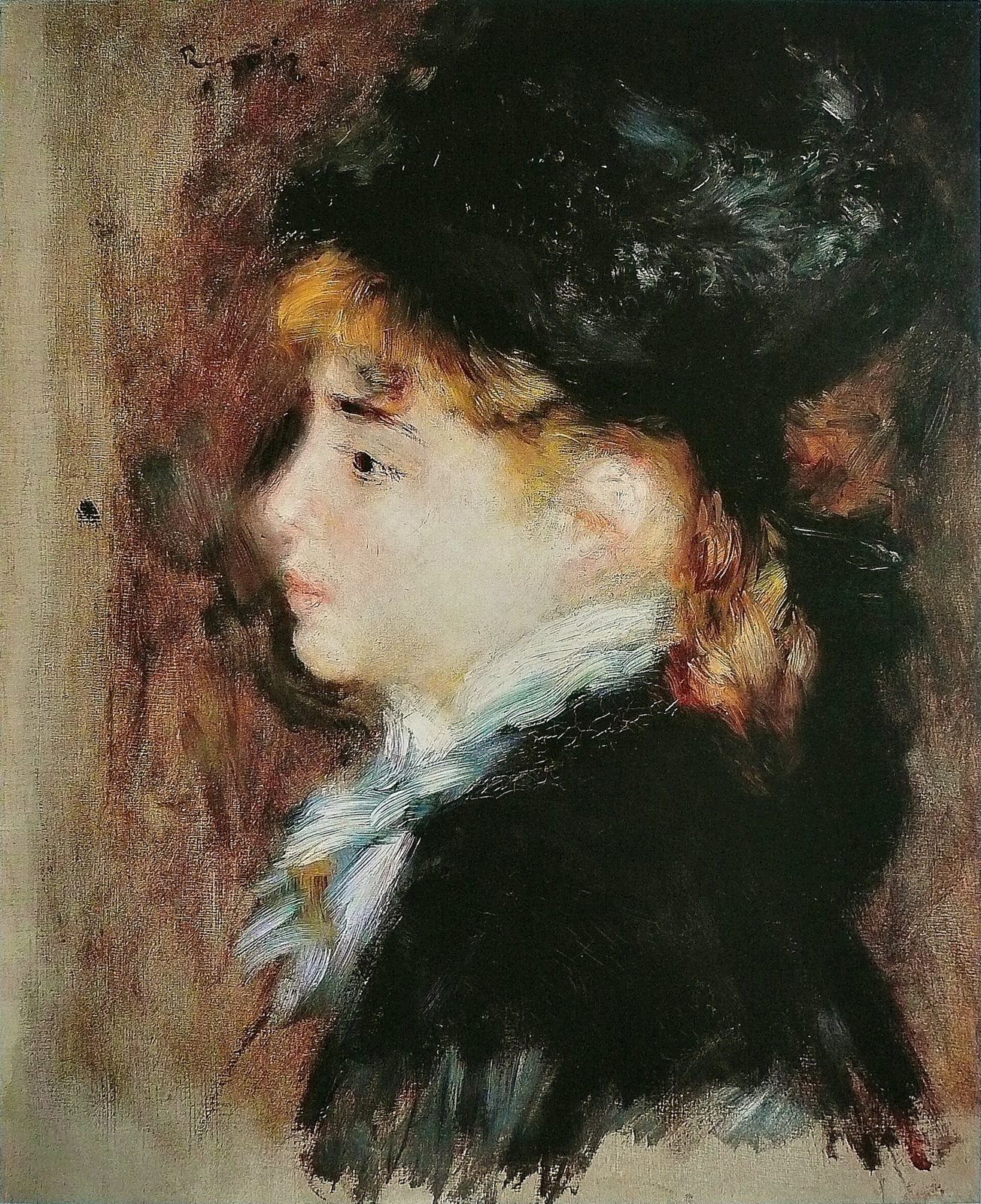
🎧 This work has audio narration — listen in the appThe young woman in profile, adorned with a dark hat and a black coat accented by a white scarf, captures a moment of serene contemplation. Her light skin and blonde hair contrast beautifully against the warm, earthy tones of the background, which Renoir has rendered with loose, fluid brushwork that evokes an intimate atmosphere. The soft textures and subtle play of light on her face and attire draw you into her quiet world, inviting you to ponder her thoughts.
Renoir's choice to focus closely on Margot, with no distractions in the foreground or background, emphasizes her presence and the emotional depth of the portrait. This approach aligns with his broader exploration of feminine beauty and character, a theme that resonates throughout his body of work. The impressionistic style, characterized by its vibrant colors and dynamic brushstrokes, allows the viewer to experience not just the likeness of Margot but the essence of her spirit.
Created in 1878, "Portrait of Margot" reflects Renoir's evolution as a leading figure in the Impressionist movement, capturing the subtleties of light and shadow that define his portraits. The painting was once part of the collection of Dr. Paul Gachet, a notable figure in the art world and a friend to many Impressionists.
Pierre-Auguste Renoir, born on February 25, 1841, in Limoges, France, emerged as a pivotal figure in the Impressionist movement. His early life in a modest family led him to Paris, where he honed his artistic skills amidst the masterpieces of the Louvre. Initially apprenticed in a porcelain factory, Renoir's passion for painting flourished, particularly after studying under Charles Gleyre, where he befriended fellow artists like Monet and Sisley.
Renoir's work celebrated feminine beauty and vibrant social scenes, exemplified in iconic pieces like "Dance at Le Moulin de la Galette." Despite facing criticism early on, he gained recognition, especially after participating in the first Impressionist exhibition in 1874. His style evolved over the years, transitioning towards realism influenced by classical masters like Raphael.
Throughout his life, Renoir balanced personal struggles, including health issues, with a prolific output, reportedly creating around four thousand works. He became a beloved figure in art history, known for his warm palette and expressive brushwork. Renoir passed away on December 3, 1919, leaving a legacy that continues to inspire artists and art lovers alike.
Created in 1878, 'Portrait of Margot' was commissioned during a period when Renoir was gaining recognition as a leading figure in the Impressionist movement. This painting was part of Dr. Paul Gachet's collection, a notable patron and friend to many Impressionists, which speaks to its significance in the art world of the time. Renoir's focus on capturing feminine beauty and character resonated with audiences, and the painting was well-received, further solidifying his reputation.
Renoir's technique in 'Portrait of Margot' showcases his mastery of oil paint on canvas, employing loose, fluid brushwork that creates a sense of intimacy and warmth. The soft textures of the background contrast with the sharpness of Margot's profile, drawing the viewer's eye directly to her serene expression. The color palette is delicate, with earthy tones that enhance the lightness of her skin and scarf, while the darker clothing grounds her figure. This careful balance of light and shadow not only highlights her features but also evokes a contemplative mood, inviting viewers to connect emotionally with the subject. The composition's focus on Margot, devoid of distractions, amplifies her presence, making her the undeniable focal point of the painting.
Interestingly, Renoir's early struggles with financial instability meant that he often had to find creative solutions to continue painting. At one point, he painted decorations on fans to make ends meet, showcasing his resourcefulness and dedication to his craft long before he became a celebrated artist.
Renoir faced financial instability early in his career, which led him to paint decorations on fans and seek other creative means to support his artistic pursuits.
Renoir utilized loose, fluid brushwork in oil paint, which enhances the painting's intimacy and warmth, drawing viewers into the subject's contemplative mood.