Tempête, côtes de Belle-Ile
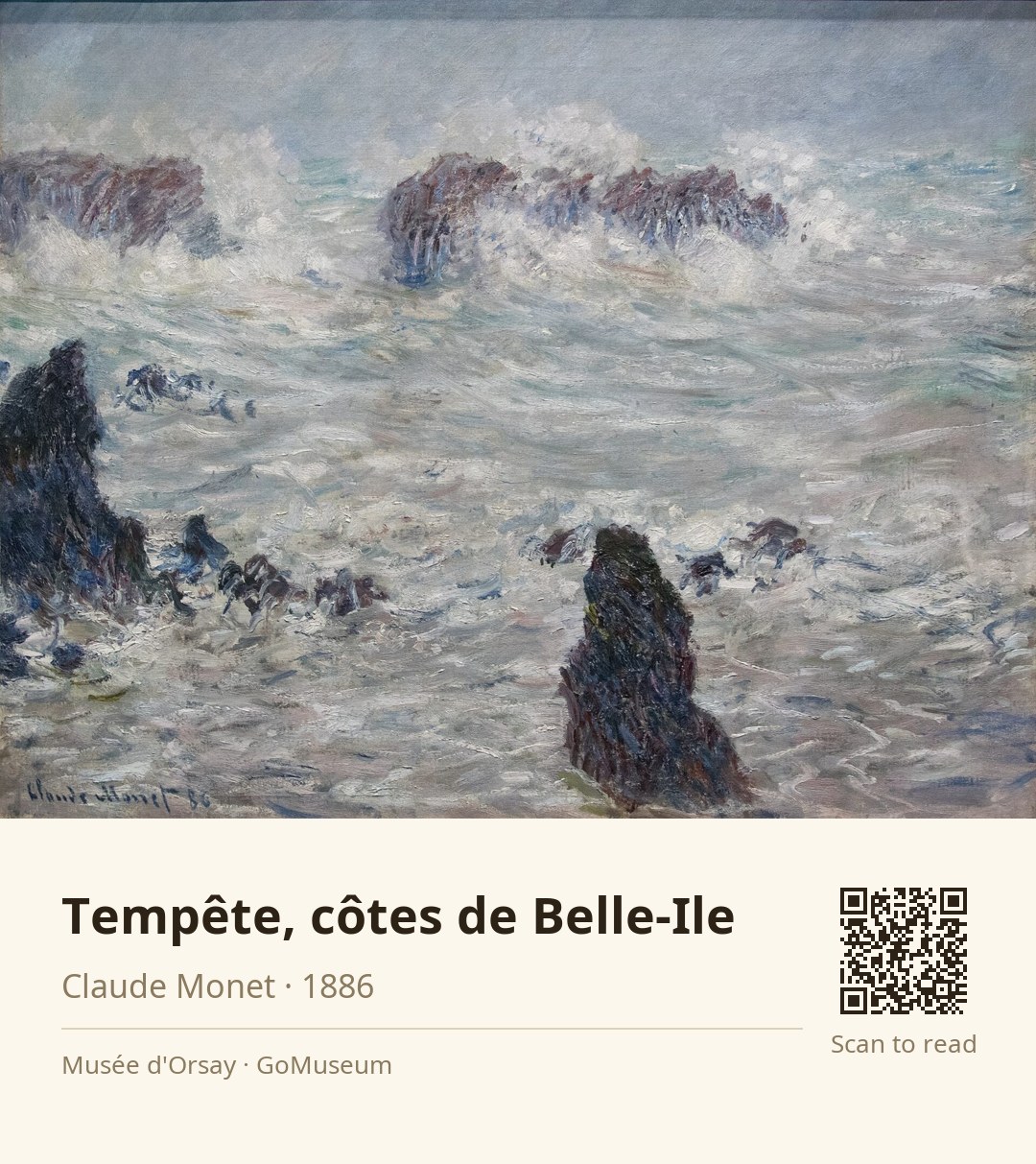
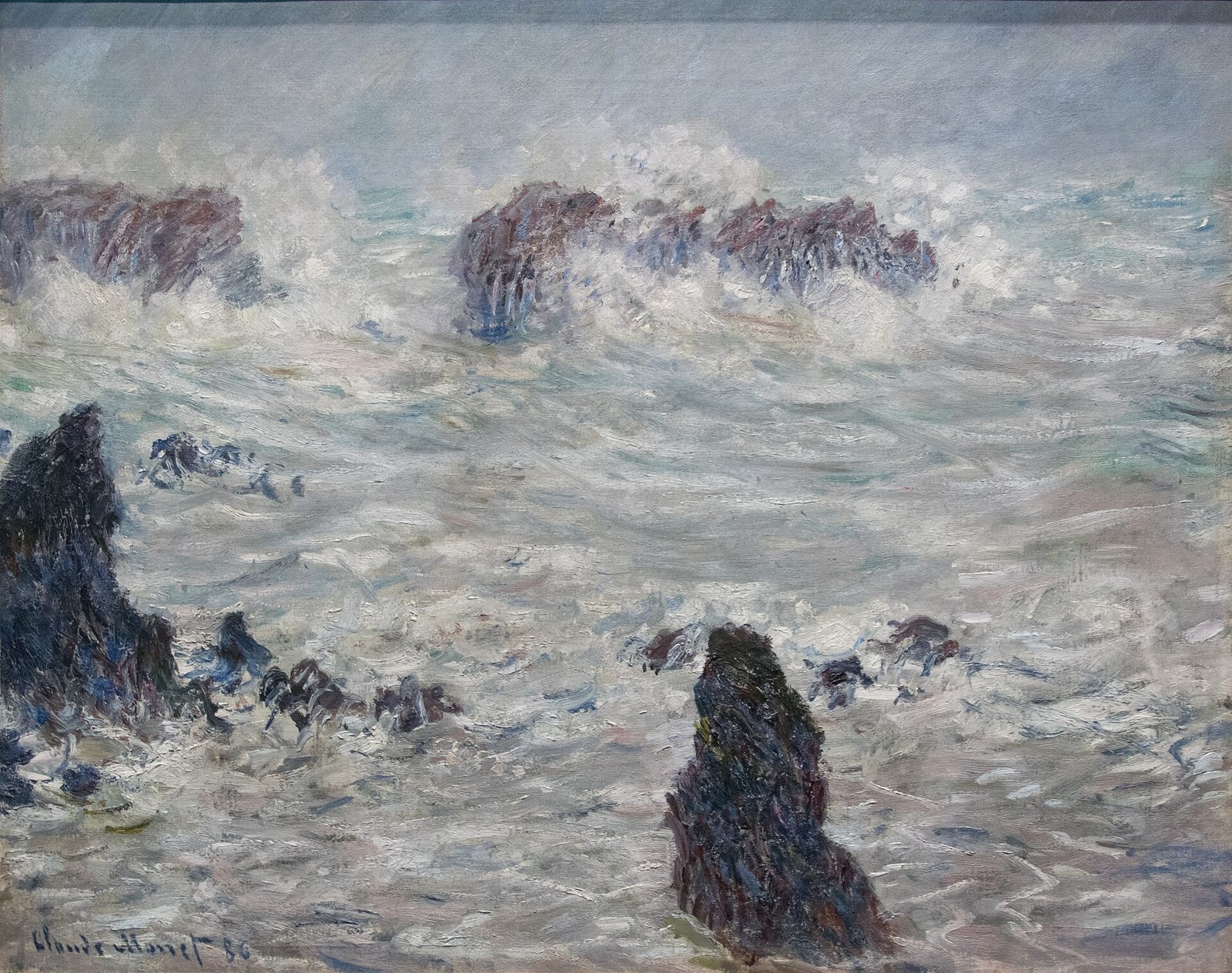
🎧 This work has audio narration — listen in the appTake a moment to really absorb the energy of this painting, "Tempête, côtes de Belle-Ile" by Claude Monet. Look closely at the swirling clouds and the churning waves—can you feel the storm brewing? Notice how Monet captures the raw power of nature with those bold, sweeping brushstrokes. The way he layers the paint creates a sense of movement, almost as if the sea is crashing right in front of you.
These details matter because they reflect Monet’s fascination with light and atmosphere, showcasing his ability to convey emotion through color and form. This isn’t just a depiction of a storm; it’s an experience, a moment frozen in time that invites you to feel the tumult and beauty of the coast.
Created in 1886, during a time when Monet was deeply exploring the effects of light on landscapes, this piece is a testament to his innovative approach to painting. He often painted en plein air, capturing the essence of a scene as it changed with the weather and time of day.
As you stand here, think about the power of nature and how it can evoke such strong feelings. What does this stormy scene make you feel?
Oscar-Claude Monet, born on November 14, 1840, in Paris, was a pioneering French painter and a founder of Impressionism, a movement that transformed the art world. Raised in Le Havre, he developed a passion for nature and painting early on, encouraged by his mother, while his father hoped he would pursue a business career. After his mother's death in 1857, Monet moved in with his aunt, who supported his artistic ambitions.
Monet's career began with caricatures, but he soon sought formal training, studying under Eugène Boudin, who introduced him to plein air painting. His breakthrough came in 1866 with "La Femme à la robe verte," which garnered attention at the Salon. The term "Impressionism" originated from his work "Impression, Sunrise," exhibited in 1874, marking a shift away from traditional art.
Throughout his life, Monet focused on capturing the essence of light and color in nature, creating series of paintings that depicted the same scenes under varying conditions, such as his famous haystacks and water lilies. He settled in Giverny in 1883, where he cultivated a beautiful garden that became his muse. Despite personal hardships, including the loss of loved ones and health issues, Monet's relentless dedication to his craft solidified his place in art history as a master of modernism, influencing countless artists and leaving a lasting legacy. He died on December 5, 1926, in Giverny, celebrated as one of the most significant figures in art.
Claude Monet painted 'Tempête, côtes de Belle-Ile' in 1886, a period when he was deeply engaged with the effects of light and atmosphere on landscapes. This painting was part of a significant sale at the Dupuis auction house in Paris on June 10, 1891, where it was listed as catalog number 42. The work eventually found its way into the hands of Migeon Gaston, adding to its storied provenance. Monet's exploration of nature's power resonated with audiences, and this piece was no exception, capturing the tumultuous spirit of the sea and sky in a way that was both revolutionary and emotionally charged.
The brushwork is vigorous and dynamic, with thick, expressive strokes that create a sense of turbulence in the waves and clouds. Notice how he layers the paint, allowing the colors to blend and interact, which enhances the feeling of depth and energy. The palette is dominated by dramatic blues and grays, punctuated by flashes of white that mimic the foamy crests of the waves. This choice of color not only captures the storm's ferocity but also invites the viewer to feel the raw energy of the scene. The composition draws your eye across the canvas, leading you through the chaos of nature, making you feel as if you are right there, experiencing the storm firsthand.
It’s said that he was so captivated by the tumultuous sea and stormy skies that he braved the elements to capture the raw power of nature. Imagine him, standing there, paintbrush in hand, as waves crashed around him—what a scene! This painting is not just a depiction of a storm; it's a testament to Monet's dedication to capturing the fleeting moments of beauty in nature, even when the weather was anything but cooperative.