Claude Monet
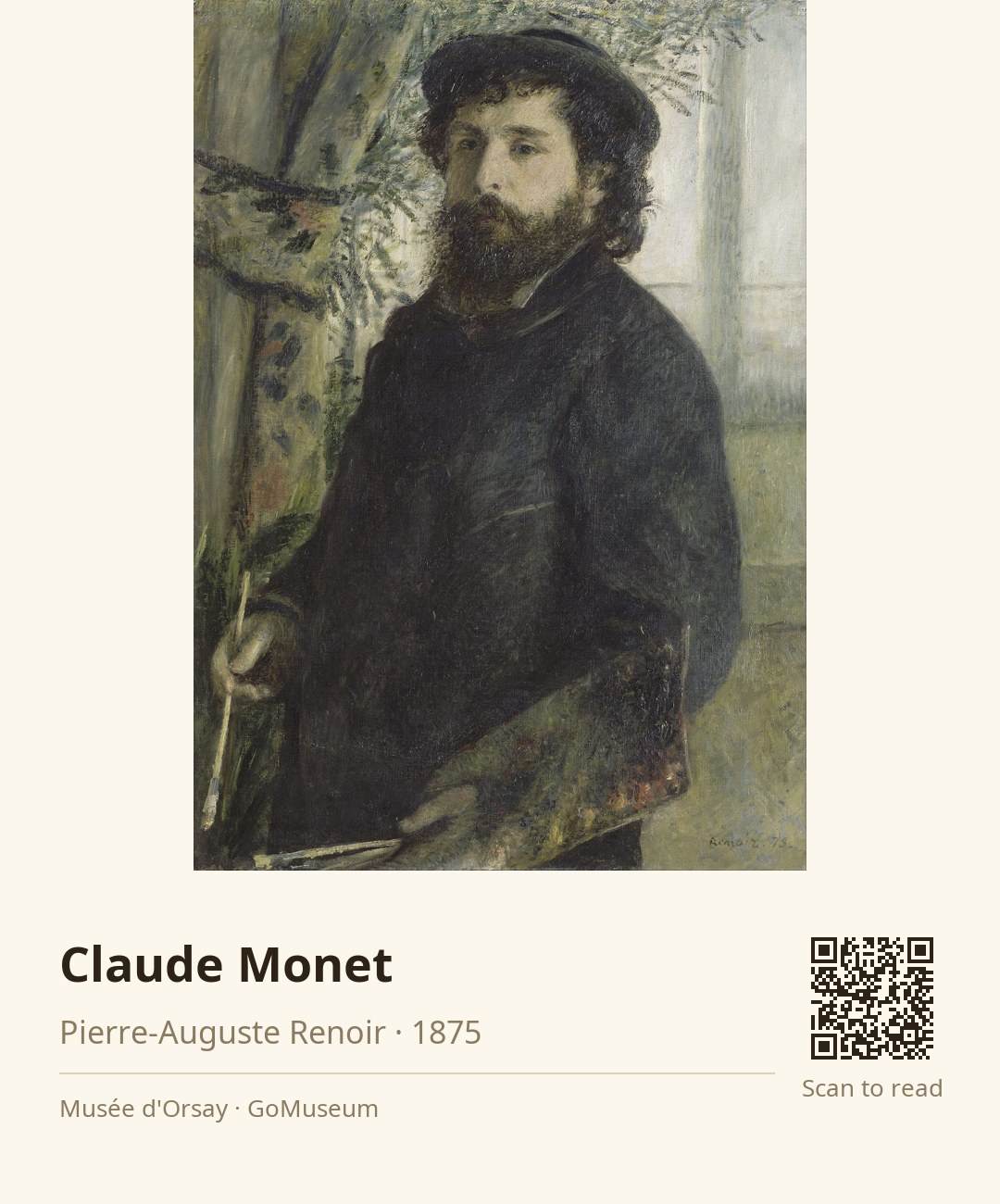
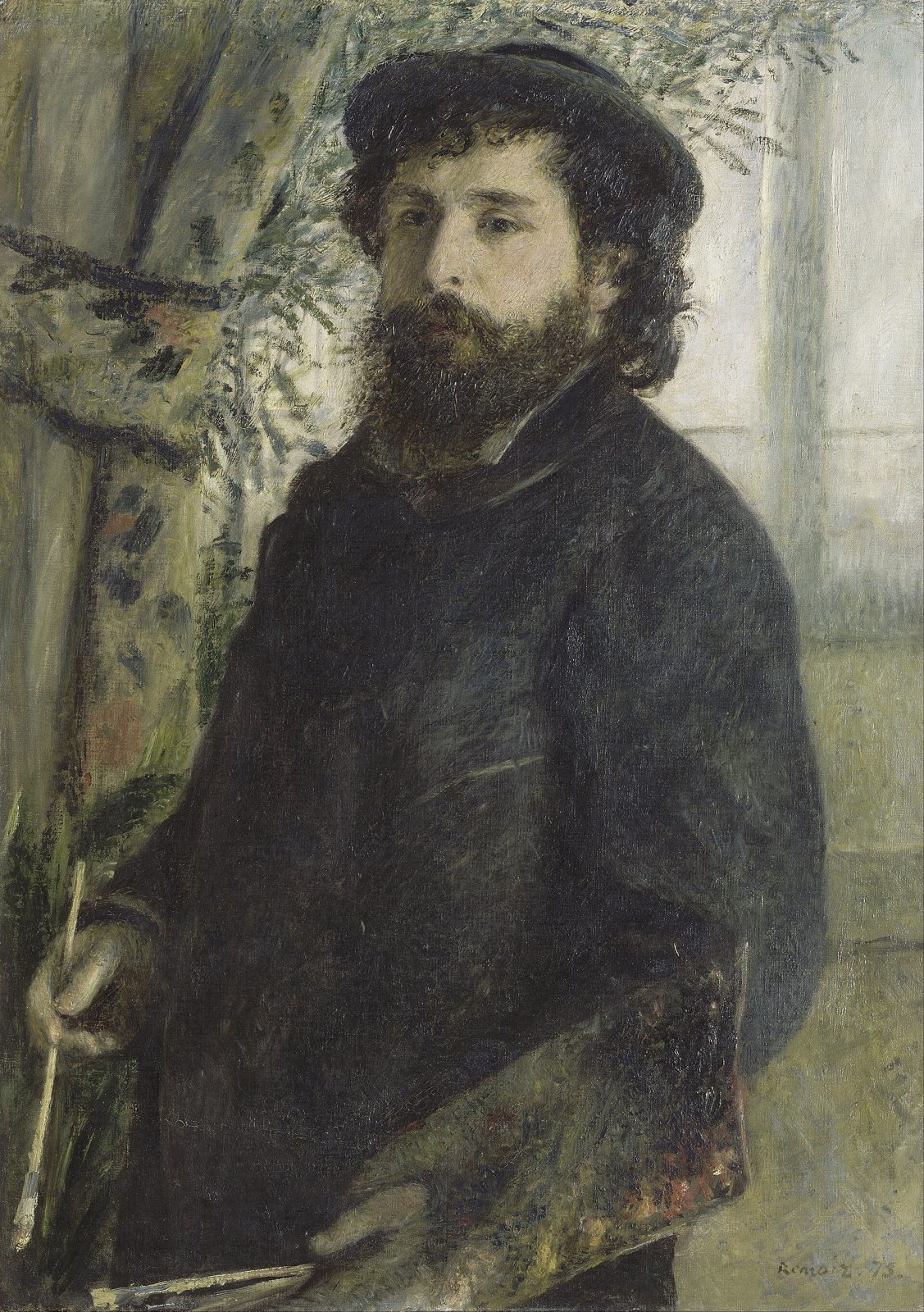
🎧 This work has audio narration — listen in the appTake a moment to really look at this portrait of Claude Monet by Pierre-Auguste Renoir. Notice how Monet holds his palette and brush, almost as if he’s ready to leap into action. The way his eyes are focused, you can almost feel the passion he has for painting. These details matter because they capture not just a likeness, but the very essence of an artist at work. Renoir doesn’t just paint Monet’s face; he paints his spirit, the drive that fueled the Impressionist movement. This was a time when artists were breaking away from tradition, and Renoir, with this piece, is celebrating that revolutionary spirit. Renoir and Monet were not just friends; they were collaborators in a new way of seeing the world, one that emphasized light and color over rigid forms. So, as you stand here, think about what it means to capture a moment in time. What do you think Monet was feeling as Renoir painted him? How does this connection between the two artists resonate with you today?
Pierre-Auguste Renoir, born on February 25, 1841, in Limoges, France, emerged as a pivotal figure in the Impressionist movement. His early life in a modest family led him to Paris, where he honed his artistic skills amidst the masterpieces of the Louvre. Initially apprenticed in a porcelain factory, Renoir's passion for painting flourished, particularly after studying under Charles Gleyre, where he befriended fellow artists like Monet and Sisley.
Renoir's work celebrated feminine beauty and vibrant social scenes, exemplified in iconic pieces like "Dance at Le Moulin de la Galette." Despite facing criticism early on, he gained recognition, especially after participating in the first Impressionist exhibition in 1874. His style evolved over the years, transitioning towards realism influenced by classical masters like Raphael.
Throughout his life, Renoir balanced personal struggles, including health issues, with a prolific output, reportedly creating around four thousand works. He became a beloved figure in art history, known for his warm palette and expressive brushwork. Renoir passed away on December 3, 1919, leaving a legacy that continues to inspire artists and art lovers alike.
Renoir's technique in this portrait is strikingly intimate. Notice how the brushwork feels both lively and deliberate, capturing the essence of Monet's character. The use of oil on canvas allows for rich textures and vibrant colors, particularly in the way light dances across Monet's face and the palette he holds. The composition is carefully structured; Monet is positioned slightly off-center, drawing your eye to his focused expression and the tools of his trade. The color palette is warm, with soft earth tones contrasting against the cooler hues of the background, creating a sense of depth and warmth. This interplay of light and shadow not only highlights Monet's features but also evokes the atmosphere of creativity and inspiration that surrounded him. Renoir's choices here reflect his understanding of both his subject and the Impressionist ethos, emphasizing the emotional connection between the artist and his craft.
When Renoir exhibited his works, including this portrait, the critical response was often mixed or unfavorable, as the Impressionist style was still controversial and not widely accepted by traditional art critics.