Restaurant de la Sirène à Asnières
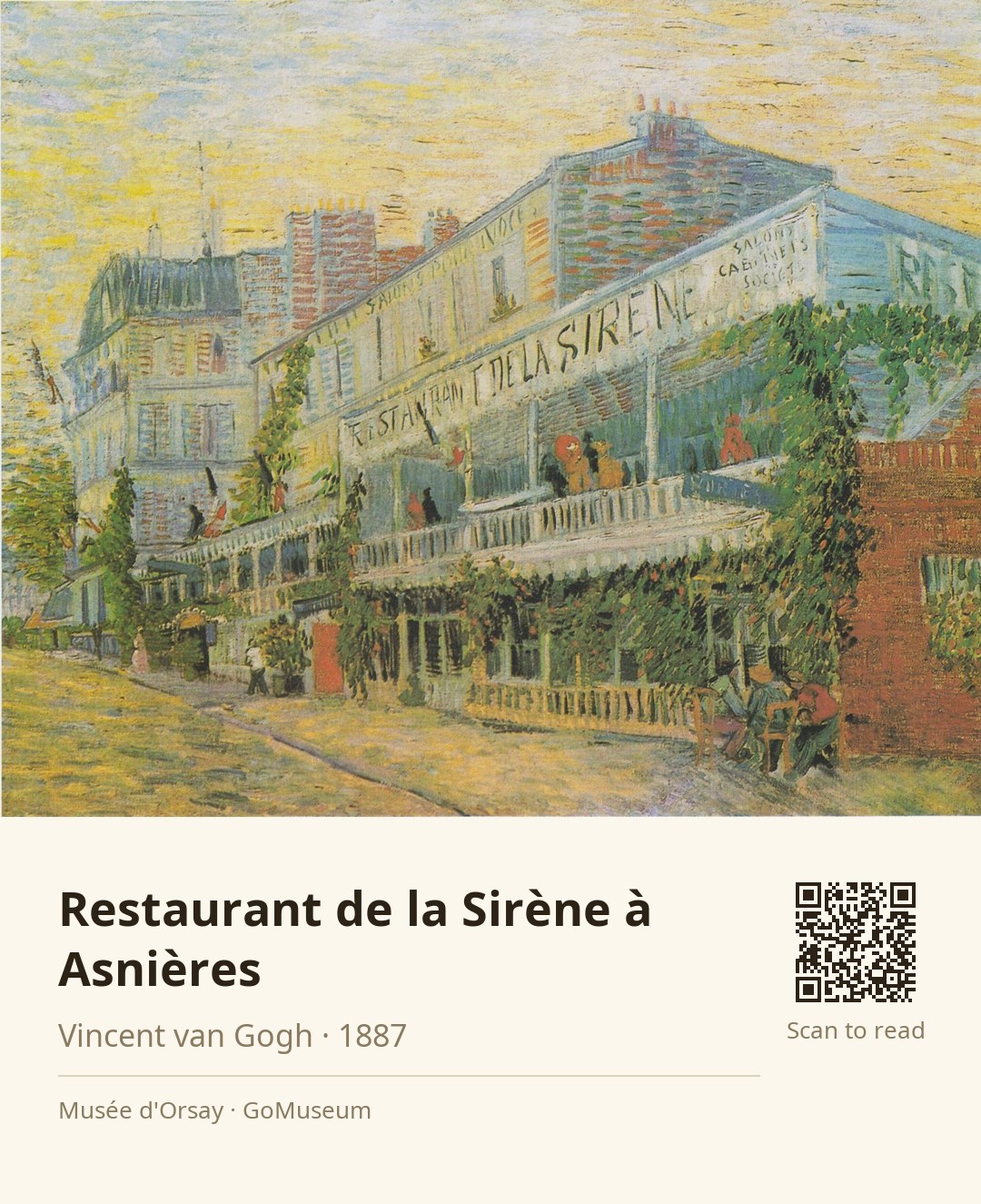
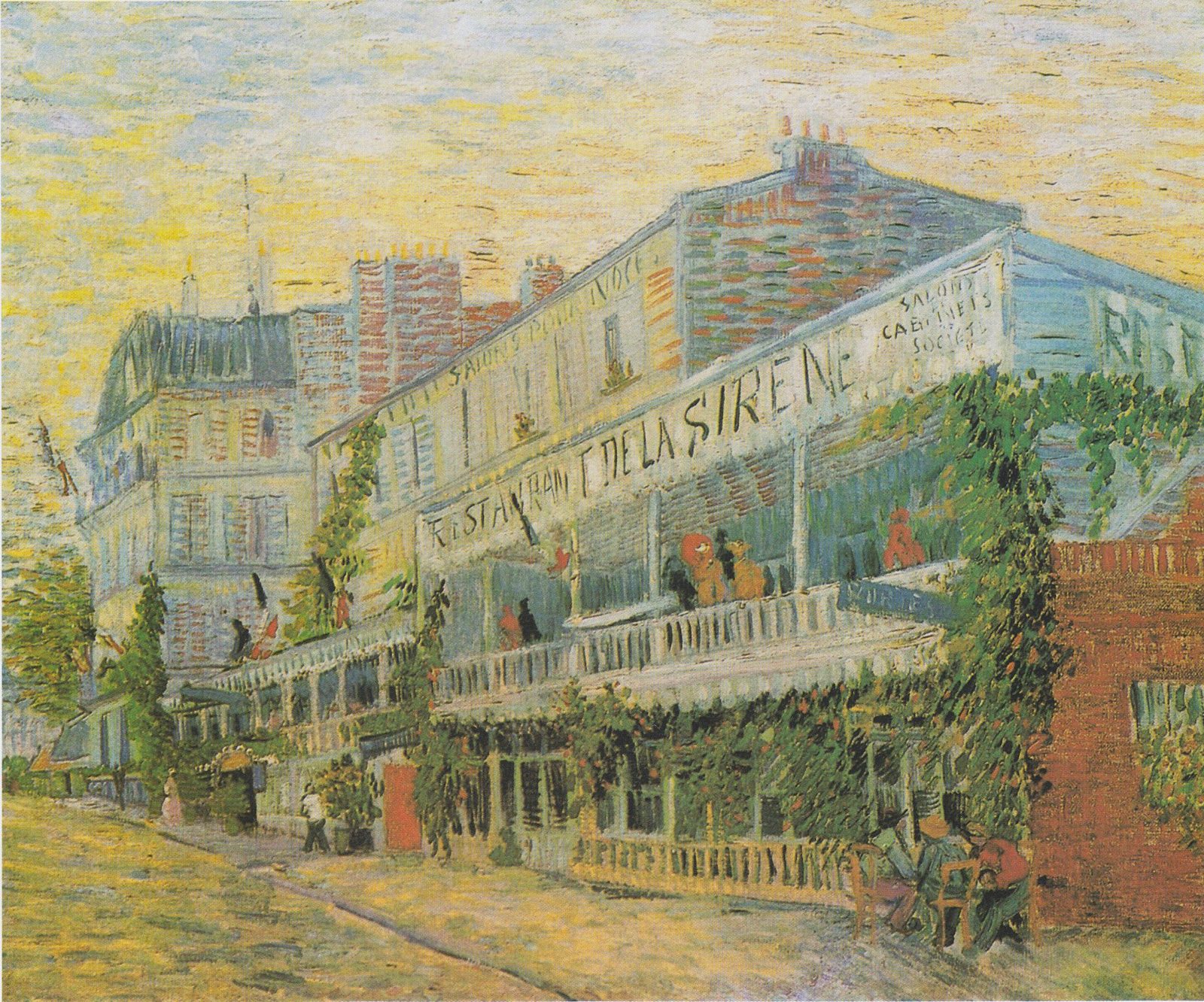
🎧 This work has audio narration — listen in the appTake a moment to really look at "Restaurant de la Sirène à Asnières." Notice how Van Gogh captures the vibrant energy of this riverside eatery with his bold brushstrokes and vivid colors. The way he uses bright yellows and deep blues creates a lively contrast that almost makes the scene pulse with life.
These details matter because they reflect Van Gogh's unique approach to color and light, which was evolving during his time in Paris. Unlike the Impressionists, who often focused on fleeting moments of leisure, Van Gogh here emphasizes the architecture and atmosphere, hinting at his desire to convey deeper emotions through his work. The hatching technique he employs suggests movement and energy, drawing you into the scene.
Painted in 1887, this piece was created while Van Gogh lived with his brother Theo in Paris, a time when he was influenced by the avant-garde and experimenting with his style. It’s fascinating to think about how this bustling restaurant, now just a memory, inspired such a dynamic work of art.
As you stand here, consider what stories the people in this painting might have had. What conversations were happening over those meals? What dreams were being shared? Let your imagination wander as you absorb this vibrant slice of life from over a century ago.
Vincent van Gogh was a Dutch Post-Impressionist painter born on March 30, 1853, in Zundert. He is renowned for his vibrant use of color and expressive brushwork, which laid the groundwork for modern art. Despite creating around 2,100 artworks in just over a decade, including 860 oil paintings, he struggled with mental illness and poverty throughout his life. His early career as an art dealer was marked by disillusionment, leading him to pursue painting in 1881.
Van Gogh's intense passion for art was evident in his correspondence with his brother Theo, who provided emotional and financial support. His works evolved significantly after moving to Paris in 1886, where he mingled with avant-garde artists. His time in Arles in 1888 marked a peak in his creativity, producing iconic series like sunflowers and wheat fields.
Tragically, van Gogh's life ended in suicide at 37, after years of battling his demons. Initially unrecognized, he gained fame posthumously, becoming a symbol of the tortured artist. His legacy influenced movements like Fauvism and Expressionism, securing his place as one of the most significant figures in art history.
In the summer of 1887, Vincent van Gogh painted 'Restaurant de la Sirène à Asnières' while living with his brother Theo in Paris. This vibrant piece captures the lively atmosphere of a restaurant located in Asnières, a suburb just northwest of the city, along the Seine River. The painting measures 54.5 by 65.5 centimeters and showcases Van Gogh's evolving style, influenced by his interactions with fellow artists and the Impressionist movement. The work was later exhibited in several notable locations, including Groningen in 1904 and the Van Gogh Museum in Amsterdam in 1905. Over the years, it passed through various hands, including those of Van Gogh's sister-in-law, Johanna van Gogh-Bonger, and art dealer Antoinette Schuffenecker. Today, it's housed in the Musée d'Orsay in Paris, where it continues to draw admiration for its bold colors and architectural focus.
In 'Restaurant de la Sirène à Asnières,' Van Gogh employs a dynamic brushwork technique that creates a sense of movement and energy throughout the scene. Notice how he layers vibrant yellows and deep blues, which not only contrast sharply but also evoke a lively atmosphere. The hatching technique he uses adds texture and depth, making the viewer feel as if they are part of the bustling environment. The composition is structured around the architectural elements of the restaurant, with bold outlines that frame the scene, drawing your eye across the canvas. The scale of the painting, at 54.5 by 65.5 centimeters, allows for an intimate yet expansive view of this lively locale. Van Gogh's choice of colors and the way he captures light reflect his desire to convey emotion, transforming a simple restaurant setting into a vivid expression of life.
One surprising anecdote about 'Restaurant de la Sirène à Asnières' is that Van Gogh painted multiple works of the same subject during the summer of 1887. In addition to this piece, he created 'Le Restaurant Rispal à Asnières' and 'L'Extérieur d'un restaurant à Asnières,' showcasing his fascination with the lively social scene along the Seine. This prolific output during a single summer highlights his intense dedication to capturing the essence of contemporary life.
In addition to 'Restaurant de la Sirène à Asnières,' Van Gogh painted 'Le Restaurant Rispal à Asnières' and 'L'Extérieur d'un restaurant à Asnières,' showcasing his fascination with the lively social scene along the Seine.
While living with his brother Theo in Paris, Van Gogh was surrounded by the vibrant art scene and avant-garde influences, which inspired him to experiment with color and composition in works like this one.
Émile Bernard noted that Van Gogh's Parisian works included 'pimping restaurants with multicolored awnings and oleanders,' highlighting the lively atmosphere he sought to capture in his art.