Torse, effet de soleil
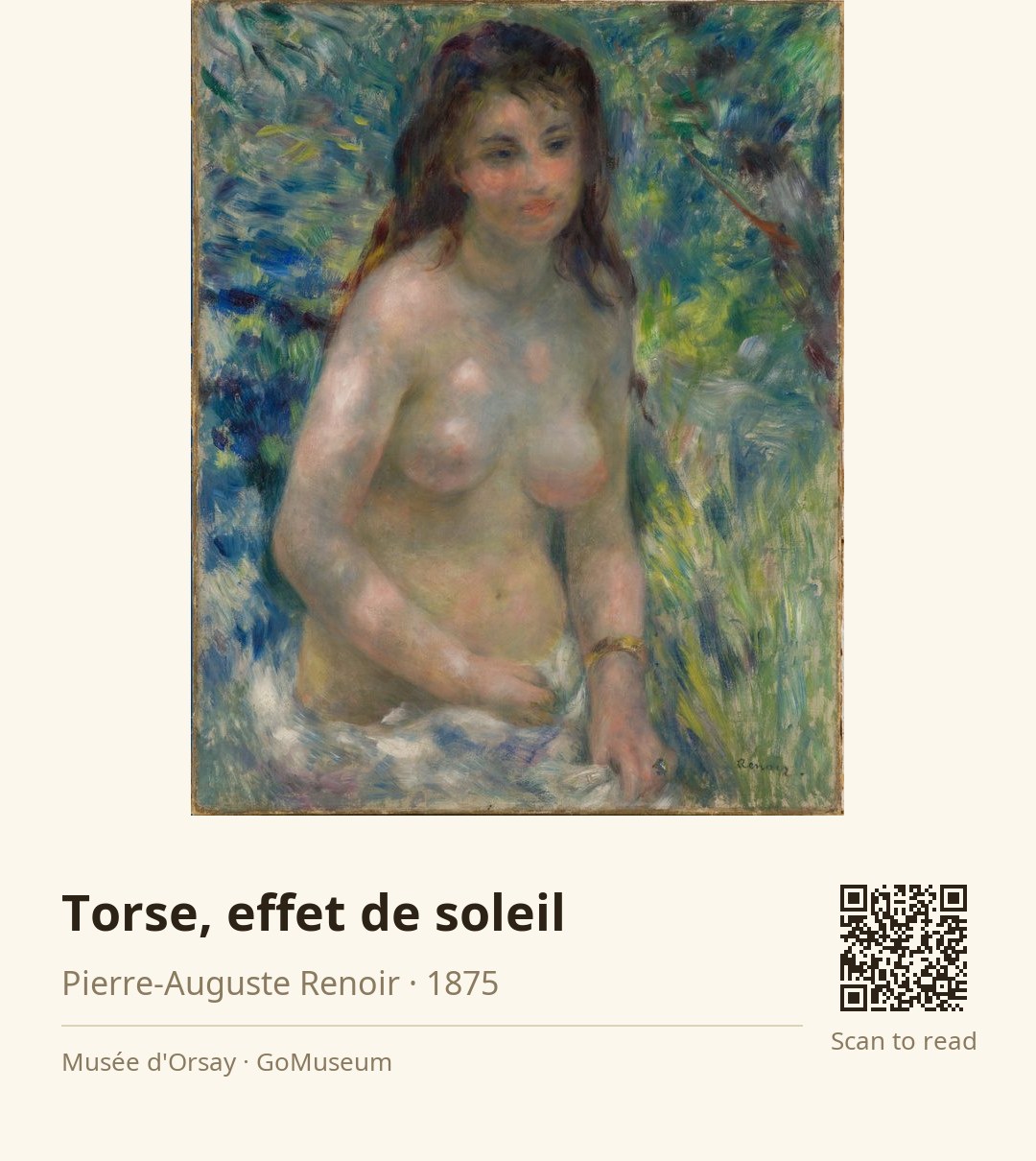
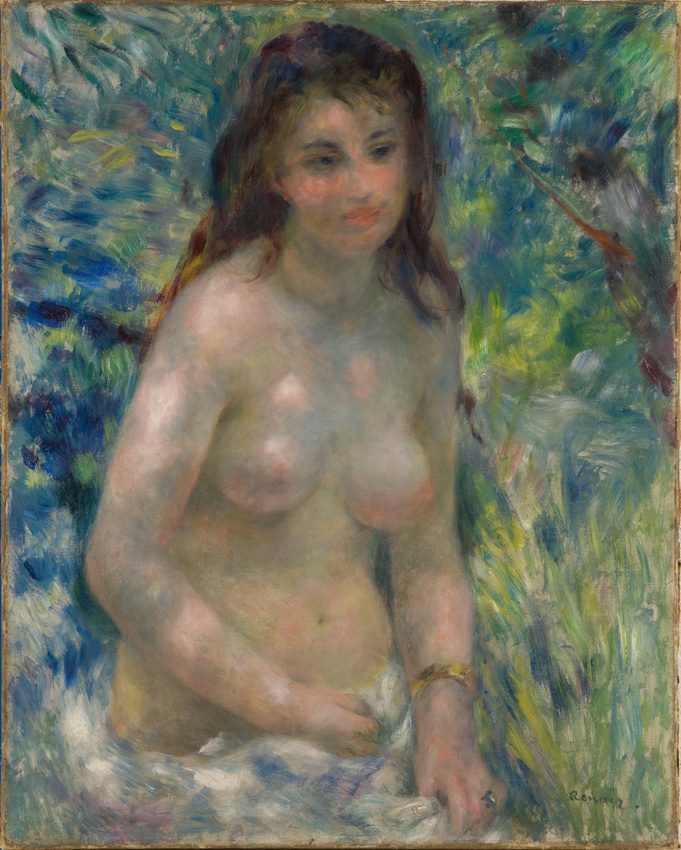
🎧 This work has audio narration — listen in the appTake a moment to really soak in Renoir's "Torse, effet de soleil." Notice how the sunlight dances across the figure of the young woman, illuminating her form against the lush greenery. The way the light plays on her skin creates a soft, almost ethereal glow, drawing you into the intimacy of the scene. This detail is crucial because it encapsulates Renoir's mastery of light and shadow, a hallmark of Impressionism. He doesn’t just paint a figure; he captures a fleeting moment in time, where nature and the human form intertwine. This technique invites you to feel the warmth of the sun and the serenity of the surroundings, making the viewer a part of the experience. Renoir was deeply influenced by his contemporaries, yet he carved out his unique style that celebrated beauty and the everyday. As you stand here, think about how this painting reflects not just a moment in nature, but also Renoir's vision of femininity and vitality. What feelings does this artwork evoke in you?
Pierre-Auguste Renoir, born on February 25, 1841, in Limoges, France, emerged as a pivotal figure in the Impressionist movement. His early life in a modest family led him to Paris, where he honed his artistic skills amidst the masterpieces of the Louvre. Initially apprenticed in a porcelain factory, Renoir's passion for painting flourished, particularly after studying under Charles Gleyre, where he befriended fellow artists like Monet and Sisley.
Renoir's work celebrated feminine beauty and vibrant social scenes, exemplified in iconic pieces like "Dance at Le Moulin de la Galette." Despite facing criticism early on, he gained recognition, especially after participating in the first Impressionist exhibition in 1874. His style evolved over the years, transitioning towards realism influenced by classical masters like Raphael.
Throughout his life, Renoir balanced personal struggles, including health issues, with a prolific output, reportedly creating around four thousand works. He became a beloved figure in art history, known for his warm palette and expressive brushwork. Renoir passed away on December 3, 1919, leaving a legacy that continues to inspire artists and art lovers alike.
Renoir's 'Torse, effet de soleil' was created in 1875 and first shown at the second Impressionist exhibition in Paris in 1876, where it was listed as number 2. This exhibition was a pivotal moment for the Impressionist movement, showcasing works that diverged from traditional styles. The painting was later exhibited at the gallery of Paul Durand-Ruel in Paris in 1883 and again in 1892, highlighting its continued relevance. It was owned by the notable painter Gustave Caillebotte until 1894, which adds a layer of prestige to its provenance. Today, it resides in the Musée d'Orsay, where it has been since 1986, allowing countless visitors to experience Renoir's intimate portrayal of light and form.
In 'Torse, effet de soleil', Renoir employs a vibrant palette and loose brushwork that creates a sense of movement and life. The way he captures light is particularly striking; it seems to shimmer across the figure, enhancing the softness of the woman's skin and the lushness of the greenery around her. Notice how the brushstrokes are almost playful, with dabs of color layered to build depth and texture. The composition is structured yet fluid, drawing your eye across the canvas, inviting you to explore the interplay of light and shadow. This technique not only showcases his skill but also evokes a feeling of warmth and intimacy, making you feel as if you're sharing a moment with the subject.
This choice allowed him to create an intimate scene, drawing viewers closer to the subject and enhancing the personal connection with the viewer. It's fascinating to think about how such a seemingly simple decision can have a profound impact on the viewer's experience.
In the 1860s, Renoir often struggled financially, sometimes lacking enough money to buy paint. This hardship pushed him to take on various jobs, including painting decorations for fans and hangings for missionaries, while he pursued his passion for art.
Renoir formed close friendships with fellow artists like Claude Monet and Alfred Sisley while studying under Charles Gleyre. These relationships not only fostered a collaborative spirit that led to the Impressionist movement but also directly influenced his style and subject matter, as they often painted together in the outdoors.
During the Paris Commune in 1871, Renoir was nearly thrown into the Seine River by Communards who mistook him for a spy. However, he was recognized by Raoul Rigault, a leader of the Commune, who had been saved by Renoir in a previous encounter, allowing him to escape a dangerous situation.