Marguerite Gachet in the Garden
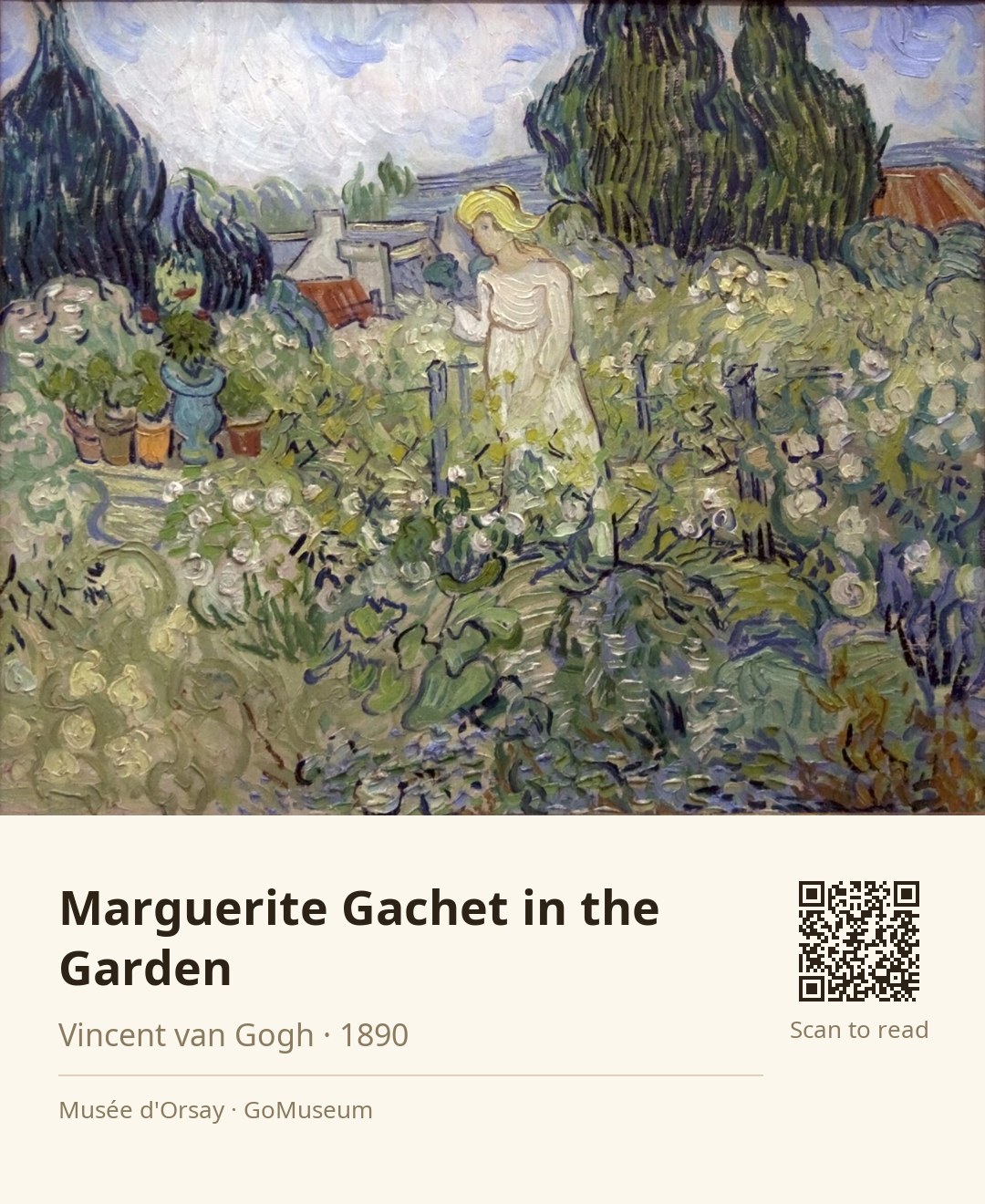
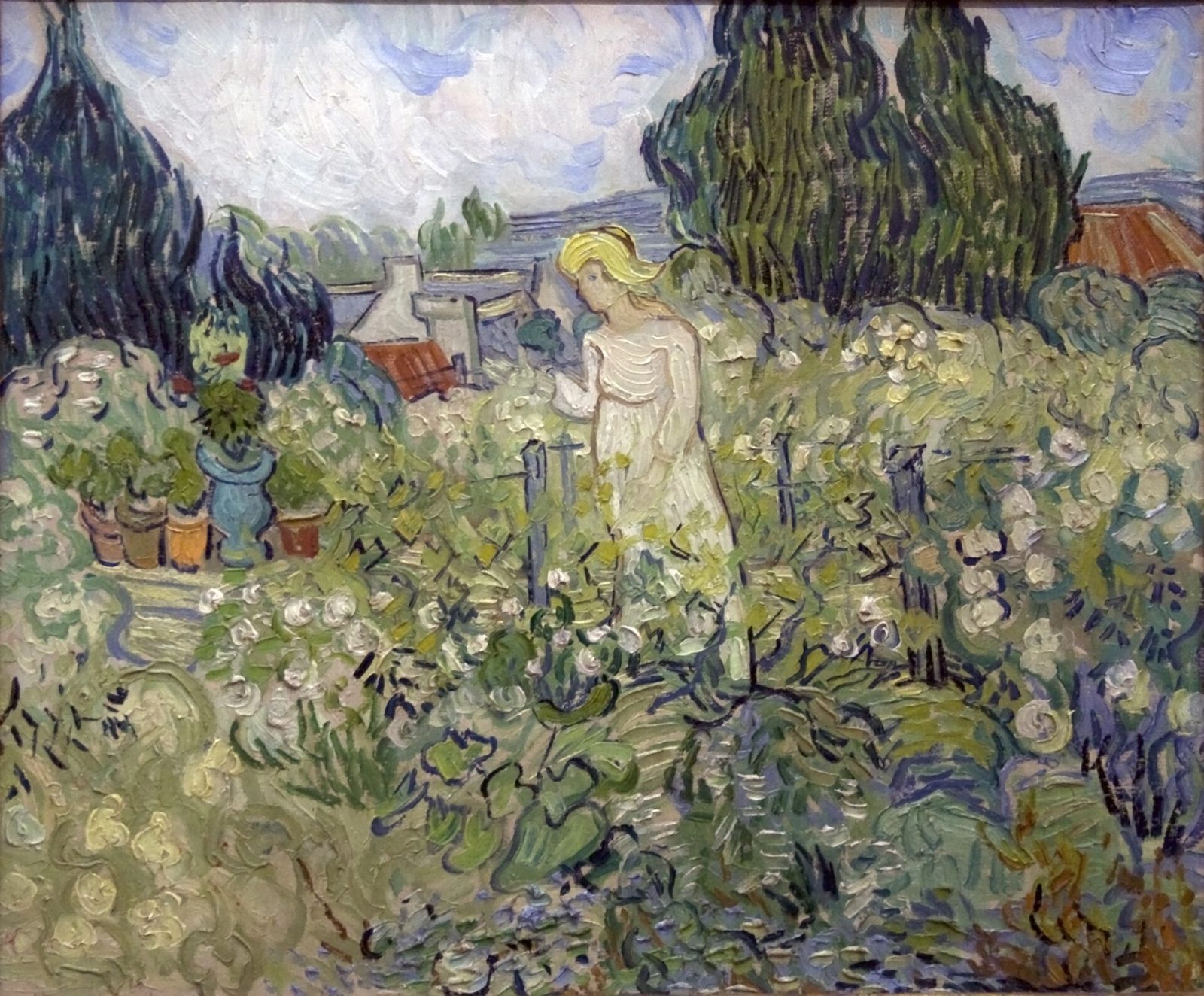
🎧 This work has audio narration — listen in the appTake a moment to really soak in the scene before you. Here, in Vincent van Gogh's "Marguerite Gachet in the Garden," you’re not just looking at a painting; you’re stepping into a moment of connection and tranquility. Notice how Marguerite is nestled among vibrant flowers, her soft gaze directed towards the viewer, almost inviting you into her world. The lush greens and bursts of color around her create a sense of life and warmth, don’t they? Painted just a month before his tragic death, this artwork captures a fleeting moment of beauty and peace amidst his turbulent life. The garden, filled with rich flora, symbolizes hope and renewal—a stark contrast to the darkness he often felt. Van Gogh painted this piece in Auvers-sur-Oise, where he sought solace under the care of Dr. Gachet, who was not only his physician but also an artist and a friend. This connection with Marguerite, the doctor’s daughter, was significant for him, as he found inspiration and companionship in her presence. As you stand here, think about what this painting conveys about the human experience. What emotions does it stir in you? How does it resonate with your own moments of connection in nature? Let this artwork linger in your mind as a reminder of the beauty that can be found even in the most challenging times.
Vincent van Gogh was a Dutch Post-Impressionist painter born on March 30, 1853, in Zundert. He is renowned for his vibrant use of color and expressive brushwork, which laid the groundwork for modern art. Despite creating around 2,100 artworks in just over a decade, including 860 oil paintings, he struggled with mental illness and poverty throughout his life. His early career as an art dealer was marked by disillusionment, leading him to pursue painting in 1881.
Van Gogh's intense passion for art was evident in his correspondence with his brother Theo, who provided emotional and financial support. His works evolved significantly after moving to Paris in 1886, where he mingled with avant-garde artists. His time in Arles in 1888 marked a peak in his creativity, producing iconic series like sunflowers and wheat fields.
Tragically, van Gogh's life ended in suicide at 37, after years of battling his demons. Initially unrecognized, he gained fame posthumously, becoming a symbol of the tortured artist. His legacy influenced movements like Fauvism and Expressionism, securing his place as one of the most significant figures in art history.
Vincent van Gogh painted 'Marguerite Gachet in the Garden' in June 1890, just a month before his untimely death. Van Gogh spent his final days in Auvers-sur-Oise, where he sought treatment for his mental health issues. The painting reflects a moment of tranquility in his otherwise tumultuous life. Gachet until his passing in 1909. It was then inherited by his children, Marguerite and Paul-Louis Gachet, who donated it to the French state in 1954. Initially displayed at the Musée du Jeu de Paume, it found its permanent home at the Musée d'Orsay in 1986, where it continues to be celebrated as a poignant representation of Van Gogh's final days.
As you gaze at this painting, take a moment to appreciate Van Gogh's distinctive brushwork. The strokes are bold and expressive, creating a sense of movement that seems to breathe life into the flowers surrounding Marguerite. Notice how he uses color to convey emotion; the vibrant greens and yellows contrast with the softer tones of her dress, drawing your eye to her serene expression. The composition is carefully structured, with Marguerite positioned slightly off-center, inviting you to explore the lush garden around her. The play of light and shadow adds depth, making the scene feel almost three-dimensional. Van Gogh's technique here is a masterclass in capturing not just a moment, but the essence of a fleeting connection with nature.
This work reflects his deep connection with the world around him and his ability to infuse emotion into every brushstroke. Van Gogh's vibrant colors and expressive style influenced generations of artists, paving the way for movements like Fauvism and Expressionism. His legacy is not just in the beauty of his paintings, but in how he transformed personal pain into universal art, reminding us that creativity can emerge from the depths of despair.
Interestingly, Van Gogh painted over 70 works during his final 70 days in Auvers-sur-Oise, a period marked by intense creativity despite his deteriorating mental health. This prolific output showcases his relentless pursuit of beauty and connection, even in the face of despair.
Auvers-sur-Oise, where Van Gogh painted this piece, is considered a cradle of Impressionism, and it was here that he found a sense of beauty and tranquility amidst his struggles. The village's picturesque countryside inspired many artists, and Van Gogh's time there was marked by a prolific output of over 70 works in just 70 days.
After Van Gogh's death, the painting was given to Dr. Gachet, who kept it until his own passing in 1909. It was then inherited by his children, who donated it to the French state in 1954, ensuring its preservation and eventual display at the Musée d'Orsay.