Mrs Jeantaud in the Mirror
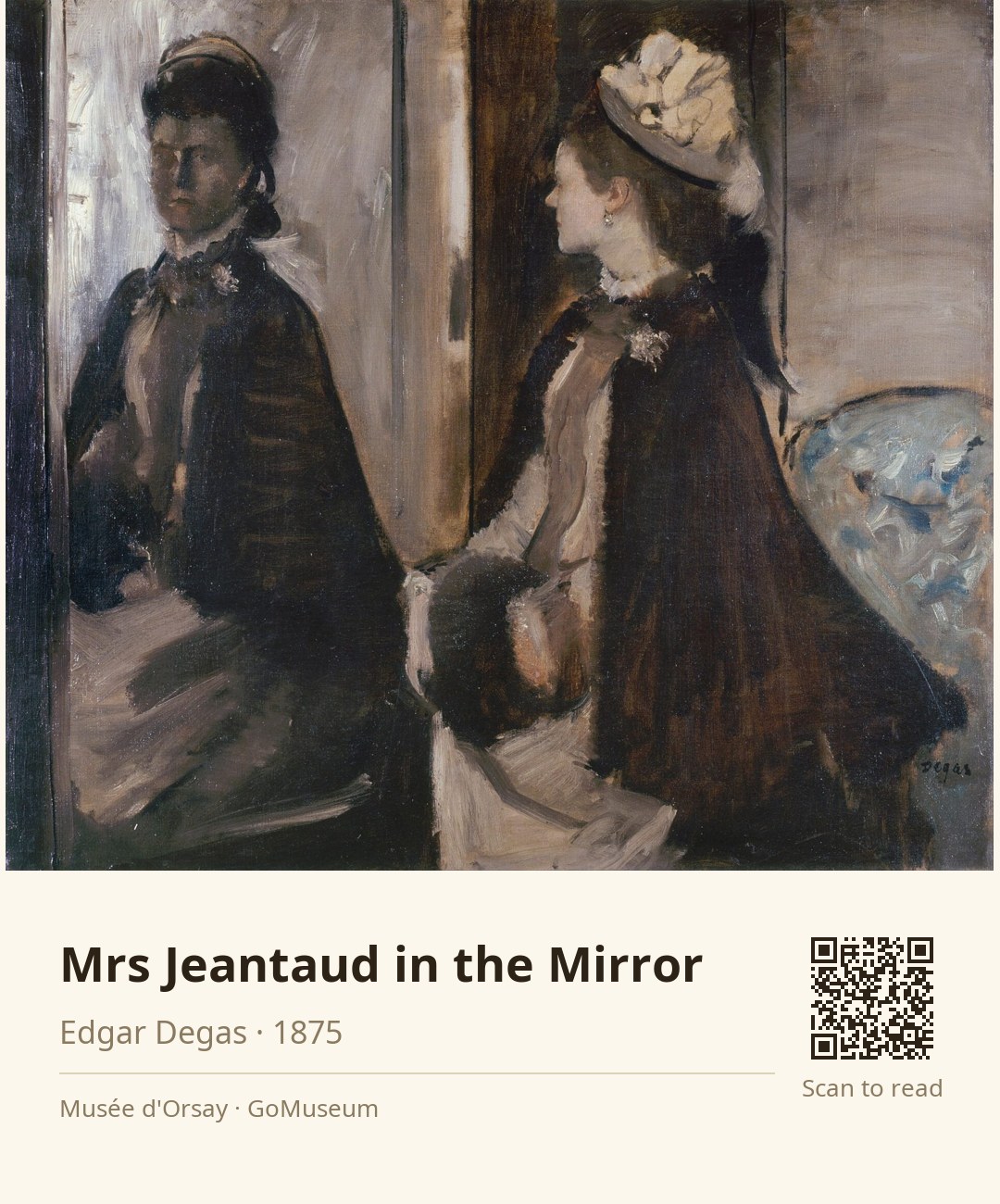
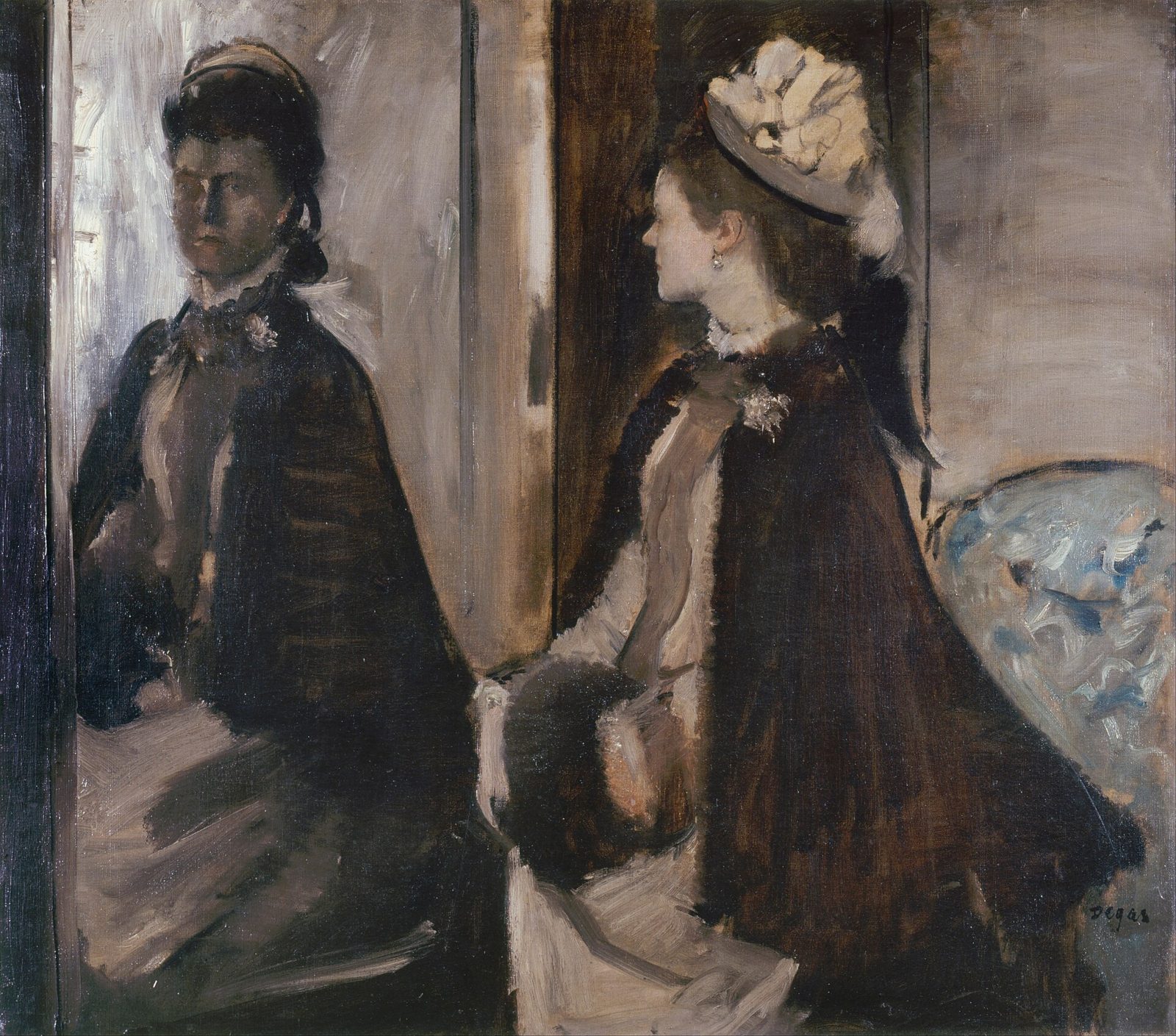
🎧 This work has audio narration — listen in the appTake a moment to really look at "Mrs Jeantaud in the Mirror." Notice how the soft, muted colors create an intimate atmosphere, almost like you're peeking into a private moment. Focus on the way the light dances across her face, illuminating her features while casting shadows that hint at her inner thoughts. These details matter because they reveal Degas's mastery in capturing not just a likeness, but a feeling. You can sense the quiet contemplation of Mrs. Jeantaud as she gazes into the mirror, reflecting a moment of solitude amidst the bustle of life. Degas was known for his psychological depth, and here, he invites you to ponder what she might be thinking—perhaps about her day, her family, or her own identity. Created in 1875, this painting is a perfect example of Degas's shift from traditional history painting to capturing modern life. He often explored themes of isolation and introspection, making his subjects feel relatable and real. As you stand here, think about the connection between the viewer and the subject. What do you see in her reflection? What stories might she hold?
Edgar Degas, born on July 19, 1834, in Paris, was a pivotal figure in the Impressionist movement, though he preferred to be labeled a realist. Known for his exceptional skill in drawing, Degas focused on capturing movement, particularly in his depictions of dancers, which constitute over half of his oeuvre. His works also include racehorses and portraits that reveal psychological depth and human isolation.
Degas came from a cultured, affluent family; his mother was a Creole from New Orleans, and his father was a banker. After his mother's death, he pursued art against his father's wishes, studying at the École des Beaux-Arts and drawing inspiration from classical masters during his time in Italy. His early ambition to be a history painter shifted as he embraced contemporary subjects, influenced by artists like Édouard Manet.
Despite being a founding member of the Impressionists, Degas's approach diverged from his peers, as he often worked in his studio rather than en plein air. His innovative techniques and themes sparked debate among critics and continue to influence art history today. Degas passed away on September 27, 1917, leaving behind a legacy that challenges traditional boundaries in art.
Edgar Degas painted 'Mrs Jeantaud in the Mirror' in 1875, during a transformative period in his career. The painting made its debut at the centennial exhibition of French art in Saint Petersburg in 1912, where it was well-received, showcasing Degas's unique approach to modern life. Over the years, it passed through several notable hands, including the gallery Boussod-Valadon in Paris and various private collectors, before becoming part of the public consciousness. Its journey reflects the changing tastes in art and the growing appreciation for Degas's psychological depth in portraiture.
As you gaze at 'Mrs Jeantaud in the Mirror,' take a moment to appreciate Degas's masterful brushwork. The soft, muted colors create a serene atmosphere, while the light plays delicately across Mrs. Jeantaud's face, highlighting her features and casting subtle shadows. Notice how the composition draws your eye to her reflection, creating a sense of intimacy and introspection. Degas's technique involves layering paint to achieve depth, allowing the viewer to feel the texture of her skin and the fabric of her clothing. The scale of the painting, at 70 by 84 centimeters, invites you into this private moment, making it feel almost life-sized. This careful attention to detail and light not only captures a likeness but evokes a profound emotional resonance.
This painting not only reflects the psychological depth of its subject but also marks a departure from traditional portraiture by capturing a moment of introspection rather than a formal pose. Degas's influence can be seen in the way he portrays human isolation and complexity, inspiring future generations of artists to explore the subtleties of human emotion and the interplay of light and shadow. His innovative techniques in depicting movement and space have left an indelible mark on the art world, challenging conventions and paving the way for modern artistic expressions.
Interestingly, Degas was known for his meticulous approach to his subjects, often using friends and family as models. Jeantaud, he painted her multiple times, each work revealing different facets of her personality. This practice not only honed his skills but also deepened his understanding of human emotion, allowing him to portray his subjects with remarkable psychological insight.