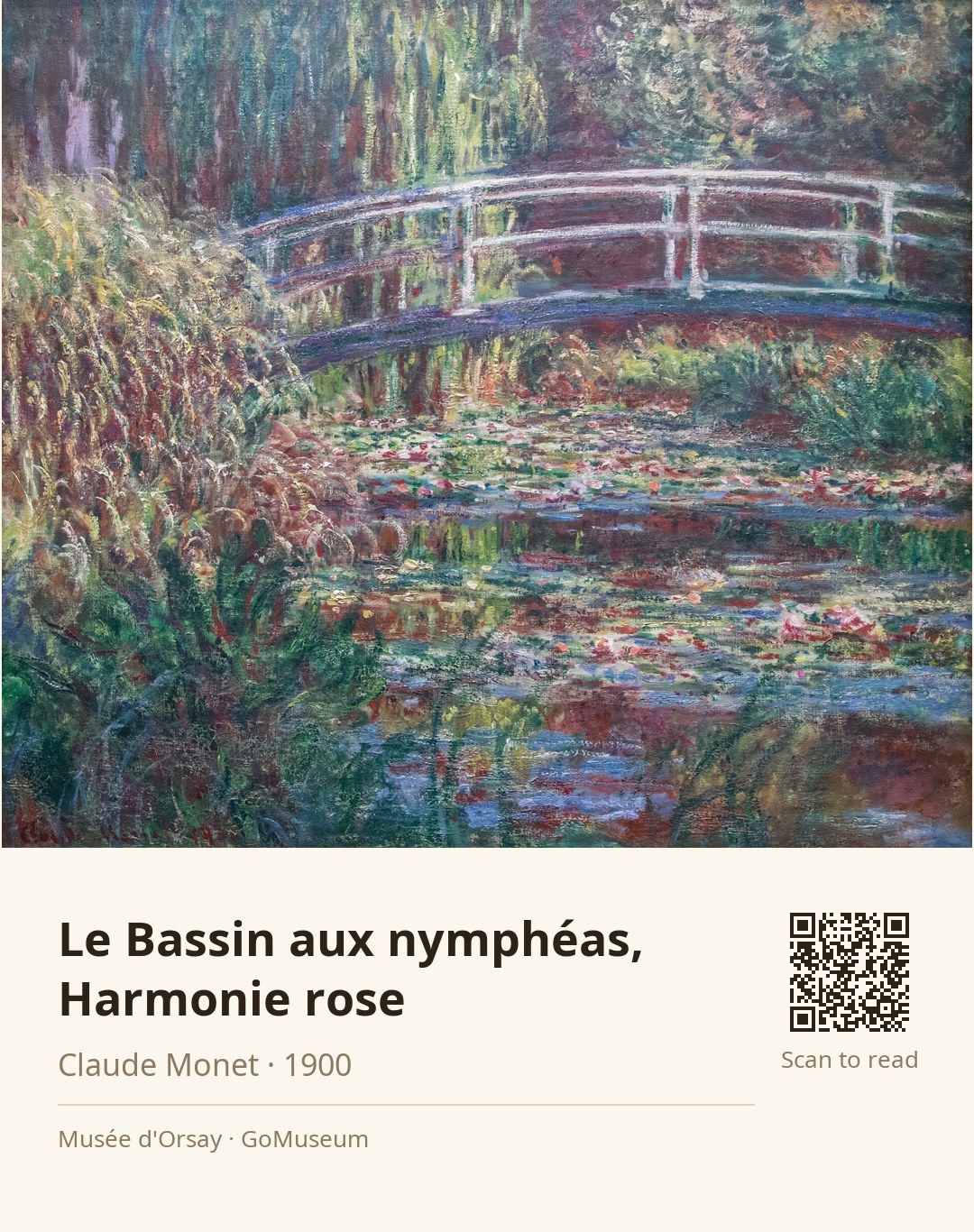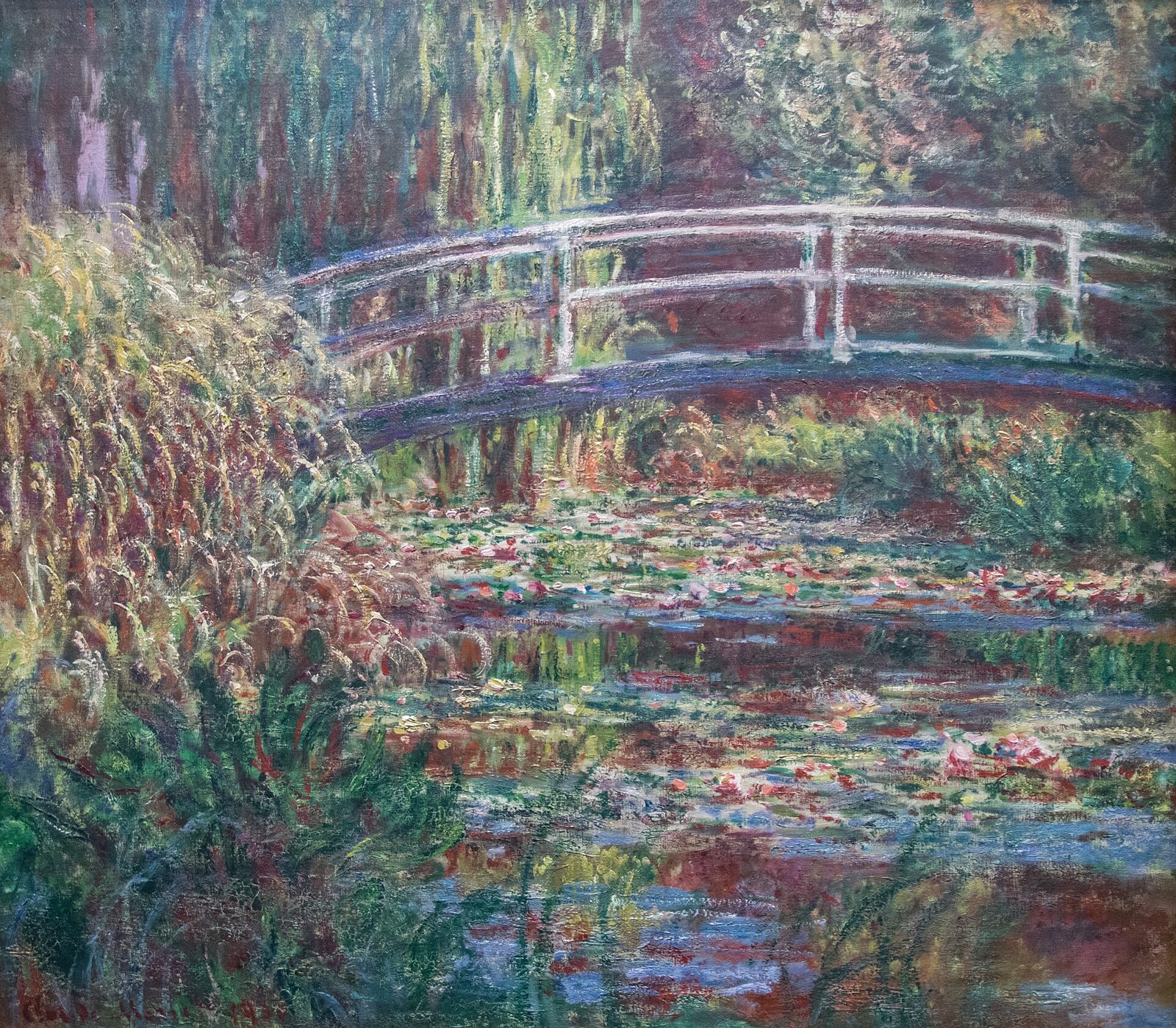
Le Bassin aux nymphéas, Harmonie rose
🎧 This work has audio narration — listen in the appTake a moment to really soak in the colors of Monet’s “Le Bassin aux nymphéas, Harmonie rose.” Notice how the soft pinks and greens blend together, almost as if the water itself is breathing. Look closely at the delicate brushstrokes that form the water lilies; they seem to float effortlessly on the surface, inviting you to step into this tranquil world. He wasn’t just depicting a scene; he was expressing a feeling, a fleeting moment in nature. This painting, created in 1900, is part of his series on water lilies, where he sought to explore light and reflection, transforming the ordinary into something extraordinary. Monet painted this in his beloved garden at Giverny, a place he meticulously designed to reflect his vision of beauty. It was here that he became a master of capturing the essence of nature, using color and light to evoke emotion rather than just represent reality. As you stand here, think about how Monet’s work invites you to slow down and appreciate the beauty in the everyday. What feelings does this serene scene stir in you?
Oscar-Claude Monet, born on November 14, 1840, in Paris, was a pioneering French painter and a founder of Impressionism, a movement that transformed the art world. Raised in Le Havre, he developed a passion for nature and painting early on, encouraged by his mother, while his father hoped he would pursue a business career. After his mother's death in 1857, Monet moved in with his aunt, who supported his artistic ambitions.
Monet's career began with caricatures, but he soon sought formal training, studying under Eugène Boudin, who introduced him to plein air painting. His breakthrough came in 1866 with "La Femme à la robe verte," which garnered attention at the Salon. The term "Impressionism" originated from his work "Impression, Sunrise," exhibited in 1874, marking a shift away from traditional art.
Throughout his life, Monet focused on capturing the essence of light and color in nature, creating series of paintings that depicted the same scenes under varying conditions, such as his famous haystacks and water lilies. He settled in Giverny in 1883, where he cultivated a beautiful garden that became his muse. Despite personal hardships, including the loss of loved ones and health issues, Monet's relentless dedication to his craft solidified his place in art history as a master of modernism, influencing countless artists and leaving a lasting legacy. He died on December 5, 1926, in Giverny, celebrated as one of the most significant figures in art.
Monet's "Le Bassin aux nymphéas, Harmonie rose" was created in 1900, during a pivotal time in his life when he was deeply immersed in his garden at Giverny. This painting was part of a series that he exhibited at the Durand-Ruel gallery, first in 1900 and again in 1909. The reception was mixed; while some critics were captivated by his innovative approach to light and color, others struggled to understand his departure from traditional representation. The painting eventually found its way into the collection of Isaac Camondo, a prominent patron of the arts, reflecting the growing appreciation for Impressionism. Over the years, it has been celebrated as a hallmark of Monet's exploration of nature and perception, solidifying its place in art history.
As you gaze at this painting, take a moment to appreciate Monet's masterful brushwork. The strokes are fluid and spontaneous, creating a sense of movement that mimics the gentle ripples of the water. Notice how he layers colors, blending soft pinks and greens to evoke the shimmering surface of the pond. The composition is carefully structured, drawing your eye across the canvas and inviting you to explore the interplay of light and shadow. Monet's choice to depict the water lilies with such delicate precision, yet with a sense of abstraction, allows the viewer to feel the essence of the scene rather than just see it. This technique of capturing fleeting moments in nature is what sets Monet apart; he transforms the ordinary into a vibrant tapestry of color and emotion.
Claude Monet's 'Le Bassin aux nymphéas, Harmonie rose' is a pivotal piece that showcases the essence of Impressionism, a movement he helped to birth. This painting not only captures the serene beauty of his beloved water lily pond in Giverny but also reflects his revolutionary approach to light and color. Monet's technique of painting the same scene multiple times to capture different times of day and seasons influenced countless artists, paving the way for modern art. His focus on perception over precise detail changed how we view landscapes, making this work a cornerstone in the evolution of artistic expression. Remember, this isn't just a painting; it's a glimpse into the very heart of nature as Monet saw it, forever altering the trajectory of art history.
Did you know that Monet often painted the same scene multiple times to capture the changing light and atmosphere? This relentless pursuit of capturing nature's fleeting beauty showcases his dedication and obsession with the nuances of light and color.
Monet struggled with his eyesight later in life, particularly due to cataracts, which affected his ability to see colors and details, yet he continued to paint, adapting his technique to express his perception of the world.