La Maison du pendu, Auvers-sur-Oise
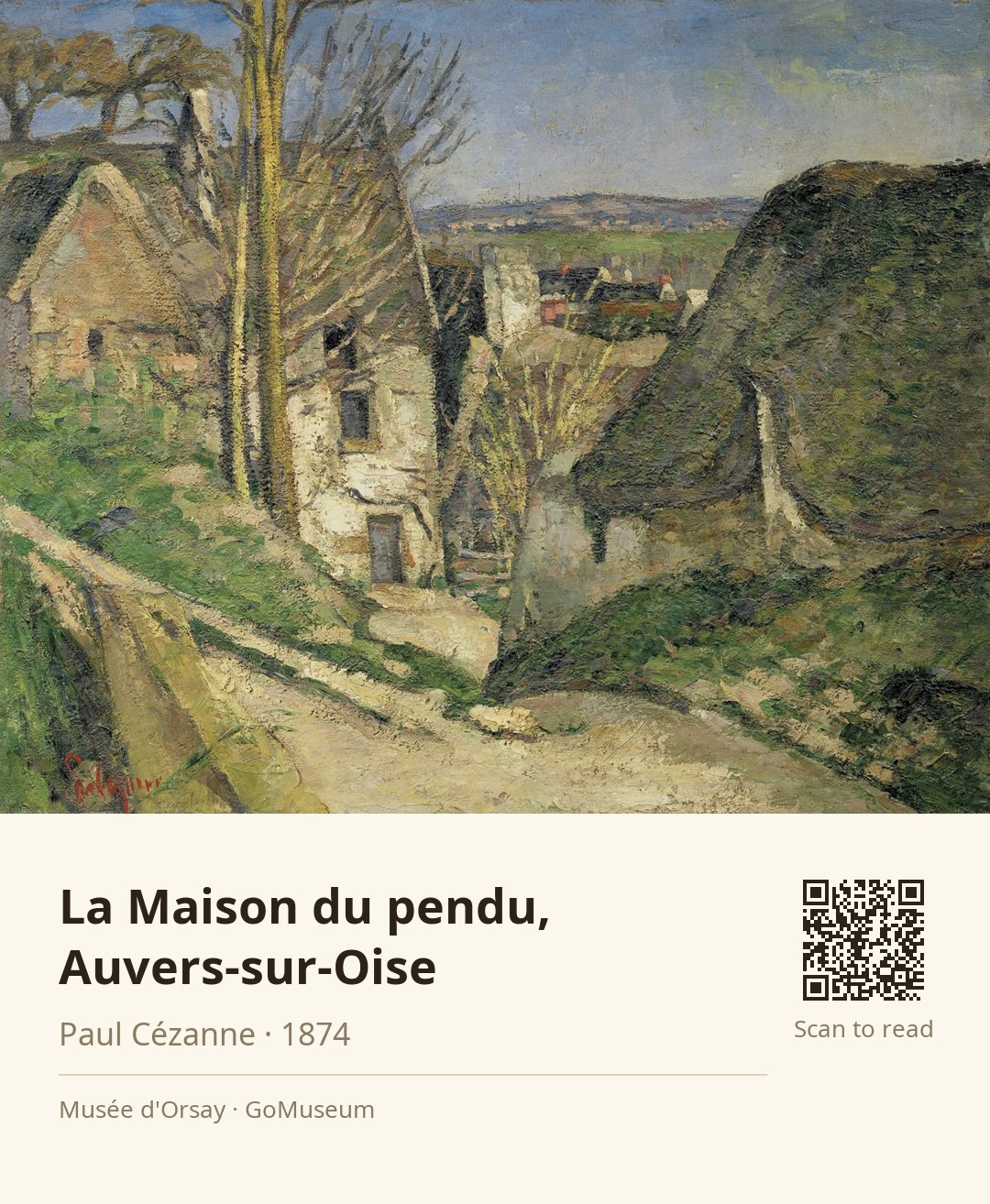
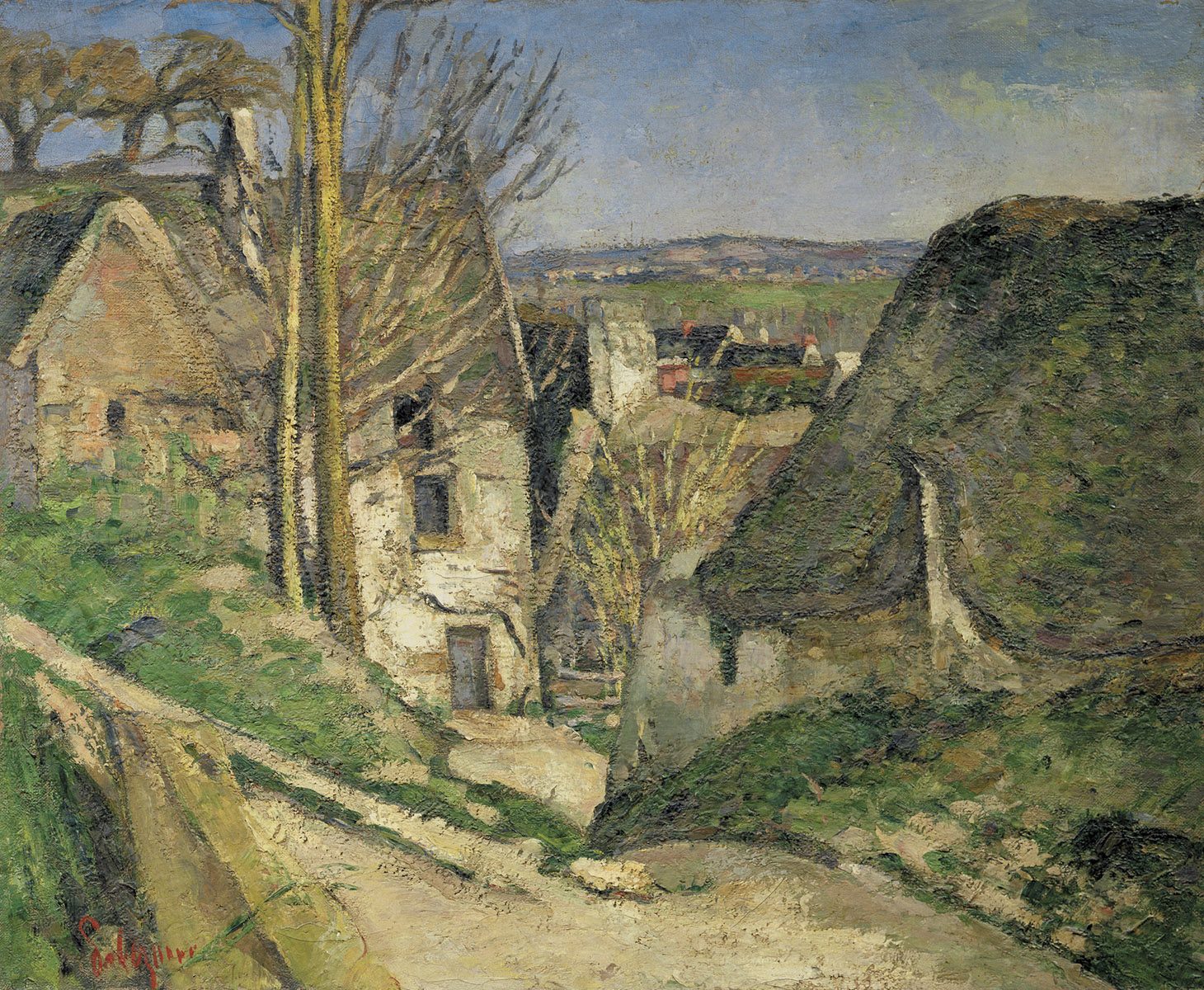
🎧 This work has audio narration — listen in the appTake a moment to really look at "La Maison du pendu." Notice how the cool colors create a sense of solitude, almost as if the landscape itself is holding its breath. Look closely at the paths that lead your eye into the painting; one veers off to the left, while another seems to draw you into the center. This deliberate imperfection in perspective is a signature of Cézanne's style, challenging the traditional rules of art and inviting you to experience the scene in a more personal way.
The absence of people in this tranquil village scene speaks volumes about his exploration of isolation and introspection, themes that resonate deeply in his work.
As you stand here, think about how Cézanne's brushstrokes, influenced by his friend Pissarro, break the surface into a tapestry of color and texture. This painting isn't just a landscape; it's a conversation between the artist and the viewer, a moment captured in time. What feelings does this solitary house evoke in you?
Paul Cézanne was a French Post-Impressionist painter born on January 19, 1839, in Aix-en-Provence. His innovative approach to color and form bridged the gap between Impressionism and the emerging Cubism of the early 20th century. Initially influenced by Romanticism and Realism, Cézanne developed a unique style that emphasized the underlying structure of objects, using repetitive brushstrokes and planes of color to create depth and complexity in his work.
Despite facing ridicule and misunderstanding from critics during his early career, Cézanne garnered support from fellow artists like Camille Pissarro and the art dealer Ambroise Vollard, who recognized his talent. His first solo exhibition in 1895 marked a turning point, leading to greater appreciation of his contributions to art. Cézanne's legacy is profound; both Henri Matisse and Pablo Picasso acknowledged him as a foundational figure in modern art, dubbing him "the father of us all." He passed away on October 22, 1906, leaving behind a transformative body of work that continues to influence artists today.
La Maison du pendu was a significant piece in Paul Cézanne's career, being the first painting he sold, marking a turning point in his artistic journey. It was showcased at the First Impressionist Exhibition in 1874, where it was met with a mix of curiosity and skepticism, typical of the reception of Impressionist works at the time. The painting depicts the village of Auvers-sur-Oise, located just 27 kilometers north of Paris, a place that would later become famous for its association with Vincent van Gogh. The painting changed hands several times, with notable provenance including Doria Arnaud comte in 1894 and a sale through the Georges Petit gallery in Paris in 1899. It eventually found a home at the Musée d'Orsay, where it resides today, continuing to intrigue viewers with its unique perspective and emotional depth.
Cézanne's technique in La Maison du pendu is a masterclass in the use of color and brushwork. The cool palette he employs creates a sense of solitude, while the grainy, broken brushstrokes invite the viewer to engage with the texture of the landscape. Notice how the paths are not just lines but dynamic elements that guide your gaze; one leads you into the heart of the painting, while the other diverges, suggesting a choice or a journey. This deliberate imperfection in perspective is a hallmark of Cézanne's style, challenging the viewer's perception and inviting a more personal interaction with the scene. The composition feels almost sculptural, with layers of color building up to create depth, making the house and landscape feel alive, as if they are breathing alongside you.
By presenting a landscape that feels both familiar and unsettling, he challenged viewers to reconsider how they perceive depth and space. Think about it: when Picasso and Matisse referred to Cézanne as 'the father of us all,' they were acknowledging how his innovative brushwork and compositional choices reshaped the very foundation of modern art. This work matters because it embodies the tension between reality and perception, a theme that resonates throughout art history.
Imagine the thrill of that moment in 1874, when he presented this piece at the very first Impressionist Exhibition. It was a turning point, a sign that his unique vision was beginning to resonate with others, despite the mixed reviews he often received. This painting marked the start of his journey from obscurity to becoming one of the most influential artists of modern art.