The Apparition
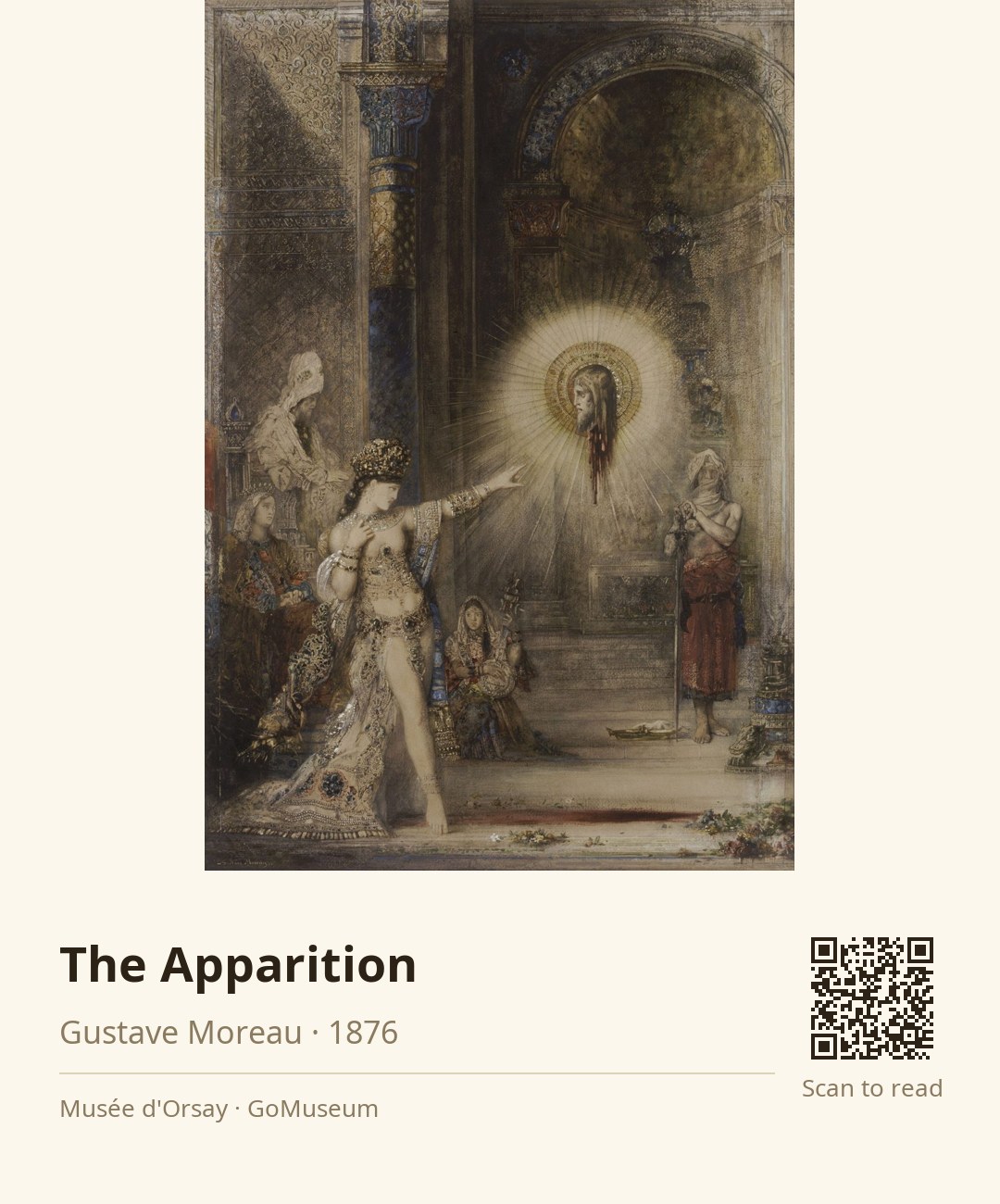
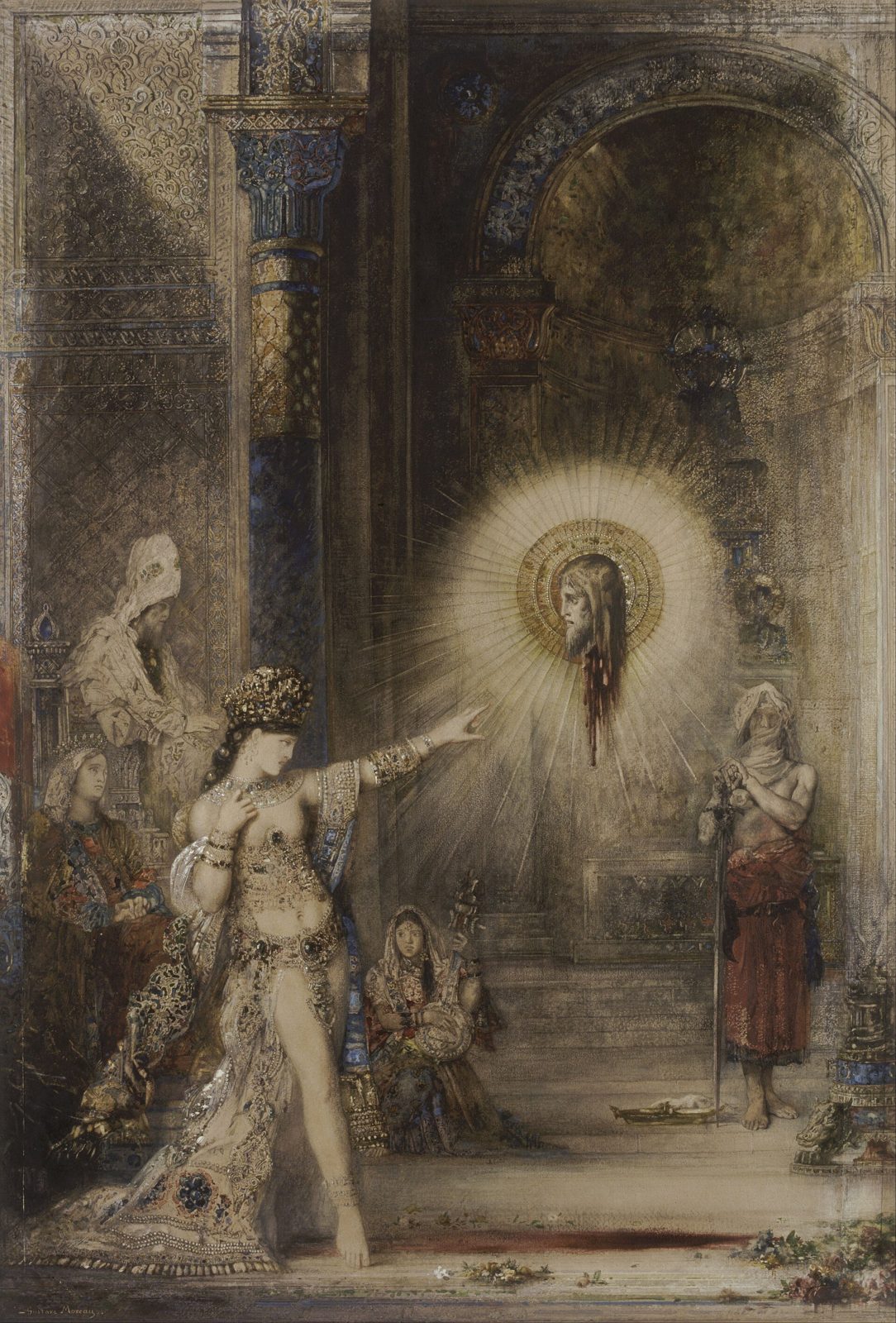
🎧 This work has audio narration — listen in the appTake a moment to really soak in "The Apparition" by Gustave Moreau. Notice how Salome stands poised, her body facing you, adorned in shimmering veils, her left arm raised, pointing towards the haunting vision of John the Baptist's severed head, haloed in an eerie glow. That stark contrast between her vibrant, jewel-toned costume and the ghostly head creates a tension that pulls you in, doesn’t it?
This detail isn’t just for show; it encapsulates the very essence of the story—a dance of desire and dread. Salome, caught between her own lust and the horrific consequences of her actions, embodies a complex interplay of power and vulnerability. Moreau’s choice to depict her in such a sensual manner challenges traditional narratives, suggesting that her motives are driven by more than just obedience to her mother.
Created between 1874 and 1876, this watercolor was part of Moreau’s exploration of biblical themes, a subject he revisited in numerous works. But here, he pushes boundaries, merging beauty with grotesque imagery, a hallmark of the Symbolist movement that was gaining momentum at the time.
As you stand before this artwork, consider: what emotions does Salome evoke in you? Is she a figure of empowerment, or does her stillness reflect a deeper fear? Let that question linger as you continue your journey through the museum.
Gustave Moreau, born on April 6, 1826, in Paris, was a pivotal figure in the Symbolist movement, celebrated for his intricate and mystical interpretations of biblical and mythological themes. His early education, influenced by his architect father and musician mother, fostered a deep appreciation for the arts. Moreau's artistic journey began at the École des Beaux-Arts, where he was mentored by François-Édouard Picot and later inspired by Théodore Chassériau.
His breakthrough came with the 1864 exhibition of "Oedipus and the Sphinx," which established his reputation. Moreau's work is characterized by rich detail and a unique blend of allegory and symbolism, earning him acclaim as the quintessential Symbolist painter. Despite his success, he became increasingly reclusive, rejecting numerous prestigious offers and exhibiting infrequently.
Moreau's legacy includes over 15,000 works, and he was instrumental in shaping the Symbolist aesthetic. His influence waned in the early 20th century but saw a resurgence in the 1960s, solidifying his status as a master of the movement. He passed away on April 18, 1898, leaving behind a vast collection of art that now resides in the Musée Gustave Moreau, a testament to his enduring impact on the art world.
Gustave Moreau's 'The Apparition' was first unveiled at the Salon de Paris in 1876, where it immediately captivated audiences, causing quite a stir among critics and art lovers alike. The following year, it made its way to London's Grosvenor Gallery, where it was prominently displayed alongside oil paintings, a testament to its significance. Moreau's exploration of biblical themes, particularly through the lens of Salome's complex character, resonated deeply with viewers, and the work has since been regarded as a cornerstone of the Symbolist movement. Its journey from the Salon to the Musée d'Orsay, where it currently resides, reflects its lasting impact on the art world.
In 'The Apparition,' Moreau employs a striking watercolor technique that enhances the ethereal quality of the scene. The brushwork is fluid and almost dreamlike, allowing the vibrant colors to blend seamlessly, creating a mystical atmosphere. Notice how the light seems to emanate from John the Baptist's severed head, casting a glow that illuminates Salome's jeweled costume. This use of light not only highlights her figure but also emphasizes the tension between beauty and horror. The composition is carefully structured, with Salome's poised body directing your gaze towards the head, while the figures of Herod and Herodias recede into the background, reinforcing her centrality. Moreau's choice to depict Salome in such an arresting, sensual manner, with her arm outstretched, invites you to question her motivations—are they driven by desire or fear? This interplay of emotions is masterfully captured through his meticulous handling of color and form.
By presenting Salome not merely as a puppet of Herodias but as a figure driven by her own desires, Moreau challenged traditional interpretations of biblical narratives. This shift towards subjectivity and eroticism opened the door for future artists to explore themes of desire and morality in more complex ways. The painting's haunting imagery and surreal quality have left a lasting mark, inspiring generations of artists to delve into the darker, more ambiguous aspects of human nature. Remember, it was Moreau's ability to blend the mystical with the erotic that truly set the stage for the Symbolist movement and beyond.
One intriguing aspect of 'The Apparition' is its connection to Japanese art. Moreau was inspired by a Japanese print he encountered in 1869, which influenced his depiction of the severed head. This detail adds another layer to the painting, inviting you to consider the global influences that shaped his work.
Upon its debut at the Salon de Paris in 1876, 'The Apparition' caused a sensation, captivating audiences and stirring controversy among critics and art lovers alike, which highlighted its significant impact on the art scene of the time.
Moreau described Salome as a 'bored and fantastic woman,' reflecting his own complex views on desire and power, which may have been shaped by his reclusive lifestyle and the tumultuous relationships he observed in society.