Girls at the Piano
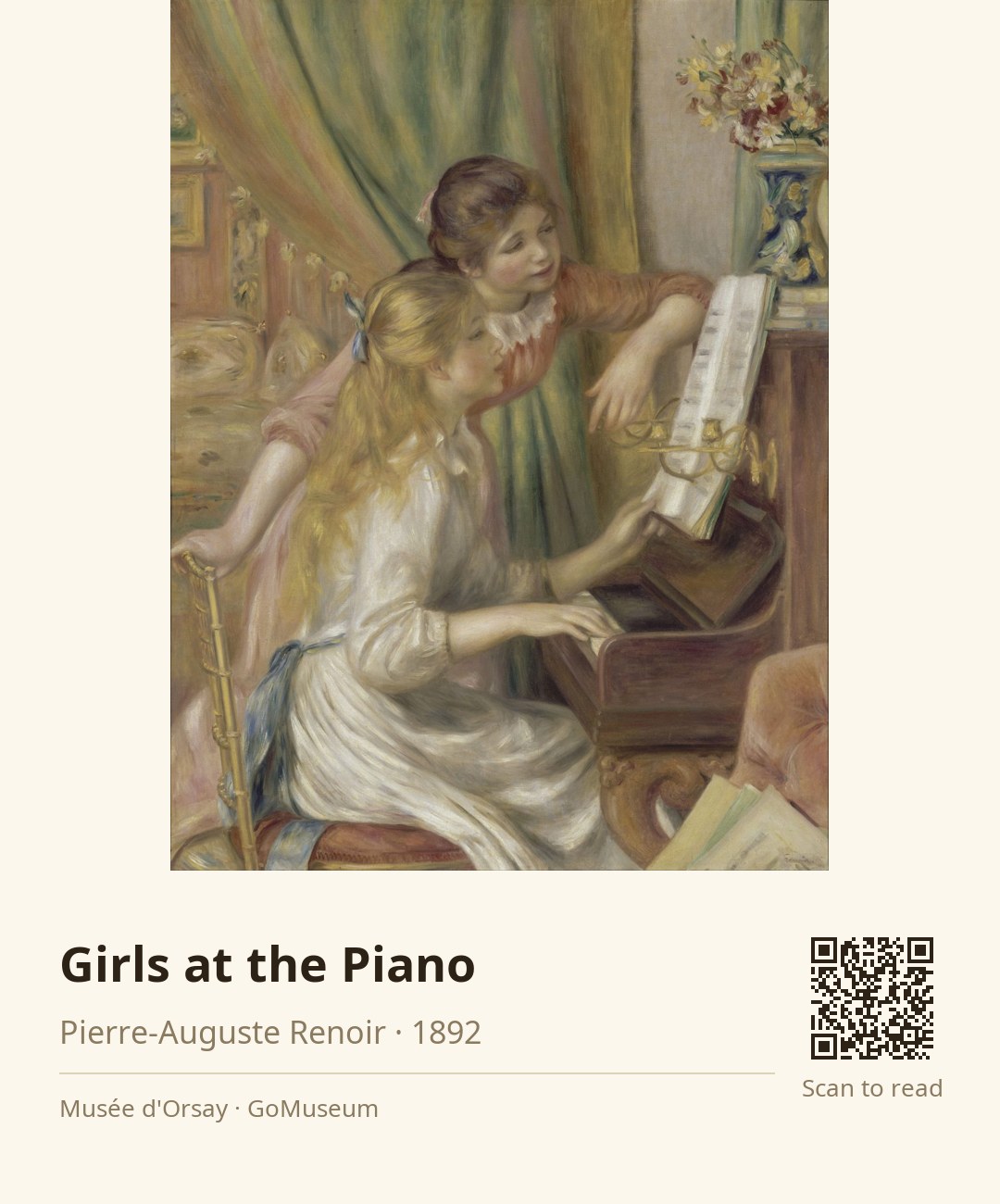
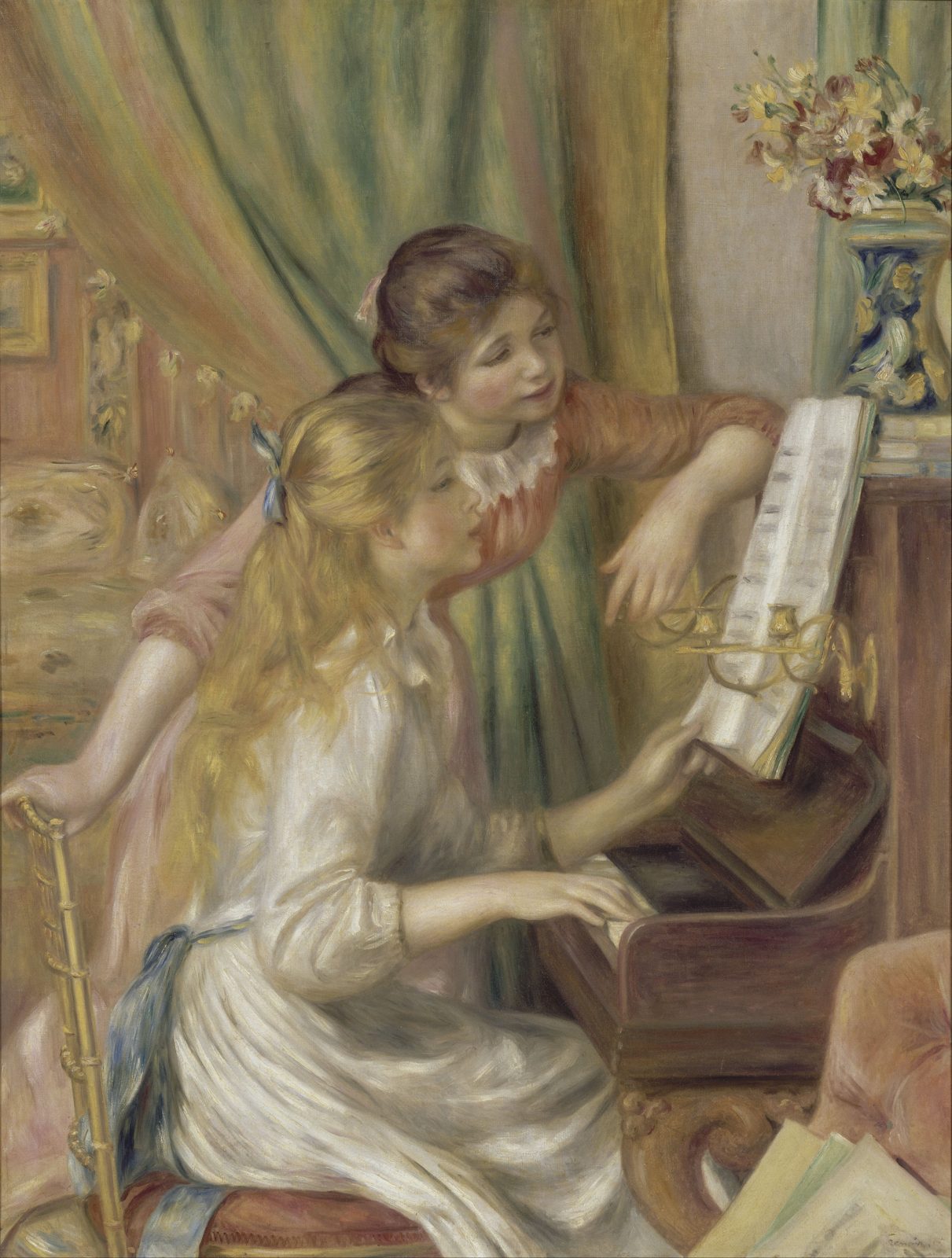
🎧 This work has audio narration — listen in the appTake a moment to really look at "Girls at the Piano" by Renoir. Notice how the light dances across the girls' dresses, especially the soft white of the seated girl and the delicate pink of the standing one. The way their fabrics catch the light gives them a life-like quality, almost as if they might step out of the canvas at any moment. These details matter because they reveal Renoir's deep affection for youth and femininity. He had a unique ability to capture the essence of his subjects, transforming ordinary moments into something extraordinary. The fluidity of the brushstrokes and the warmth of the colors reflect not just the physical beauty of the girls but also the joy of music and companionship. Created in 1892, this painting is part of Renoir's later works, where he moved beyond pure Impressionism into a more intimate realism. It’s interesting to note that he painted multiple versions of this scene, each one slightly different, which shows his dedication to exploring the theme of youthful beauty. As you stand here, think about the connection between art and memory. What feelings does this scene evoke for you? Can you recall a moment in your own life that resonates with the joy captured in this painting?
Pierre-Auguste Renoir, born on February 25, 1841, in Limoges, France, emerged as a pivotal figure in the Impressionist movement. His early life in a modest family led him to Paris, where he honed his artistic skills amidst the masterpieces of the Louvre. Initially apprenticed in a porcelain factory, Renoir's passion for painting flourished, particularly after studying under Charles Gleyre, where he befriended fellow artists like Monet and Sisley.
Renoir's work celebrated feminine beauty and vibrant social scenes, exemplified in iconic pieces like "Dance at Le Moulin de la Galette." Despite facing criticism early on, he gained recognition, especially after participating in the first Impressionist exhibition in 1874. His style evolved over the years, transitioning towards realism influenced by classical masters like Raphael.
Throughout his life, Renoir balanced personal struggles, including health issues, with a prolific output, reportedly creating around four thousand works. He became a beloved figure in art history, known for his warm palette and expressive brushwork. Renoir passed away on December 3, 1919, leaving a legacy that continues to inspire artists and art lovers alike.
This particular piece was informally commissioned for the Musée du Luxembourg, where it was first exhibited. The painting garnered attention for its vibrant depiction of two young girls in a bourgeois setting, one seated at the piano and the other standing beside her. Renoir's work was well-received, marking a significant moment in his career as he transitioned from pure Impressionism to a more intimate realism. Interestingly, Renoir painted multiple versions of this scene, including three oil variations and two sketches, which were intended to satisfy the demands of collectors and dealers. This dedication to the subject matter reflects his deep affection for the youth and femininity he often portrayed. Today, the painting resides in the Musée d'Orsay, alongside other notable works by the artist.
As you gaze at 'Girls at the Piano,' take a moment to appreciate Renoir's masterful brushwork. The fluidity of his strokes creates a sense of movement, almost as if the girls might leap from the canvas at any moment. Notice how he layers the paint to achieve a soft, luminous quality, particularly in the girls' dresses. The light seems to dance across their fabrics, highlighting the delicate textures and colors. Renoir's choice of a more intimate composition draws you into the scene, making you feel like a part of this joyful moment. The way he captures the interplay of light and shadow adds depth, while the warm palette evokes a sense of nostalgia and warmth. This technique not only showcases his skill but also invites you to experience the joy and companionship shared between the girls, enhancing the emotional impact of the painting.
By 1892, Renoir was moving away from the strict tenets of Impressionism towards a more fluid and intimate style. This painting, with its soft brushwork and tender portrayal of youth, influenced a generation of artists who sought to capture the essence of everyday life and emotion. Renoir's ability to convey warmth and humanity in his subjects set a precedent for future portraitists and genre painters. Remember, this work is not just a snapshot of a moment but a bridge to the more personal and expressive styles that would follow in the 20th century.
One intriguing aspect of 'Girls at the Piano' is that the two girls depicted, Yvonne and Christine Lerolle, were actually the daughters of Henry Lerolle, a fellow artist and friend of Renoir. This personal connection adds a layer of intimacy to the painting, as Renoir often drew inspiration from those close to him. Interestingly, he painted multiple versions of this scene, showcasing his dedication to perfecting the composition and capturing the unique personalities of his young models.
In 'Girls at the Piano,' Renoir employed a softer, more fluid brushwork compared to his earlier, more defined styles. This change was partly influenced by his realization that his earlier works were prone to cracking, leading him to use thinner layers of paint for a more luminous effect.
The two girls, Yvonne and Christine Lerolle, were the daughters of Henry Lerolle, a close friend of Renoir. This personal relationship likely allowed him to capture their personalities more intimately, adding depth to the portrayal of youth and companionship.
Renoir's creation of multiple versions of 'Girls at the Piano' reflects his dedication to exploring the theme of youthful beauty and his desire to satisfy the demands of collectors. Each version showcases subtle variations in details and poses, highlighting his artistic exploration rather than simply replicating a single image.