Jeantaud, Linet et Lainé
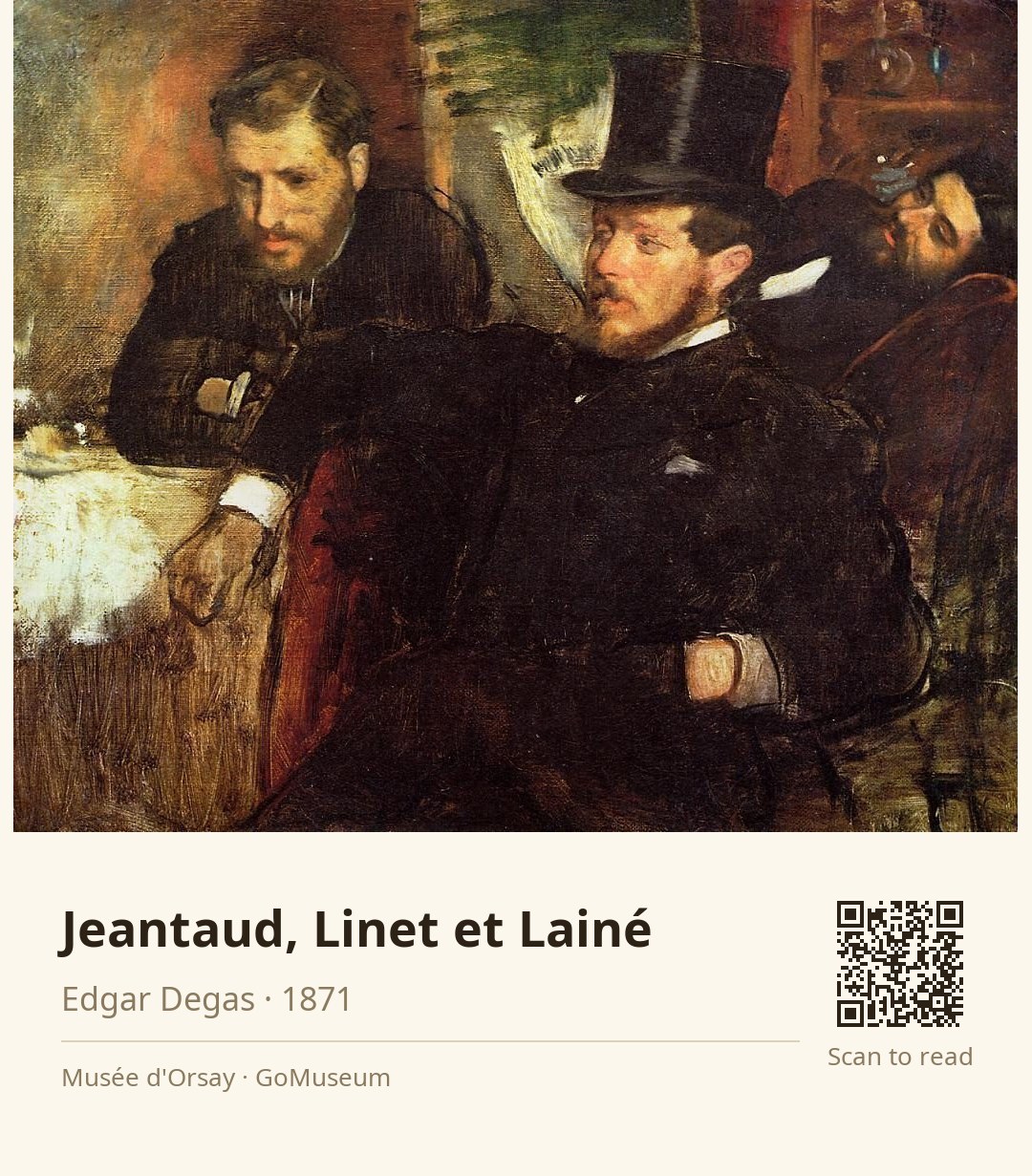
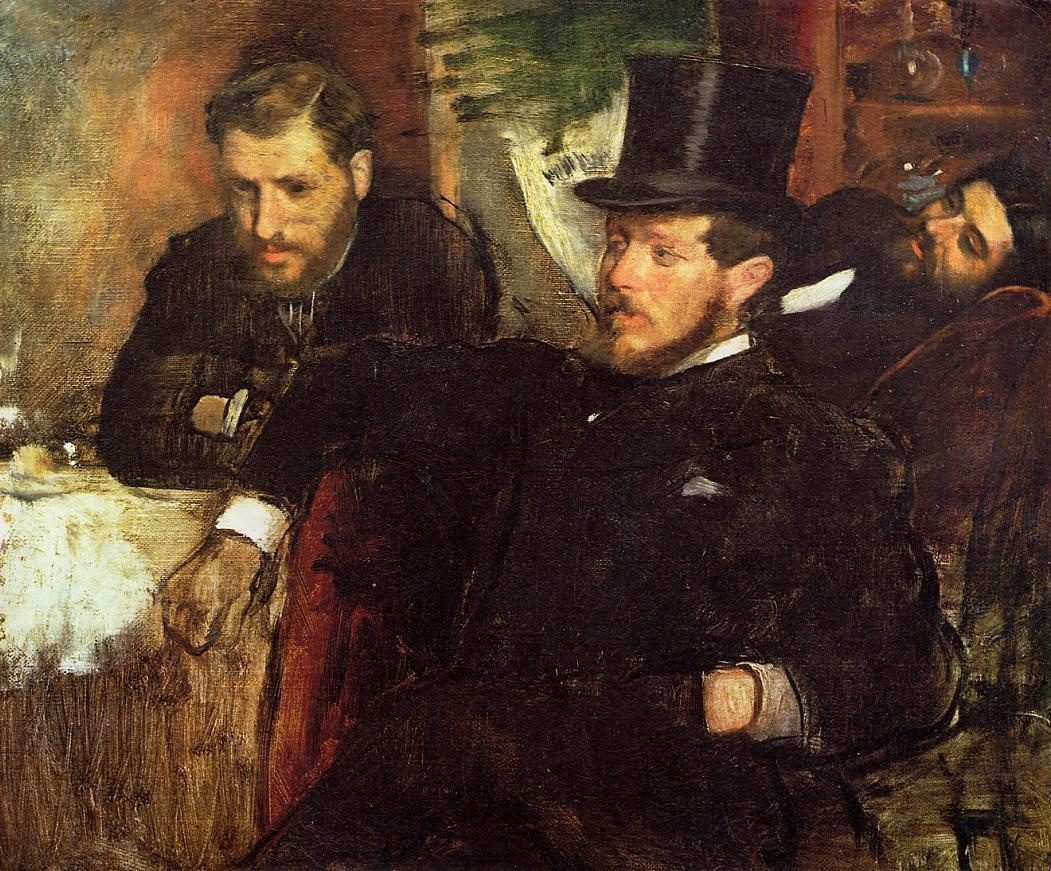
🎧 This work has audio narration — listen in the appTake a moment to really look at "Jeantaud, Linet et Lainé" by Edgar Degas. Notice how the three figures are positioned, almost like a snapshot of a conversation frozen in time. Their expressions are subtle yet telling, revealing a depth of character that Degas masterfully captures.
What’s fascinating here is how Degas, known for his dynamic depictions of movement, brings a stillness to this scene. The way he uses light and shadow adds a layer of intimacy, inviting you to wonder what these men are discussing. This painting, created in 1871, reflects not just the subjects—Charles Jeantaud, a pioneering automobile manufacturer, and his companions—but also the era’s shifting focus towards modernity and innovation.
Degas painted this during a time when he was transitioning from grand historical scenes to more contemporary subjects, showcasing his adaptability as an artist. Think about that: he was not just capturing a moment; he was documenting a pivotal shift in society.
As you stand here, consider what stories these three men might tell if they could speak. What do you think their conversation reveals about the world they lived in?
Edgar Degas, born on July 19, 1834, in Paris, was a pivotal figure in the Impressionist movement, though he preferred to be labeled a realist. Known for his exceptional skill in drawing, Degas focused on capturing movement, particularly in his depictions of dancers, which constitute over half of his oeuvre. His works also include racehorses and portraits that reveal psychological depth and human isolation.
Degas came from a cultured, affluent family; his mother was a Creole from New Orleans, and his father was a banker. After his mother's death, he pursued art against his father's wishes, studying at the École des Beaux-Arts and drawing inspiration from classical masters during his time in Italy. His early ambition to be a history painter shifted as he embraced contemporary subjects, influenced by artists like Édouard Manet.
Despite being a founding member of the Impressionists, Degas's approach diverged from his peers, as he often worked in his studio rather than en plein air. His innovative techniques and themes sparked debate among critics and continue to influence art history today. Degas passed away on September 27, 1917, leaving behind a legacy that challenges traditional boundaries in art.
Edgar Degas painted 'Jeantaud, Linet et Lainé' in 1871, during a transformative period in his artistic career. The painting was part of Jeantaud's collection until his death in 1906, after which it passed to his widow. In 1926, it was bequeathed to the Louvre, where it remained until it was exhibited at the Musée d'Orsay in Paris, further solidifying its place in art history. Notably, it was featured in significant exhibitions, including the 1924 Degas retrospective at the Orangerie and the 1988 show at the Grand Palais, both of which celebrated Degas's innovative approach to modern life.
As you gaze at 'Jeantaud, Linet et Lainé,' take a moment to appreciate Degas's masterful brushwork. The way he layers paint creates a rich texture, almost inviting you to reach out and touch the canvas. Notice how he captures light—it's not just illumination but a character in itself, casting shadows that deepen the intimacy of the scene. The composition is carefully structured; the figures are arranged in a triangular formation, drawing your eye naturally from one to the next. This technique not only enhances the narrative but also reflects the dynamics of their conversation. The scale of the painting, relatively modest at 38 by 46 centimeters, encourages a personal connection, making you feel as though you are part of this moment, eavesdropping on their exchange.
Painted in 1871, this work reflects Degas's shift from traditional history painting to capturing the essence of modern life. Degas's unique approach—melding classical techniques with contemporary themes—set the stage for later movements, encouraging artists to break free from rigid conventions and embrace a more personal narrative in their work. Remember, this isn't just a painting; it's a pivotal moment in art history that invites you to consider the stories behind the faces.
Degas's use of layering in 'Jeantaud, Linet et Lainé' creates a rich texture that adds depth to the scene, allowing viewers to feel the physicality of the paint and the intimacy of the moment.