Pont de Maincy
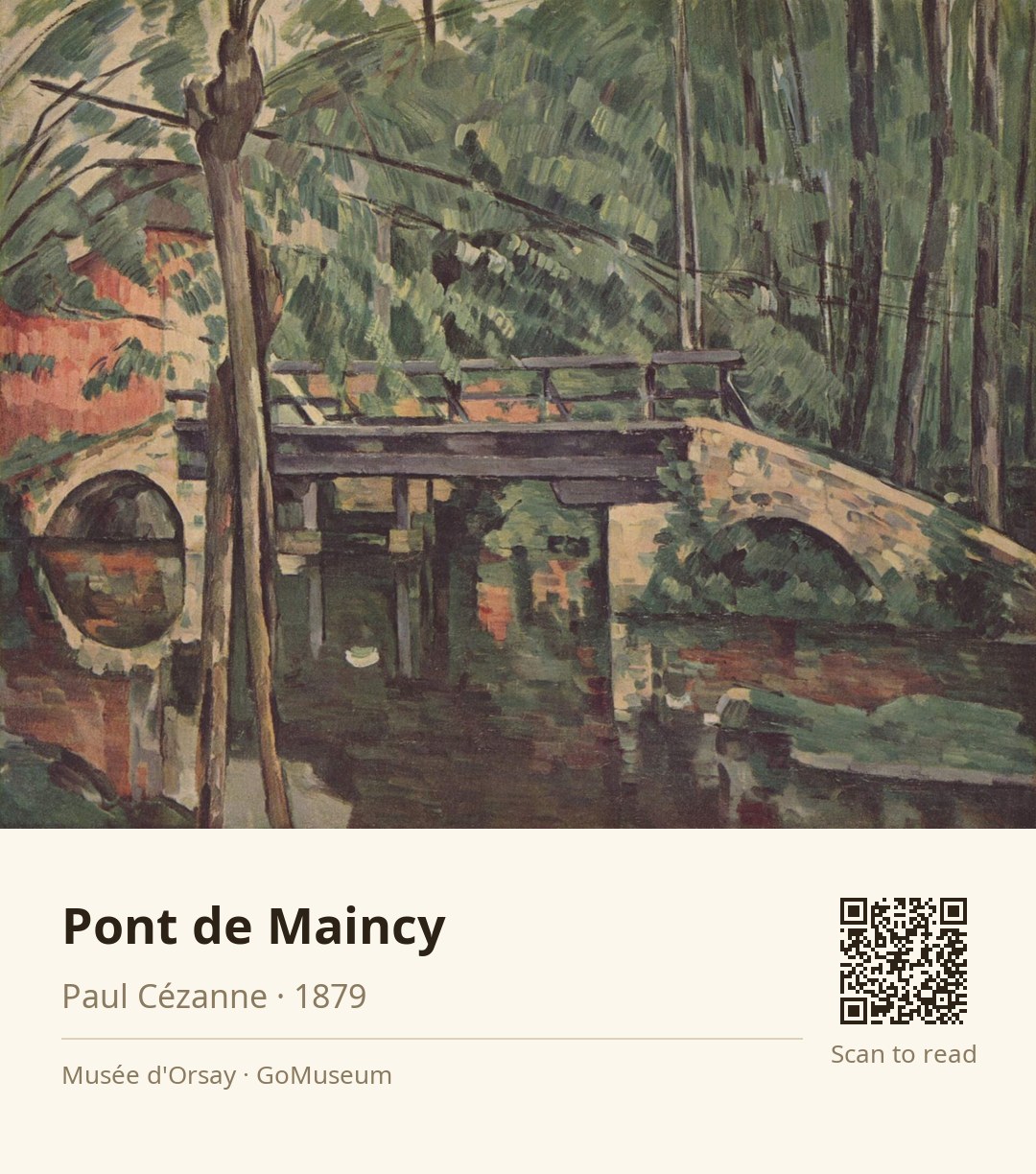
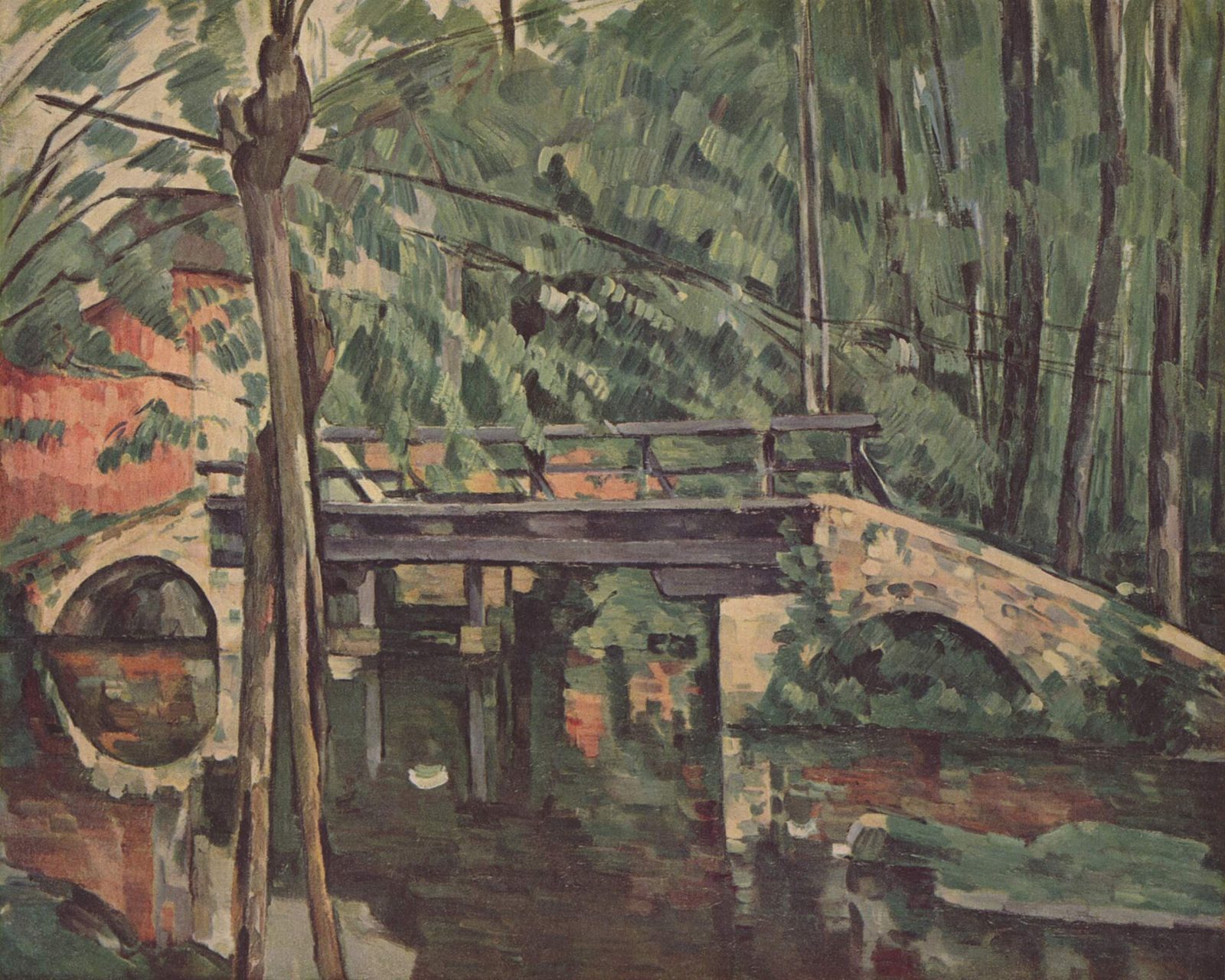
🎧 This work has audio narration — listen in the appTake a moment to really look at Paul Cézanne's "Pont de Maincy." Notice how the bridge, with its sturdy arches, seems to almost cradle the landscape around it. The way the light dances off the water beneath creates a shimmering effect that pulls you into the scene.
These details matter because they reveal Cézanne's unique approach to capturing nature. He wasn't just painting what he saw; he was exploring how light and structure interact to create a feeling of depth and movement. This painting, created in 1879, reflects his desire to break away from traditional perspectives, paving the way for modern art.
Cézanne lived nearby in Melun during this time, and you can sense his intimate connection to the landscape. The bridge itself, spanning the Almont River, becomes a symbol of his artistic journey—a bridge between Impressionism and the emerging styles of the 20th century.
As you stand here, think about how this piece invites you to see the world through Cézanne's eyes. What emotions does this landscape evoke for you?
Paul Cézanne was a French Post-Impressionist painter born on January 19, 1839, in Aix-en-Provence. His innovative approach to color and form bridged the gap between Impressionism and the emerging Cubism of the early 20th century. Initially influenced by Romanticism and Realism, Cézanne developed a unique style that emphasized the underlying structure of objects, using repetitive brushstrokes and planes of color to create depth and complexity in his work.
Despite facing ridicule and misunderstanding from critics during his early career, Cézanne garnered support from fellow artists like Camille Pissarro and the art dealer Ambroise Vollard, who recognized his talent. His first solo exhibition in 1895 marked a turning point, leading to greater appreciation of his contributions to art. Cézanne's legacy is profound; both Henri Matisse and Pablo Picasso acknowledged him as a foundational figure in modern art, dubbing him "the father of us all." He passed away on October 22, 1906, leaving behind a transformative body of work that continues to influence artists today.
Paul Cézanne's 'Pont de Maincy' was created between 1879 and 1880, during a time when he was deeply immersed in the landscapes of Melun, close to Maincy. The painting captures a bridge over the Almont River, a local landmark that Cézanne felt a personal connection to. Initially, the work faced challenges in identification and dating, but it eventually found its place in the art world. It has been exhibited in numerous prestigious venues, including Paris and London, with notable exhibitions in 1910 and 1914. Over the years, it has changed hands through various collectors and galleries, including the influential Galerie Durand-Ruel in Paris. Today, it resides in the Musée d'Orsay, a testament to its enduring significance in Cézanne's oeuvre and the broader narrative of art history.
As you gaze at 'Pont de Maincy,' notice Cézanne's distinctive brushwork—each stroke feels deliberate yet exploratory, creating a sense of movement and life. The way he layers paint gives the landscape a palpable texture, inviting you to feel the weight of the bridge and the fluidity of the water below. The composition is carefully structured; the bridge acts as a focal point, drawing your eye across the canvas. Cézanne's use of light is particularly striking—he captures the way sunlight dances on the water, creating shimmering reflections that seem to pulse with energy. The colors are not just applied; they interact, creating depth and atmosphere that pull you into the scene. This painting is a masterclass in how to convey emotion and structure through color and form.
Cézanne's paintings, including 'Pont de Maincy,' initially faced ridicule and incomprehension from contemporary critics and audiences, who struggled to appreciate his innovative style and departure from traditional techniques.
The legacy of 'Pont de Maincy' can be seen in the works of later artists, particularly in the way it influenced the development of Cubism; both Henri Matisse and Pablo Picasso regarded Cézanne as a pivotal figure in modern art.
Cézanne's distinctive brushwork in 'Pont de Maincy' is characterized by repetitive, exploratory strokes that build up layers of color, creating a complex texture that enhances the sense of movement and depth in the landscape.