The Railway Bridge at Argenteuil
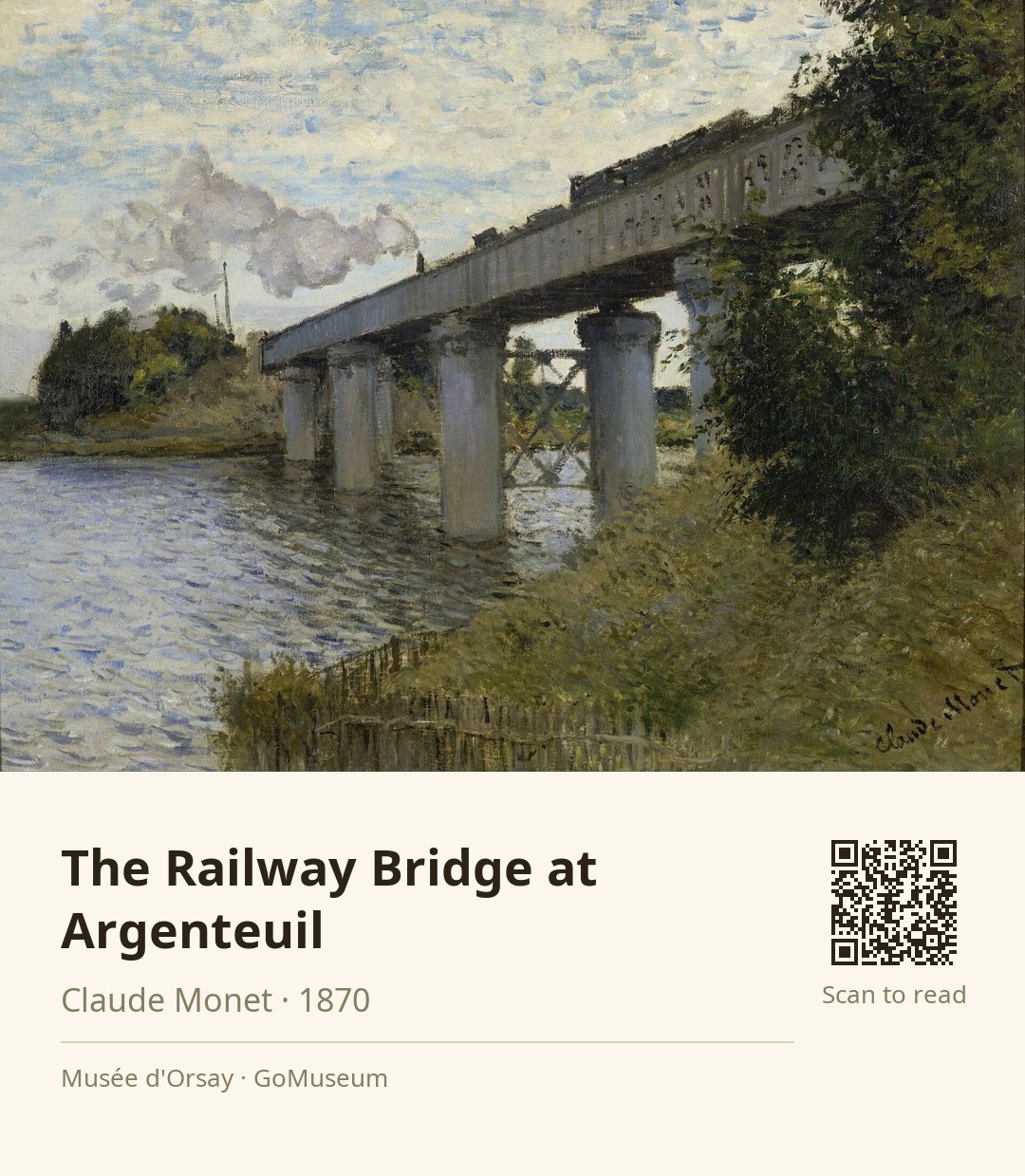
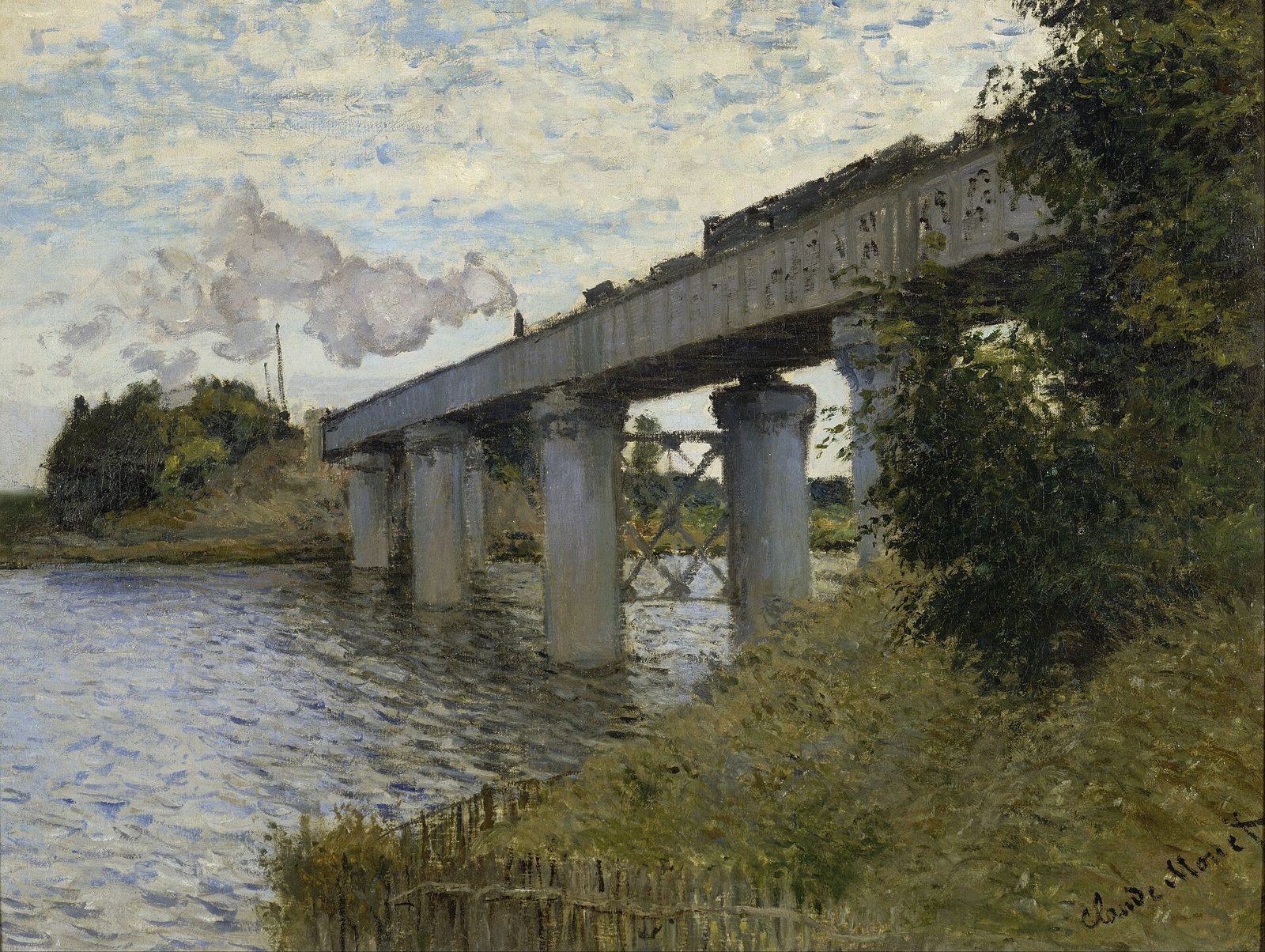
🎧 This work has audio narration — listen in the appTake a moment to really look at "The Railway Bridge at Argenteuil" by Claude Monet. Notice how the sunlight dances on the water, creating a shimmering effect that almost makes you feel the breeze. And check out the bridge itself—its bold, industrial lines contrast beautifully with the soft, natural surroundings.
Monet was fascinated by how the changing light transformed the scene, and he painted this bridge not just as a structure, but as a symbol of progress and change.
Created in 1870, this piece was part of Monet's exploration of the world around him, reflecting his belief that art should express one's perception of nature. It was exhibited in the second Impressionist exhibition in Paris in 1876, showcasing his innovative approach to light and color.
As you stand here, think about how this painting invites you to consider the relationship between the natural world and human innovation. What feelings does it evoke for you?
Oscar-Claude Monet, born on November 14, 1840, in Paris, was a pioneering French painter and a founder of Impressionism, a movement that transformed the art world. Raised in Le Havre, he developed a passion for nature and painting early on, encouraged by his mother, while his father hoped he would pursue a business career. After his mother's death in 1857, Monet moved in with his aunt, who supported his artistic ambitions.
Monet's career began with caricatures, but he soon sought formal training, studying under Eugène Boudin, who introduced him to plein air painting. His breakthrough came in 1866 with "La Femme à la robe verte," which garnered attention at the Salon. The term "Impressionism" originated from his work "Impression, Sunrise," exhibited in 1874, marking a shift away from traditional art.
Throughout his life, Monet focused on capturing the essence of light and color in nature, creating series of paintings that depicted the same scenes under varying conditions, such as his famous haystacks and water lilies. He settled in Giverny in 1883, where he cultivated a beautiful garden that became his muse. Despite personal hardships, including the loss of loved ones and health issues, Monet's relentless dedication to his craft solidified his place in art history as a master of modernism, influencing countless artists and leaving a lasting legacy. He died on December 5, 1926, in Giverny, celebrated as one of the most significant figures in art.
This painting was part of Monet's exploration of the interplay between nature and industrialization, a theme that resonated deeply with the changing landscape of 19th-century France. It was exhibited in the second Impressionist exhibition in Paris in 1876, where it received mixed reviews. Some critics were baffled by Monet's loose brushwork and unconventional approach to light and color, while others began to appreciate the fresh perspective he brought to landscape painting.
As you gaze at 'The Railway Bridge at Argenteuil,' take a moment to appreciate Monet's masterful brushwork. The strokes are both energetic and fluid, creating a sense of movement that mimics the shimmering water below. Notice how he uses a palette of vibrant colors, particularly the blues and greens, to capture the essence of the scene. The bridge, with its strong lines, stands in stark contrast to the softer, more organic shapes of the trees and water. Monet's choice to paint en plein air allowed him to capture the fleeting effects of light, as seen in the way the sunlight dances across the surface of the water. The composition is carefully structured, drawing your eye from the foreground to the bridge and beyond, inviting you to explore the relationship between the natural and the man-made.
Interestingly, Monet painted this bridge multiple times, capturing it in different seasons and lighting conditions. This approach not only highlights his fascination with the changing effects of light but also reflects his commitment to exploring a single subject from various perspectives, a hallmark of his later works.