The artist's garden at Giverny
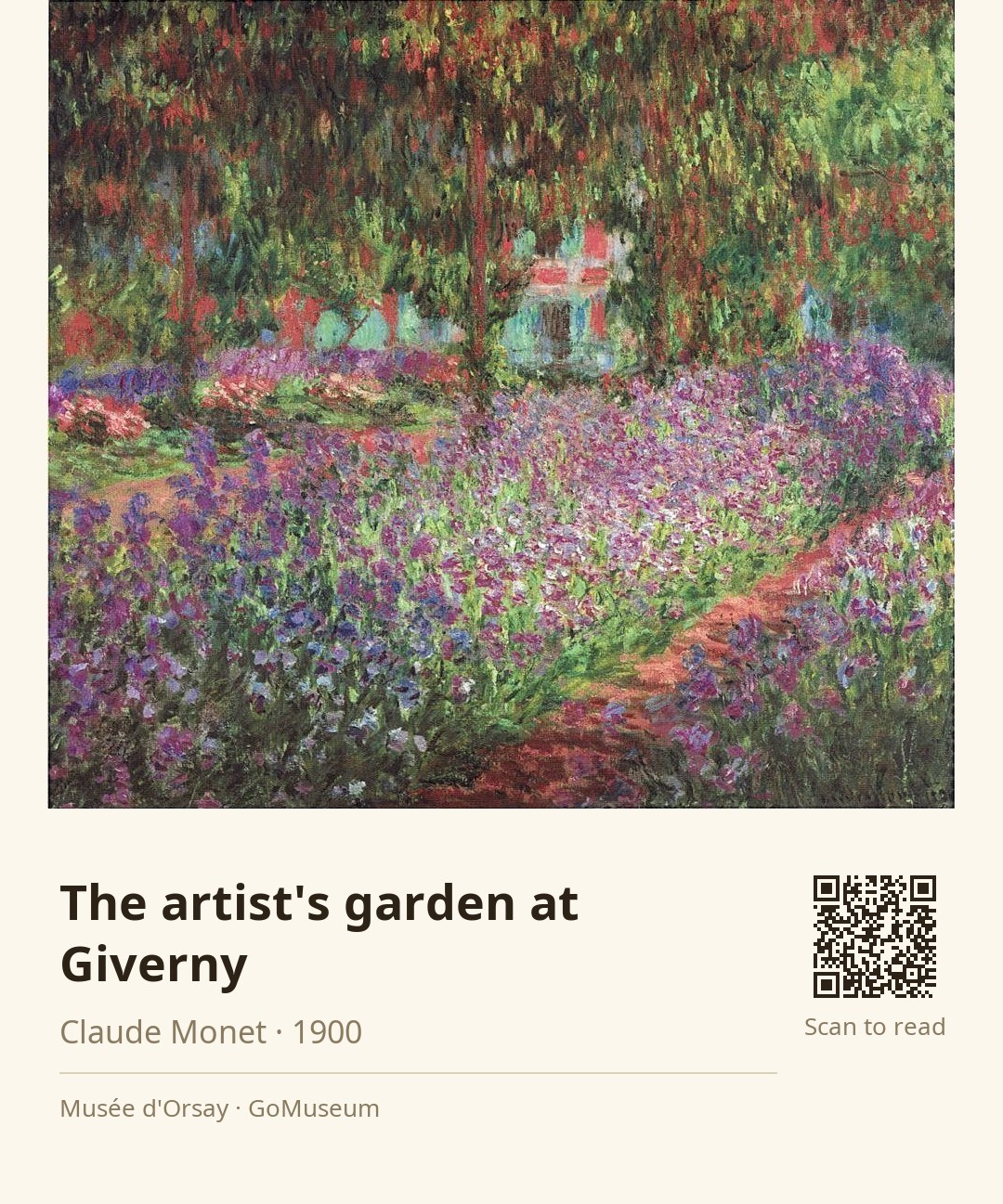
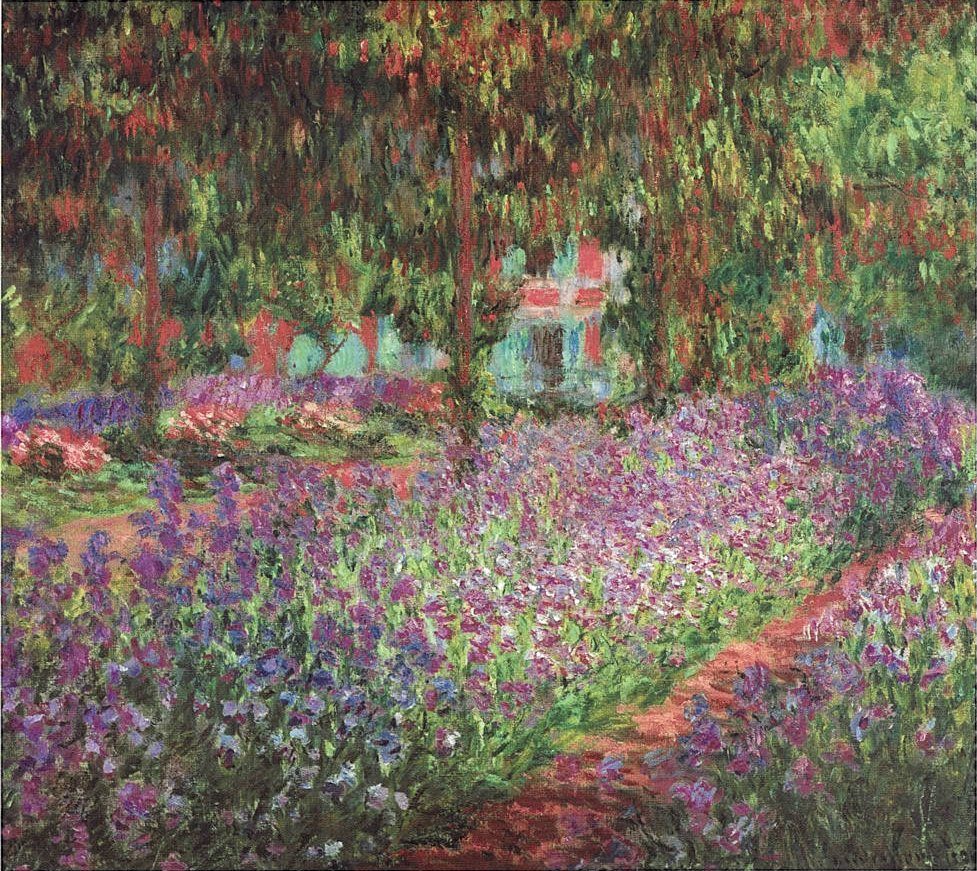
🎧 This work has audio narration — listen in the appTake a moment to really look at "The Artist's Garden at Giverny." Notice how the vibrant rows of irises stretch diagonally across the canvas, their purples and pinks dancing in the dappled light filtering through the trees. This isn’t just a pretty garden; it’s a snapshot of Monet’s world, where he meticulously cultivated each flower to create a living palette.
These details matter because they reveal Monet's deep connection to nature and his obsession with light. The way the sunlight plays on the petals transforms their colors, capturing a fleeting moment that only he could see. This painting, created in 1900 when Monet was 60, reflects his mastery of Impressionism—where subject and sensation blend seamlessly.
Monet spent the last thirty years of his life at Giverny, nurturing this garden as both a sanctuary and a source of inspiration. It was here that he painted some of his most famous works, including his beloved water lilies.
As you stand here, think about the time Monet spent tending to these flowers. What do you think he felt as he painted this scene, surrounded by the beauty he created?
Oscar-Claude Monet, born on November 14, 1840, in Paris, was a pioneering French painter and a founder of Impressionism, a movement that transformed the art world. Raised in Le Havre, he developed a passion for nature and painting early on, encouraged by his mother, while his father hoped he would pursue a business career. After his mother's death in 1857, Monet moved in with his aunt, who supported his artistic ambitions.
Monet's career began with caricatures, but he soon sought formal training, studying under Eugène Boudin, who introduced him to plein air painting. His breakthrough came in 1866 with "La Femme à la robe verte," which garnered attention at the Salon. The term "Impressionism" originated from his work "Impression, Sunrise," exhibited in 1874, marking a shift away from traditional art.
Throughout his life, Monet focused on capturing the essence of light and color in nature, creating series of paintings that depicted the same scenes under varying conditions, such as his famous haystacks and water lilies. He settled in Giverny in 1883, where he cultivated a beautiful garden that became his muse. Despite personal hardships, including the loss of loved ones and health issues, Monet's relentless dedication to his craft solidified his place in art history as a master of modernism, influencing countless artists and leaving a lasting legacy. He died on December 5, 1926, in Giverny, celebrated as one of the most significant figures in art.
In 1900, Claude Monet painted 'The Artist's Garden at Giverny,' a vibrant depiction of his beloved garden, which he had meticulously cultivated over the years. Monet's garden had become a significant part of his life and work, and this painting captures that essence. After its initial showing, the painting changed hands several times, moving through various collections including that of Montaignac and later Wolkovyski in Paris. By 1928, it was part of the Laffon collection before being withdrawn from auction. Eventually, in 1983, it found its permanent home at the Musée d'Orsay, where it continues to draw visitors, showcasing Monet's deep connection to nature and light.
Notice the way he applies paint with quick, loose brushstrokes, creating a sense of movement and life within the flowers. The irises, painted in various shades of purple and pink, seem to sway in the gentle breeze, while dappled light filters through the trees, casting playful shadows that alter the colors of the petals. This interplay of light and shadow not only adds depth but also evokes the fleeting nature of the moment. The diagonal composition draws your eye across the canvas, inviting you to explore every vibrant detail, while the relatively small scale of the painting makes it feel intimate, as if you could step right into Monet's garden.
Did you know that Monet's garden at Giverny was not just a beautiful place to paint, but a carefully curated masterpiece of nature? He spent years designing it, adhering to strict principles: no dark flowers, no single blooms, and a love for blue. This meticulous approach was his way of ensuring that every corner of his garden would inspire his art, creating a living palette that changed with the seasons.
Monet had specific gardening principles, such as avoiding dark flowers and only allowing double blooms in roses and peonies. He believed that bare earth was unacceptable in a garden, and he had a particular fondness for the color blue, which he incorporated into his floral arrangements.