Dance Class at the Opera
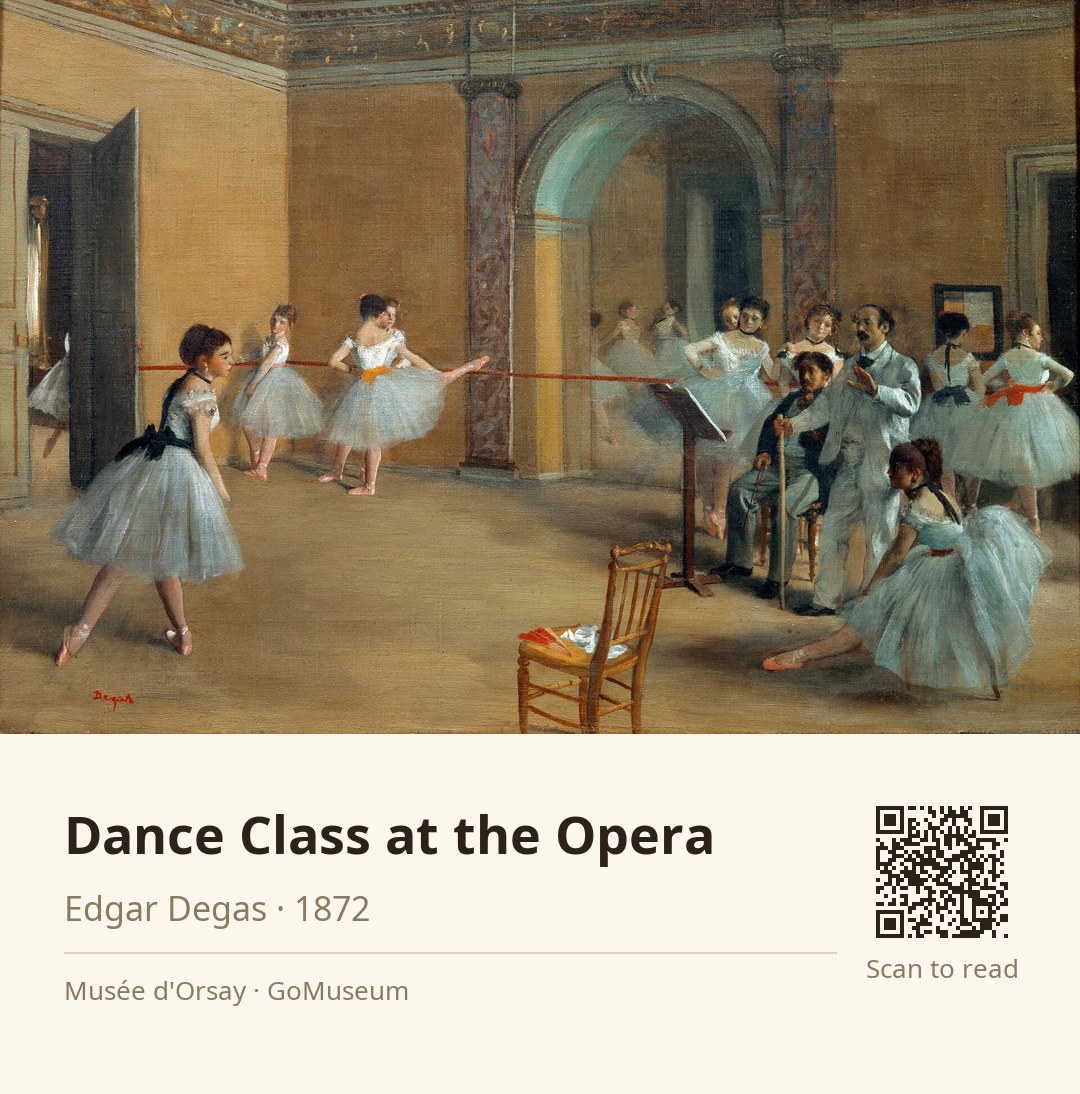
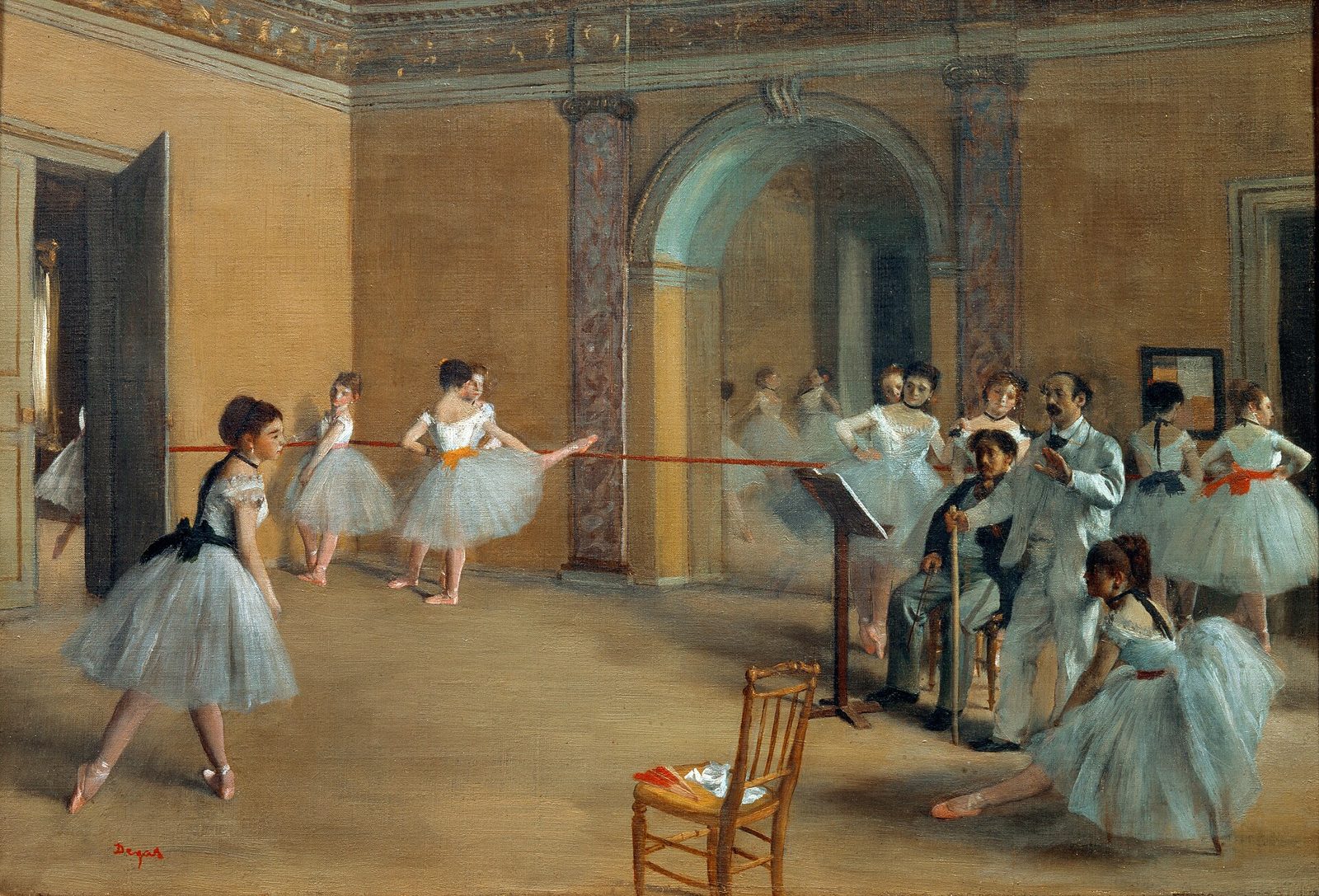
🎧 This work has audio narration — listen in the appTake a moment to gaze at "Dance Class at the Opera" by Edgar Degas. Notice how the ballerinas are captured mid-practice, each in their own world, yet all part of a shared moment. Look closely at the dancer on the left, poised and focused, while the ballet master on the right gestures with his cane, guiding her movements.
These details matter because they reveal Degas's keen eye for the subtleties of human expression and the dynamics of movement. He doesn’t just paint dancers; he captures their dedication, the tension of practice, and the beauty of their art. The way the light softly illuminates their tutus against the warm ochre walls creates a dreamlike atmosphere, inviting you into this intimate scene.
Created in 1872, this painting reflects Degas's fascination with ballet, a subject he explored throughout his career. His unique perspective as both an observer and a participant in the world of dance allows us to witness a moment that feels both fleeting and timeless.
As you stand here, consider this: what emotions do you think these dancers are feeling as they prepare for their performance? What stories might they tell if they could speak?
Edgar Degas, born on July 19, 1834, in Paris, was a pivotal figure in the Impressionist movement, though he preferred to be labeled a realist. Known for his exceptional skill in drawing, Degas focused on capturing movement, particularly in his depictions of dancers, which constitute over half of his oeuvre. His works also include racehorses and portraits that reveal psychological depth and human isolation.
Degas came from a cultured, affluent family; his mother was a Creole from New Orleans, and his father was a banker. After his mother's death, he pursued art against his father's wishes, studying at the École des Beaux-Arts and drawing inspiration from classical masters during his time in Italy. His early ambition to be a history painter shifted as he embraced contemporary subjects, influenced by artists like Édouard Manet.
Despite being a founding member of the Impressionists, Degas's approach diverged from his peers, as he often worked in his studio rather than en plein air. His innovative techniques and themes sparked debate among critics and continue to influence art history today. Degas passed away on September 27, 1917, leaving behind a legacy that challenges traditional boundaries in art.
Over the years, it changed hands several times, passing through notable collectors such as Henri Vever and Isaac de Camondo. Each owner contributed to its provenance, with the painting eventually finding its home in the Musée d'Orsay, Paris. Degas's unique portrayal of dancers resonated with audiences, capturing the essence of their dedication and the subtleties of movement, which would later influence countless artists and movements in the art world.
In 'Dance Class at the Opera', Degas employs a masterful technique that combines firm drawing with soft, atmospheric brushwork. The figures are arranged around a large central space, creating a dynamic composition that draws your eye across the canvas. Notice how the light filters in from the right, illuminating the dancers' tutus against the warm ochre walls. This interplay of light and shadow enhances the dreamlike quality of the scene. Degas's choice to depict the dancers at various stages of their practice, with some at the barre and others observing, adds a sense of movement and life to the painting. The use of mirrors in the background not only expands the space but also reflects the energy of the moment, inviting you to feel as if you're part of the rehearsal. The contrast between the delicate dancers and the solid figure of the violinist adds tension, grounding the ethereal quality of the ballet with a touch of reality.
His familiarity with the dancers allowed him to capture their movements with remarkable accuracy. Interestingly, Degas was known to have a somewhat complicated relationship with the dancers; while he admired their artistry, he also maintained a distance, often observing them rather than engaging directly. This duality is reflected in the painting, where the dancers appear both intimate and isolated in their practice.
Degas had a complex relationship with the dancers; he admired their artistry but often kept a distance, observing them rather than engaging directly. This allowed him to capture their movements and expressions with remarkable accuracy, reflecting both intimacy and isolation in his work.
The violinist, seated beside the ballet master, serves as a grounding presence in the painting, contrasting with the ethereal quality of the dancers. His dark clothing and heavy figure disrupt the harmony of the scene, adding a layer of tension and reality to the otherwise delicate portrayal of the dancers.