The Canal du Loing at Moret
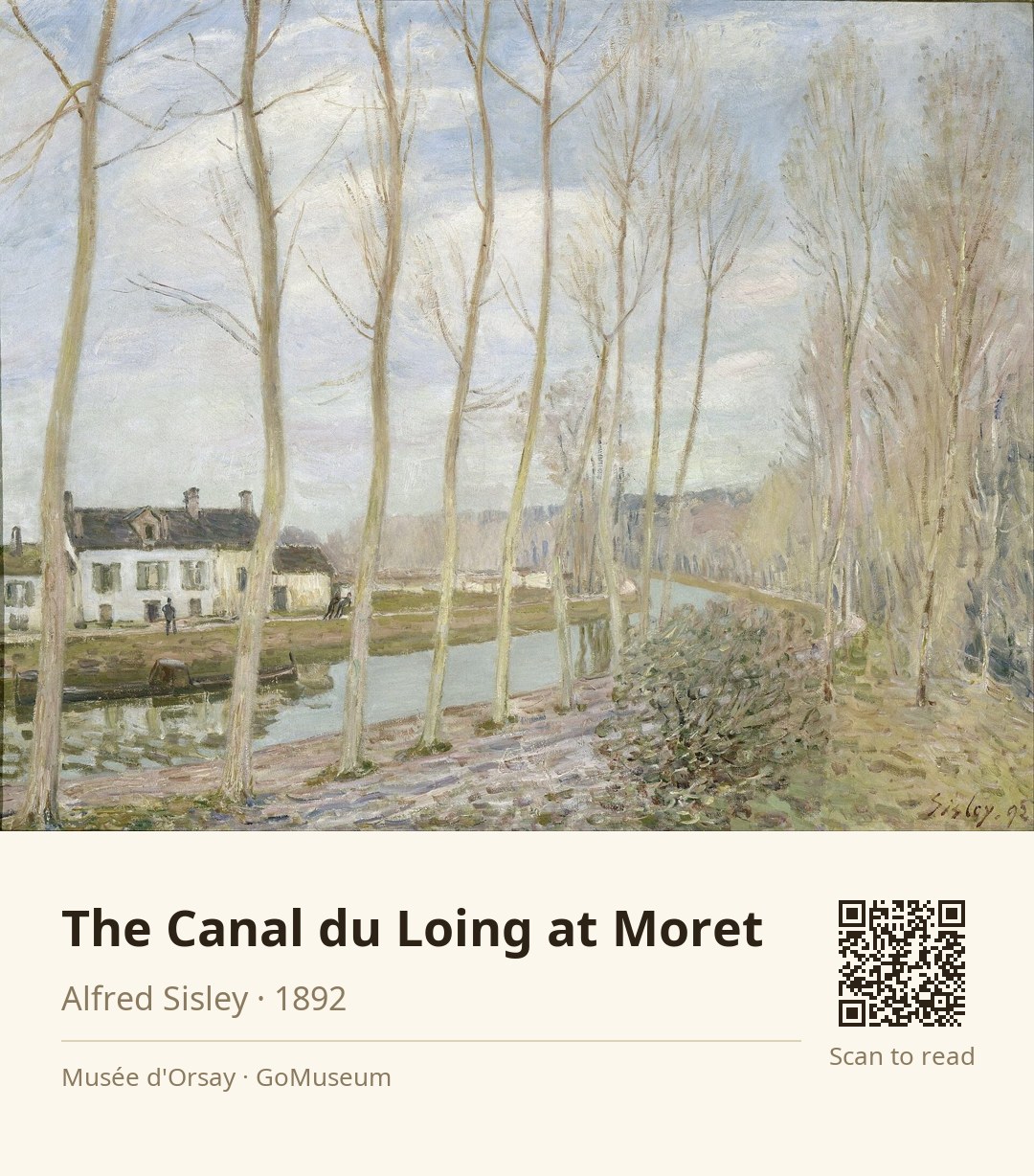
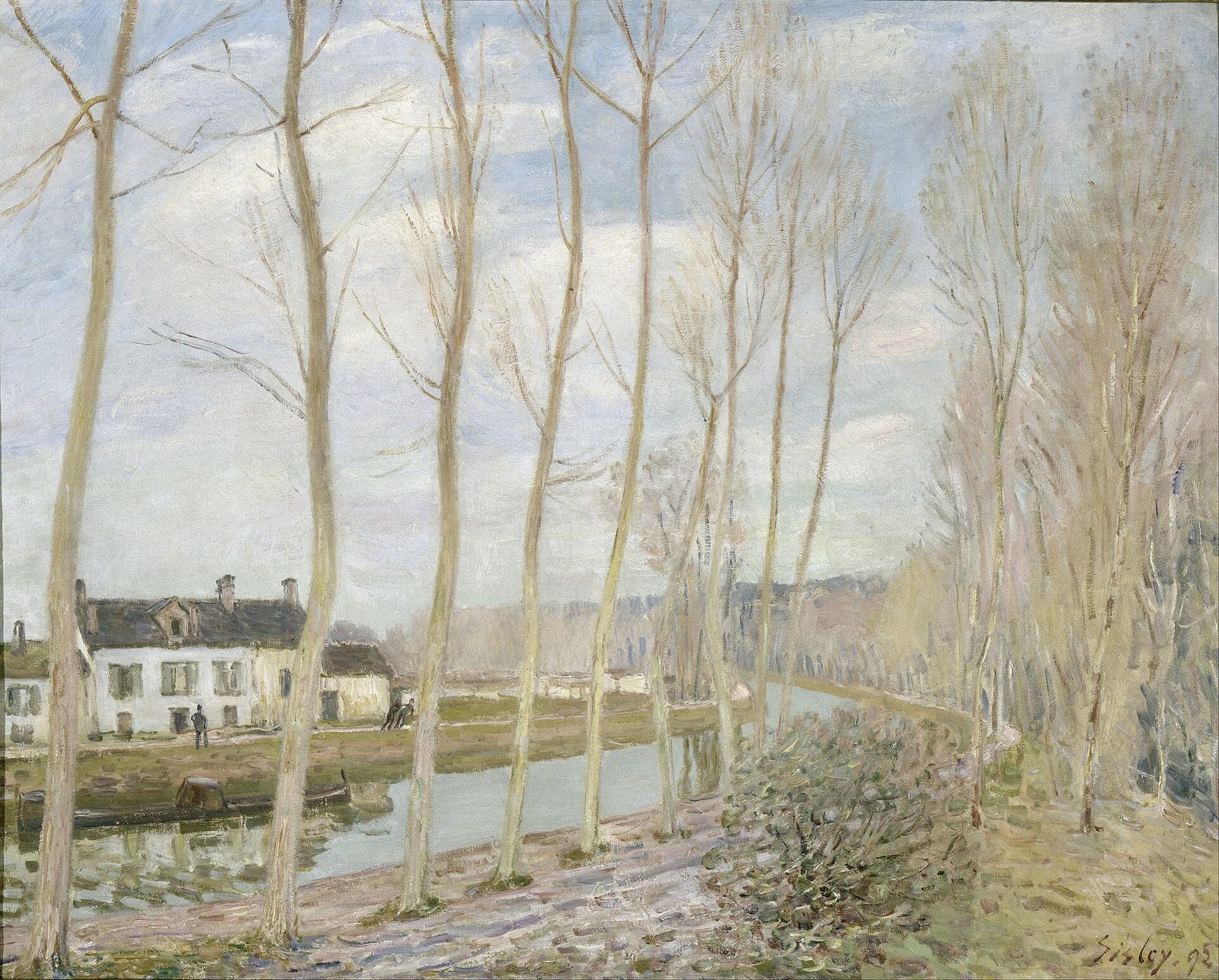
🎧 This work has audio narration — listen in the appTake a moment to really soak in the scene before you in Alfred Sisley's "The Canal du Loing at Moret." Notice how the sky dominates the canvas, painted in soft blues and purples that seem to breathe life into the landscape. Look closely at the delicate, skeletal trees lining the canal, their branches reaching out like fingers towards the horizon.
These details matter because Sisley believed that the sky was more than just a backdrop; it was the very essence of the landscape. He once said, "I always begin a picture with the sky," and here, you can see how he captures the shifting light and atmosphere that define the moment. The tranquil water reflects this sky, creating a harmony that invites you to pause and reflect.
Painted in 1892, this piece showcases Sisley’s deep connection to Moret-sur-Loing, where he settled and found inspiration in the serene beauty of the waterways. His friends, including Claude Monet, recognized his talent and ensured this work found a home in the Musée du Luxembourg after his passing.
As you stand here, consider what emotions this peaceful scene stirs in you. What stories might unfold along this quiet canal?
Alfred Sisley was a British-born Impressionist landscape painter, born in Paris on October 30, 1839, to affluent expatriate parents. His dedication to painting outdoors, or en plein air, marked him as one of the most consistent figures within the Impressionist movement. Sisley’s work primarily focused on landscapes, with notable series depicting the River Thames, the floods at Marly-le-Roi, and the Gothic church at Moret-sur-Loing. Despite his talent, he struggled for recognition and financial stability throughout his life, often relying on the support of patrons and friends.
Sisley's artistic journey began in earnest after returning to Paris from London, where he had been sent to pursue a business career. Instead, he found his calling in art, studying at the École des Beaux-Arts and forming close friendships with fellow artists like Monet and Renoir. His personal life was marked by hardship, particularly after the Franco-Prussian War disrupted his family's financial support. He married Eugénie Lescouezec, and together they faced many challenges, including the loss of a child and Sisley’s ongoing financial instability.
Although Sisley’s work was largely overlooked during his lifetime, it has since gained significant appreciation, solidifying his place in art history as a key contributor to Impressionism and French landscape painting. His delicate depictions of nature continue to resonate, showcasing the beauty of the world around him. Sisley passed away on January 29, 1899, in Moret-sur-Loing, leaving behind a legacy that would flourish posthumously.
Alfred Sisley's "The Canal du Loing at Moret" was painted in 1892, during a period when he had fully settled in Moret-sur-Loing. The painting was later transferred to the Musée d'Orsay, where it resides today. Interestingly, this piece is part of a larger narrative of Sisley’s life, marked by his deep connection to the landscapes around Moret, where he found inspiration in the serene beauty of the waterways. The reception of Sisley's work during his lifetime was mixed; he struggled for recognition and faced financial difficulties, but his friends' efforts to promote his art posthumously helped solidify his legacy. Notably, a similar work from 1891 is housed in the National Museum of Fine Arts in Algiers, showcasing his consistent exploration of the same themes.
As you gaze at "The Canal du Loing at Moret," take a moment to appreciate Sisley’s masterful brushwork. His technique is characterized by loose, fluid strokes that create a sense of movement and life within the landscape. The way he handles the paint is almost poetic; the soft blues and purples of the sky blend seamlessly into the tranquil water below, reflecting the atmospheric conditions of the moment. Notice how the skeletal trees, rendered with delicate precision, seem to reach towards the horizon, their branches almost whispering secrets of the landscape. Sisley’s composition draws your eye across the canvas, inviting you to travel along the canal. The balance between the expansive sky and the intimate waterway creates a harmonious dialogue, emphasizing the importance he placed on the sky as a vital element of the landscape. This choice not only enhances the painting’s emotional depth but also showcases Sisley’s commitment to capturing the ephemeral qualities of light and nature.
This painting, created in 1892, reflects Sisley's unique ability to convey tranquility through soft hues and delicate brushwork. His emphasis on the sky, which he believed should never be merely a background, influenced future generations of artists to consider atmospheric elements as integral to their compositions. The legacy of this work extends beyond its aesthetic appeal; it helped solidify the importance of Impressionism in the art world, paving the way for modern landscape painting. Remember, Sisley’s approach to the sky was revolutionary, urging artists to see it as a vital character in their narratives, not just a backdrop.
It’s a touching testament to their friendship and respect for Sisley’s work, especially since he struggled for recognition during his lifetime. Imagine the camaraderie among these artists, rallying together to ensure Sisley’s legacy lived on, even when he couldn’t witness it himself.
The Canal du Loing was not only a picturesque setting for Sisley but also a vital part of his daily life, as he settled in Moret-sur-Loing to immerse himself in its serene landscapes, which greatly influenced his artistic output.
Despite his talent, Sisley faced significant financial difficulties throughout his life, which often hindered his ability to gain recognition and sell his works, leading to a reliance on the support of friends and patrons.