 Image: Sailko
Jeune femme à la voilette
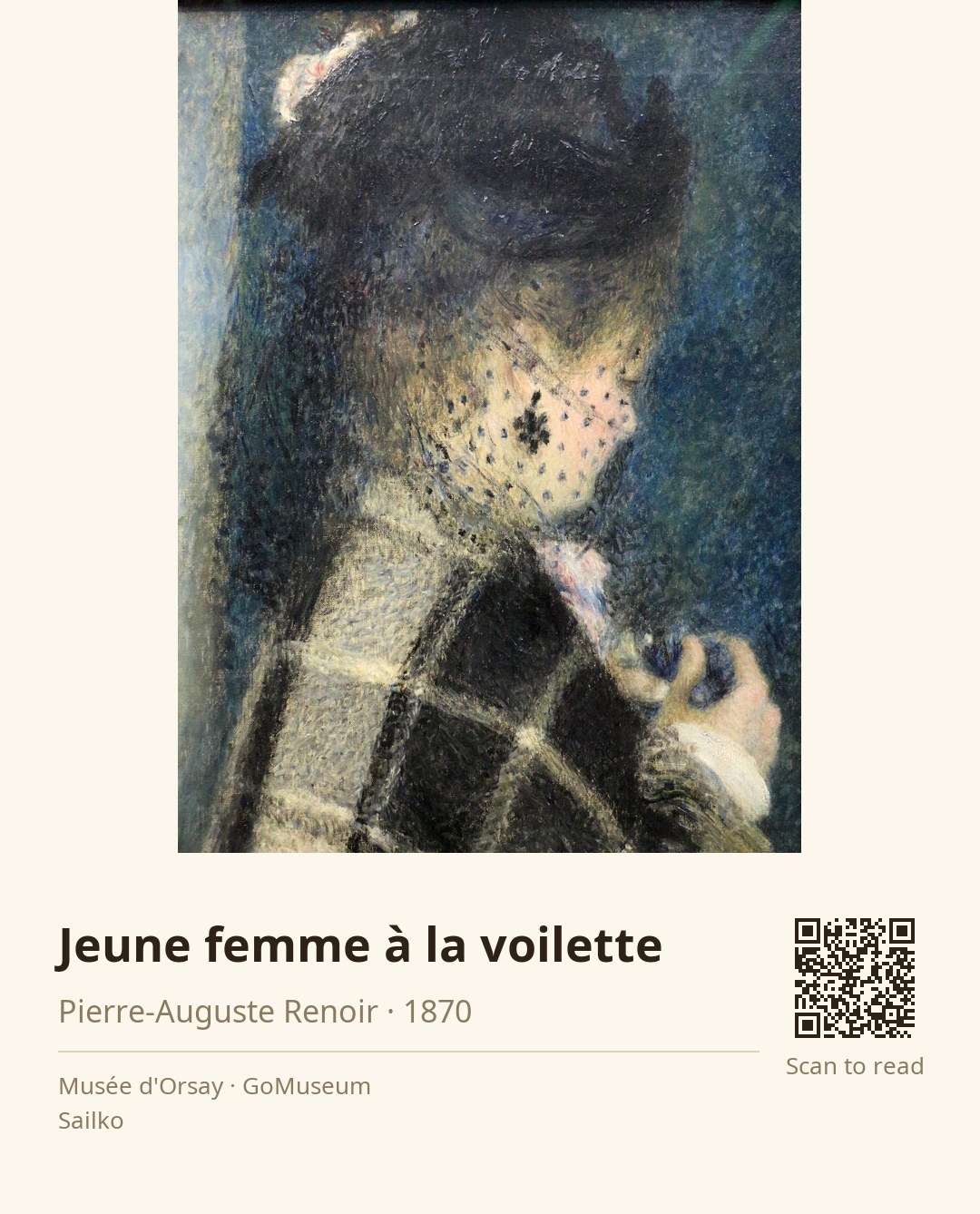
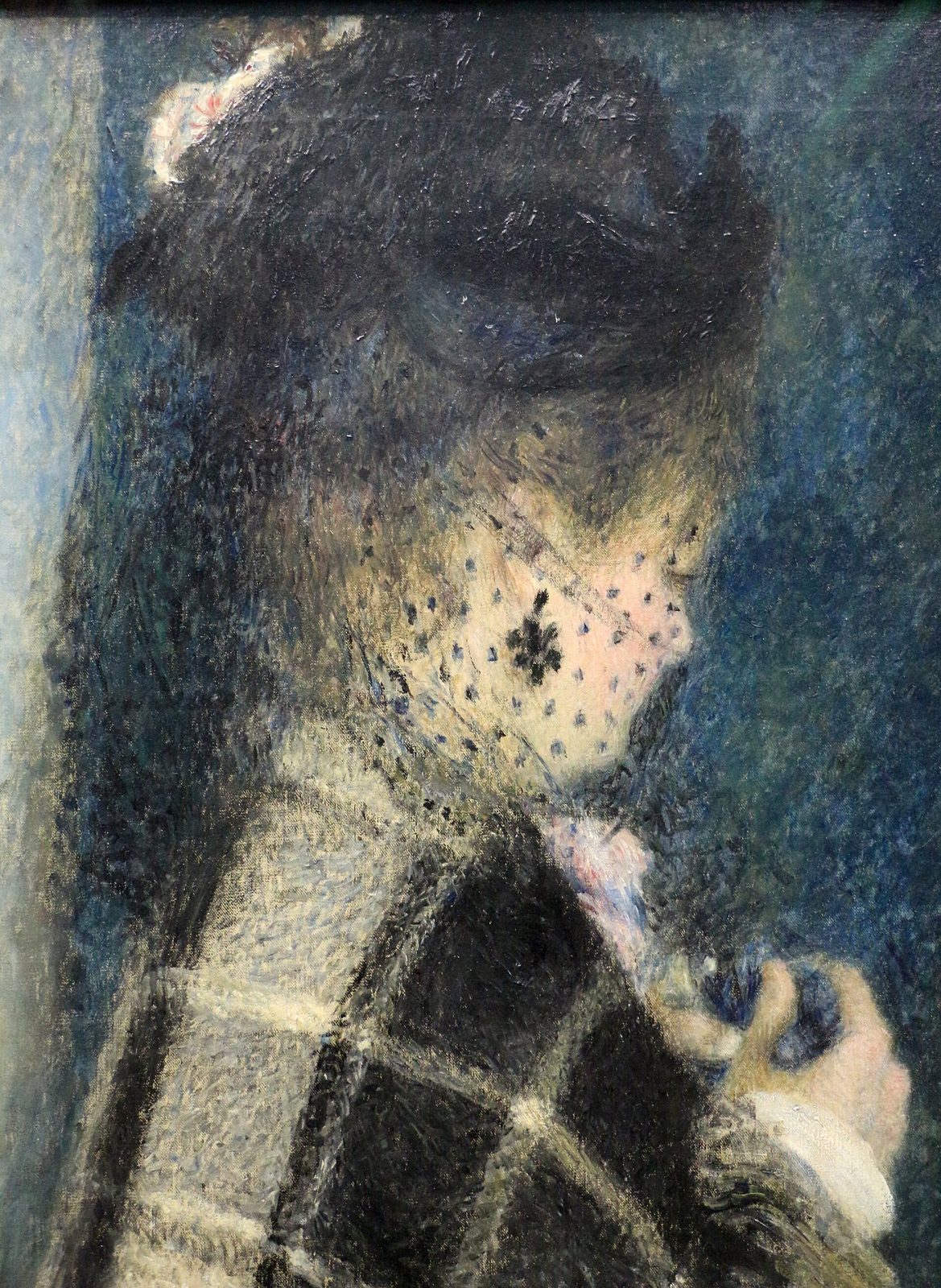
🎧 This work has audio narration — listen in the appThe woman in profile, adorned with a dark hat and a delicate veil, draws you into a moment of quiet elegance. Her attire, a checkered pattern of black and gray, contrasts beautifully with her lighter skin tones, creating a striking visual harmony. The small, indistinct object she holds adds an air of mystery, inviting speculation about her thoughts or emotions.
Renoir’s loose brushwork captures not just the physicality of the figure but also the essence of femininity, a theme he often explored throughout his career. The soft blue and green background envelops her, enhancing the intimate atmosphere of the piece. This impressionistic style, characterized by visible strokes and a muted palette, reflects Renoir’s desire to convey the fleeting nature of beauty and presence, rather than a rigid representation.
Created in 1870, "Jeune femme à la voilette" exemplifies Renoir's early foray into portraiture, a genre that would become central to his work. The painting showcases his evolving technique and his fascination with the female form, marking a significant moment in the development of Impressionism.
Pierre-Auguste Renoir, born on February 25, 1841, in Limoges, France, emerged as a pivotal figure in the Impressionist movement. His early life in a modest family led him to Paris, where he honed his artistic skills amidst the masterpieces of the Louvre. Initially apprenticed in a porcelain factory, Renoir's passion for painting flourished, particularly after studying under Charles Gleyre, where he befriended fellow artists like Monet and Sisley.
Renoir's work celebrated feminine beauty and vibrant social scenes, exemplified in iconic pieces like "Dance at Le Moulin de la Galette." Despite facing criticism early on, he gained recognition, especially after participating in the first Impressionist exhibition in 1874. His style evolved over the years, transitioning towards realism influenced by classical masters like Raphael.
Throughout his life, Renoir balanced personal struggles, including health issues, with a prolific output, reportedly creating around four thousand works. He became a beloved figure in art history, known for his warm palette and expressive brushwork. Renoir passed away on December 3, 1919, leaving a legacy that continues to inspire artists and art lovers alike.
Created in 1870, 'Jeune femme à la voilette' was part of a pivotal moment in Renoir's career, marking his early exploration of portraiture. This painting was later exhibited at the French art exhibition in Amsterdam in 1926, showcasing its enduring appeal. The work has a rich provenance, having passed through the hands of notable collectors, including Orville in 1910 and Koechlin Raymond and his wife.
Renoir's technique in 'Jeune femme à la voilette' is a masterclass in impressionistic brushwork. The loose, fluid strokes create a sense of movement and life, allowing the viewer to feel the fabric of the woman's attire and the delicate veil that frames her face. The muted palette, dominated by soft blues and greens, enhances the intimacy of the scene, inviting you into her world. This approach reflects Renoir's desire to capture not just the likeness of his subjects but their essence, making each brushstroke a deliberate choice in conveying emotion.
An intriguing anecdote about Renoir's life during this period is that, despite his growing recognition, he often struggled financially. At times, he couldn't afford paint, which led him to experiment with different materials and techniques. This resourcefulness not only shaped his artistic style but also fostered a deep appreciation for the beauty of everyday life, a theme that would permeate his work for years to come.