Hôpital Saint-Paul à Saint-Rémy-de-Provence
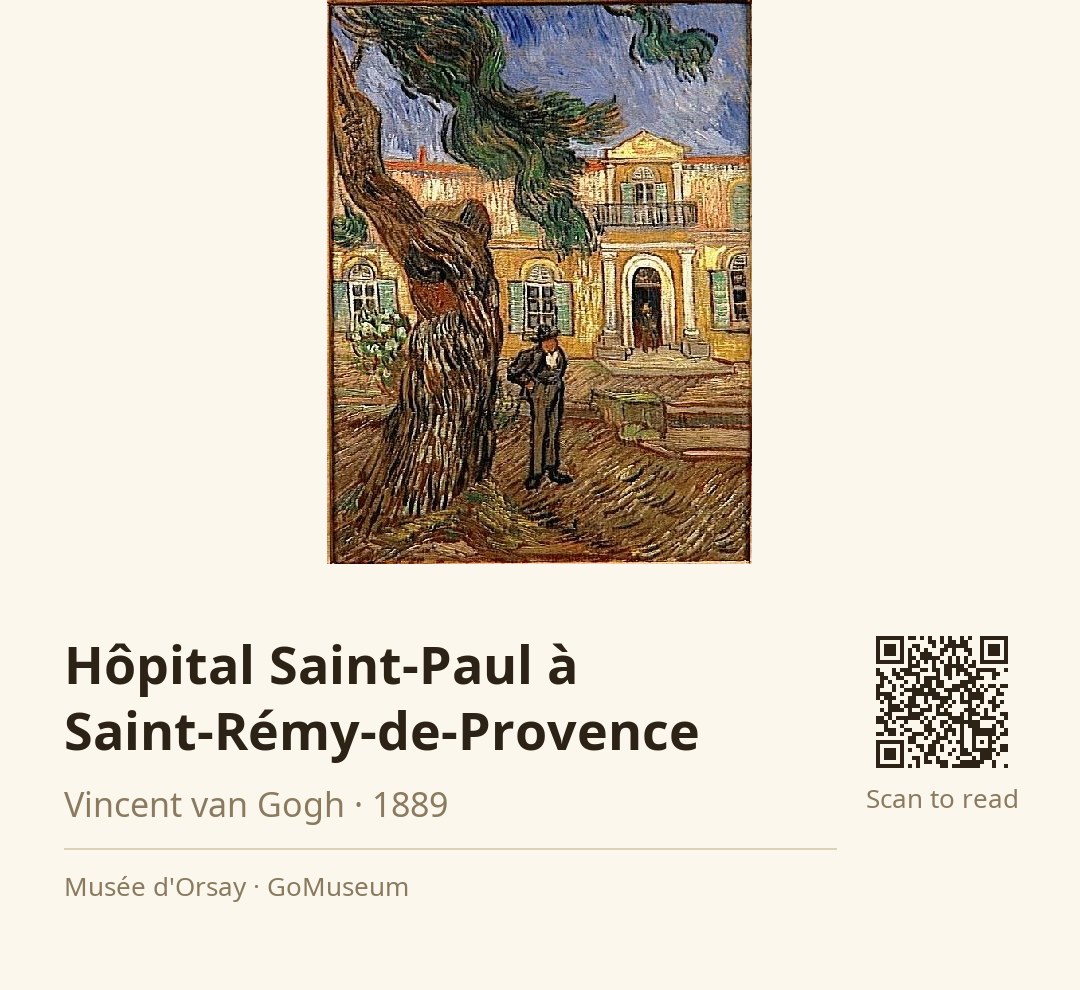
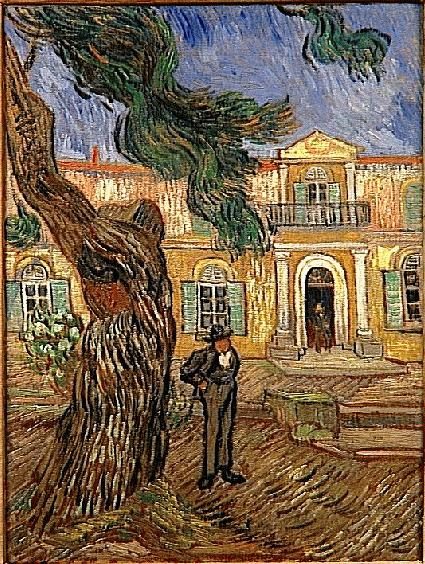
🎧 This work has audio narration — listen in the appTake a moment to really look at Van Gogh's "Hôpital Saint-Paul à Saint-Rémy-de-Provence." Notice how the vibrant colors leap off the canvas, especially the rich greens and blues that swirl around the building. And check out the figure standing in front of the hospital—his posture seems to convey a sense of solitude and contemplation, doesn’t it?
These details matter because they reflect Van Gogh’s own experience during his stay at the asylum. He painted this scene in 1889, a time when he was grappling with his mental health. The colors and the figure are not just elements of the landscape; they express his inner turmoil and longing for peace.
Van Gogh was allowed to paint outside the hospital grounds, and this piece captures a moment of his life when he sought solace in nature and art. It’s a glimpse into his world, where beauty and pain intertwined.
As you stand here, think about the emotions that this artwork evokes in you. What do you feel when you look at this solitary figure against the backdrop of the hospital?
Vincent van Gogh was a Dutch Post-Impressionist painter born on March 30, 1853, in Zundert. He is renowned for his vibrant use of color and expressive brushwork, which laid the groundwork for modern art. Despite creating around 2,100 artworks in just over a decade, including 860 oil paintings, he struggled with mental illness and poverty throughout his life. His early career as an art dealer was marked by disillusionment, leading him to pursue painting in 1881.
Van Gogh's intense passion for art was evident in his correspondence with his brother Theo, who provided emotional and financial support. His works evolved significantly after moving to Paris in 1886, where he mingled with avant-garde artists. His time in Arles in 1888 marked a peak in his creativity, producing iconic series like sunflowers and wheat fields.
Tragically, van Gogh's life ended in suicide at 37, after years of battling his demons. Initially unrecognized, he gained fame posthumously, becoming a symbol of the tortured artist. His legacy influenced movements like Fauvism and Expressionism, securing his place as one of the most significant figures in art history.
Vincent van Gogh painted 'Hôpital Saint-Paul à Saint-Rémy-de-Provence' in 1889 during his stay at the Saint-Paul-de-Mausole asylum in Saint-Rémy. This work was part of a series he created while he was allowed to paint outdoors, often accompanied by a nurse. The painting was first shown in Berlin in 1914 and later exhibited again in 1928 and 1937, gaining attention for its emotional depth and vibrant colors. Over the years, the painting changed hands multiple times, with a notable controversy surrounding its provenance. Klaus Kallmann claimed it had been looted from his family during the Nazi regime.
Take a closer look at Van Gogh's brushwork in this piece. The strokes are both bold and expressive, creating a sense of movement that feels almost alive. Notice how he uses color to evoke emotion—those swirling greens and blues aren't just for decoration; they pulse with the artist's own turmoil. The composition is structured yet dynamic, with the figure in the foreground grounding the scene against the backdrop of the hospital. The scale of the painting, larger than many of his earlier works, allows for a more immersive experience, inviting you into Van Gogh's world. His choice of palette reflects not only the landscape but also his inner state, making the painting a vivid dialogue between nature and emotion.
Created during his stay at the asylum in Saint-Rémy, this work reflects Van Gogh's tumultuous mental state and his quest for solace through art. Its bold colors and expressive brushwork influenced countless artists, paving the way for movements like Fauvism and Expressionism. This painting matters because it encapsulates the struggle of the artist against his inner demons, making it a profound testament to the connection between creativity and mental health. Remember, this isn't just a landscape; it's Van Gogh's heart laid bare on canvas.
Did you know that during his stay at the asylum in Saint-Rémy, Van Gogh was actually allowed to paint outside the hospital? He was accompanied by a nurse, which was quite a privilege for him. This freedom to explore the surrounding landscape and express his emotions through art was crucial for his creative process, especially during such a tumultuous time in his life. It's fascinating to think about how this painting, 'Hôpital Saint-Paul à Saint-Rémy-de-Provence,' captures not just a scene, but a moment of liberation amidst his struggles.
Painting outdoors allowed Van Gogh to connect with nature, which he found therapeutic during his struggles with mental health. This practice not only influenced his color palette but also provided him a sense of freedom and inspiration, contrasting with the confinement of the asylum.
In his letters to Theo, Van Gogh often discussed his artistic process and emotional state, providing insight into his motivations for works like 'Hôpital Saint-Paul à Saint-Rémy-de-Provence.' This correspondence reveals how his relationship with Theo was a source of support and inspiration, influencing his artistic output during difficult times.