Chaumes de Cordeville
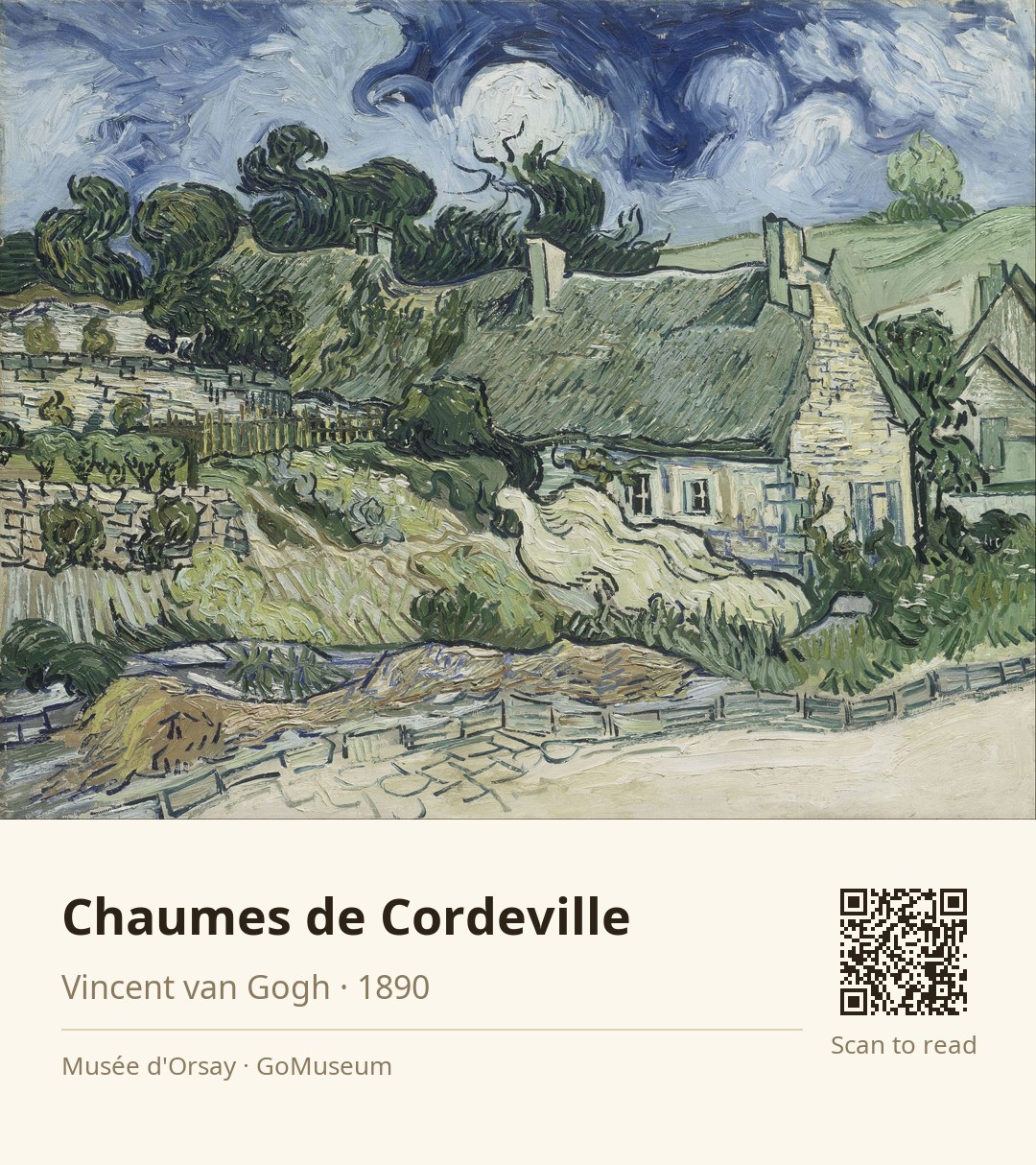
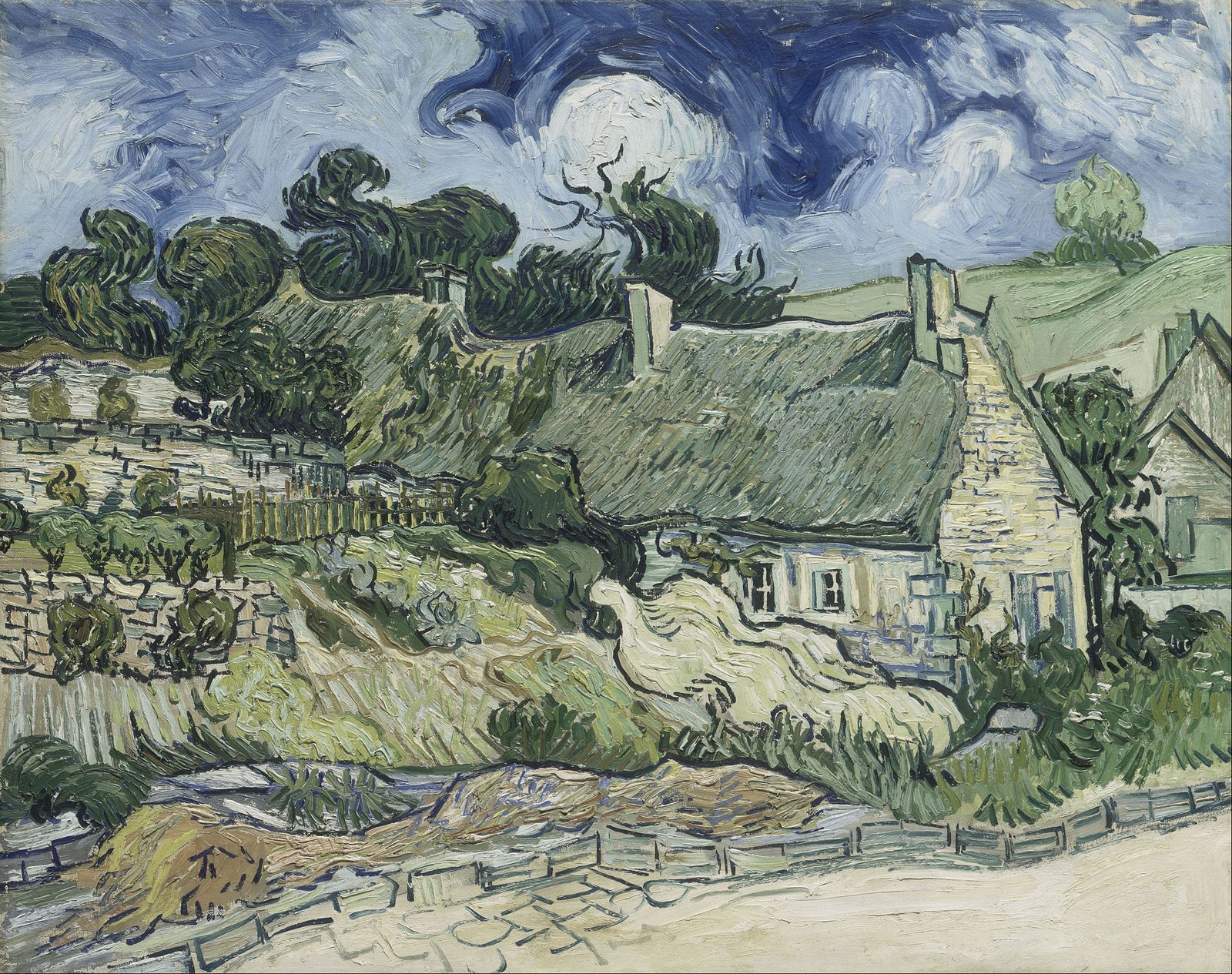
🎧 This work has audio narration — listen in the appTake a moment to really look at "Chaumes de Cordeville." Notice how the thatched roofs of the cottages seem to blend into the surrounding greens, almost disappearing into the landscape. The way Van Gogh uses thick, swirling brushstrokes gives the scene a sense of movement, as if the wind is sweeping through the trees and grass. Painted in June 1890, just a month before his death, this artwork captures a tumultuous energy, mirroring the artist's own inner turmoil. The cool greens and stormy sky evoke a sense of chaos, contrasting sharply with the warmth typically found in pastoral scenes. Van Gogh had recently moved to Auvers-sur-Oise, seeking treatment from Dr. Gachet, and this painting is part of a frenzied burst of creativity that marked his last days. It’s a poignant reminder of how art can express deep feelings, even in the face of despair. As you stand here, consider what emotions this scene stirs in you. Does it feel like a moment of calm or a storm brewing? What do you think Van Gogh was trying to convey through this vivid landscape?
Vincent van Gogh was a Dutch Post-Impressionist painter born on March 30, 1853, in Zundert. He is renowned for his vibrant use of color and expressive brushwork, which laid the groundwork for modern art. Despite creating around 2,100 artworks in just over a decade, including 860 oil paintings, he struggled with mental illness and poverty throughout his life. His early career as an art dealer was marked by disillusionment, leading him to pursue painting in 1881.
Van Gogh's intense passion for art was evident in his correspondence with his brother Theo, who provided emotional and financial support. His works evolved significantly after moving to Paris in 1886, where he mingled with avant-garde artists. His time in Arles in 1888 marked a peak in his creativity, producing iconic series like sunflowers and wheat fields.
Tragically, van Gogh's life ended in suicide at 37, after years of battling his demons. Initially unrecognized, he gained fame posthumously, becoming a symbol of the tortured artist. His legacy influenced movements like Fauvism and Expressionism, securing his place as one of the most significant figures in art history.
Vincent van Gogh painted 'Chaumes de Cordeville' in June 1890, just a month before his tragic death. After leaving the asylum in Saint-Rémy, he moved to Auvers-sur-Oise to be under the care of Dr. Gachet. This painting emerged during a frenzied period of creativity, reflecting his emotional turmoil. The work was later exhibited in a retrospective at the Salon des Indépendants in Paris in 1905, and it eventually found its home at the Musée d'Orsay in 1986 after passing through the hands of Dr. Gachet's son, Paul.
Take a closer look at the brushwork in 'Chaumes de Cordeville.' Van Gogh's technique here is almost sculptural, with thick, swirling strokes that create a palpable sense of movement. The paint is applied in a way that feels almost alive, as if the landscape is breathing with the wind. Notice how the cool greens dominate the canvas, contrasting sharply with the dark, tempestuous sky. This choice of color not only evokes a sense of chaos but also reflects Van Gogh's inner turmoil. The composition, with its layered elements of cottages and trees, draws your eye across the canvas, creating a dynamic interplay between the foreground and the turbulent sky above.
Created in the last month of his life, this work encapsulates the emotional intensity and innovative brushwork that would influence generations of artists. Van Gogh's unique approach to color and form, seen here in the turbulent skies and distorted landscapes, paved the way for movements like Fauvism and Expressionism. His legacy is one of emotional honesty and raw beauty, challenging artists to express their inner turmoil through their work. Remember, this painting isn't merely a scene; it's a glimpse into the soul of a man who transformed pain into art, leaving an indelible mark on the history of art.
Interestingly, 'Chaumes de Cordeville' is mentioned in Frank Herbert's 'Dune' series, where it is described as the favorite painting of a character named Reverend Mother Ordade. This highlights the painting's cultural reach beyond the art world, illustrating how Van Gogh's work has permeated popular literature and continues to inspire various forms of storytelling.
The painting's swirling brushstrokes and emotional intensity can be seen as a continuation of the style Van Gogh developed during his time in Arles, where he first began to explore vibrant colors and dynamic compositions.