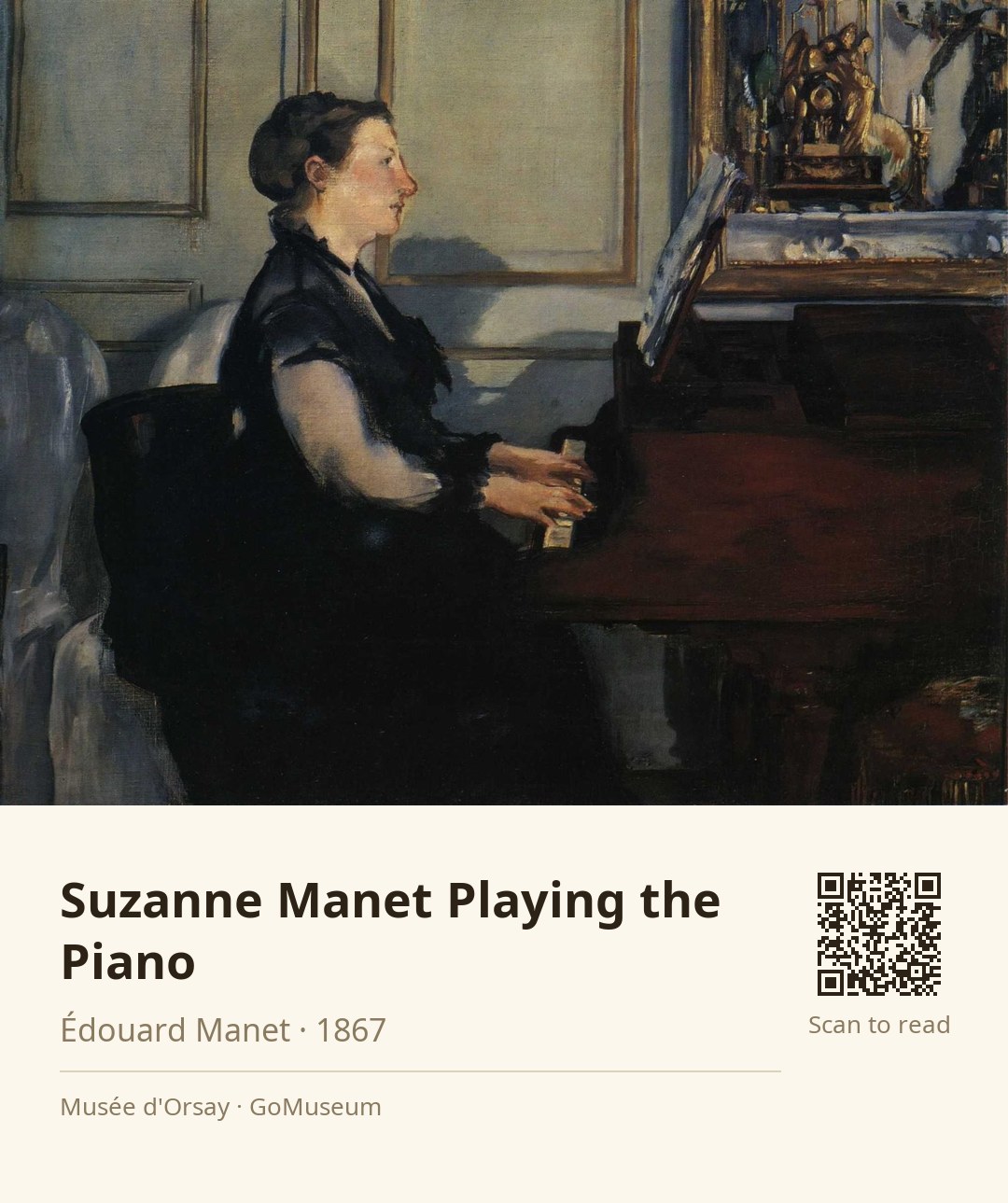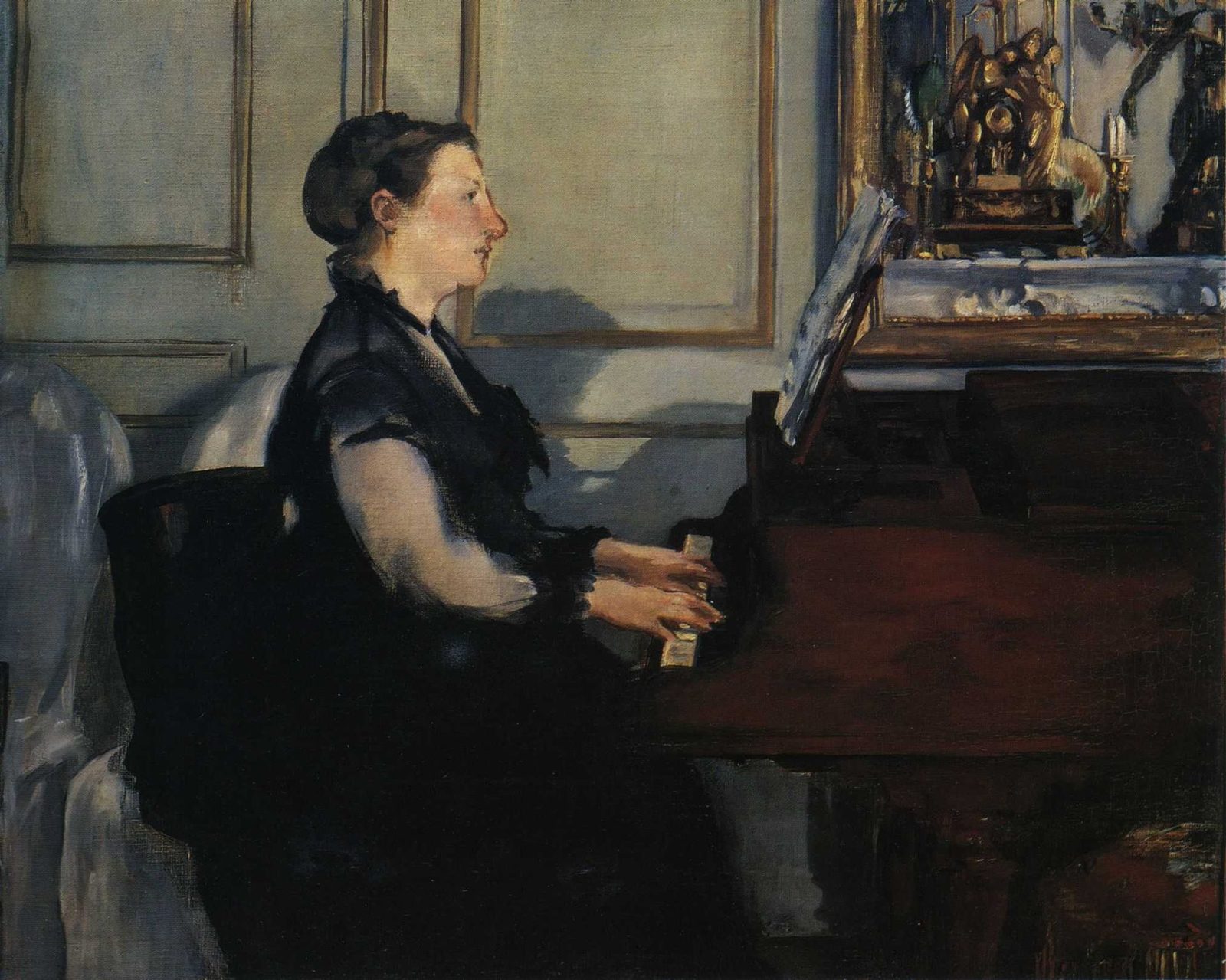
Suzanne Manet Playing the Piano
🎧 This work has audio narration — listen in the appTake a moment to really look at "Suzanne Manet Playing the Piano." Notice how the light dances across the surface of her black dress, creating a striking contrast against the soft, muted tones of the room. And look at her hands—how gracefully they hover over the piano keys, as if caught in a moment of musical magic.
These details aren’t just for show; they reveal Manet’s deep admiration for his wife, Suzanne, a talented pianist who brought comfort to the poet Baudelaire in his final days. By capturing her in this intimate setting, Manet immortalizes not just her beauty but her artistry and the emotional resonance of music in their lives.
Painted in 1867, this piece reflects Manet’s shift towards portraying modern life, moving away from the grand historical themes of his earlier works. It’s a personal glimpse into their world, where art and love intertwine.
As you stand here, think about the stories that music can tell. What memories does this scene evoke for you?
Édouard Manet, born on January 23, 1832, in Paris, emerged as a pivotal figure in 19th-century art, bridging Realism and Impressionism. From an affluent family, he initially faced pressure to pursue a naval career but instead dedicated himself to painting, influenced by his uncle and the Old Masters. His early works, including "The Luncheon on the Grass" and "Olympia," sparked controversy and challenged traditional artistic norms, marking him as a revolutionary force.
Manet's style, characterized by loose brushwork and a focus on contemporary life, diverged from the meticulous techniques of his predecessors. He often depicted modern Parisian scenes, capturing the essence of leisure and social dynamics. Despite initial rejection from the art establishment, he gained recognition among progressive artists and became a mentor to the Impressionists.
Throughout his life, Manet formed connections with influential figures like Baudelaire and Zola, who defended him against critics. His later works, such as "A Bar at the Folies-Bergère," showcased his evolving style and mastery of color. Manet's contributions to art history are profound; he is celebrated not only for his innovative techniques but also for elevating still life and modern subjects to the forefront of artistic expression. He passed away on April 30, 1883, leaving behind a legacy that continues to inspire artists today.
Édouard Manet painted 'Suzanne Manet Playing the Piano' in 1867, capturing a tender moment with his wife, Suzanne. The painting was part of a personal evolution for Manet, moving towards modern life themes. Over the years, it has been part of significant exhibitions, including one at the Grand Palais in 1983, which highlighted Manet's pivotal role in modern art. The provenance traces back through various collectors, including Manet himself and his wife, showcasing its intimate ties to the artist's life.
In 'Suzanne Manet Playing the Piano,' Manet employs a high vantage point, allowing us to focus on Suzanne's hands as they hover over the piano keys, creating a sense of anticipation. The brushwork is both delicate and deliberate, with the black of her dress contrasting beautifully against the lighter, muted background. This choice not only highlights her figure but also evokes a sense of intimacy and warmth in the scene. The light plays a crucial role, dancing across the textures of her dress and the piano, while the small still life reflected in the mirror adds depth and a touch of vibrancy. Manet's technique here reflects his mastery of capturing fleeting moments, inviting viewers to feel the emotional weight of the music she plays.
Did you know that Édouard Manet's wife, Suzanne, was not just his muse but also a talented pianist? In fact, she played Wagner for the poet Charles Baudelaire during his final days in the hospital. This intimate connection between art and life is beautifully captured in this painting, where Manet immortalizes her at the piano, showcasing not only her talent but also their deep bond. It's a reminder of how personal stories can intertwine with artistic expression.
The piano served as a crucial connection between Manet and Suzanne, as she was not only a talented pianist but also played for the poet Baudelaire during his illness, showcasing her ability to bring comfort through music. This shared love for music likely deepened their bond and influenced Manet's artistic portrayal of her.
Manet's portrayal of Suzanne was a direct response to Edgar Degas's earlier painting, which he found unflattering. Manet cut off the part of Degas's canvas that depicted her, opting instead to create a more flattering and intimate representation of his wife at the piano.
In the top right corner of the painting, a small still life is reflected in the mirror, featuring a clock and candlesticks. This detail not only adds depth to the composition but also enhances the intimate atmosphere of the scene.