Régates à Argenteuil
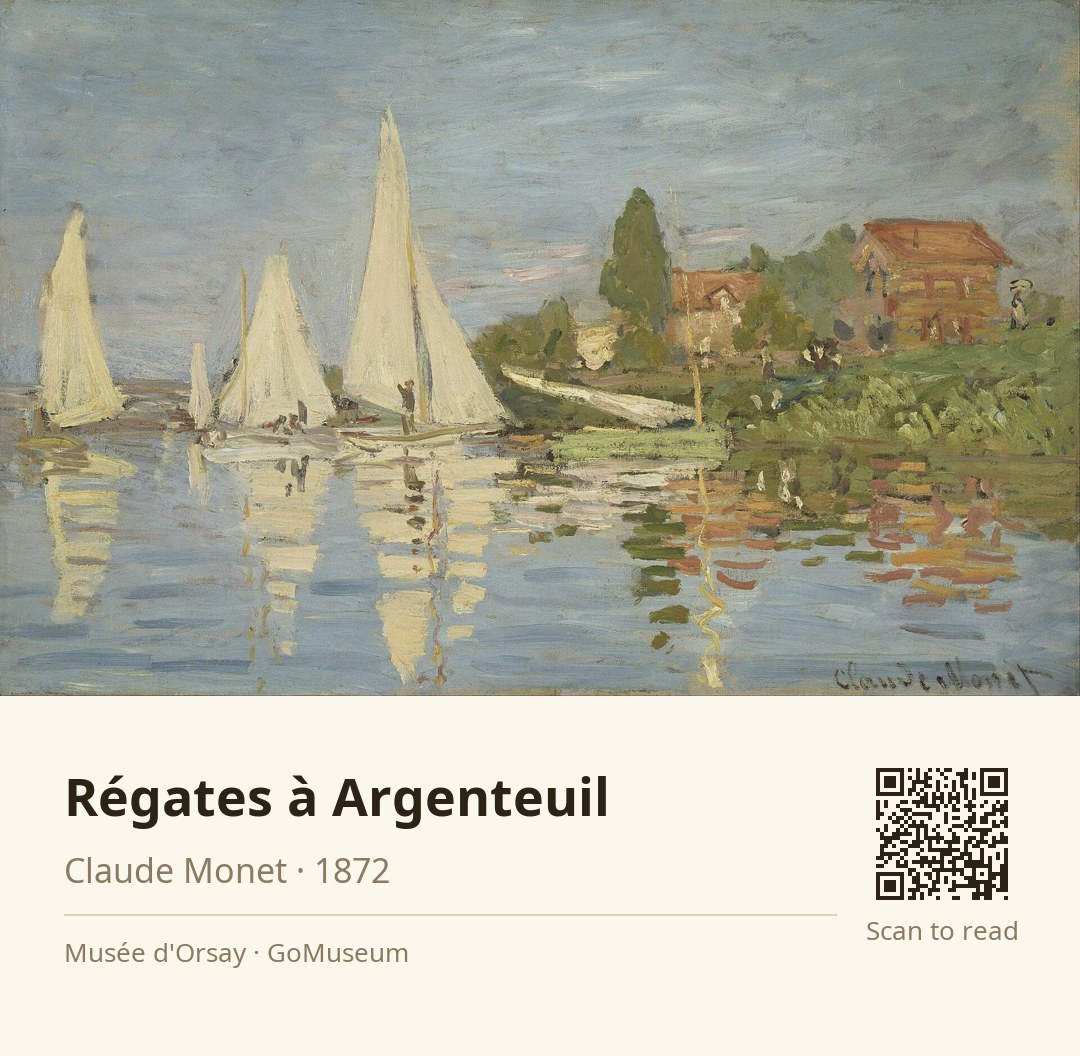
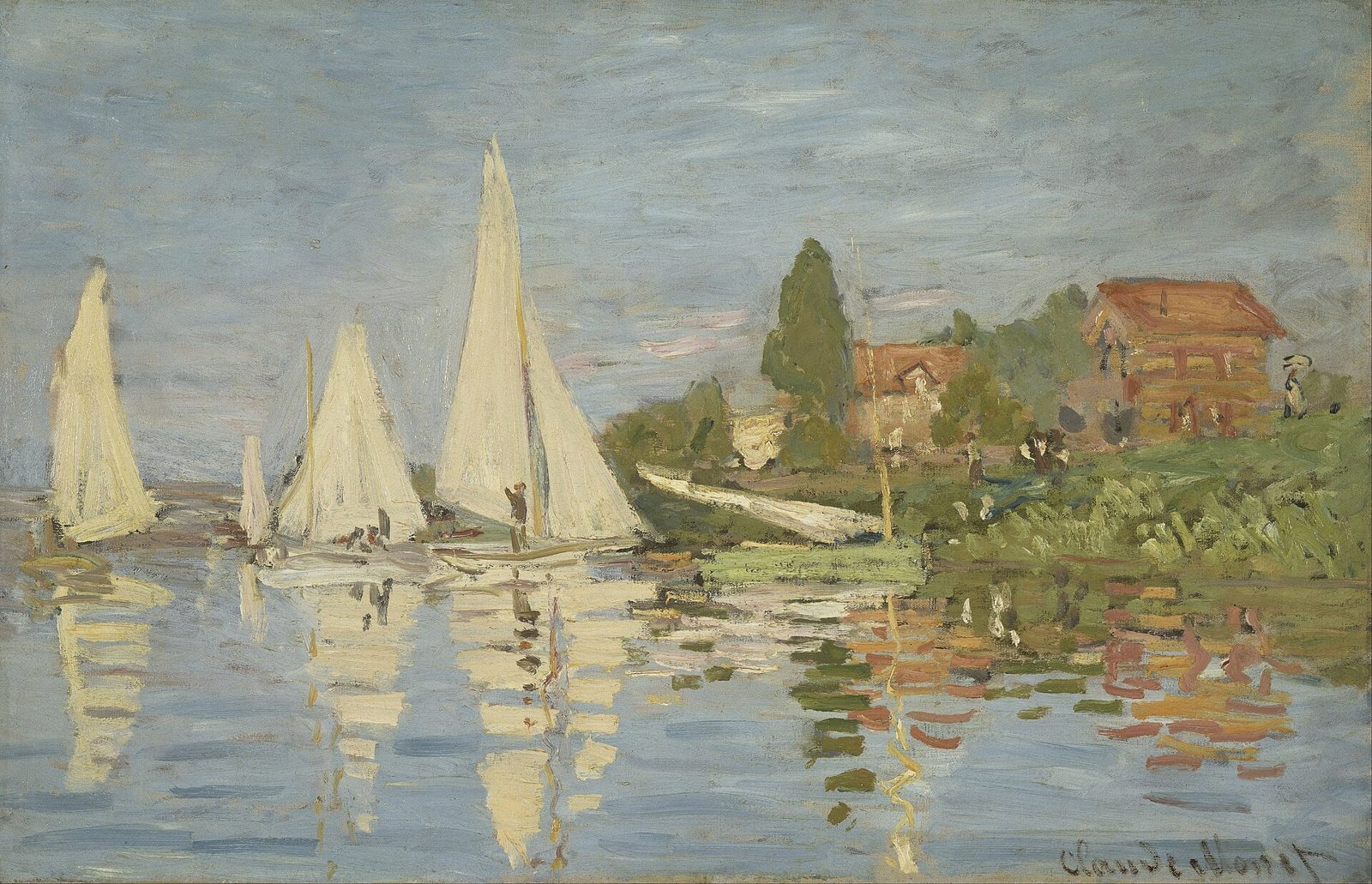
🎧 This work has audio narration — listen in the appTake a moment to really soak in the vibrant energy of Claude Monet’s "Régates à Argenteuil." Notice how the sailboats seem to dance on the shimmering surface of the Seine, their bright colors reflecting in the water like playful brushstrokes of light. Look closely at the way Monet captures the movement of the sails—each one is a burst of color, almost alive, as if they’re racing against the wind.
These details matter because they reveal Monet's fascination with light and movement, key elements of the Impressionist style he helped pioneer. By eliminating dark colors and using pure, bright hues, he creates a sense of spontaneity and joy that invites you to feel the lively atmosphere of a Sunday regatta in the 19th century. This was a time when leisure activities like sailing became popular among Parisians, and Monet was right there, painting the scene from his unique perspective.
Monet lived in Argenteuil during this period, immersing himself in the beauty of the landscape, which inspired many of his works. This painting is not just a depiction of a moment; it’s a celebration of life, light, and the fleeting beauty of nature.
As you stand here, think about what it must have felt like to be part of that lively scene. What stories do you think these boats could tell if they could speak?
Oscar-Claude Monet, born on November 14, 1840, in Paris, was a pioneering French painter and a founder of Impressionism, a movement that transformed the art world. Raised in Le Havre, he developed a passion for nature and painting early on, encouraged by his mother, while his father hoped he would pursue a business career. After his mother's death in 1857, Monet moved in with his aunt, who supported his artistic ambitions.
Monet's career began with caricatures, but he soon sought formal training, studying under Eugène Boudin, who introduced him to plein air painting. His breakthrough came in 1866 with "La Femme à la robe verte," which garnered attention at the Salon. The term "Impressionism" originated from his work "Impression, Sunrise," exhibited in 1874, marking a shift away from traditional art.
Throughout his life, Monet focused on capturing the essence of light and color in nature, creating series of paintings that depicted the same scenes under varying conditions, such as his famous haystacks and water lilies. He settled in Giverny in 1883, where he cultivated a beautiful garden that became his muse. Despite personal hardships, including the loss of loved ones and health issues, Monet's relentless dedication to his craft solidified his place in art history as a master of modernism, influencing countless artists and leaving a lasting legacy. He died on December 5, 1926, in Giverny, celebrated as one of the most significant figures in art.
Initially, the work was displayed at the Musée du Luxembourg before making its way to the Louvre in 1929, then to the Galerie nationale du Jeu de Paume in 1947, and finally settling in the Musée d'Orsay in 1986. The painting reflects the growing popularity of leisure activities among Parisians, particularly sailing, which became a fashionable pastime in the mid-19th century. Monet's choice to depict this lively regatta captures not just a moment in time but a cultural shift in how people engaged with nature and leisure.
Take a closer look at Monet's brushwork in 'Régates à Argenteuil.' His technique is characterized by a lively, fragmented application of color that creates a sense of movement and spontaneity. Notice how he eliminates dark tones, opting instead for pure, bright hues that dance across the canvas. This choice enhances the vibrancy of the scene, making the boats appear almost alive as they glide over the shimmering surface of the Seine. The composition is structured around the interplay of light and color, with horizontal strokes reflecting the water's surface, while the juxtaposition of complementary colors intensifies the visual impact. Monet's decision to paint en plein air, likely from a boat, allows him to capture the scene from a unique low angle, immersing you in the action of the regatta. This approach not only conveys the excitement of the moment but also showcases his fascination with the ever-changing qualities of light.
Gustave Caillebotte, a fellow artist and collector, purchased the painting from Monet in 1876 and later bequeathed it to the French state in 1894, ensuring its preservation and public display.
During the mid-19th century, Argenteuil became a fashionable retreat for Parisians, and Monet's numerous paintings of the Seine from this area reflect the cultural shift towards leisure activities and the beauty of nature.