Square in Argenteuil
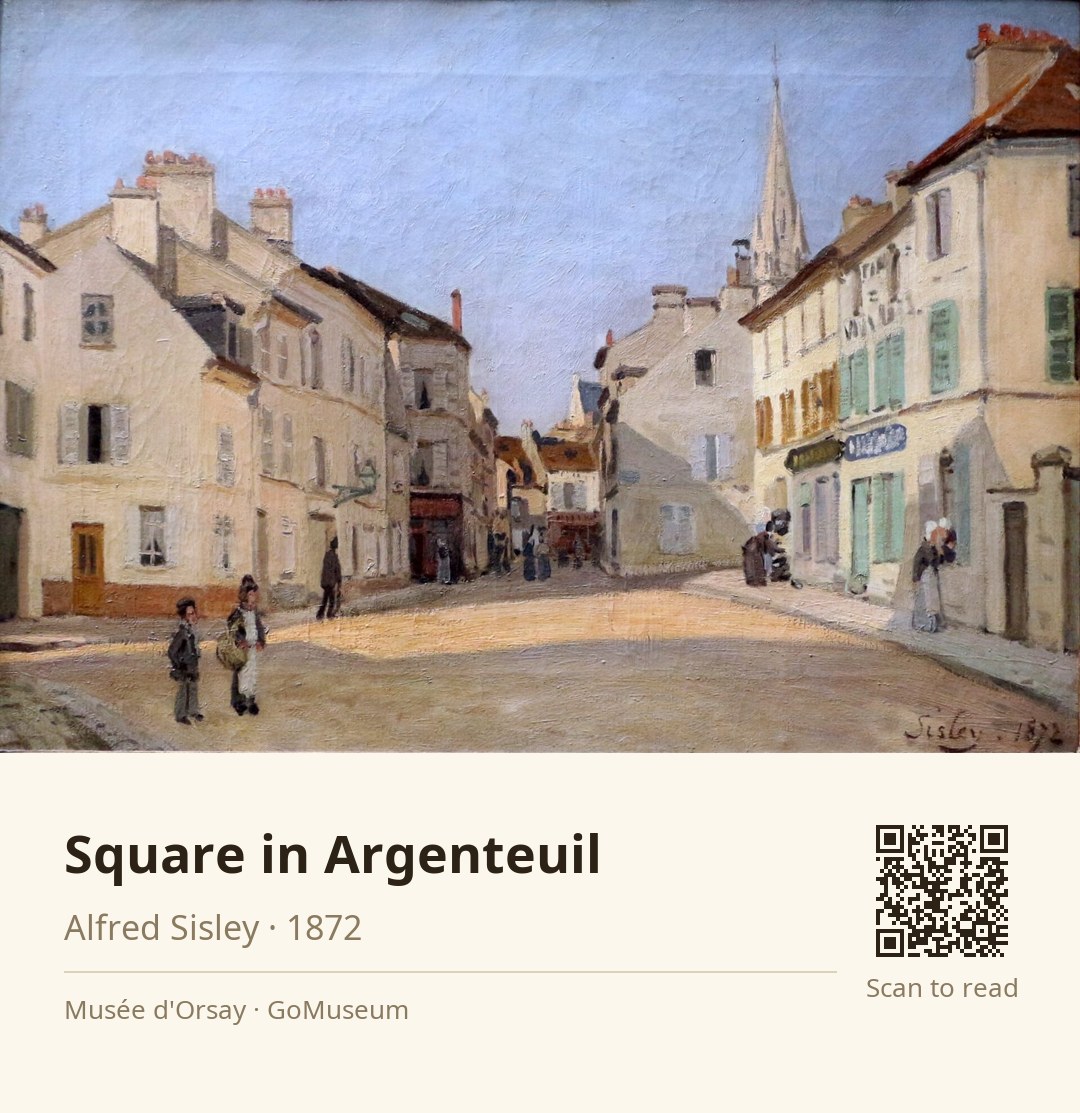
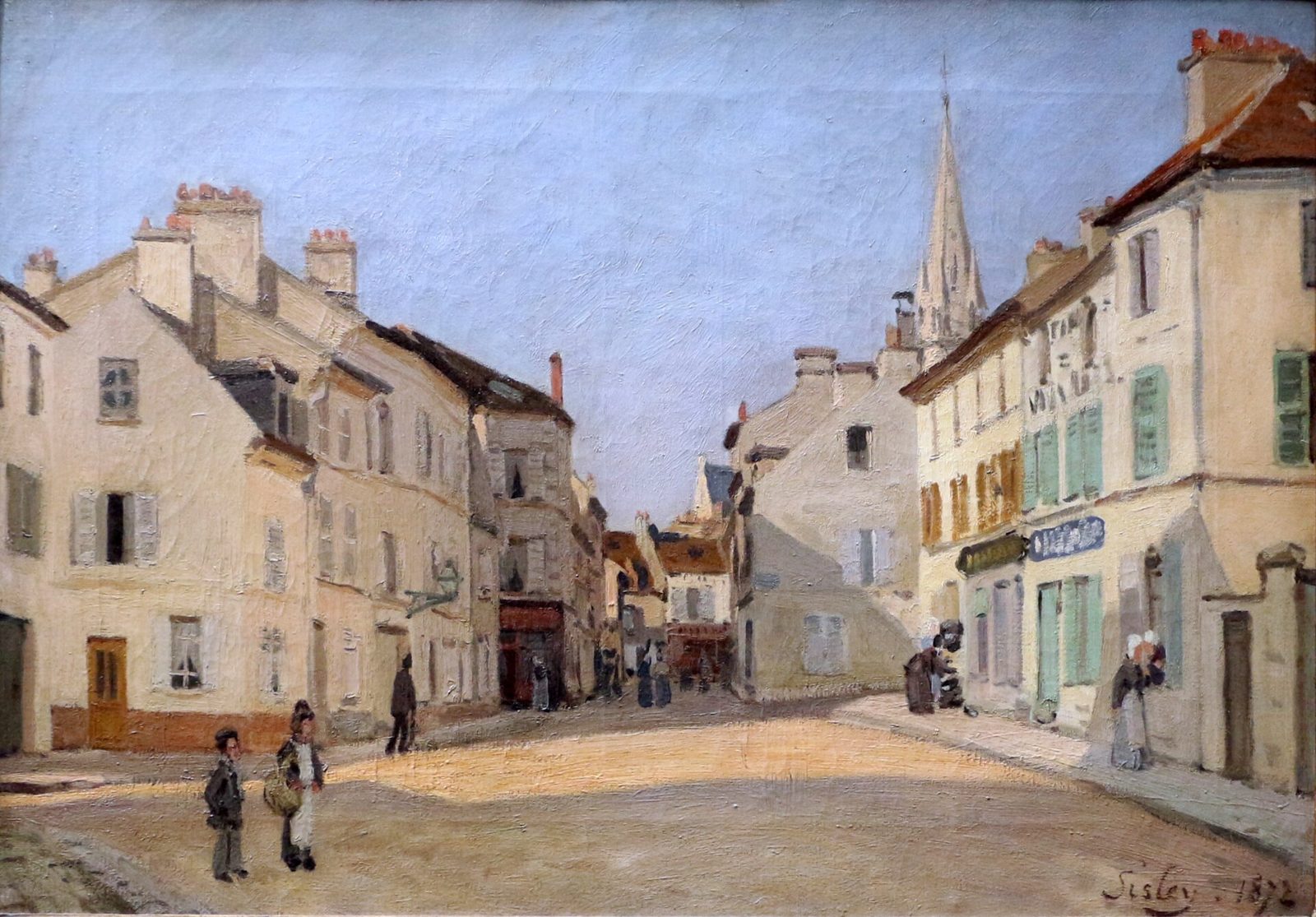
🎧 This work has audio narration — listen in the appTake a moment to really soak in the scene before you in Alfred Sisley’s "Square in Argenteuil." Notice how the light dances across the canvas, illuminating the vibrant greens and soft blues. Look closely at the figures—children playing, their innocence captured in a fleeting moment.
These details matter because they encapsulate the essence of Impressionism, where the focus is on capturing a moment in time, the play of light, and the everyday life of the people. Sisley, a close friend of Claude Monet, often painted in Argenteuil, and you can feel the camaraderie in the brushstrokes, as if they were both trying to outdo each other in their quest to portray the beauty of nature and urban life.
Created in 1872, this piece reflects a period when Sisley was deeply influenced by his surroundings and the changing light of the Seine. Unlike Monet’s more dramatic scenes, Sisley’s work here is serene and balanced, showcasing his unique ability to blend color and composition with a tranquil atmosphere.
As you stand here, think about what this scene might have felt like for the people living in Argenteuil at that time. What stories do you think these children could tell? What memories does this painting evoke for you?
Alfred Sisley was a British-born Impressionist landscape painter, born in Paris on October 30, 1839, to affluent expatriate parents. His dedication to painting outdoors, or en plein air, marked him as one of the most consistent figures within the Impressionist movement. Sisley’s work primarily focused on landscapes, with notable series depicting the River Thames, the floods at Marly-le-Roi, and the Gothic church at Moret-sur-Loing. Despite his talent, he struggled for recognition and financial stability throughout his life, often relying on the support of patrons and friends.
Sisley's artistic journey began in earnest after returning to Paris from London, where he had been sent to pursue a business career. Instead, he found his calling in art, studying at the École des Beaux-Arts and forming close friendships with fellow artists like Monet and Renoir. His personal life was marked by hardship, particularly after the Franco-Prussian War disrupted his family's financial support. He married Eugénie Lescouezec, and together they faced many challenges, including the loss of a child and Sisley’s ongoing financial instability.
Although Sisley’s work was largely overlooked during his lifetime, it has since gained significant appreciation, solidifying his place in art history as a key contributor to Impressionism and French landscape painting. His delicate depictions of nature continue to resonate, showcasing the beauty of the world around him. Sisley passed away on January 29, 1899, in Moret-sur-Loing, leaving behind a legacy that would flourish posthumously.
Alfred Sisley's "Square in Argenteuil" was painted in 1872, during a vibrant period for the Impressionist movement. This particular work was part of a series that Sisley created while frequently visiting his friend Claude Monet, who had settled in Argenteuil just months earlier. The painting was originally part of François Depeaux's collection and was sold at auction in 1906 by Georges Petit to Étienne Moreau-Nélaton, who bequeathed it to the French state later that same year. Since 1986, it has been housed in the Musée d'Orsay, where it continues to draw viewers into its serene world. The painting's journey from private collection to public display reflects the evolving appreciation for Impressionist art, which was often overlooked during the artists' lifetimes.
As you gaze at "Square in Argenteuil," take a moment to appreciate Sisley's masterful brushwork. The way he layers paint creates a sense of depth and movement, particularly in the foliage and the figures of the children. Notice how the light plays across the canvas, with soft blues and vibrant greens that evoke the tranquil atmosphere of a sunny day. Sisley’s composition is notably balanced; he carefully arranges the elements to guide your eye through the scene, from the foreground where the children play to the distant church steeple. The scale of the painting, relatively large at 46.5 by 66 centimeters, allows for an immersive experience, drawing you into the everyday life of Argenteuil. His choice of colors and the gentle blending of tones reflect the fleeting nature of the moment he sought to capture.
Painted in 1872, it reflects a moment when artists like Sisley were breaking away from traditional techniques, opting instead to embrace the spontaneity of outdoor painting. This work not only highlights Sisley's balanced composition but also influenced future generations of landscape painters who sought to convey the subtle interplay of light and atmosphere. Its legacy lies in how it encapsulates the tranquil beauty of everyday scenes, encouraging viewers to appreciate the ordinary in extraordinary ways.
Interestingly, Sisley was born to British parents in Paris and spent most of his life in France, yet he never gained French citizenship during his lifetime. Despite his deep connection to French culture and his significant contributions to the Impressionist movement, he remained a British national until his death in 1899.
Sisley was born to affluent British parents in Paris, which provided him with a privileged education and exposure to the arts from an early age. His mother was a music connoisseur, which may have fostered his appreciation for harmony and beauty, elements that are evident in his serene landscapes.
Despite his talent, Sisley faced financial struggles throughout his life, especially after the failure of his father's business during the Franco-Prussian War. This led him to rely solely on the sale of his paintings, which did not gain significant value until after his death, highlighting the often precarious nature of an artist's livelihood.
Sisley's friendship with Monet was pivotal, as they often painted side by side in Argenteuil, influencing each other's techniques and perspectives. This camaraderie not only enriched Sisley's work but also placed him within the vibrant context of the Impressionist movement, where they both sought to capture the beauty of everyday life.