Portrait of Eugène Boch
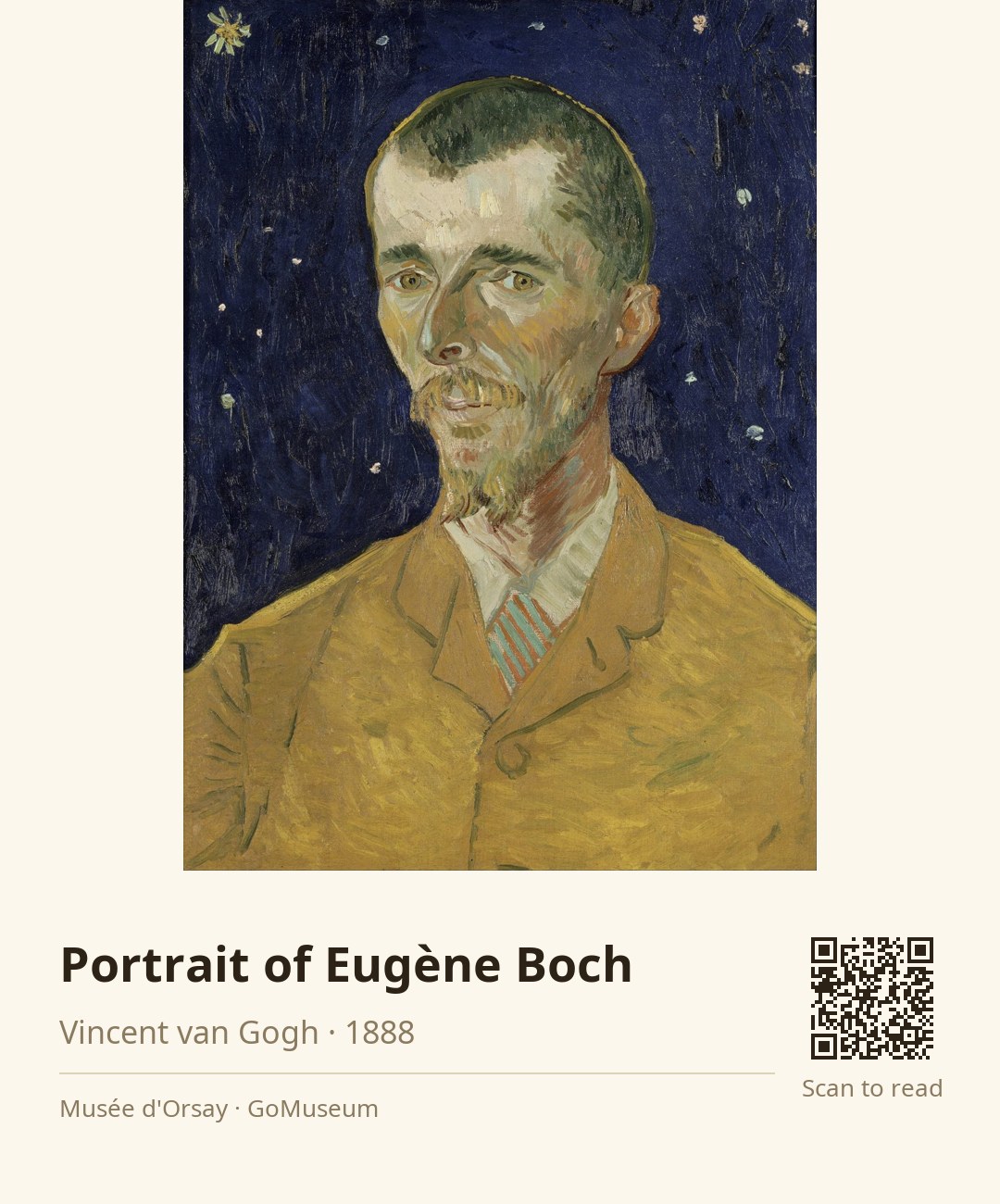
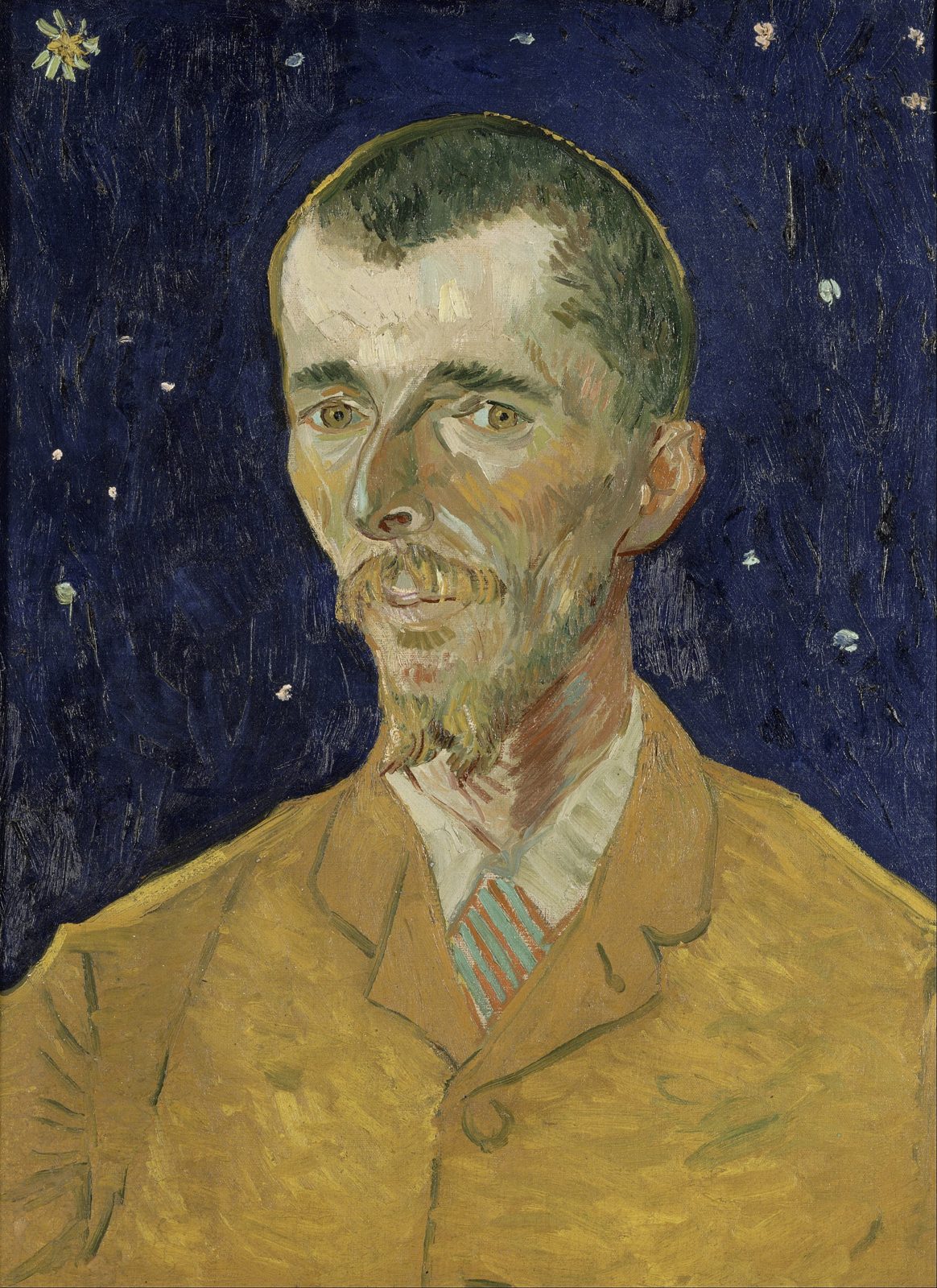
🎧 This work has audio narration — listen in the appTake a moment to really look at this striking portrait of Eugène Boch by Vincent van Gogh. Notice how Boch’s fine, delicate features stand out against that deep, starry blue background. It’s almost as if he’s emerging from the night sky itself.
Now, focus on the way Van Gogh has painted Boch’s eyes—they’re bright and almost luminous, drawing you in with an intensity that feels personal. This isn’t just a casual portrait; it’s a glimpse into the soul of a friend and fellow artist, captured during a time when Van Gogh was deeply exploring the human experience through his art.
Well, Van Gogh was not just painting a likeness; he was expressing a connection, a shared journey in the world of art. Boch was an impressionist painter himself, and this portrait reflects Van Gogh's admiration for his friend, as well as his desire to create a “luxury of portraits” that conveyed emotion and depth.
Created in 1888 while Van Gogh was living in Arles, this work is part of a transformative period for him, where he began to embrace bold colors and expressive brushwork. It’s fascinating to think about how this portrait hung in Van Gogh’s own bedroom, a constant reminder of friendship amidst his struggles.
As you stand here, consider: what stories do you think Van Gogh might have shared with Boch during their time together? What emotions do you feel when you look into Boch’s eyes?
Vincent van Gogh was a Dutch Post-Impressionist painter born on March 30, 1853, in Zundert. He is renowned for his vibrant use of color and expressive brushwork, which laid the groundwork for modern art. Despite creating around 2,100 artworks in just over a decade, including 860 oil paintings, he struggled with mental illness and poverty throughout his life. His early career as an art dealer was marked by disillusionment, leading him to pursue painting in 1881.
Van Gogh's intense passion for art was evident in his correspondence with his brother Theo, who provided emotional and financial support. His works evolved significantly after moving to Paris in 1886, where he mingled with avant-garde artists. His time in Arles in 1888 marked a peak in his creativity, producing iconic series like sunflowers and wheat fields.
Tragically, van Gogh's life ended in suicide at 37, after years of battling his demons. Initially unrecognized, he gained fame posthumously, becoming a symbol of the tortured artist. His legacy influenced movements like Fauvism and Expressionism, securing his place as one of the most significant figures in art history.
Vincent van Gogh painted the Portrait of Eugène Boch in September 1888, during his transformative time in Arles, France. Initially, the painting was hung above Van Gogh's bed in the Maison Jaune, serving as a constant reminder of their friendship. After Van Gogh's death, Boch received the painting from Johanna van Gogh Bonger, Vincent's sister-in-law, in 1891. Boch cherished it throughout his life, keeping it in his room at the Villa La Grimpette in Monthyon. Eventually, he bequeathed it to the Amis du Louvre in 1941, ensuring its preservation and continued appreciation.
As you examine the painting, notice Van Gogh's dynamic brushwork. The strokes are bold and expressive, creating a sense of movement that feels almost alive. The deep blue background contrasts sharply with Boch's delicate features, making them pop out at you. This choice of color not only enhances the emotional depth but also reflects the night sky, suggesting a connection to the cosmos. The composition is intimate, drawing you into Boch's gaze, which is both penetrating and inviting. Van Gogh's use of light is particularly striking; it seems to illuminate Boch's face from within, giving it an ethereal quality. This technique, combined with the vivid colors, creates a portrait that transcends mere representation, inviting you to feel the essence of Boch's character.
Painted during his vibrant Arles period, this work showcases Van Gogh's bold use of color and expressive brushwork, which would go on to influence generations of artists. The way he captures Boch's essence against a deep blue night sky, speckled with stars, hints at the emotional depth and psychological insight that would become hallmarks of modern art. Remember, this was a time when artists were beginning to break free from traditional constraints, and Van Gogh was at the forefront of that movement.
Imagine waking up every morning to the sight of your friend's face, a reminder of your artistic ambitions and shared dreams. Van Gogh painted this piece in September 1888, during a time when he was deeply immersed in his quest for portraiture, hoping to capture the essence of his subjects with a 'luxury of portraits' as he described in his letters. This intimate connection between artist and subject adds a layer of depth to the painting, making it not just a representation but a piece of their shared history.