The Regatta at Molesey
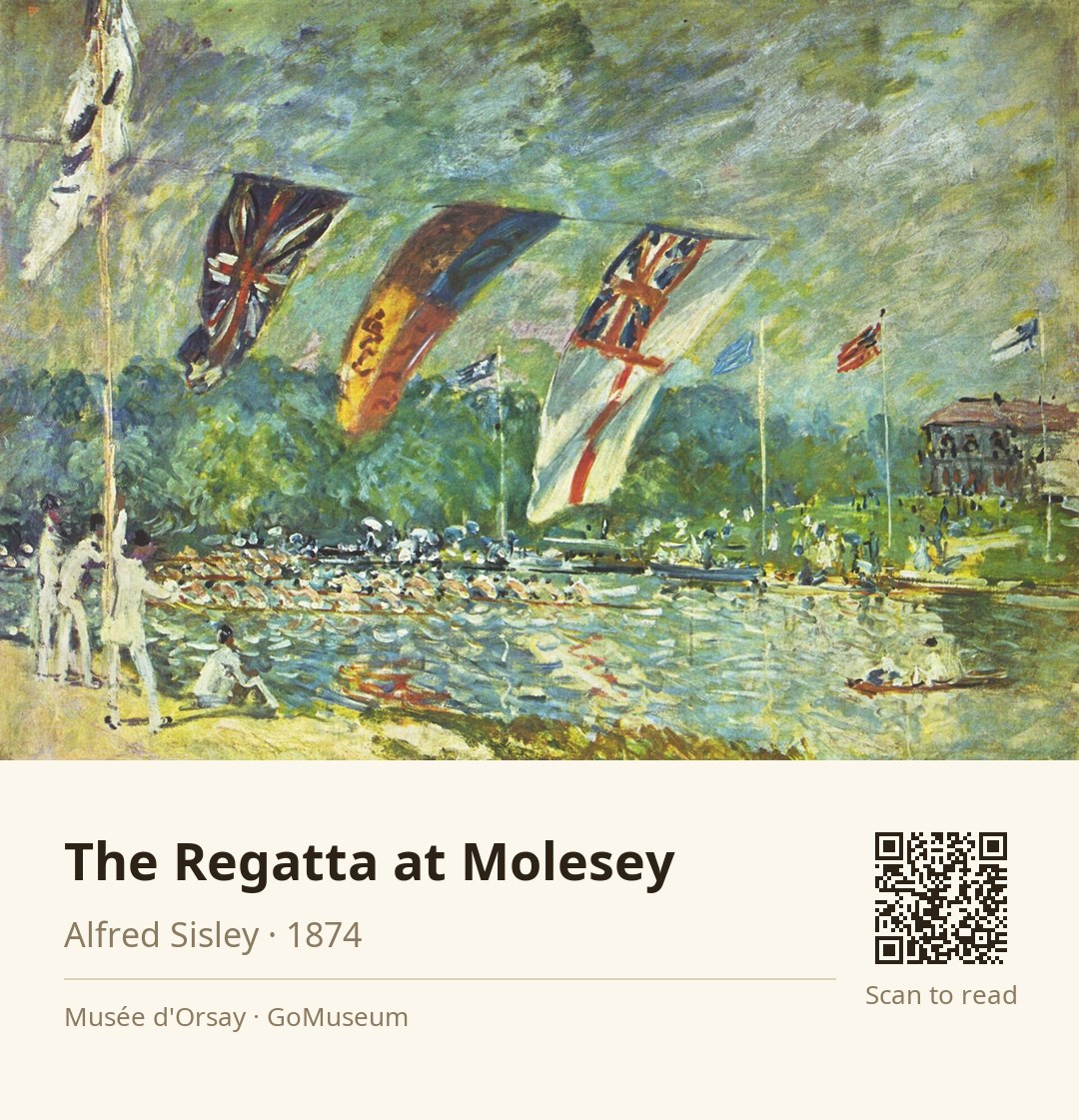
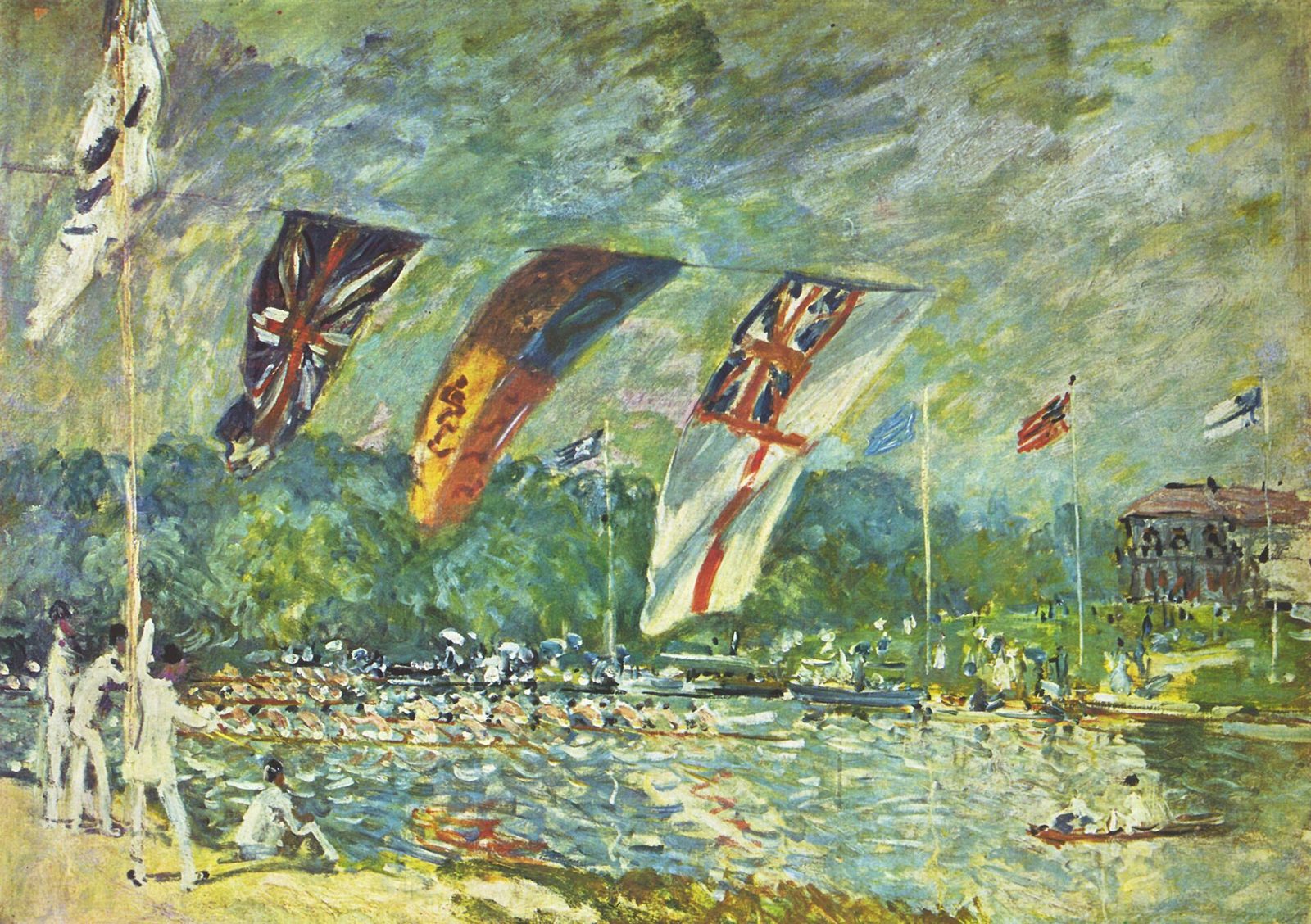
🎧 This work has audio narration — listen in the appTake a moment to really soak in the vibrant energy of "The Regatta at Molesey." Look closely at the lively splashes of color that Sisley has used to capture the excitement of the rowing competition on the Thames. Notice how the sunlight dances on the water, illuminating the boats and the spectators in a joyful celebration of summer.
These details matter because they reflect not just a moment in time, but the spirit of the Impressionist movement itself. Sisley, often overshadowed by his contemporaries, manages to convey a sense of movement and life that draws you in, making you feel as if you’re part of the scene. This painting, created during a transformative summer in 1874, showcases his ability to blend light and color in a way that evokes emotion and connection.
Now, consider that Sisley painted this while staying in England, a place where he found inspiration and a new palette, contrasting with the often-muted tones of his earlier works. The Molesey Regatta was a new event at the time, and Sisley captures its inaugural excitement with a fresh perspective.
As you stand here, think about the thrill of competition and the beauty of nature that Sisley so masterfully intertwines. What stories do you think the people in this painting might tell if they could speak?
Alfred Sisley was a British-born Impressionist landscape painter, born in Paris on October 30, 1839, to affluent expatriate parents. His dedication to painting outdoors, or en plein air, marked him as one of the most consistent figures within the Impressionist movement. Sisley’s work primarily focused on landscapes, with notable series depicting the River Thames, the floods at Marly-le-Roi, and the Gothic church at Moret-sur-Loing. Despite his talent, he struggled for recognition and financial stability throughout his life, often relying on the support of patrons and friends.
Sisley's artistic journey began in earnest after returning to Paris from London, where he had been sent to pursue a business career. Instead, he found his calling in art, studying at the École des Beaux-Arts and forming close friendships with fellow artists like Monet and Renoir. His personal life was marked by hardship, particularly after the Franco-Prussian War disrupted his family's financial support. He married Eugénie Lescouezec, and together they faced many challenges, including the loss of a child and Sisley’s ongoing financial instability.
Although Sisley’s work was largely overlooked during his lifetime, it has since gained significant appreciation, solidifying his place in art history as a key contributor to Impressionism and French landscape painting. His delicate depictions of nature continue to resonate, showcasing the beauty of the world around him. Sisley passed away on January 29, 1899, in Moret-sur-Loing, leaving behind a legacy that would flourish posthumously.
Alfred Sisley's 'The Regatta at Molesey' was painted in 1874 during a pivotal four-month stay in England, a trip funded by his patron, the art collector Jean-Baptiste Faure. This painting captures the inaugural Molesey Regatta, an event that began just a year earlier, showcasing the lively rowing competition on the Thames. Initially, the painting was part of Gustave Caillebotte's collection, who bequeathed it to the French state in 1894. It traveled through various prestigious venues, including the Musée du Luxembourg and the Louvre, before finding its home at the Musée d'Orsay in 1986. The work reflects Sisley's vibrant palette and energetic brushwork, a stark contrast to the often-muted tones of his earlier pieces, marking a significant moment in his artistic evolution.
In 'The Regatta at Molesey', Sisley employs a lively brushwork technique that captures the fleeting moments of the regatta with a sense of immediacy. Notice how the dabs of color blend seamlessly to create the shimmering effect of sunlight on the water. The composition is structured to draw your eye across the canvas, from the boats to the spectators, creating a dynamic sense of movement. Sisley’s choice of a bright color palette, particularly the vibrant blues and greens, evokes the freshness of a summer day, while the loose, expressive strokes convey the excitement and energy of the event.
Did you know that Alfred Sisley painted 'The Regatta at Molesey' during a four-month stay in England, funded by his patron Jean-Baptiste Faure? This trip was pivotal for Sisley, as it marked a moment when his works became unexpectedly brighter and more festive, despite the often gloomy English weather. The Molesey Regatta itself was an event started by an amateur sportsman just a year before Sisley captured it on canvas, and it continues to this day! Imagine the excitement of that first race, with Sisley there to immortalize it in his own unique style.
In the painting, the recently constructed Island Hotel on Tagg's Island is visible, which not only adds a contemporary touch to the scene but also highlights the development of leisure facilities along the Thames during the period.