Le Repos au bord d'un ruisseau. Lisière de bois
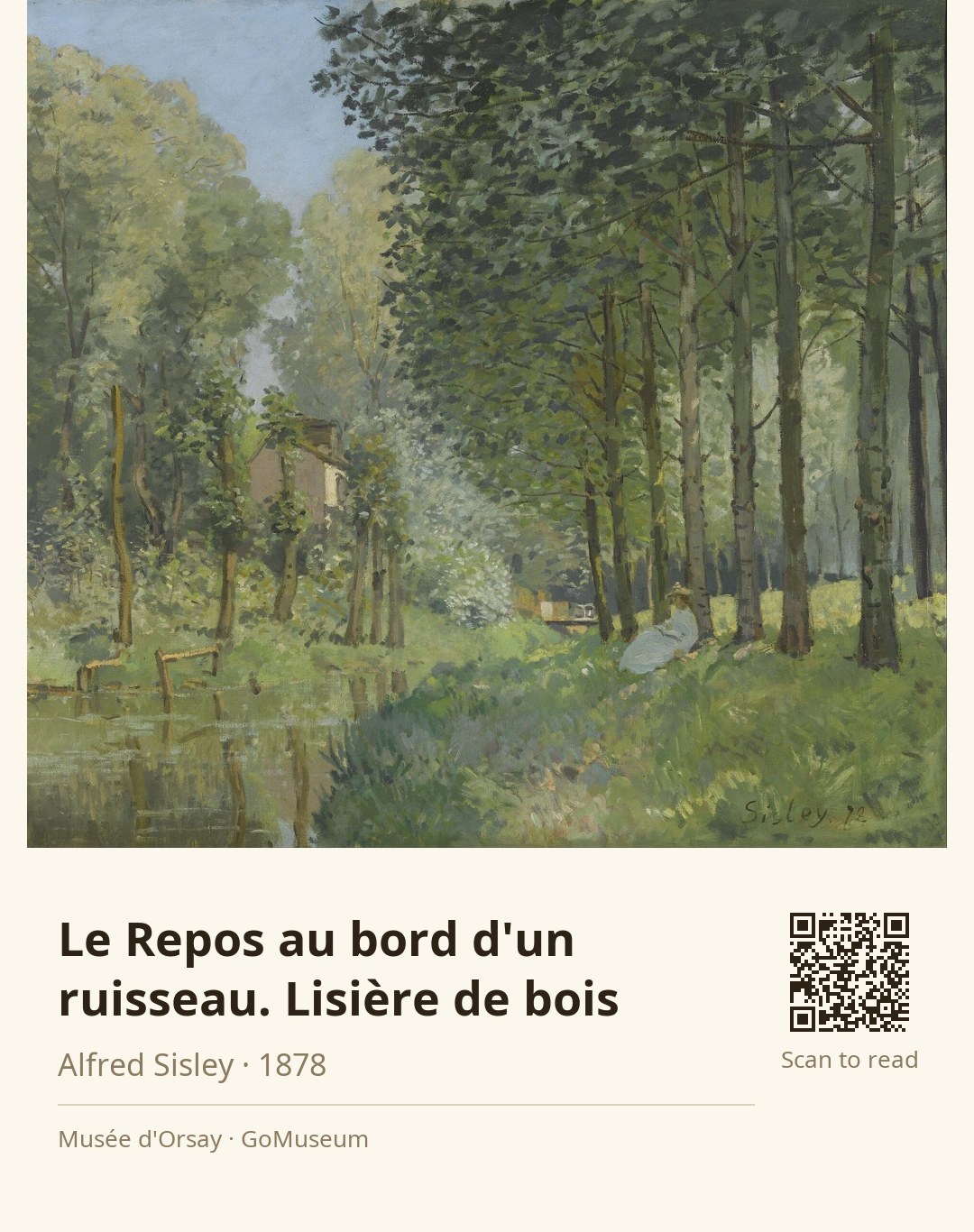
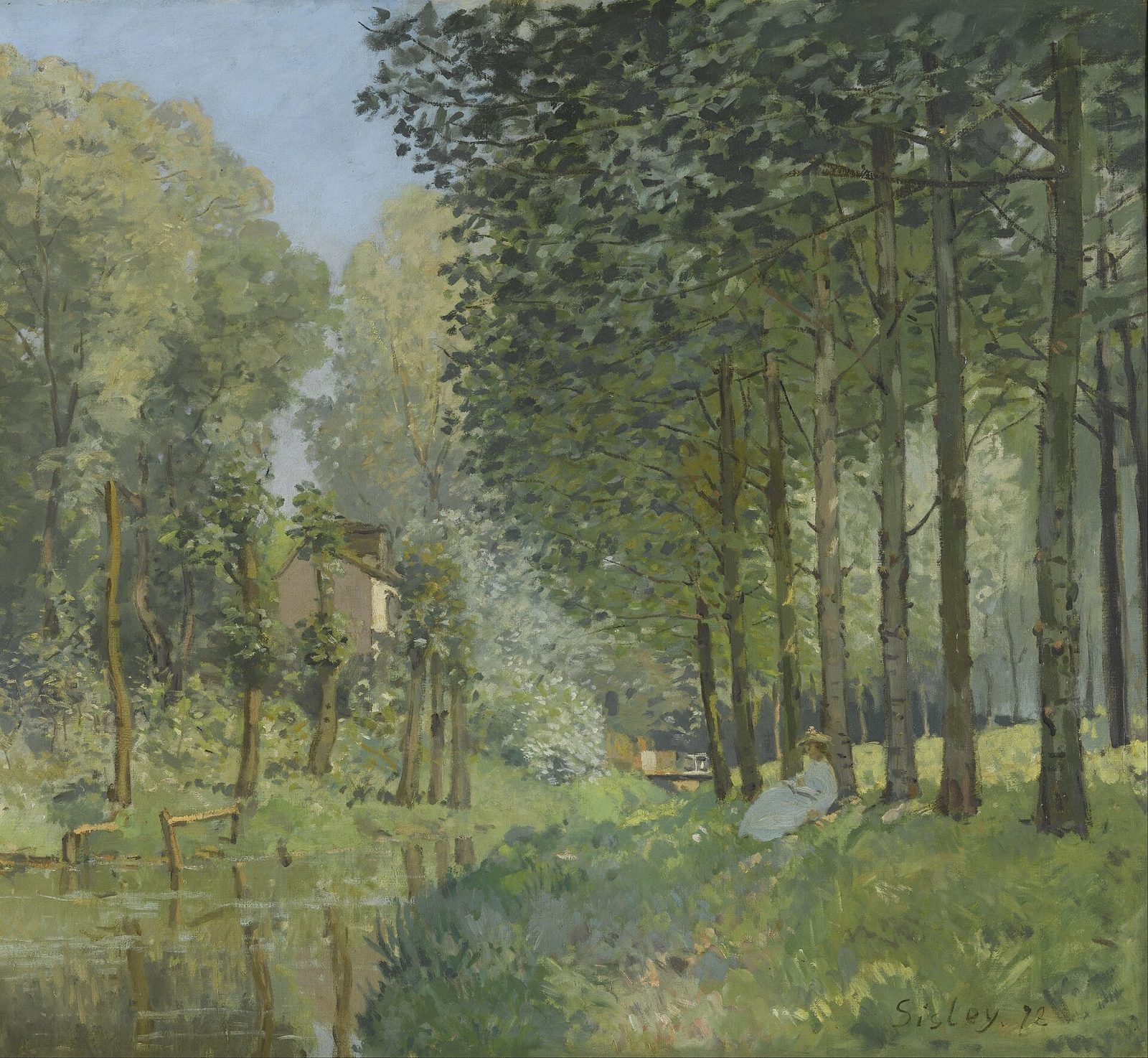
🎧 This work has audio narration — listen in the appTake a moment to really soak in the tranquility of Alfred Sisley’s “Le Repos au bord d'un ruisseau. Lisière de bois.” Look closely at the way the sunlight dances on the water, creating a shimmering effect that feels almost alive. Notice how the soft greens and blues blend seamlessly, inviting you into this serene woodland scene.
These details matter because they capture the essence of Impressionism—Sisley’s dedication to painting outdoors, or “en plein air,” allows him to convey the fleeting beauty of nature. The gentle brushstrokes and light palette evoke a sense of calm, transporting you to a peaceful moment by the stream, as if you could hear the water flowing and the leaves rustling in the breeze.
Created in 1878, this painting reflects Sisley’s deep connection to the French landscape. Despite facing financial struggles throughout his life, he remained committed to his art, finding joy in the simplicity of nature.
As you stand here, think about what it feels like to escape into nature. What memories does this scene stir up for you?
Alfred Sisley was a British-born Impressionist landscape painter, born in Paris on October 30, 1839, to affluent expatriate parents. His dedication to painting outdoors, or en plein air, marked him as one of the most consistent figures within the Impressionist movement. Sisley’s work primarily focused on landscapes, with notable series depicting the River Thames, the floods at Marly-le-Roi, and the Gothic church at Moret-sur-Loing. Despite his talent, he struggled for recognition and financial stability throughout his life, often relying on the support of patrons and friends.
Sisley's artistic journey began in earnest after returning to Paris from London, where he had been sent to pursue a business career. Instead, he found his calling in art, studying at the École des Beaux-Arts and forming close friendships with fellow artists like Monet and Renoir. His personal life was marked by hardship, particularly after the Franco-Prussian War disrupted his family's financial support. He married Eugénie Lescouezec, and together they faced many challenges, including the loss of a child and Sisley’s ongoing financial instability.
Although Sisley’s work was largely overlooked during his lifetime, it has since gained significant appreciation, solidifying his place in art history as a key contributor to Impressionism and French landscape painting. His delicate depictions of nature continue to resonate, showcasing the beauty of the world around him. Sisley passed away on January 29, 1899, in Moret-sur-Loing, leaving behind a legacy that would flourish posthumously.
Lisière de bois' was painted in 1878 and showcased at the third Impressionist exhibition in Paris the following year. This painting was part of a collection owned by Étienne Moreau-Nélaton, a notable patron of the arts, who later donated it to the French state in 1906. It has since found a permanent home at the Musée d'Orsay. The reception of Sisley's work during his lifetime was often lukewarm; he struggled financially and faced many rejections from the prestigious Salon exhibitions. However, his dedication to capturing the essence of nature in his landscapes began to gain recognition posthumously, influencing future generations of artists.
In 'Le Repos au bord d'un ruisseau,' Sisley employs delicate brushwork that creates a sense of movement and life within the tranquil scene. The way he layers soft greens and blues invites the viewer into a serene woodland, while the dappled sunlight reflects off the water, enhancing the painting's vibrancy. Notice how Sisley uses a light palette to evoke a gentle atmosphere, contrasting with the more dramatic tones favored by some of his contemporaries. The composition is structured to draw your eye along the stream, inviting you to explore the depths of the woodland. This technique of painting en plein air allowed him to capture the fleeting effects of light and weather, making the scene feel almost ephemeral.
Alfred Sisley's 'Le Repos au bord d'un ruisseau. Lisière de bois' is a striking example of Impressionism that captures the serene beauty of nature. This painting, created in 1878, showcases Sisley’s dedication to plein air painting, a practice that revolutionized how landscapes were depicted. Unlike many of his contemporaries, Sisley focused on the tranquility of the countryside rather than dramatic scenes, influencing future landscape artists to explore subtlety and atmosphere. His ability to convey light and color in such delicate hues set a precedent for later movements, reminding us that sometimes, the quiet moments in nature are the most profound. Remember, it’s this gentle approach that helped solidify Impressionism's place in art history, allowing viewers to experience the world through a lens of peace and reflection.
One intriguing aspect of Sisley's life is that despite his British origins, he never gained French citizenship, even after multiple attempts. His identity as a British national remained until his death in 1899.
Sisley was known for his meticulous layering of paint, which allowed him to capture the subtleties of light and atmosphere, creating a sense of depth that is sometimes missed at first glance.
The painting was created near Moret-sur-Loing, a place that offered Sisley a rich variety of landscapes, which he found perfectly suited to his impressionistic style, allowing him to explore the interplay of light and nature.