Le Canal Saint-Martin
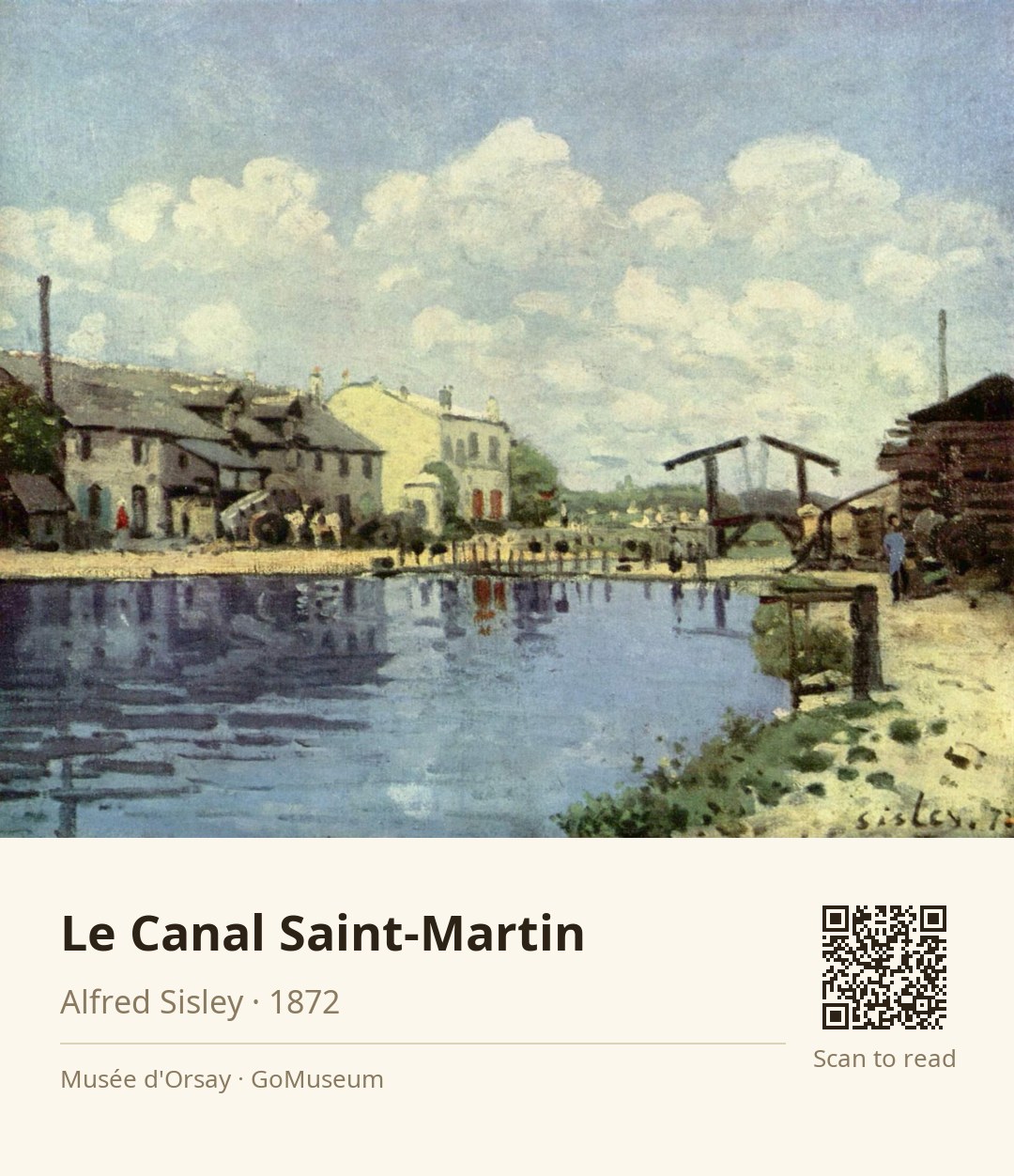
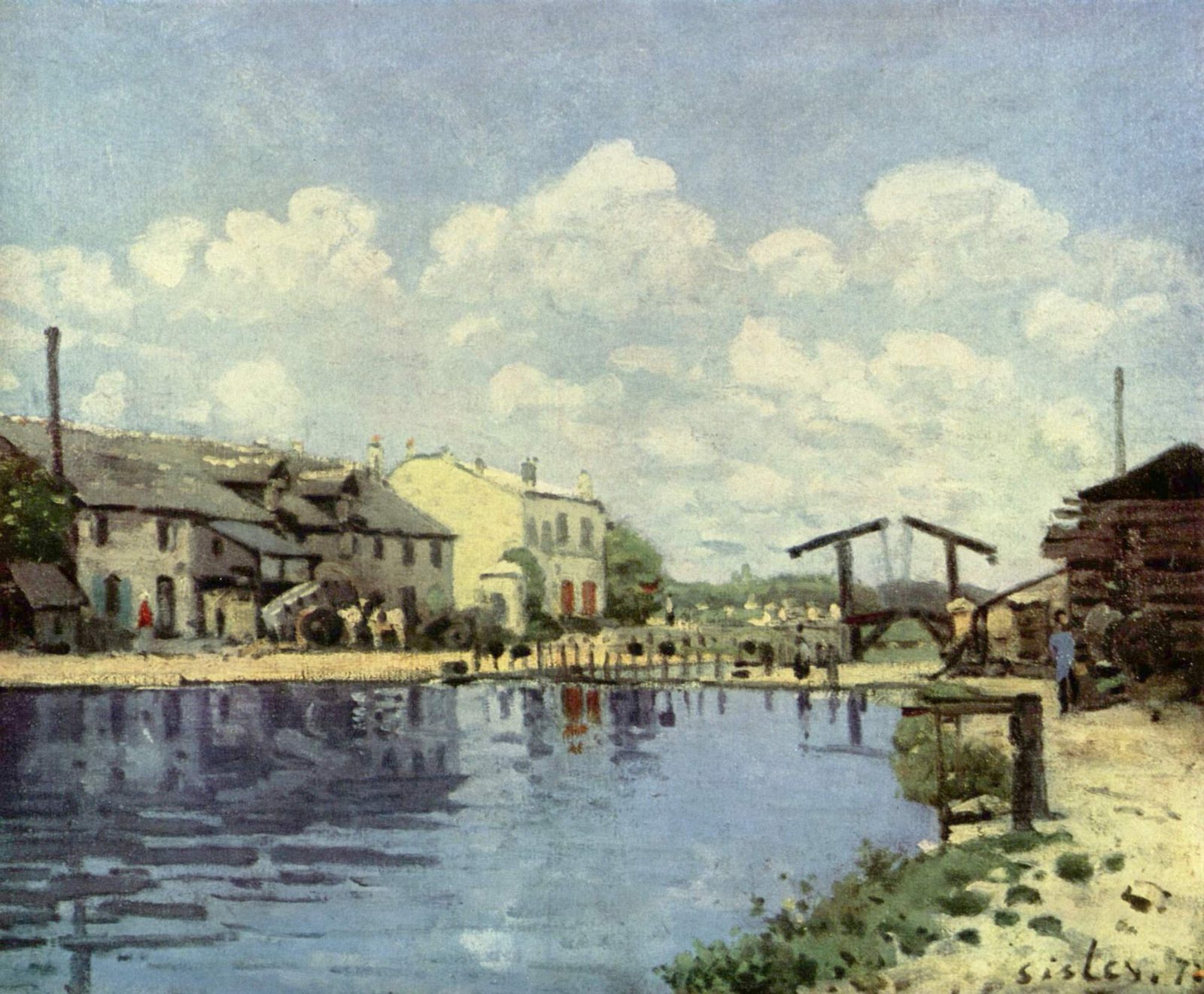
🎧 This work has audio narration — listen in the appTake a moment to really look at "Le Canal Saint-Martin" by Alfred Sisley. Notice how the water reflects the soft hues of the sky, almost like a mirror capturing the fleeting moments of a Parisian day. The gentle ripples and the way the light dances on the surface create a sense of tranquility that pulls you in.
These details matter because they reveal Sisley’s mastery of capturing light and atmosphere, key elements of Impressionism. While many artists focused on grand subjects, Sisley found beauty in the everyday, transforming an industrial canal into a serene landscape. This painting is part of a series he created while living near the canal, showcasing his deep connection to this urban environment.
Sisley, born to British parents in Paris, dedicated his life to painting landscapes outdoors, a practice that was revolutionary at the time. His work often reflects a quiet, contemplative mood, contrasting with the bustling life of the city around him.
As you take in this scene, think about the stories that might unfold along this canal. What lives have passed by here? What moments of joy or sorrow have been captured in the reflections of the water? Let your imagination wander as you stand before this beautiful piece of art.
Alfred Sisley was a British-born Impressionist landscape painter, born in Paris on October 30, 1839, to affluent expatriate parents. His dedication to painting outdoors, or en plein air, marked him as one of the most consistent figures within the Impressionist movement. Sisley’s work primarily focused on landscapes, with notable series depicting the River Thames, the floods at Marly-le-Roi, and the Gothic church at Moret-sur-Loing. Despite his talent, he struggled for recognition and financial stability throughout his life, often relying on the support of patrons and friends.
Sisley's artistic journey began in earnest after returning to Paris from London, where he had been sent to pursue a business career. Instead, he found his calling in art, studying at the École des Beaux-Arts and forming close friendships with fellow artists like Monet and Renoir. His personal life was marked by hardship, particularly after the Franco-Prussian War disrupted his family's financial support. He married Eugénie Lescouezec, and together they faced many challenges, including the loss of a child and Sisley’s ongoing financial instability.
Although Sisley’s work was largely overlooked during his lifetime, it has since gained significant appreciation, solidifying his place in art history as a key contributor to Impressionism and French landscape painting. His delicate depictions of nature continue to resonate, showcasing the beauty of the world around him. Sisley passed away on January 29, 1899, in Moret-sur-Loing, leaving behind a legacy that would flourish posthumously.
Alfred Sisley's "Le Canal Saint-Martin" was painted in 1872, during a time when he was deeply engaged with the Impressionist movement. This particular work was part of a series of four paintings he created, all focusing on the canal, which was a stone's throw from his home. The painting was later exhibited at the Exposition Universelle in Paris in 1900, a significant event showcasing the evolution of French art. In 1907, the painting was donated to the Musée d'Orsay by Étienne Moreau-Nélaton, a notable patron of the arts.
As you gaze at "Le Canal Saint-Martin," pay attention to Sisley's masterful brushwork. His technique is characterized by loose, fluid strokes that create a sense of movement and life. The way he layers the paint gives the water a shimmering quality, almost as if it’s alive. Notice how he uses a palette of soft blues, greens, and pinks to evoke the tranquility of the scene. The composition draws your eye along the canal, inviting you to explore the depth of the painting. Sisley’s choice to depict the industrial canal, rather than a grand landscape, showcases his innovative approach to capturing the essence of modern life. The balance between the serene water and the urban environment reflects his unique ability to find beauty in the ordinary.
Did you know that Alfred Sisley painted 'Le Canal Saint-Martin' while living just a stone's throw away from the canal itself? This painting is part of a series of four works he created, all showcasing this industrial landscape. It's fascinating to think that Sisley, often overshadowed by his more famous Impressionist peers, found inspiration in the everyday scenes around him, capturing the essence of urban life in a way that feels both intimate and expansive.
Despite his talent, Sisley faced financial difficulties throughout his life, especially after the failure of his father's business during the Franco-Prussian War, which forced him to rely solely on his art for income, impacting his ability to gain recognition during his lifetime.
Living near the Canal Saint-Martin allowed Sisley to develop a deep personal connection to the location, which inspired him to paint it multiple times, reflecting his intimate understanding of the area's atmosphere and daily life.