The Water Lily Pond: Green Harmony
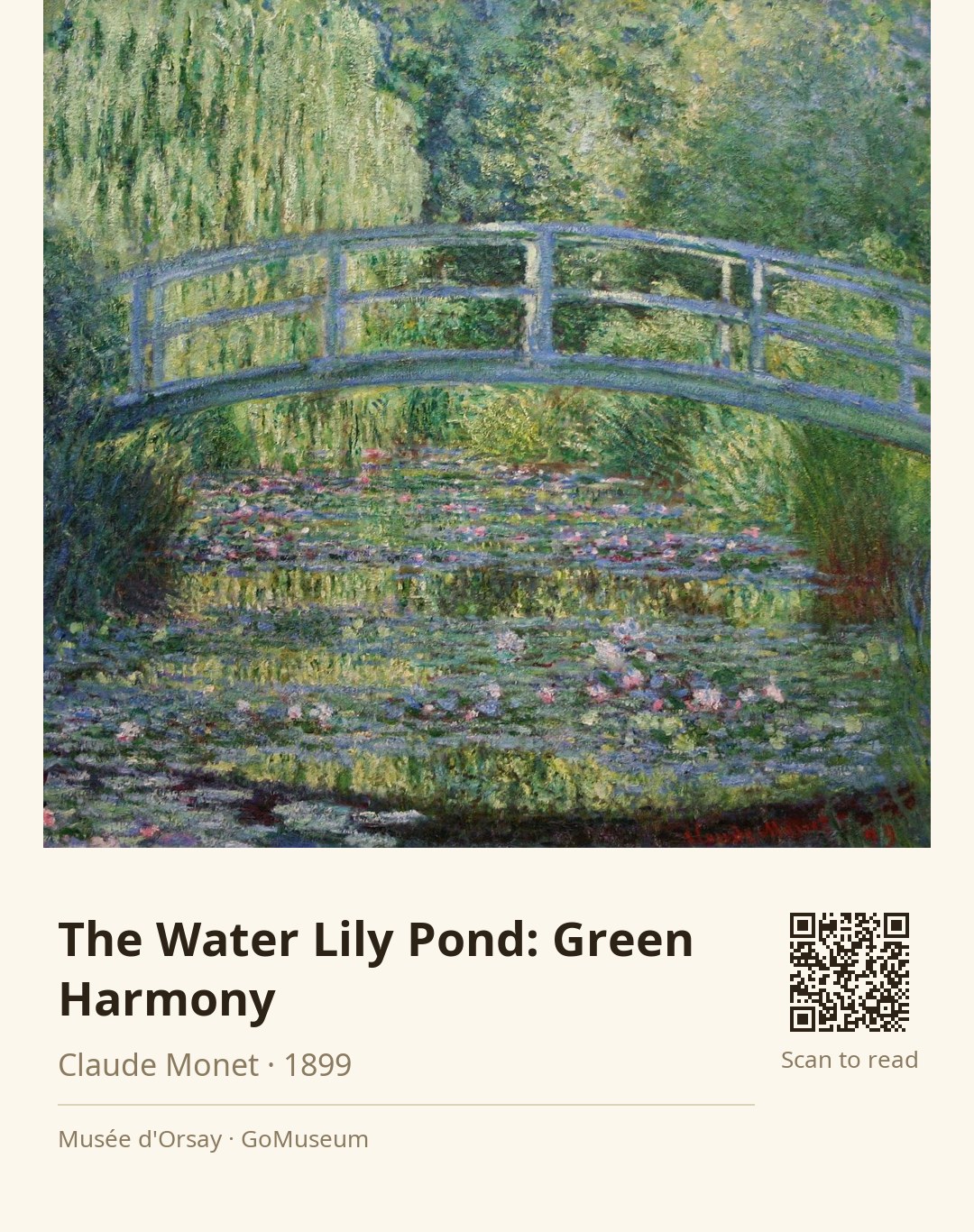
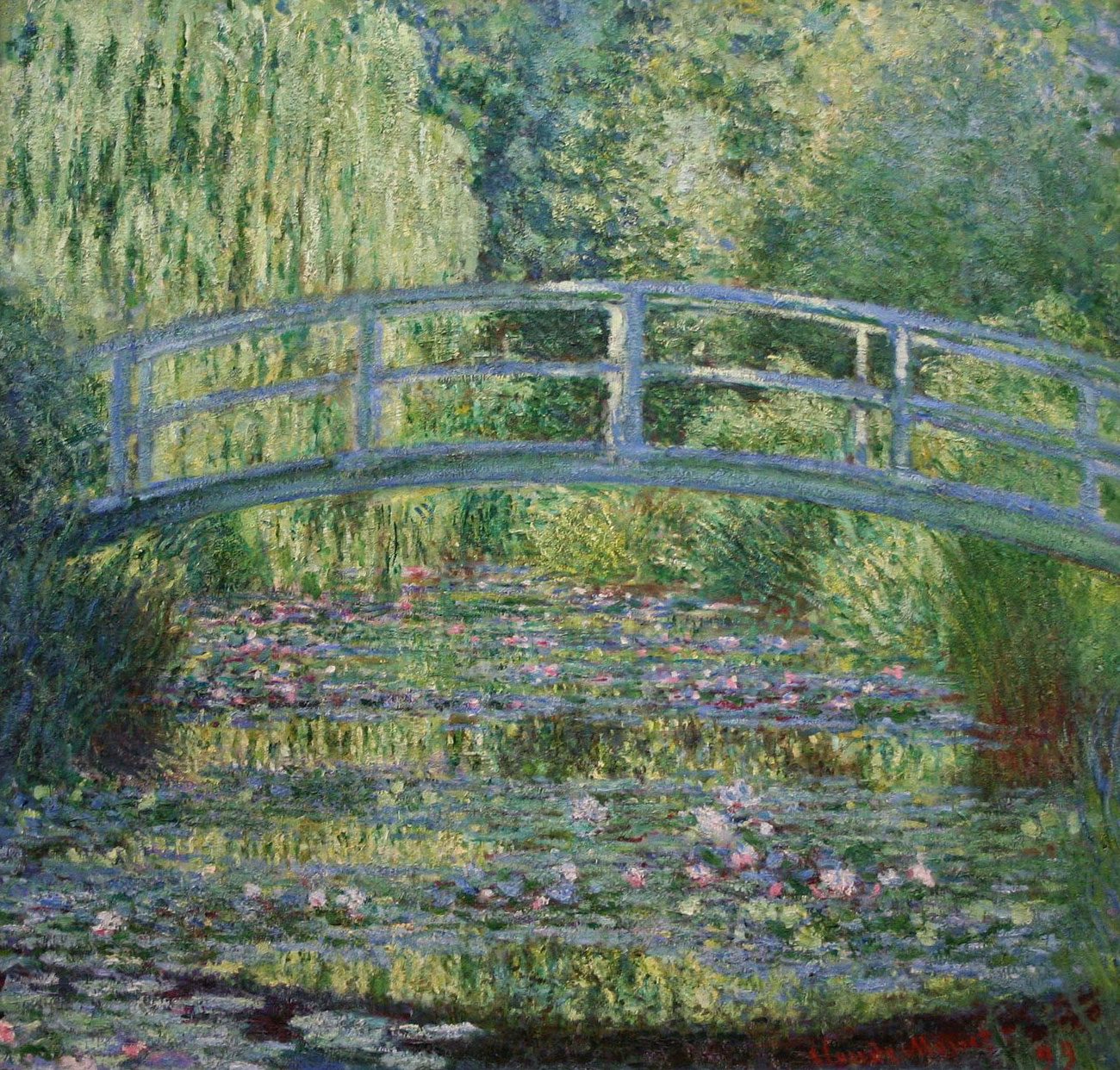
🎧 This work has audio narration — listen in the appTake a moment to really soak in the beauty of Monet's "The Water Lily Pond: Green Harmony." Notice how the vibrant greens dance across the canvas, creating a lush, almost dreamlike atmosphere. The gentle curve of the wooden bridge, painted in a soft green, draws your eye and invites you to imagine strolling across it, surrounded by the tranquility of nature. These details matter because they embody Monet's revolutionary approach to capturing light and color. The way he uses varying shades of green not only reflects the natural world but also evokes a sense of harmony, as if the scene is alive and breathing. This painting is part of his famous water lily series, where he explored the interplay of light on water, transforming ordinary landscapes into extraordinary experiences. Created in 1899, during a time when Monet was deeply immersed in his garden at Giverny, this piece showcases his dedication to plein air painting—capturing the essence of a moment in nature. Monet was not just painting a pond; he was expressing his feelings about the world around him. As you stand here, think about how this serene scene might have felt to Monet as he painted it. What emotions does it stir in you? Let the harmony of this artwork linger in your mind as you continue your journey through the museum.
Oscar-Claude Monet, born on November 14, 1840, in Paris, was a pioneering French painter and a founder of Impressionism, a movement that transformed the art world. Raised in Le Havre, he developed a passion for nature and painting early on, encouraged by his mother, while his father hoped he would pursue a business career. After his mother's death in 1857, Monet moved in with his aunt, who supported his artistic ambitions.
Monet's career began with caricatures, but he soon sought formal training, studying under Eugène Boudin, who introduced him to plein air painting. His breakthrough came in 1866 with "La Femme à la robe verte," which garnered attention at the Salon. The term "Impressionism" originated from his work "Impression, Sunrise," exhibited in 1874, marking a shift away from traditional art.
Throughout his life, Monet focused on capturing the essence of light and color in nature, creating series of paintings that depicted the same scenes under varying conditions, such as his famous haystacks and water lilies. He settled in Giverny in 1883, where he cultivated a beautiful garden that became his muse. Despite personal hardships, including the loss of loved ones and health issues, Monet's relentless dedication to his craft solidified his place in art history as a master of modernism, influencing countless artists and leaving a lasting legacy. He died on December 5, 1926, in Giverny, celebrated as one of the most significant figures in art.
In 1900, the painting 'The Water Lily Pond: Green Harmony' found its first owner, Isaac de Camondo, who purchased it shortly after its completion. Upon his death in 1911, he bequeathed the artwork to the French state. Initially housed at the Louvre, it was exhibited there until 1947 before moving to the Galerie nationale du Jeu de Paume. Since 1986, it has been a treasured piece in the Musée d'Orsay. This piece is part of a larger series that captured the beauty of Monet's garden in Giverny, a place that became his sanctuary and source of inspiration.
As you gaze at 'The Water Lily Pond: Green Harmony', pay attention to the way Monet employs a rich palette of greens, creating a sense of depth and vibrancy. The brushwork feels both spontaneous and deliberate, with each stroke contributing to the overall harmony of the scene. Monet's use of a nearly square format allows for a balanced composition, drawing your eye to the gently arched wooden bridge that serves as a focal point. Notice how the layers of paint build texture, giving life to the water lilies and the surrounding foliage. The interplay of light and shadow is masterfully handled, evoking the shimmering reflections on the pond's surface. This technique not only captures the essence of the moment but also immerses you in the tranquility of Monet's garden.
The wooden bridge, often referred to as the 'Japanese bridge', reflects Monet's fascination with Japanese aesthetics, which influenced many Impressionists and can be seen in his choice of curved forms and the harmony of colors.
After Isaac de Camondo passed away in 1911, he bequeathed the painting to the French state, which initially placed it in the Louvre before it eventually found its home at the Musée d'Orsay.
Monet's garden in Giverny, where he painted 'The Water Lily Pond: Green Harmony', became a crucial source of inspiration and a living canvas for him, allowing him to explore the effects of light and color in a personal and intimate setting.