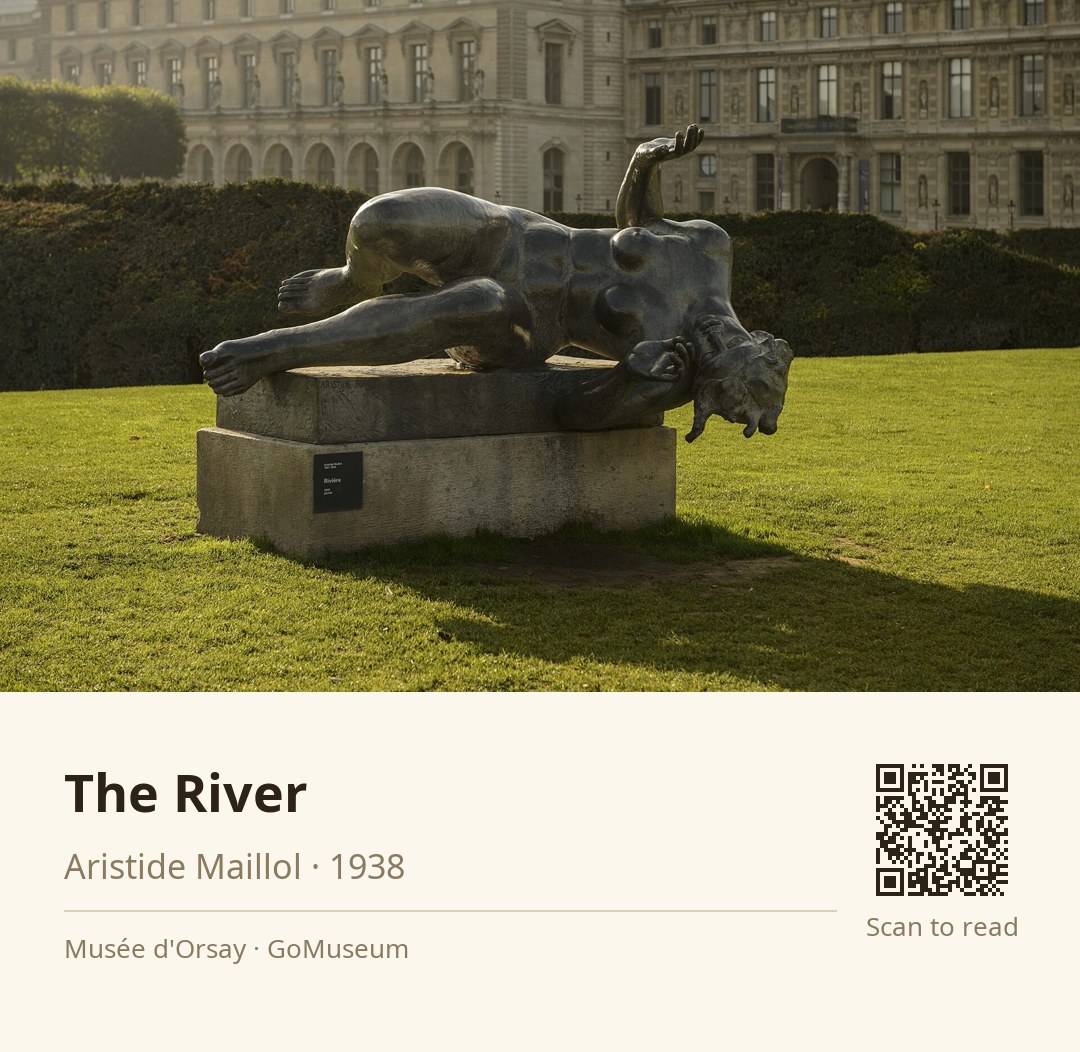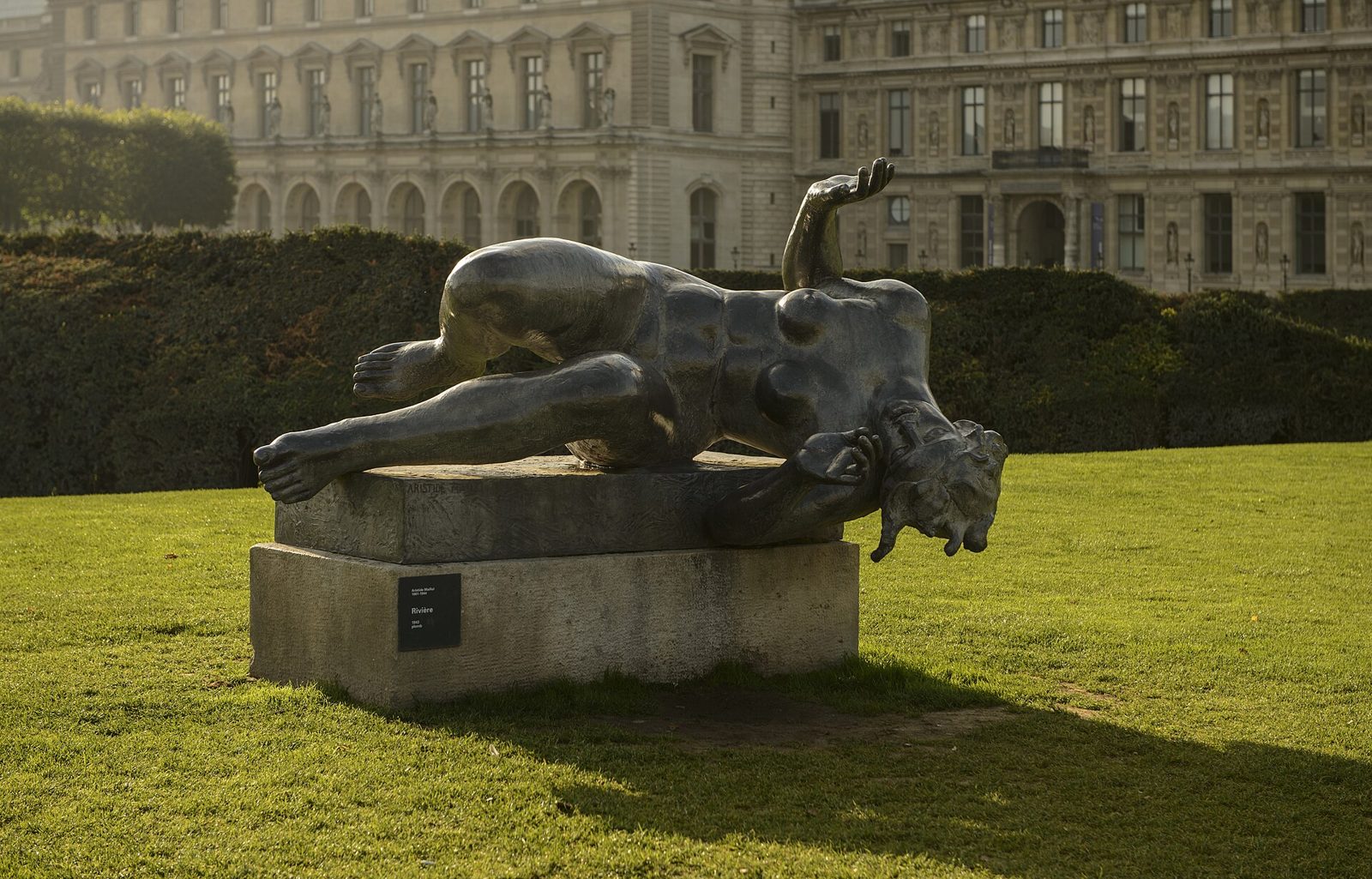
Take a moment to really look at "The River" by Aristide Maillol. Notice how the figure lies gracefully on her side, her head tilted back as if she's caught in a moment of serene contemplation. The smooth, flowing lines of her body create a sense of calm, don’t they?
What’s fascinating here is how Maillol captures the essence of femininity and tranquility through such simplicity. This sculpture, created in 1938, embodies a timeless elegance that speaks to the human experience. The way her form flows almost mimics the gentle currents of a river, reflecting the title perfectly.
Maillol was known for his focus on the female body, and this piece is a stunning example of his ability to blend classical influences with modern sensibilities. He believed in the power of form over narrative, allowing the viewer to find their own meaning in the work.
As you stand here, think about how this sculpture invites you to pause and reflect. What thoughts or feelings does it evoke in you? How does it connect to your own experiences with nature or femininity? Let those questions linger as you take in the beauty of "The River."
Aristide Maillol, born on December 8, 1861, in Banyuls-sur-Mer, was a prominent French Catalan sculptor, painter, and printmaker. Initially pursuing painting, he shifted his focus to sculpture in his early forties, becoming one of the most celebrated sculptors of his era. His works, characterized by a classical treatment of the female form, influenced notable artists like Picasso, Matisse, and Moore, marking a significant transition in modern sculpture.
Maillol's artistic journey began in Paris, where he studied at the École des Beaux-Arts under renowned instructors. His early works were shaped by the decorative arts, particularly tapestry, which he explored before fully dedicating himself to sculpture. His first major piece, "A Seated Woman," completed in 1902, exemplified his unique style, blending simplicity with a profound sense of beauty.
Throughout his career, Maillol received acclaim for his serene and monumental sculptures, which emphasized form over narrative. His public commissions included memorials and monuments, solidifying his legacy in art history. Despite the challenges he faced, including the loss of many artworks during the Nazi occupation, his influence persisted, with a significant collection of his works housed in the Musée Maillol in Paris. Maillol passed away in an automobile accident on September 27, 1944, leaving behind a transformative body of work that continues to resonate in the art world.
As you observe 'The River,' take a closer look at the material—it’s crafted from lead or bronze, which gives it a unique weight and presence. The smooth surface invites your touch, while the flowing lines of the figure are a testament to Maillol's mastery of form. Notice how the contours seem to dance with light, creating shadows that enhance the sculpture's serene expression.
After Maillol's passing in 1944, Vierny dedicated herself to preserving his work, leading to the installation of this sculpture in the Carrousel Garden in Paris in 1964-65. This placement was part of a larger initiative by André Malraux to showcase Maillol's sculptures in public spaces, making art accessible to all. The piece has since been displayed in various prestigious locations, including the Museum of Modern Art in New York and the Virginia Museum of Fine Arts, ensuring its continued appreciation.
One intriguing aspect of 'The River' is that the original plaster model has since disappeared, leaving only the lead or bronze versions to represent Maillol's vision. This adds a layer of mystery to the sculpture, as we can only imagine how the initial model might have looked and felt. Additionally, Maillol's work was notably affected during World War II, with many of his pieces being looted by the Nazis, making the survival of 'The River' even more remarkable.
Dina Vierny, who was both Maillol's model and platonic companion, dedicated herself to preserving his work after his death. Her efforts led to the installation of 'The River' in public spaces, ensuring that Maillol's art remained accessible and appreciated by future generations.