 Image: Marie-Lan Nguyen · Rijksmuseum
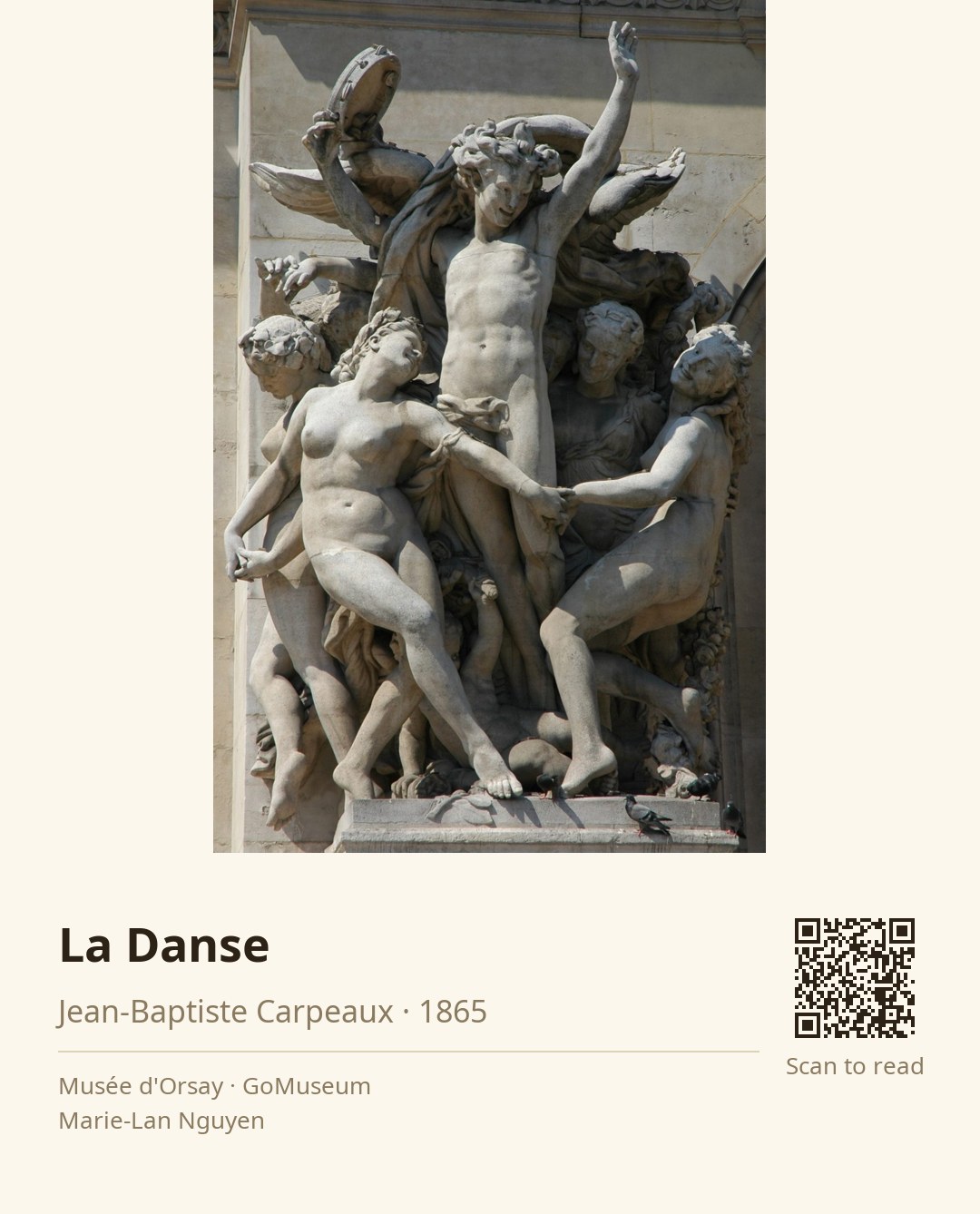
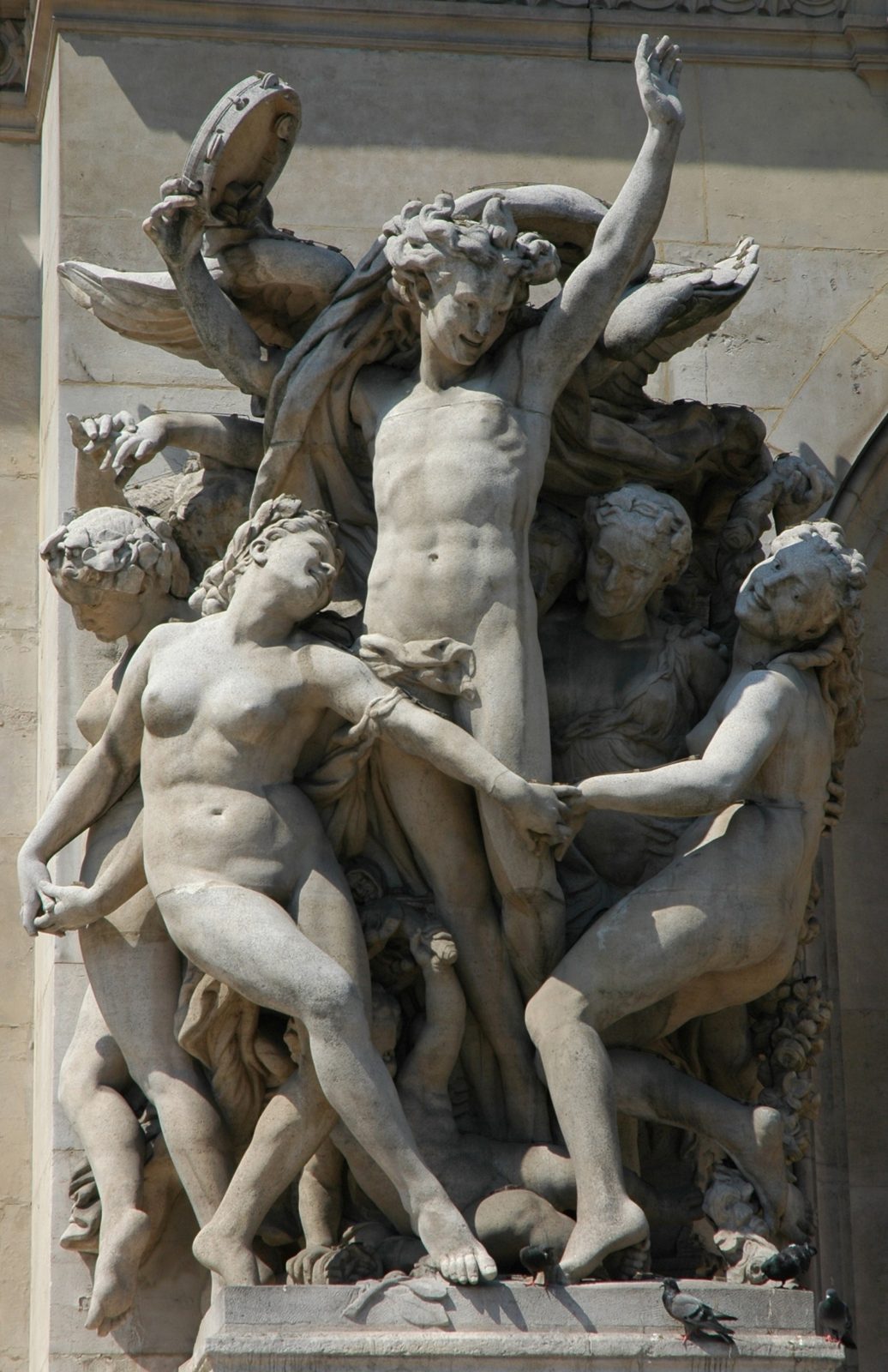
Take a moment to really look at "La Danse" by Jean-Baptiste Carpeaux. Notice how the central figure, a young man with wings, holds a tambourine high above his head, a joyful smile lighting up his face. Surrounding him, the women dance with abandon, their bodies twisting and turning in a celebration of movement and life. These details matter because they capture the essence of uninhibited joy and the spirit of revelry. Carpeaux was inspired by the dance of Bacchus, the Roman god of wine and festivity, and you can feel that energy radiating from the sculpture. The nudity of the figures, once deemed scandalous, speaks to a raw, natural beauty and a rejection of the constraints of society at the time. Commissioned for the façade of the Opera Garnier in 1869, this piece was controversial from the start, drawing criticism for its boldness and realism. It was even vandalized shortly after its unveiling, a testament to how art can provoke strong reactions. As you stand here, think about how this sculpture, now housed in the Musée d'Orsay, once faced the public eye at the opera, challenging norms and sparking conversation. What do you think it says about the relationship between art and society, especially in a place as grand as the opera?
Jean-Baptiste Carpeaux was a prominent French sculptor and painter born on May 11, 1827, in Valenciennes. Coming from a humble background as the son of a mason, he pursued his passion for art against his father's wishes, studying under François Rude at the École des Beaux-Arts. His artistic journey took him to Rome after winning the Prix de Rome in 1854, where he drew inspiration from the works of Michelangelo and Donatello, embracing a style that celebrated movement and spontaneity over classical tradition.
Carpeaux's career flourished during the Second Empire, where he became known for his dynamic sculptures, including the famous "Neapolitan Fisherboy" and the allegorical group "Ugolino and His Sons." His work often reflected a blend of realism and emotional depth, which resonated with the public and earned him numerous commissions, including from Emperor Napoleon III. He was not only a celebrated artist but also a savvy entrepreneur, producing variations of his works to reach a broader audience.
Despite his success, Carpeaux struggled with the constraints of academicism and sought to break free from traditional norms. His innovative spirit and dedication to capturing the essence of life left a lasting impact on the art world. He passed away on October 12, 1875, but his legacy endures through his influential works and the artists he mentored, securing his place in art history as a key figure of the 19th century.
You can see the way he skillfully carved the flowing forms of the dancers, their limbs twisting and turning, almost as if they're caught mid-motion. Notice the intricate detailing in the faces and the textures of the drapery, which contrast beautifully with the smoothness of the marble. This combination of realism and idealism is a hallmark of Carpeaux's style, showcasing his ability to bring life to stone.
Carpeaux spent three years sketching and modeling, drawing inspiration from real-life dancers and actresses. When it was unveiled in July 1869, the sculpture immediately stirred controversy, with critics labeling it obscene due to its nudity and realistic portrayal. Just weeks after its installation, an anonymous vandal attacked it with black ink, symbolizing the public's outrage. Despite calls for its removal, the statue remained until the outbreak of the Franco-Prussian War in 1870 shifted public focus. It was later moved to the Louvre in 1964 and finally to the Musée d'Orsay in 1986.
This work, with its unabashed display of nudity and dynamic figures, sparked outrage and debate about decency in art, influencing how future generations approached the representation of the human form. Carpeaux's ability to capture movement and emotion in stone marked a shift towards realism, steering away from the more restrained classical traditions. The controversy surrounding La Danse not only solidified Carpeaux's reputation but also opened doors for artists to explore more expressive and provocative themes in their work. It’s a reminder that art can challenge societal norms and provoke thought, making it a crucial piece in the evolution of modern sculpture.
Did you know that Carpeaux was so dedicated to capturing the essence of dance that he used real-life models from the Palais-Royal? He spent countless hours observing and sketching the dancers, ensuring that the figures in 'La Danse' were not just idealized forms but reflections of real human movement and emotion. This commitment to realism was part of what made his work so groundbreaking at the time.