La Blonde aux seins nus
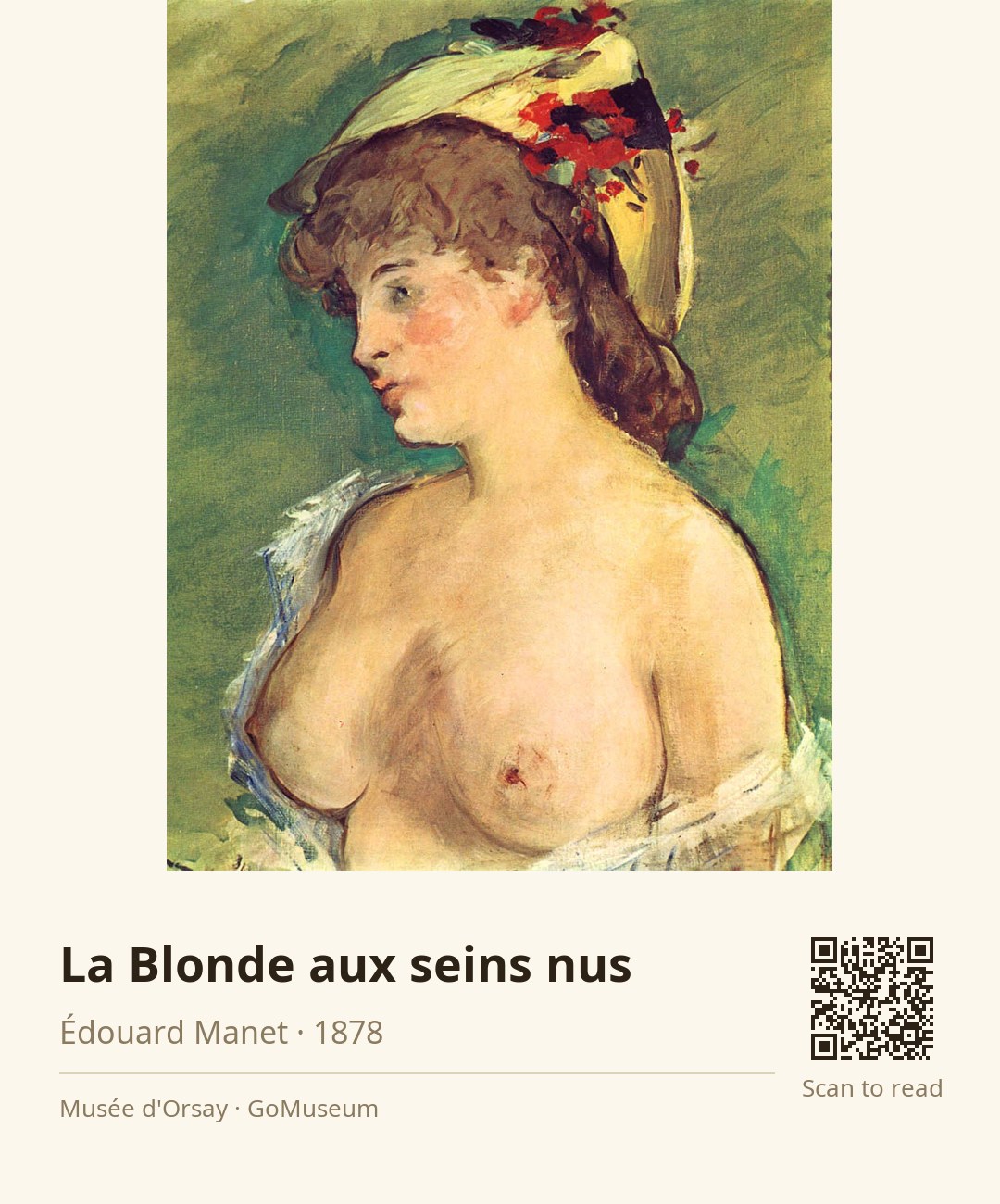
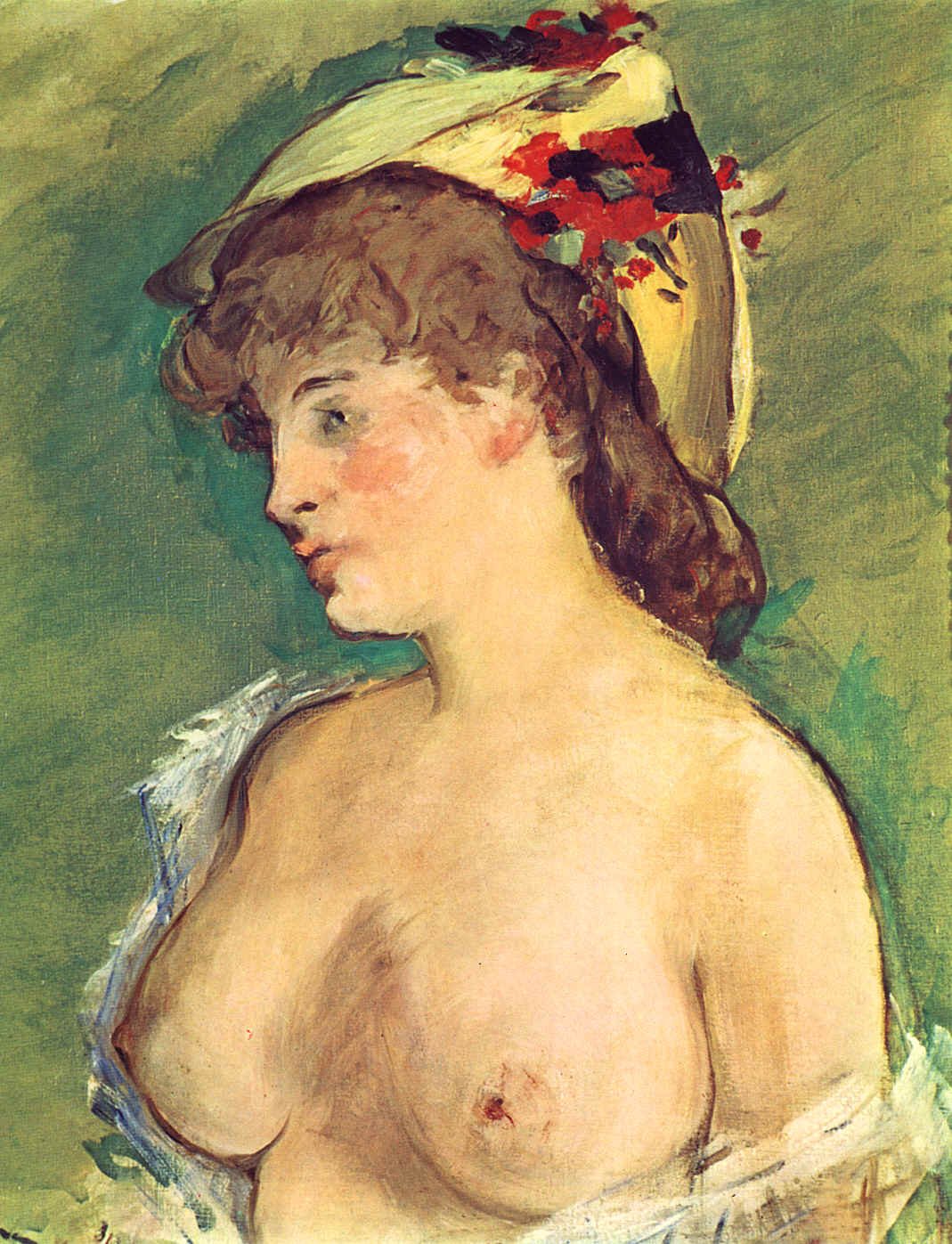
🎧 This work has audio narration — listen in the appAs you stand before Édouard Manet's "La Blonde aux seins nus," take a moment to really absorb the figure at the center. Notice how the light dances across her skin, highlighting the soft curves and creating a striking contrast with the dark background. This interplay of light and shadow is a hallmark of Manet’s style, drawing your eye to the subject in a way that feels both intimate and bold.
Now, consider the title—“La Blonde aux seins nus”—which might lead you to expect a fair-haired beauty, yet here we see a brunette. This twist is not just a playful contradiction; it challenges conventional representations of femininity and beauty in art during the late 19th century. Manet was known for pushing boundaries, and this painting is no exception. It invites you to question the norms of the time, making you think about how women were portrayed and perceived.
Created in 1878, this work is part of a larger conversation about modernity in art, where Manet was at the forefront, breaking away from traditional techniques and subjects. He was a pioneer of impressionism, and with this piece, he invites you to witness a moment of raw, unfiltered beauty.
As you take in the details, think about how this painting makes you feel. What does it say to you about the nature of beauty and the role of women in art? Let that question linger as you move on, carrying with you the spirit of Manet’s bold vision.
Édouard Manet, born on January 23, 1832, in Paris, emerged as a pivotal figure in 19th-century art, bridging Realism and Impressionism. From an affluent family, he initially faced pressure to pursue a naval career but instead dedicated himself to painting, influenced by his uncle and the Old Masters. His early works, including "The Luncheon on the Grass" and "Olympia," sparked controversy and challenged traditional artistic norms, marking him as a revolutionary force.
Manet's style, characterized by loose brushwork and a focus on contemporary life, diverged from the meticulous techniques of his predecessors. He often depicted modern Parisian scenes, capturing the essence of leisure and social dynamics. Despite initial rejection from the art establishment, he gained recognition among progressive artists and became a mentor to the Impressionists.
Throughout his life, Manet formed connections with influential figures like Baudelaire and Zola, who defended him against critics. His later works, such as "A Bar at the Folies-Bergère," showcased his evolving style and mastery of color. Manet's contributions to art history are profound; he is celebrated not only for his innovative techniques but also for elevating still life and modern subjects to the forefront of artistic expression. He passed away on April 30, 1883, leaving behind a legacy that continues to inspire artists today.
Édouard Manet painted 'La Blonde aux seins nus' around 1878, and it quickly became a notable piece in his oeuvre. Initially, it was owned by Manet's wife, Suzanne, before passing through the hands of the art dealer Ambroise Vollard and later to the collector Étienne Moreau-Nélaton. The painting was exhibited at the Grand Palais in Paris in 1983, where it was numbered 178 in the exhibition catalog. This work stirred conversations about the representation of women in art, challenging the norms of its time. Its reception was mixed, as many viewers were taken aback by the boldness of the subject and the unconventional title, which humorously misleads about the figure's hair color.
As you gaze at 'La Blonde aux seins nus,' notice the way Manet employs light and shadow to create a sense of depth and intimacy. The brushwork is both loose and deliberate, allowing the skin tones to glow against the darker background, which enhances the figure's presence. The composition draws your eye directly to the subject, with her relaxed pose inviting a sense of familiarity. Manet's choice of colors is striking; the warm hues of the skin contrast sharply with the cooler tones surrounding her, creating a dynamic interplay that feels almost alive. This technique not only highlights the figure but also evokes a sense of modernity, as if capturing a fleeting moment in time. The scale of the painting, at 62.5 by 52 centimeters, allows for an immersive experience, making you feel as though you're sharing a space with the subject.
Interestingly, despite the title suggesting a fair-haired woman, the painting features a brunette. This deliberate choice by Manet not only plays with expectations but also serves as a commentary on the often superficial standards of beauty prevalent in society at the time. It’s a small detail that encapsulates Manet's playful yet critical approach to art.
Initially owned by Manet's wife, Suzanne, the painting later passed through the hands of art dealer Ambroise Vollard and collector Étienne Moreau-Nélaton, showcasing its journey through the art world.
Manet's brushwork in this painting is both loose and deliberate, creating a dynamic interplay of light and shadow that enhances the figure's presence and evokes a sense of modernity.