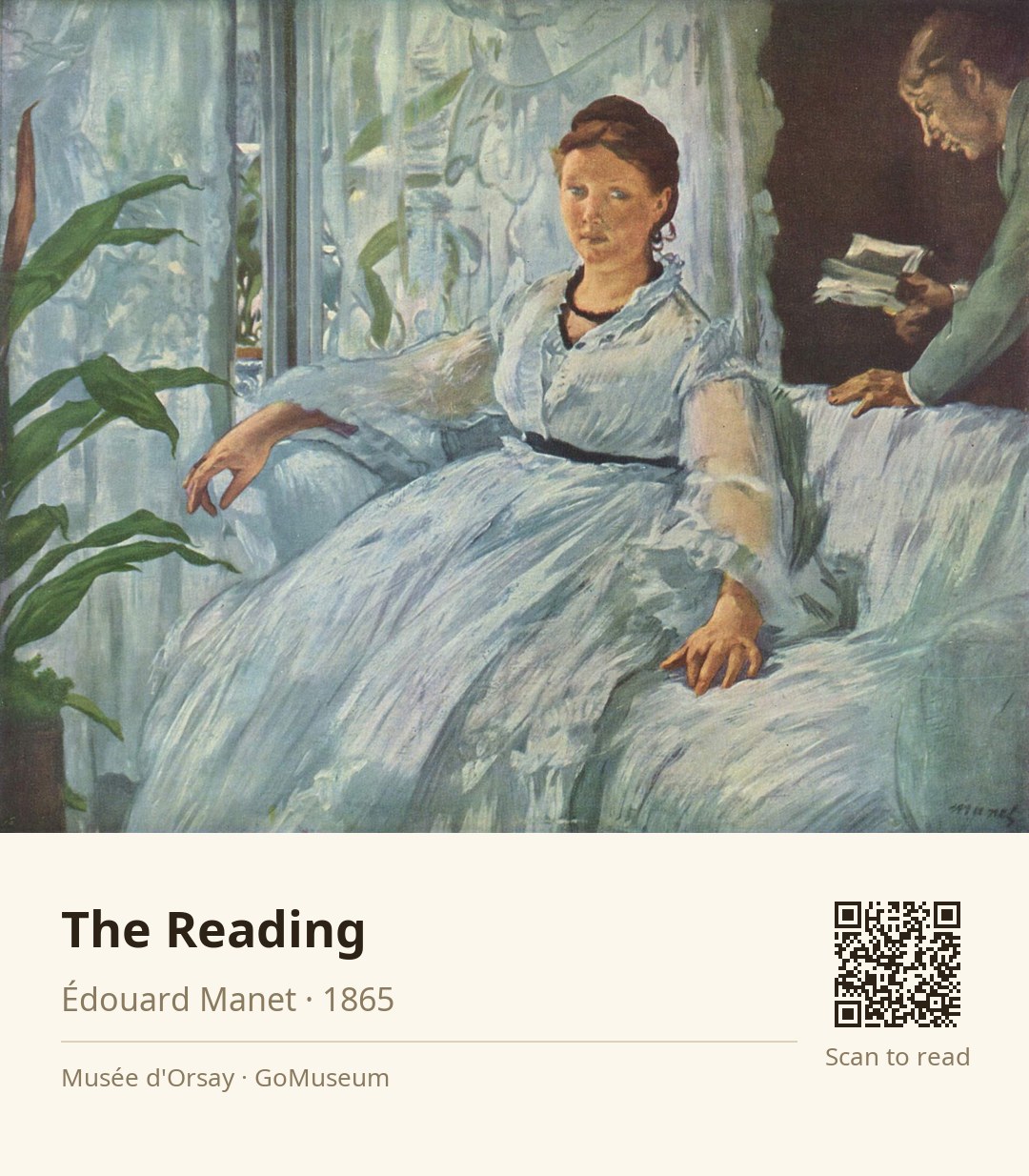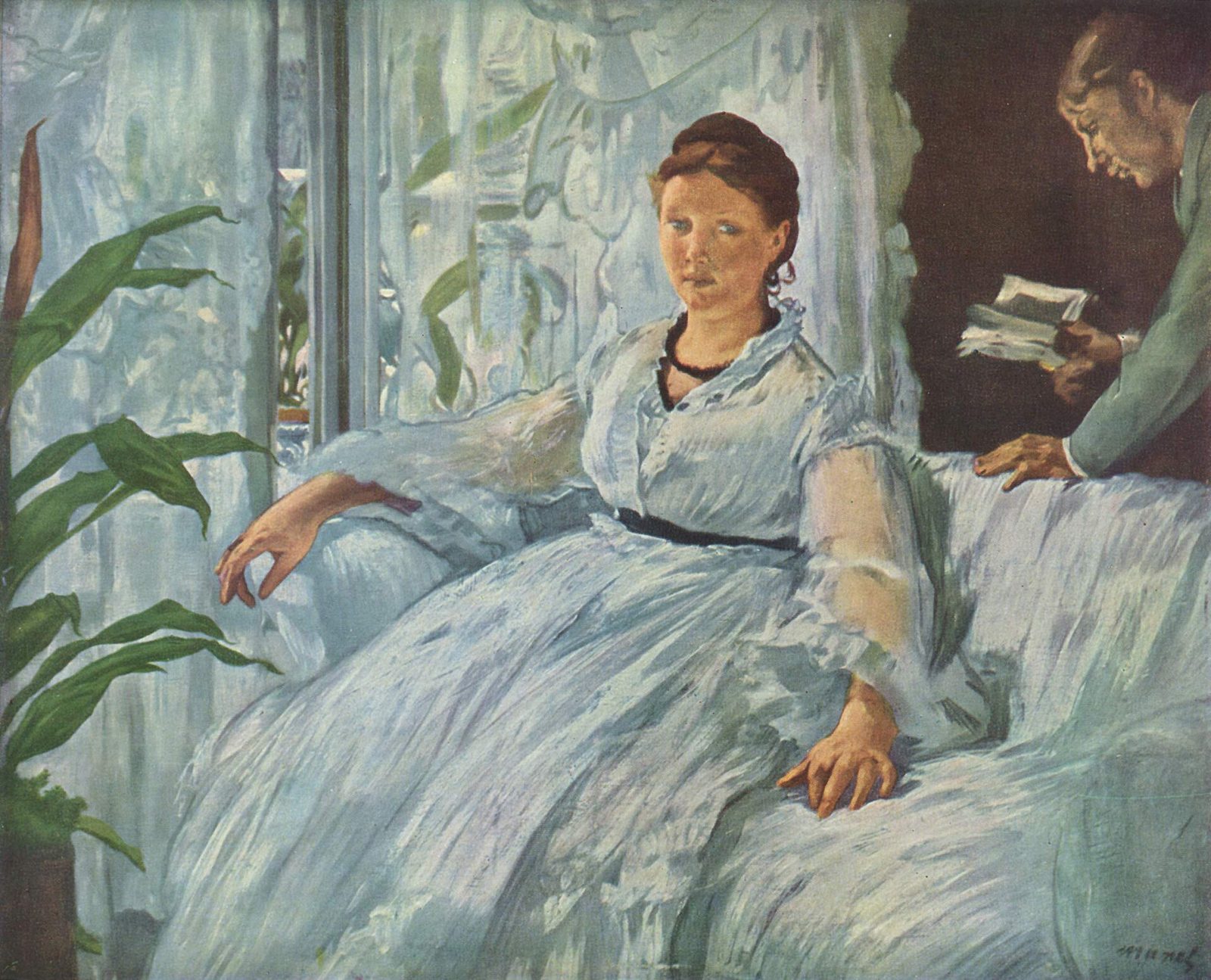
Take a moment to really absorb the scene in front of you. Here, in Édouard Manet's "The Reading," you’re not just looking at a painting; you’re peering into a quiet moment of family intimacy from the 1860s. Notice how Suzanne, Manet's wife, is seated comfortably, her back turned to their son Léon, who is engrossed in a book. The way she leans slightly forward suggests her rapt attention, creating a sense of connection between them despite the distance.
Now, focus on the striking contrast of colors. The bright white of Suzanne's dress stands out against the darker tones of the room, almost glowing under the light. Manet’s brushwork here is loose yet deliberate, capturing the softness of the fabric and the warmth of the moment.
Painted around 1865, this piece is a beautiful representation of Manet's shift towards capturing modern life, moving away from the grand historical themes that dominated art at the time. It’s a snapshot of everyday life, a theme that would become central to Impressionism.
As you stand here, think about the personal nature of this work. It’s a glimpse into Manet's own family life, a reminder that even great artists find beauty in the mundane. What stories do you think this moment holds? How does it resonate with your own experiences of family and connection?
Édouard Manet, born on January 23, 1832, in Paris, emerged as a pivotal figure in 19th-century art, bridging Realism and Impressionism. From an affluent family, he initially faced pressure to pursue a naval career but instead dedicated himself to painting, influenced by his uncle and the Old Masters. His early works, including "The Luncheon on the Grass" and "Olympia," sparked controversy and challenged traditional artistic norms, marking him as a revolutionary force.
Manet's style, characterized by loose brushwork and a focus on contemporary life, diverged from the meticulous techniques of his predecessors. He often depicted modern Parisian scenes, capturing the essence of leisure and social dynamics. Despite initial rejection from the art establishment, he gained recognition among progressive artists and became a mentor to the Impressionists.
Throughout his life, Manet formed connections with influential figures like Baudelaire and Zola, who defended him against critics. His later works, such as "A Bar at the Folies-Bergère," showcased his evolving style and mastery of color. Manet's contributions to art history are profound; he is celebrated not only for his innovative techniques but also for elevating still life and modern subjects to the forefront of artistic expression. He passed away on April 30, 1883, leaving behind a legacy that continues to inspire artists today.
Édouard Manet's 'The Reading' was first unveiled in 1880 during one of his solo exhibitions at his workshop, a space that buzzed with the energy of modern life. This painting, capturing a serene moment with his wife Suzanne and their son Léon, was part of a significant posthumous exhibition in 1884, just a year after Manet's death. Initially, it belonged to the private collection of Winnaretta Singer, Princess Edmond de Polignac, who cherished it until her passing in 1944. Following her death, the painting was gifted to the French State and found its home in the Musée du Louvre. In 1947, it was moved to the Galerie nationale du Jeu de Paume, and eventually, in 1986, it became part of the Musée d'Orsay's collection, where it continues to be admired today.
As you gaze at 'The Reading,' take a moment to appreciate Manet's masterful brushwork. The way he captures the texture of Suzanne's white dress is particularly striking; it almost seems to shimmer against the darker hues of the room. Notice how the broad strokes create a sense of movement, making the fabric feel soft and inviting. Manet's choice of color is deliberate, with the bright white dress symbolizing purity and domesticity, while the darker tones of the sofa and curtains provide a rich backdrop that enhances the overall composition. The light falls gently, illuminating Suzanne and Léon, creating a warm, intimate atmosphere that draws you into their world. This painting is not just a depiction; it’s an emotional experience, inviting you to feel the connection between mother and child.
If you look closely, you might notice a small, partially visible painting hanging on the wall behind Suzanne, which adds a layer of depth and personal touch to the scene, hinting at Manet's artistic environment.
Manet often portrayed his family members in his works, and 'The Reading' is a testament to his close bond with Suzanne and Léon, reflecting not only his love for them but also his desire to capture intimate family moments.