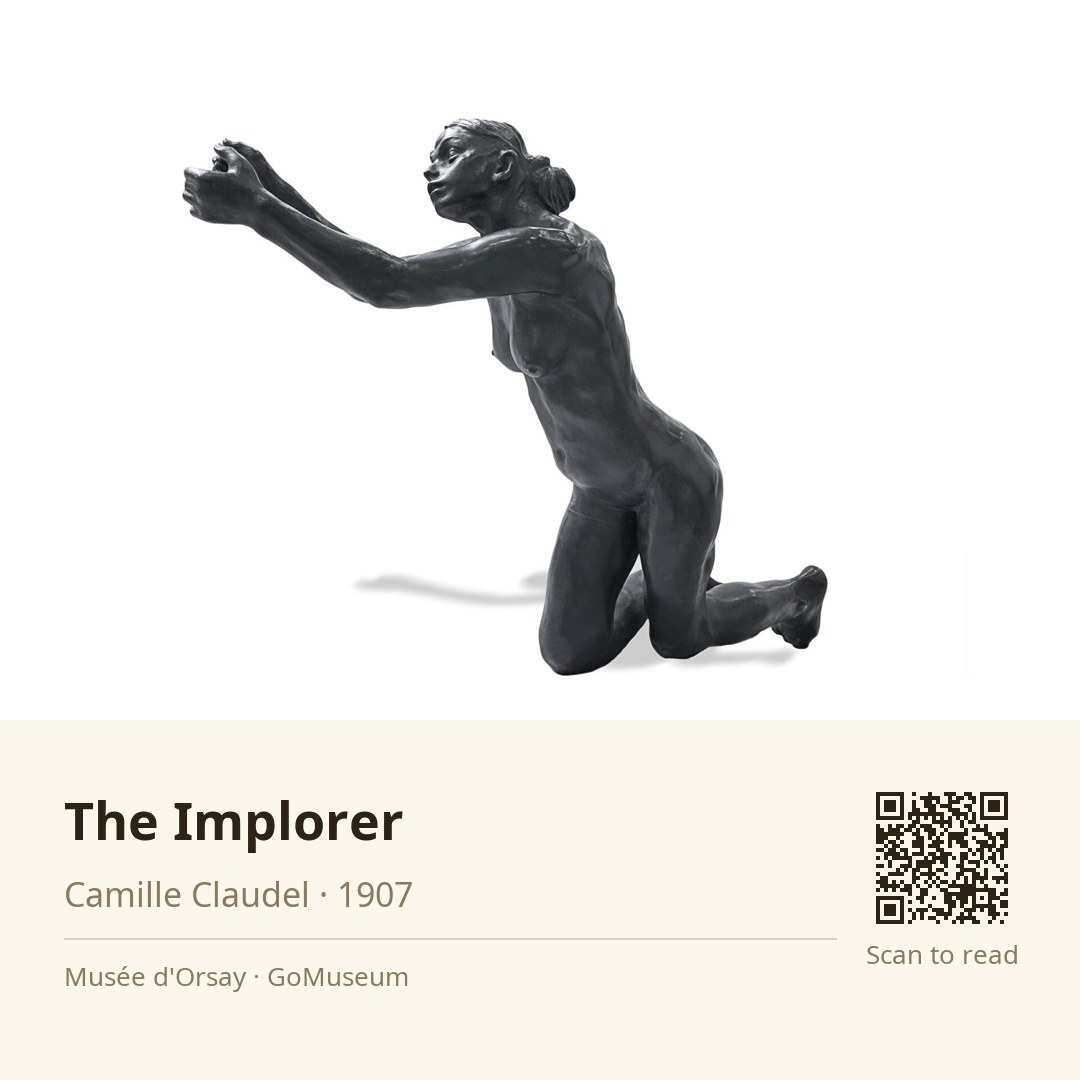
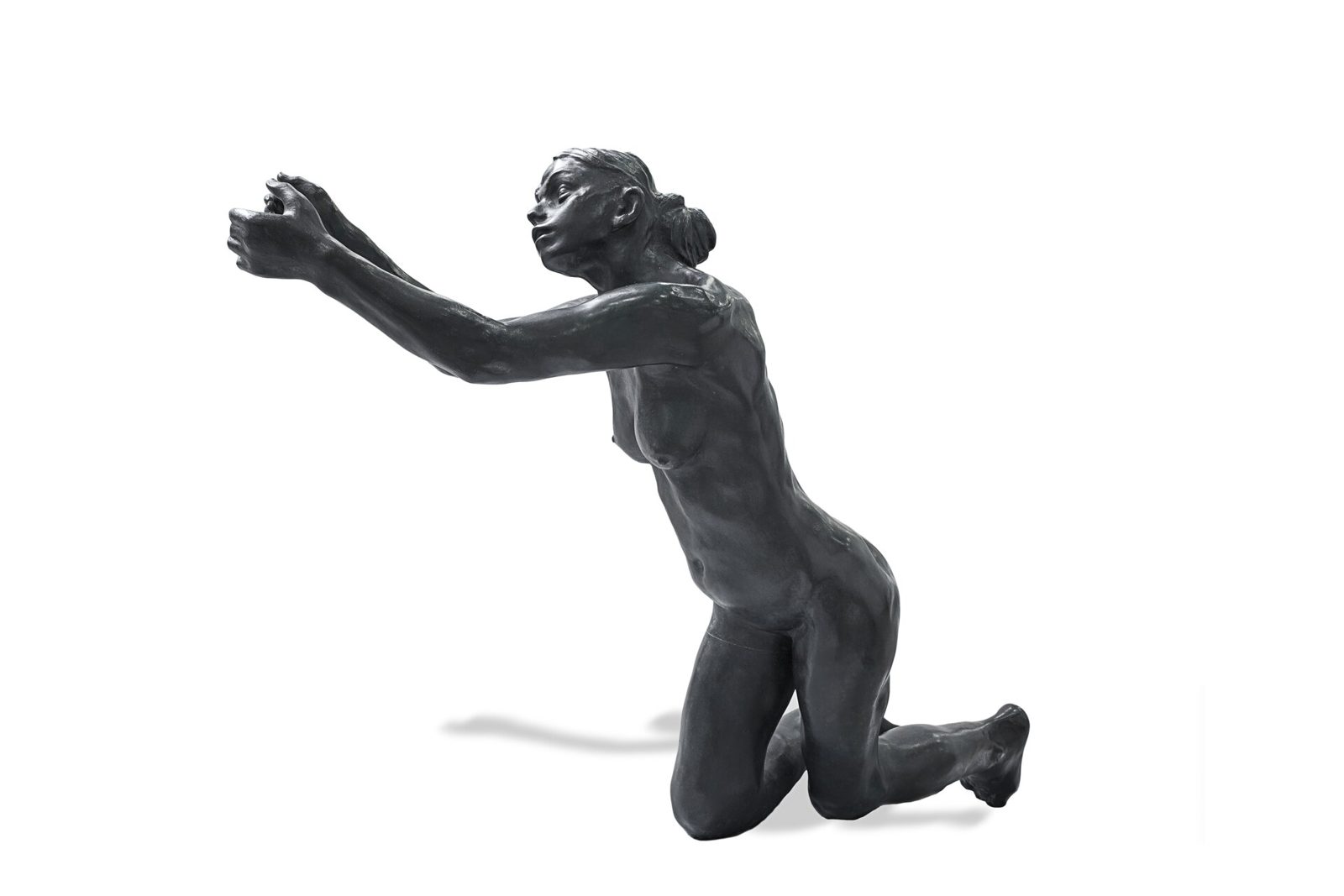
 Image: Jean-Pierre Dalbéra from Paris, France · Jean-Pierre Dalbéra from Paris, France · Vassil
The Implorer
🎧 This work has audio narration — listen in the appTake a moment to really look at "The Implorer" by Camille Claudel. Notice how the figure of the young woman is kneeling, her arms outstretched in a desperate plea. The way her body leans forward, almost as if she’s reaching out to something just beyond her grasp, pulls you into her emotional turmoil.
This isn’t just a sculpture; it’s a raw expression of vulnerability and longing, capturing a moment of profound human experience. The figure’s nudity symbolizes both her exposure and her desperation, making her plea feel universal and timeless.
Claudel faced immense challenges as a woman in the male-dominated art world of her time, and this piece embodies her struggle for recognition and love. It’s a personal narrative that resonates with anyone who has felt abandoned or unheard.
As you stand here, think about what it means to be vulnerable. What do you feel when you see her reaching out? What stories does her pose evoke for you?
Camille Claudel was a pioneering French sculptor born on December 8, 1864, in Fère-en-Tardenois. From a young age, she showed a remarkable talent for sculpting, encouraged by her father while facing opposition from her mother. Claudel studied at the Académie Colarossi in Paris, where she became a prominent figure in the art scene, particularly through her association with renowned sculptor Auguste Rodin. Their collaboration was both creative and tumultuous, influencing her work significantly.
Despite her early success, Claudel's life took a tragic turn. She faced mental health struggles and was institutionalized for much of her later life, leading to her obscurity until the late 20th century when her work gained renewed recognition. Today, she is celebrated for her innovative and expressive sculptures, such as "The Waltz" and "The Mature Age." The Camille Claudel Museum, opened in 2017, showcases her legacy, while her pieces are held in prestigious collections worldwide. Claudel's story reflects the challenges faced by women artists in her time, marking her as a significant figure in art history.
As you examine 'The Implorer,' take a closer look at the texture of the surface. Claudel initially sculpted this piece in terracotta and plaster, which allowed her to capture delicate details and nuances in the figure's expression. Notice the way the contours of the body flow, almost as if they’re alive. The final bronze casting, done later, preserves these intricate details, showcasing her mastery in manipulating materials to convey emotion. The way the figure leans forward, arms outstretched, feels almost like a whisper of desperation, a testament to Claudel's skill in evoking raw human emotion through her craft.
Camille Claudel's journey with 'The Implorer' began in the early 1890s, during a tumultuous period in her life marked by her separation from Auguste Rodin. Initially titled 'Le Dieu envolé,' the sculpture underwent several transformations as Claudel poured her heart into it. She presented the piece at the Salon of 1894, where it was met with mixed reactions. Over the years, Claudel created multiple versions, including a bronze casting in 1899, which was commissioned by Captain Tessier. This piece became part of a larger group titled 'L'Âge mûr,' which depicted her complex relationship with Rodin. The sculpture has since found homes in prestigious institutions like the Musée Rodin and the Metropolitan Museum of Art, reflecting its enduring significance.
This experimentation reflects her desire to capture the essence of her emotional state at different stages of her life. Interestingly, the initial versions were so personal that they almost serve as a diary of her feelings, with each iteration revealing a new layer of her complex relationship with love and loss.