Le joueur de cartes (The Cardplayer)
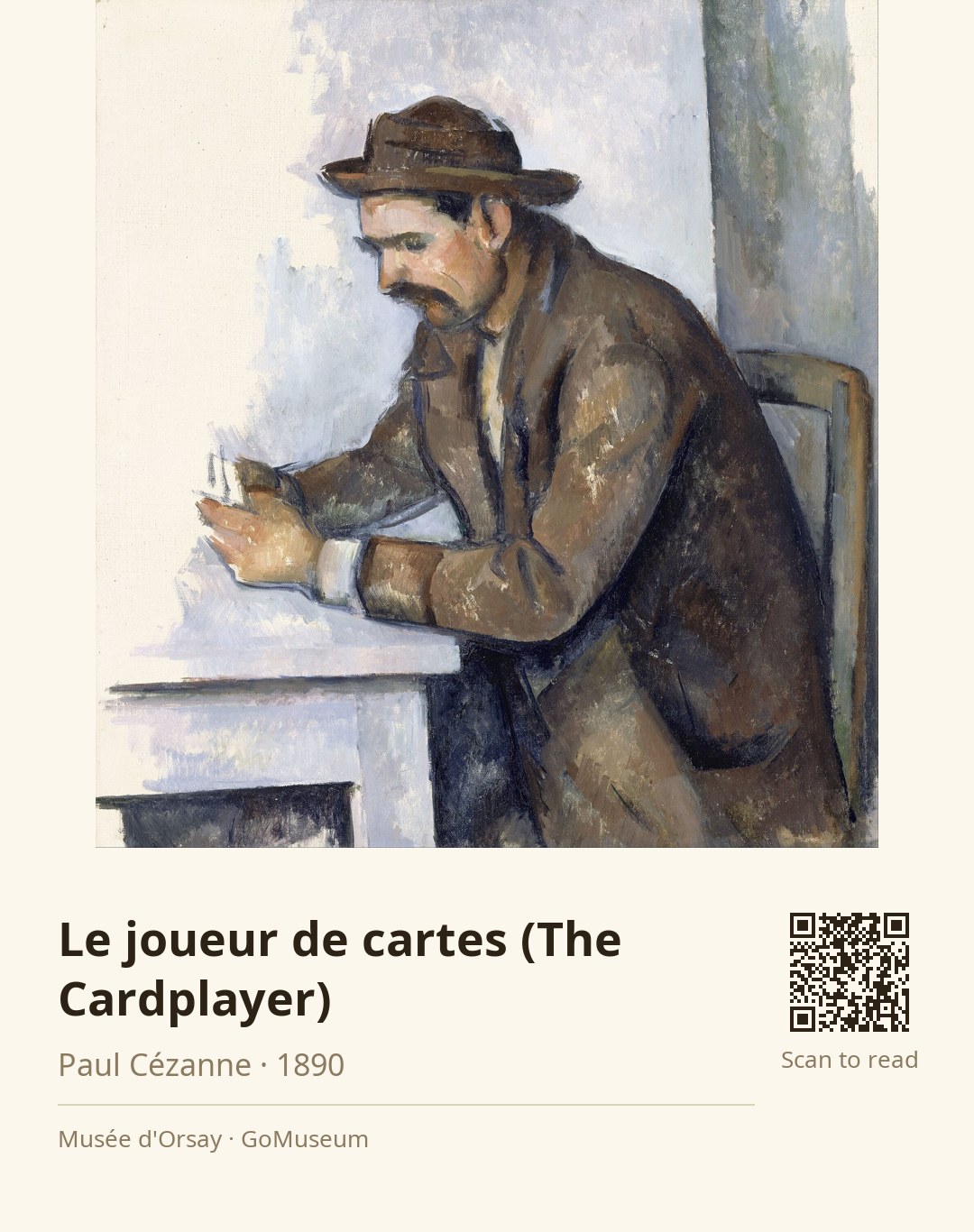
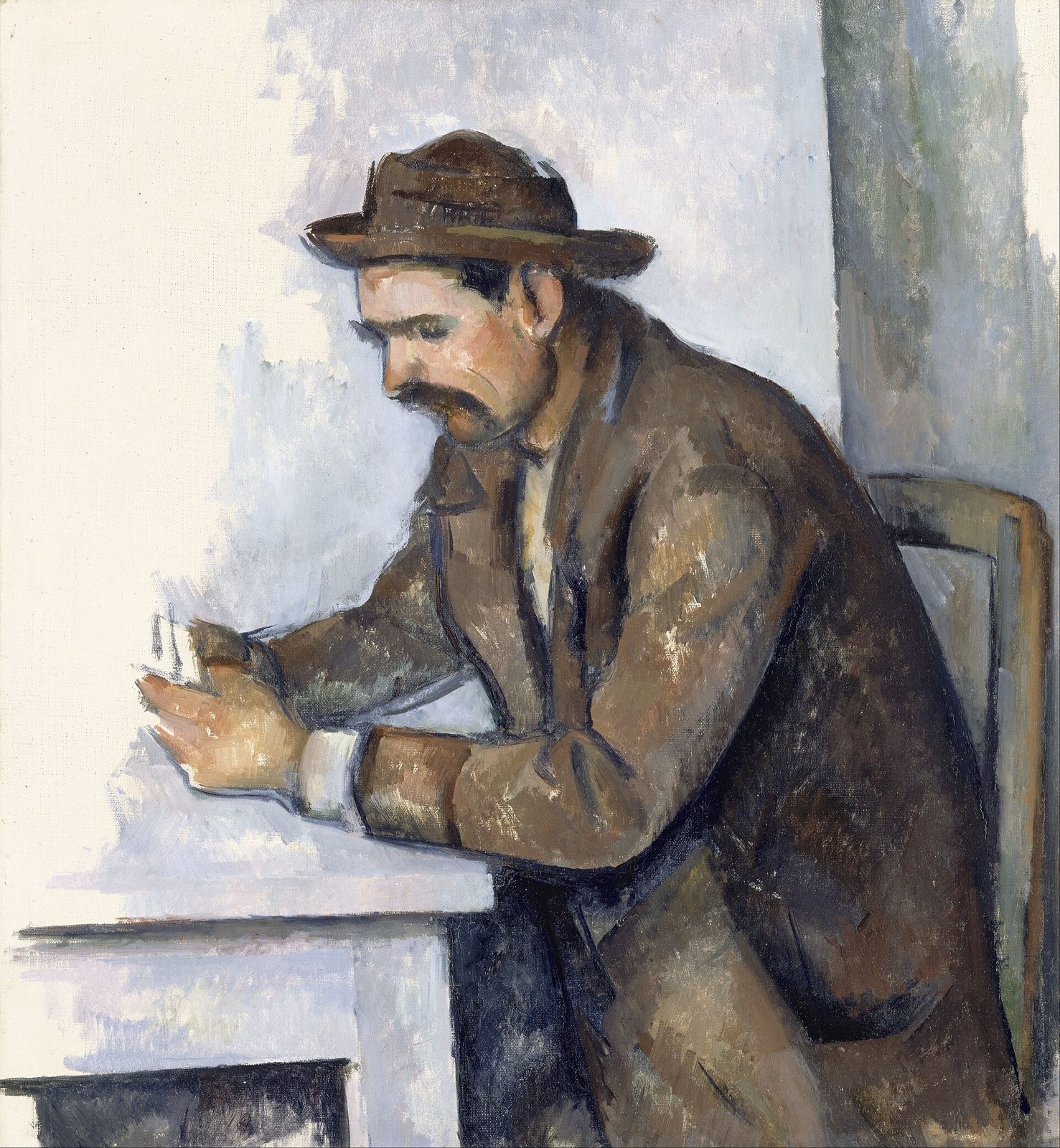
🎧 This work has audio narration — listen in the appTake a moment to really look at "Le joueur de cartes" by Paul Cézanne. Notice how the card player seems almost sculptural, with his solid form and the way he’s enveloped in the warm, earthy colors. The way Cézanne builds up layers of paint gives this figure a depth that feels almost tangible, doesn’t it? This isn’t just a painting of a man playing cards; it’s a masterclass in structure and form. Cézanne was fascinated by the underlying geometry of objects, and here, you can see how he breaks down the scene into shapes and planes. The card player’s body and the table are almost like pieces of a puzzle, fitting together in a way that challenges traditional perspectives. Created in 1890, this work was part of Cézanne's exploration of everyday life, a theme that was often overlooked by his contemporaries. He was paving the way for modern art by focusing on the essence of his subjects rather than just their appearance. As you stand here, think about how this painting reflects the quiet intensity of a moment that might otherwise go unnoticed. What stories do you think the card player could tell?
Paul Cézanne was a French Post-Impressionist painter born on January 19, 1839, in Aix-en-Provence. His innovative approach to color and form bridged the gap between Impressionism and the emerging Cubism of the early 20th century. Initially influenced by Romanticism and Realism, Cézanne developed a unique style that emphasized the underlying structure of objects, using repetitive brushstrokes and planes of color to create depth and complexity in his work.
Despite facing ridicule and misunderstanding from critics during his early career, Cézanne garnered support from fellow artists like Camille Pissarro and the art dealer Ambroise Vollard, who recognized his talent. His first solo exhibition in 1895 marked a turning point, leading to greater appreciation of his contributions to art. Cézanne's legacy is profound; both Henri Matisse and Pablo Picasso acknowledged him as a foundational figure in modern art, dubbing him "the father of us all." He passed away on October 22, 1906, leaving behind a transformative body of work that continues to influence artists today.
Cézanne's 'Le joueur de cartes' was created in 1890 during a pivotal time in his career. This painting was part of a series that explored the theme of everyday life, which was often overlooked by other artists of the time. Initially, Cézanne's work was met with confusion and ridicule, but it eventually found appreciation among fellow artists and collectors. The first solo exhibition of his work took place in 1895 at Ambroise Vollard's gallery in Paris, marking a significant turning point. This exhibition helped to elevate Cézanne's status in the art world, leading to a growing recognition that would influence future generations. Notably, both Henri Matisse and Pablo Picasso later acknowledged Cézanne as a foundational figure in modern art, famously declaring him 'the father of us all.'
In 'Le joueur de cartes,' Cézanne employs a unique technique that combines repetitive, exploratory brushstrokes with a careful layering of color. This method creates a rich texture that draws you in, making the figure of the card player feel almost three-dimensional. Notice how the warm, earthy palette envelops the scene, imbuing it with a sense of intimacy and warmth. The composition is structured around geometric forms, with the card player and the table forming a cohesive unit that challenges traditional perspectives. Cézanne's use of light is subtle yet effective, enhancing the solidity of the figure while casting gentle shadows that add depth. This careful manipulation of light and color not only highlights the subject but also invites you to ponder the underlying geometry of the scene.
This fascination began in his youth when his friend Émile Zola gifted him a basket of apples as a thank-you for defending him in school. This moment sparked a recurring motif in Cézanne's work, as he often included apples in his still lifes, symbolizing not just fruit but the essence of his artistic exploration.
Cézanne's father was a successful banker, providing him with financial security that allowed him to pursue art without the pressure of commercial success, a privilege not common among his contemporaries.
Zola, who was a close friend from their school days, encouraged Cézanne to take his artistic pursuits seriously, which ultimately led to Cézanne's commitment to painting despite his father's wishes for him to pursue a career in banking.