Achille Emperaire
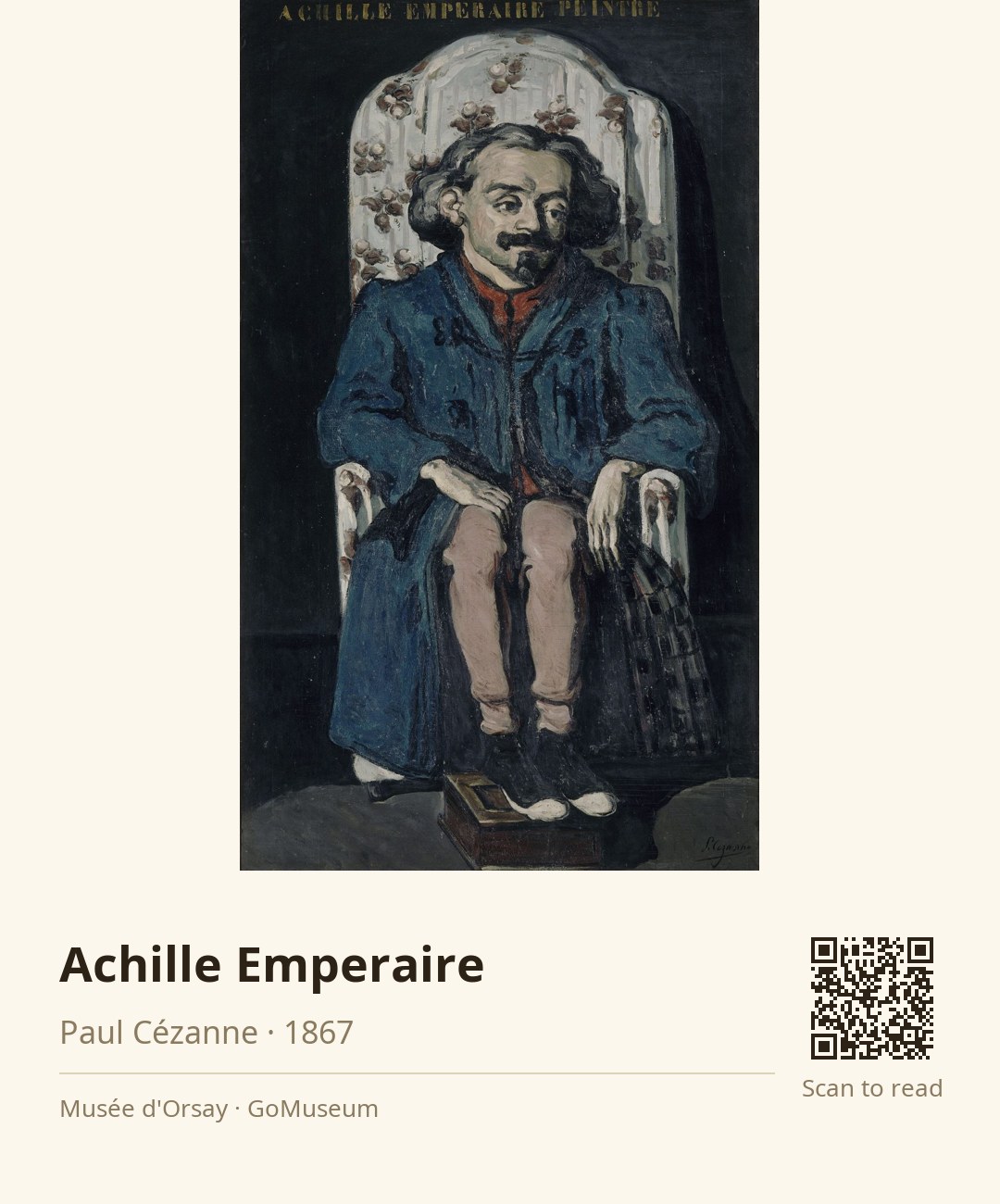
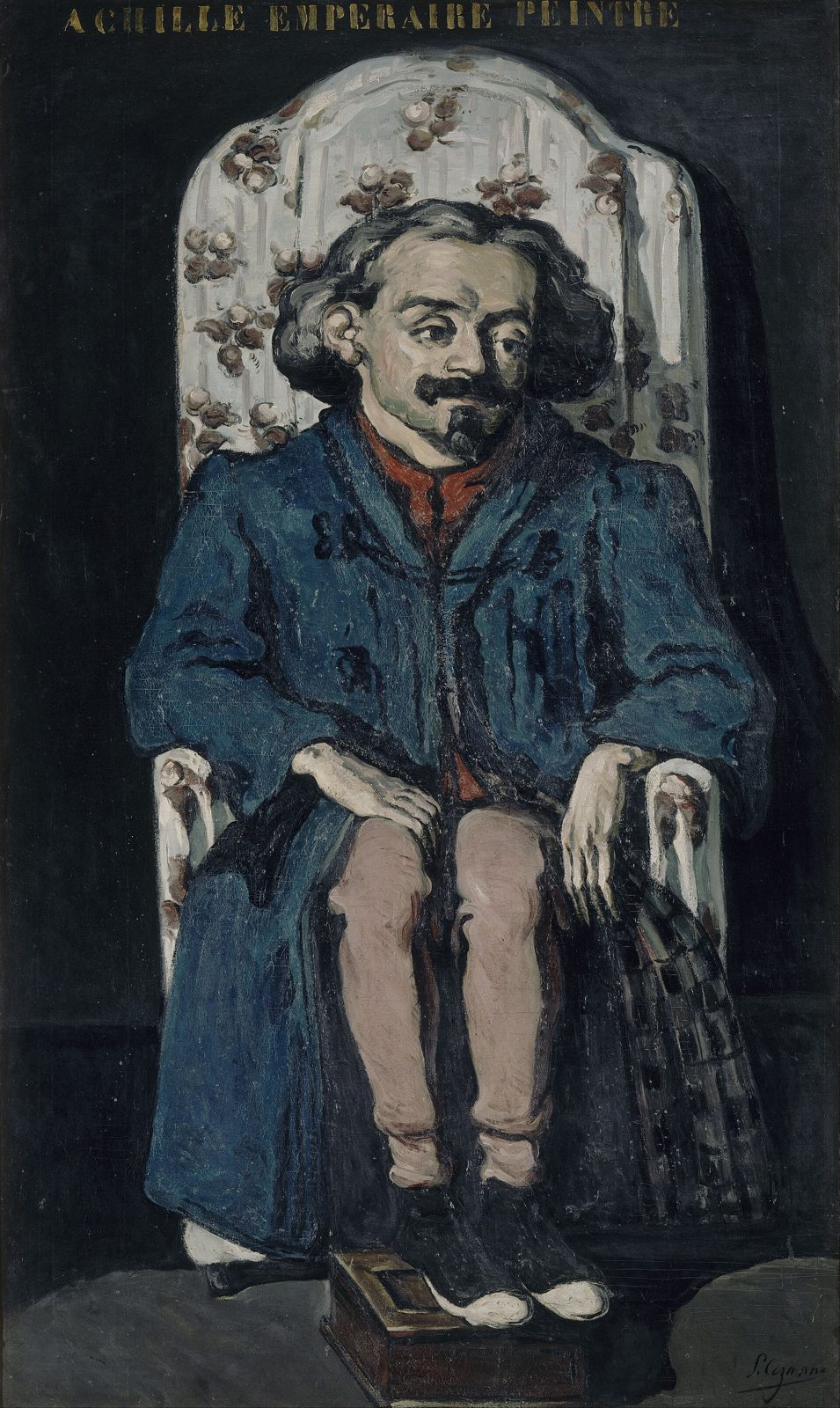
🎧 This work has audio narration — listen in the appTake a moment to really look at "Achille Emperaire" by Paul Cézanne. Notice how the figure of Emperaire is seated in a high-backed chair, almost like a king on a throne, with a floral cover that adds a touch of elegance. His feet rest on a small heater, suggesting a sense of comfort despite the somber mood.
Painted in 1867, this work came at a time when Cézanne was still finding his voice, influenced by the artistic circles he moved in, including his close ties with Emperaire. Despite being rejected from the Salon in 1870, this painting would later become a significant piece in Cézanne's oeuvre, showcasing his evolving style.
As you stand here, think about the stories behind the canvas. What do you think Cézanne wanted to convey about friendship and struggle through this portrait?
Paul Cézanne was a French Post-Impressionist painter born on January 19, 1839, in Aix-en-Provence. His innovative approach to color and form bridged the gap between Impressionism and the emerging Cubism of the early 20th century. Initially influenced by Romanticism and Realism, Cézanne developed a unique style that emphasized the underlying structure of objects, using repetitive brushstrokes and planes of color to create depth and complexity in his work.
Despite facing ridicule and misunderstanding from critics during his early career, Cézanne garnered support from fellow artists like Camille Pissarro and the art dealer Ambroise Vollard, who recognized his talent. His first solo exhibition in 1895 marked a turning point, leading to greater appreciation of his contributions to art. Cézanne's legacy is profound; both Henri Matisse and Pablo Picasso acknowledged him as a foundational figure in modern art, dubbing him "the father of us all." He passed away on October 22, 1906, leaving behind a transformative body of work that continues to influence artists today.
The portrait of Achille Emperaire was painted by Paul Cézanne between 1867 and 1868, during a pivotal time in his artistic journey. Emperaire, a fellow artist and friend, was ten years older than Cézanne and struggled with dwarfism, which added a layer of complexity to their friendship. They met in the Paris studio of Charles Suisse in the early 1860s and maintained a close bond for over a decade. Despite his talent, Emperaire faced poverty and obscurity, leaving behind only a handful of works. This painting was initially rejected by the Salon in 1870, a setback that might have stung Cézanne, who was still grappling with his identity as an artist.
The brushwork feels almost restless, with each stroke contributing to the overall texture of the piece. Notice how he uses color to convey mood—there's a somber palette that reflects Emperaire's struggles, yet the floral cover on the chair adds a touch of elegance, creating a tension between comfort and melancholy. The composition is carefully structured; Emperaire's figure is centrally placed, drawing your eye immediately. The high-backed chair, reminiscent of a throne, elevates him, suggesting both dignity and isolation. Cézanne's choice of scale, with the dimensions of 200 by 120 centimeters, allows for an intimate yet imposing portrayal, inviting viewers to engage deeply with the subject's presence.
Painted in 1867, this work showcases Cézanne's departure from traditional representation, hinting at the geometric forms and structural analysis that would later define Cubism. His bold brushwork and innovative use of color laid the groundwork for future movements, influencing artists like Picasso and Matisse, who famously regarded Cézanne as the 'father of us all.' This painting is a testament to the artist's ability to capture not just likeness, but the essence of his subject, pushing the boundaries of how we perceive portraiture. Remember, this was a time when art was beginning to break free from the constraints of realism, and Cézanne was at the forefront of that revolution.
Did you know that this painting was initially rejected from the Salon in 1870? It’s a surprising twist for a work that now holds such a prestigious place in art history. Imagine Cézanne, pouring his heart into this portrait of his friend Achille Emperaire, only to have it turned away! Emperaire, a fellow artist and a decade older than Cézanne, struggled with dwarfism and poverty, yet he was a source of inspiration for the young painter. Cézanne once fondly remarked that Emperaire had a talent that rivaled the great Venetian masters.
The floral cover adds a layer of elegance to the portrait, contrasting with Emperaire's somber expression and suggesting a complexity in his character—one that balances dignity with the struggles he faced.
The high-backed chair, reminiscent of a throne, symbolizes both the dignity of Emperaire as an artist and the isolation he experienced due to his struggles, reflecting the duality of his life and their friendship.