L'Arlésienne
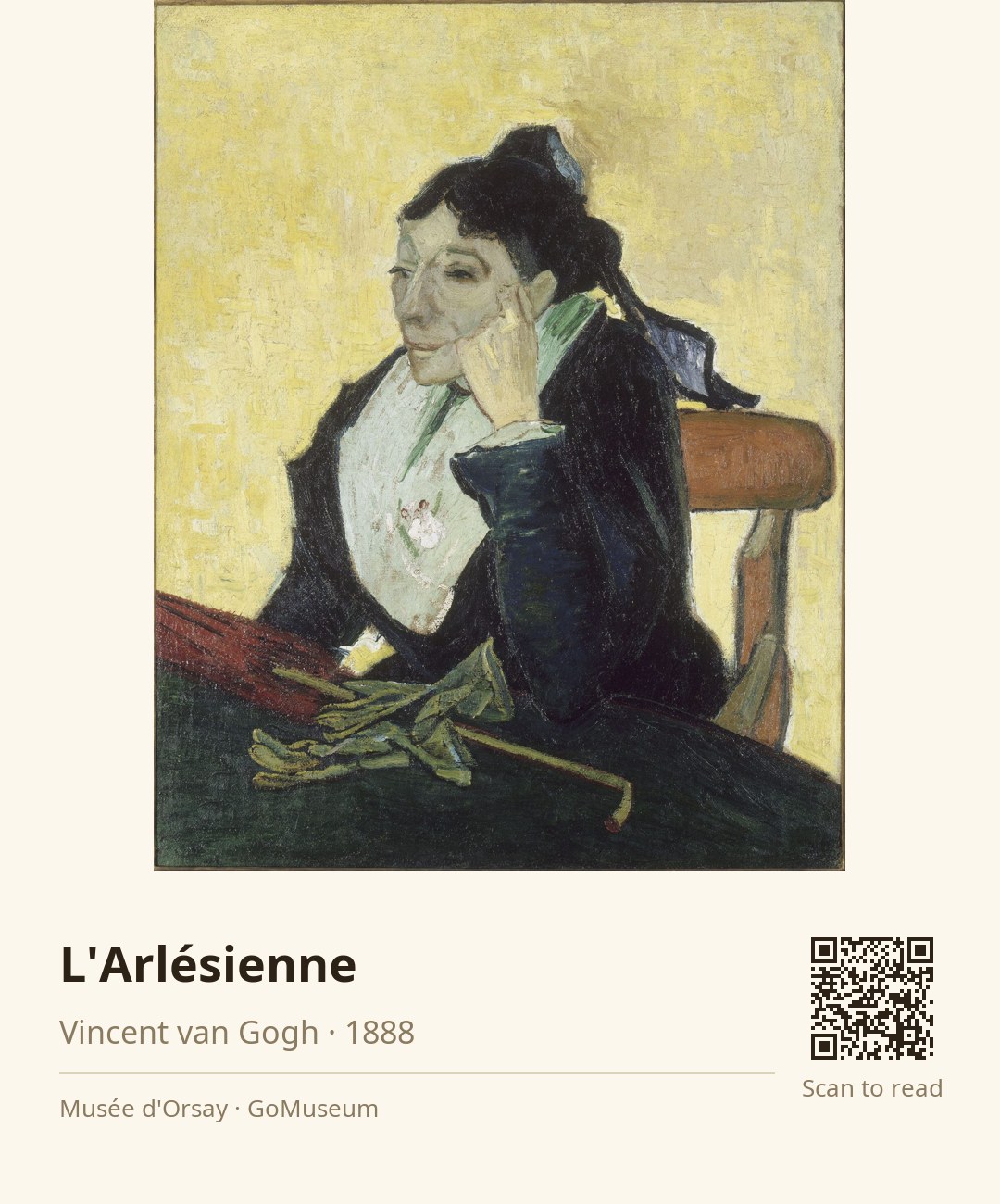
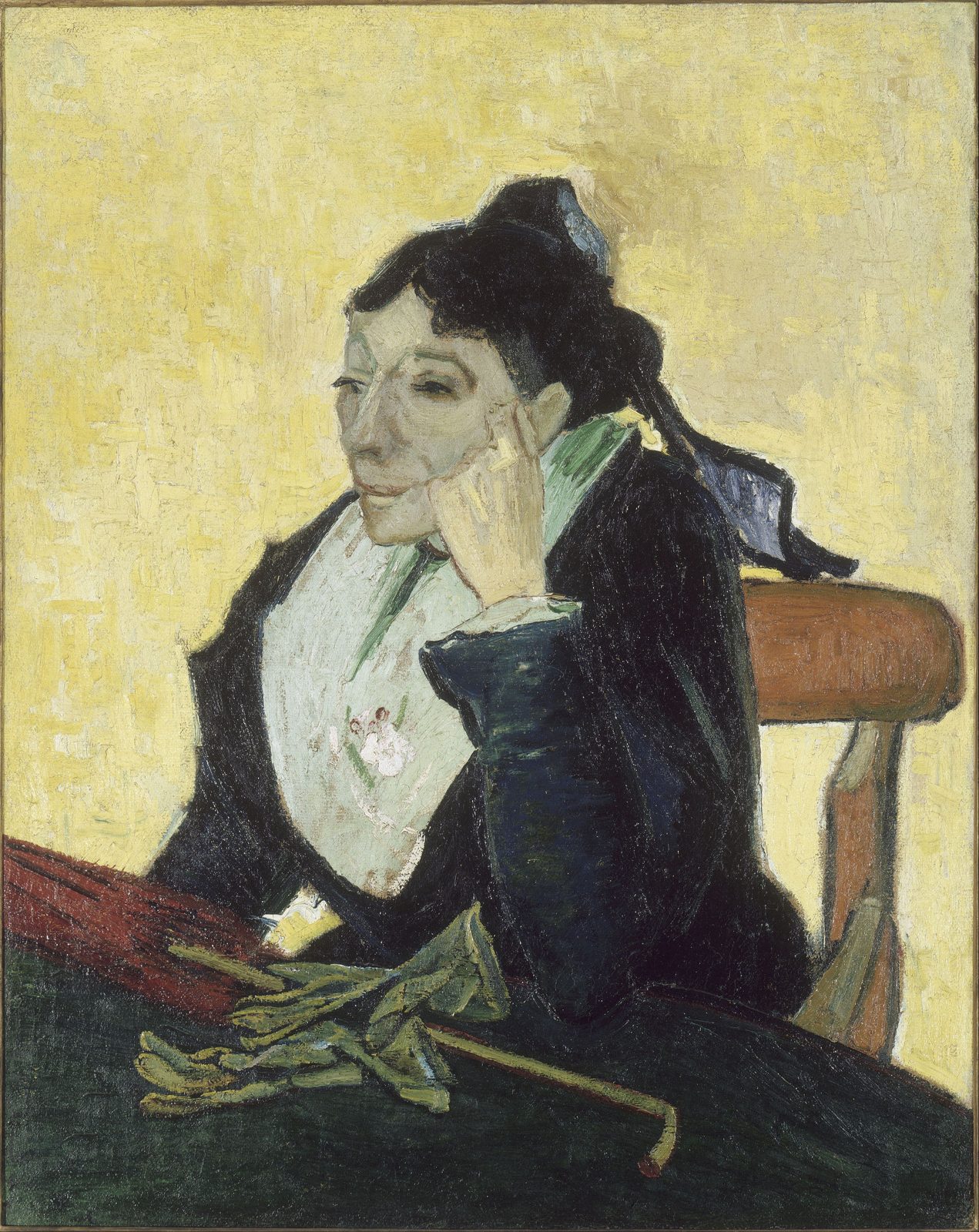
🎧 This work has audio narration — listen in the appTake a moment to really look at "L'Arlésienne" by Vincent van Gogh. Notice how the woman’s gaze seems to pull you in, her expression a blend of contemplation and mystery. Look closely at the vibrant colors of her dress and the intricate details of her headdress. These aren’t just decorative; they reflect the rich culture of Arles, where Van Gogh lived and painted. They reveal Van Gogh's deep connection to the local community and his desire to capture the essence of the people around him. The bold colors and expressive brushwork are hallmarks of his style, showcasing his emotional intensity and innovative approach to portraiture. This painting is not just a representation of a woman; it’s a window into Van Gogh’s world, filled with passion and complexity. Created in 1888, during his prolific period in Arles, this work marks a significant evolution in his artistic journey. It was a time when he was inspired by the vibrant surroundings and the local culture, seeking to express not just what he saw, but what he felt. As you stand here, think about the stories this woman might hold. What emotions do you see in her eyes? What do you think Van Gogh was trying to convey through her portrait? Let your imagination wander—after all, art is as much about the viewer’s experience as it is about the artist’s intention.
Vincent van Gogh was a Dutch Post-Impressionist painter born on March 30, 1853, in Zundert. He is renowned for his vibrant use of color and expressive brushwork, which laid the groundwork for modern art. Despite creating around 2,100 artworks in just over a decade, including 860 oil paintings, he struggled with mental illness and poverty throughout his life. His early career as an art dealer was marked by disillusionment, leading him to pursue painting in 1881.
Van Gogh's intense passion for art was evident in his correspondence with his brother Theo, who provided emotional and financial support. His works evolved significantly after moving to Paris in 1886, where he mingled with avant-garde artists. His time in Arles in 1888 marked a peak in his creativity, producing iconic series like sunflowers and wheat fields.
Tragically, van Gogh's life ended in suicide at 37, after years of battling his demons. Initially unrecognized, he gained fame posthumously, becoming a symbol of the tortured artist. His legacy influenced movements like Fauvism and Expressionism, securing his place as one of the most significant figures in art history.
Vincent van Gogh's 'L'Arlésienne' was created in 1888, during a vibrant and tumultuous period of his life in Arles, France. The painting first appeared in exhibitions in Cologne in 1912, followed by showings in Berlin in 1914 and 1921, and later in Paris in 1936 and 1937. Its journey through various exhibitions reflects the growing appreciation for Van Gogh's work, which was largely overlooked during his lifetime. The painting's provenance includes notable owners such as Thea Sternheim and the Goldschmidt-Rothschild family, illustrating its significance in the art market and its eventual recognition as a masterpiece.
As you gaze at 'L'Arlésienne', take a moment to appreciate Van Gogh's bold brushwork. The way he layers paint creates a palpable texture, almost inviting you to reach out and touch the canvas. Notice how the vibrant colors—especially the reds and greens—interact with one another, creating a dynamic tension that draws your eye around the painting. The composition is structured yet fluid; the figure of the woman is slightly off-center, which adds a sense of movement and life. Van Gogh’s choice of a three-quarter pose gives her a presence that feels both intimate and distant, as if she’s sharing a secret with you. The light plays across her headdress, highlighting the intricate details and adding depth to her expression. This isn’t just a portrait; it’s a vivid exploration of emotion and identity, crafted with a technique that feels both spontaneous and deliberate.
Painted during his time in Arles, this work showcases Van Gogh's bold use of color and expressive brushwork, which would go on to influence generations of artists. His innovative approach laid the groundwork for movements like Fauvism and Expressionism, where color became a primary means of expression rather than just a tool for representation. The emotional intensity and psychological depth in his portraits invite viewers to connect with the subject on a personal level, a concept that transformed how artists approached portraiture.
Did you know that Van Gogh painted 'L'Arlésienne' during a particularly tumultuous time in his life? While living in Arles, he was not only creating some of his most famous works but was also struggling with his mental health. This painting was inspired by a local woman named Marie Ginoux, who was a significant figure in his life. Interestingly, Van Gogh painted her multiple times, capturing her in various poses and expressions, which shows how deeply he was affected by her presence. It's almost as if he was trying to understand her and, in turn, himself through his art.
During his stay in Arles, Van Gogh's palette became much brighter and more vibrant, marking a shift from his earlier, darker works. This period was crucial for his development, as he experimented with color and brushwork that would define his later masterpieces.
Van Gogh's letters to Theo provide deep insights into his thoughts and struggles as an artist, revealing his evolving theories on color and composition. This correspondence not only documented his artistic process but also highlighted the emotional support that Theo provided, which was vital for Vincent's creative output.