Portrait of Emile Zola
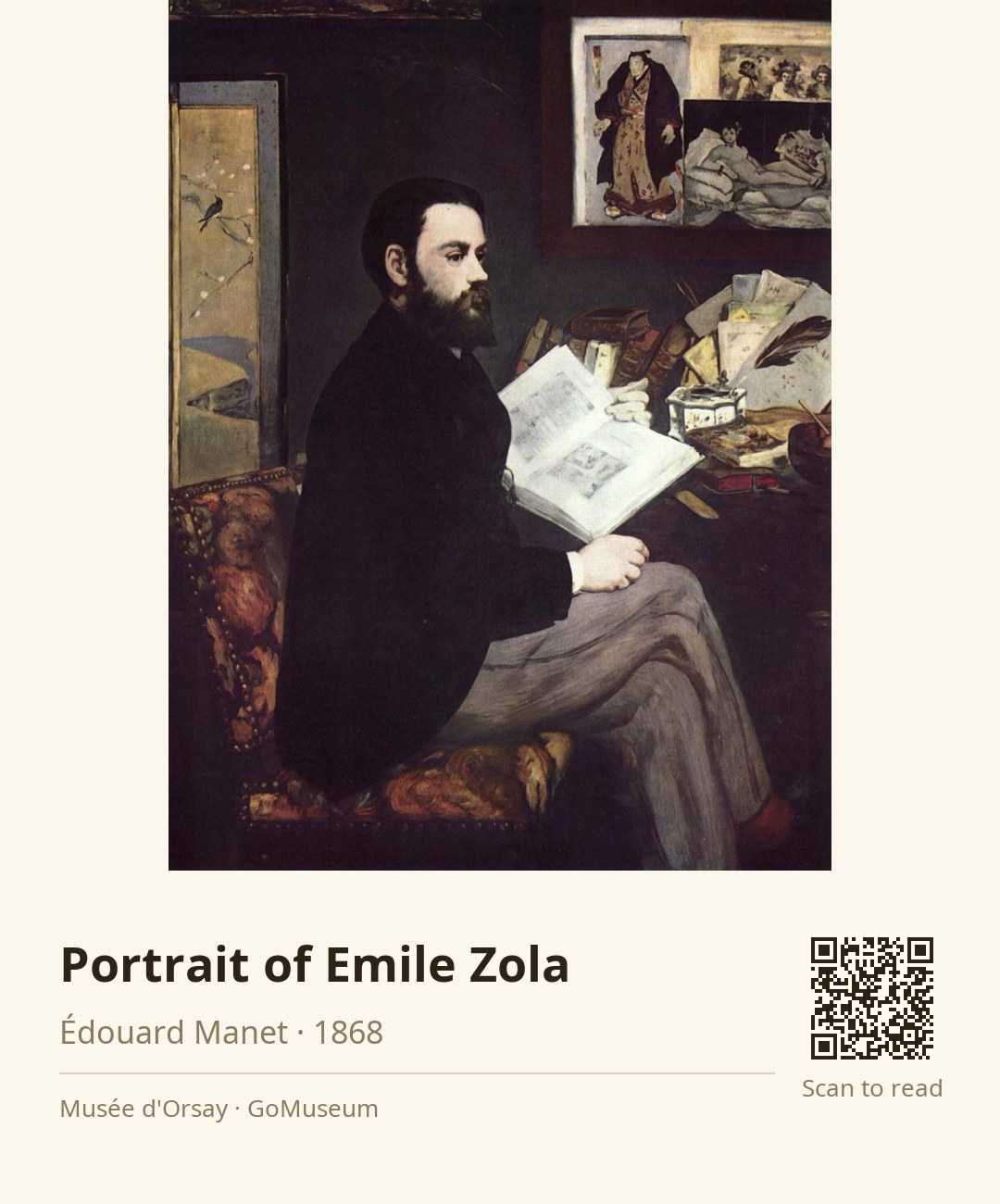
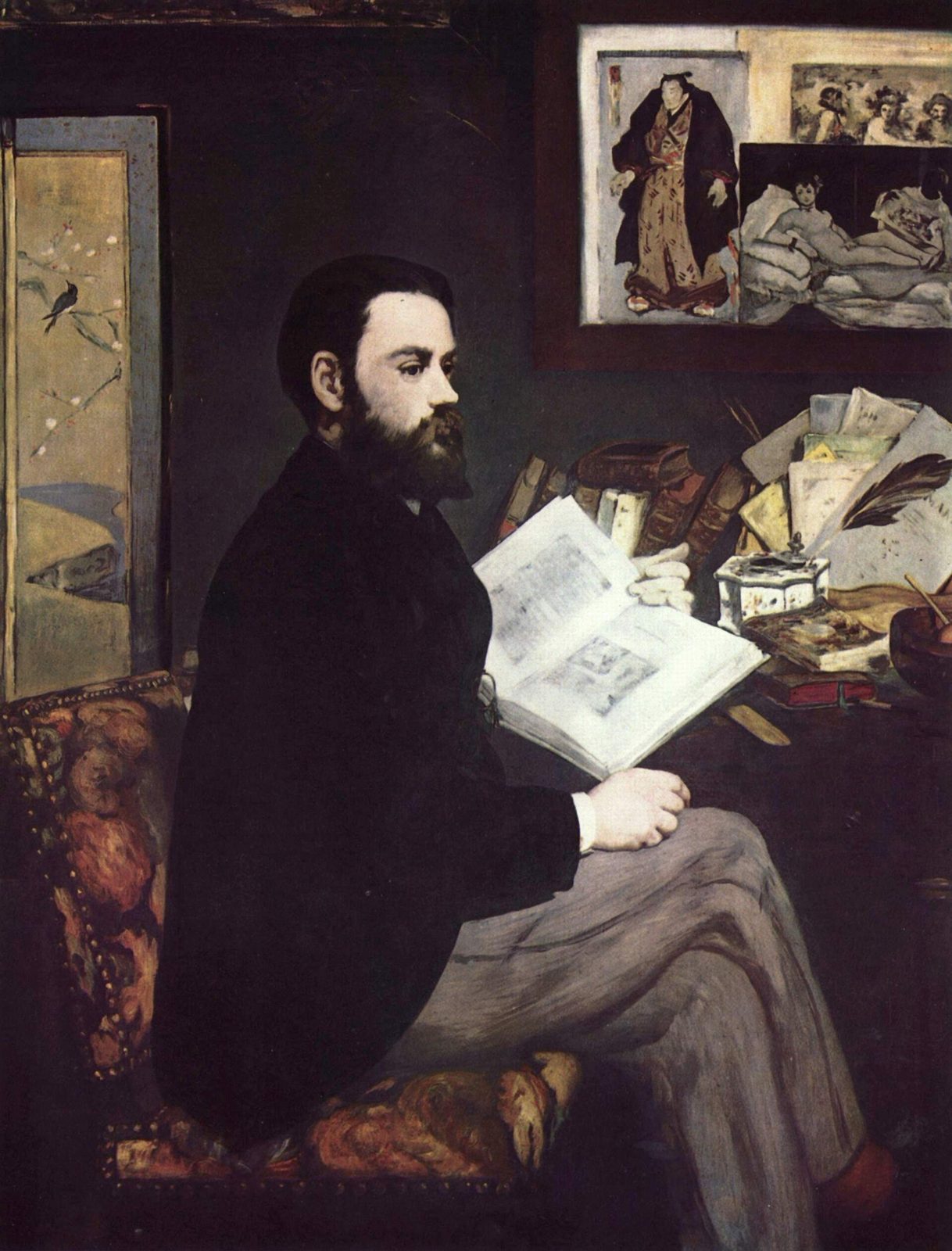
🎧 This work has audio narration — listen in the appTake a moment to really look at this striking portrait of Émile Zola by Édouard Manet. Notice how Zola’s gaze seems to pierce through the canvas, drawing you in. His thoughtful expression is framed by a backdrop of rich colors and intriguing details, like the reproduction of Manet’s own controversial painting, Olympia, hanging on the wall behind him.
These elements matter because they reveal the deep friendship and mutual respect between Manet and Zola. Zola was not just a novelist; he was also a passionate advocate for Manet when critics were harsh about his work. By including Olympia in the portrait, Manet acknowledges Zola's support and the artistic dialogue they shared. The Japanese print and the references to Spanish art hint at the broader influences that shaped their creative worlds.
Created in 1868, this painting was a significant moment for both men. Zola was emerging as a literary giant, while Manet was pushing the boundaries of modern art. Their collaboration was a testament to the vibrant cultural scene of Paris at the time.
As you stand here, think about the power of friendship in the arts. How do you think Zola’s support impacted Manet’s career? What stories might this portrait tell beyond the canvas?
Édouard Manet, born on January 23, 1832, in Paris, emerged as a pivotal figure in 19th-century art, bridging Realism and Impressionism. From an affluent family, he initially faced pressure to pursue a naval career but instead dedicated himself to painting, influenced by his uncle and the Old Masters. His early works, including "The Luncheon on the Grass" and "Olympia," sparked controversy and challenged traditional artistic norms, marking him as a revolutionary force.
Manet's style, characterized by loose brushwork and a focus on contemporary life, diverged from the meticulous techniques of his predecessors. He often depicted modern Parisian scenes, capturing the essence of leisure and social dynamics. Despite initial rejection from the art establishment, he gained recognition among progressive artists and became a mentor to the Impressionists.
Throughout his life, Manet formed connections with influential figures like Baudelaire and Zola, who defended him against critics. His later works, such as "A Bar at the Folies-Bergère," showcased his evolving style and mastery of color. Manet's contributions to art history are profound; he is celebrated not only for his innovative techniques but also for elevating still life and modern subjects to the forefront of artistic expression. He passed away on April 30, 1883, leaving behind a legacy that continues to inspire artists today.
Édouard Manet's 'Portrait of Émile Zola' was created in 1868, a pivotal year for both the artist and his subject. Zola, already a rising literary star, had recently become a vocal supporter of Manet's work, defending him against harsh criticism from the art establishment. This portrait was Manet's way of thanking Zola for his unwavering support. It was exhibited at the Salon des artistes français in Paris that same year, where it received a mix of admiration and critique, reflecting the ongoing tensions in the art world. The painting later traveled through various exhibitions, including the 'Portraits du Siècle' in 1883 and a significant showing at the Grand Palais in 1983. After Zola's death, the portrait was passed to his widow and eventually gifted to the French state, making its way to the Louvre and later the Musée d'Orsay, where it remains a testament to their friendship and the cultural milieu of 19th-century Paris.
Notice the vibrant colors and the way they interact; the rich reds and deep greens create a dynamic backdrop that enhances Zola's presence. The brushwork feels both confident and spontaneous, lending a sense of immediacy to the scene. The composition is structured yet fluid, guiding your eye from Zola's penetrating gaze to the details around him, like the Japanese print and the engraving of Velázquez's 'Bacchus'. This layering of influences reflects the vibrant artistic dialogue of the time, making the portrait not just a likeness but a conversation among friends.
Zola, known for his fierce advocacy of Manet during a time when the artist faced harsh criticism, becomes a symbol of the changing tides in the art world. This portrait, accepted at the Salon of 1868, not only solidified Manet's place in the avant-garde but also influenced future generations of artists who sought to break free from traditional constraints. The way Manet captures Zola's gaze, framed by the echoes of his own controversial works, speaks volumes about the power of friendship and mutual support in the face of adversity. Remember this: it’s not just a portrait; it’s a testament to the transformative power of art and camaraderie.
An interesting tidbit about this painting is that the book on the desk in front of Zola is actually a light blue brochure he wrote to promote Manet's exhibition in 1867. This detail not only highlights their collaboration but also serves as a subtle reminder of the supportive role Zola played in Manet's career during a time when the artist faced significant backlash from critics.