 Image: Museo Soumaya · Museo Soumaya · Sailko · Sailko
Man with the Broken Nose
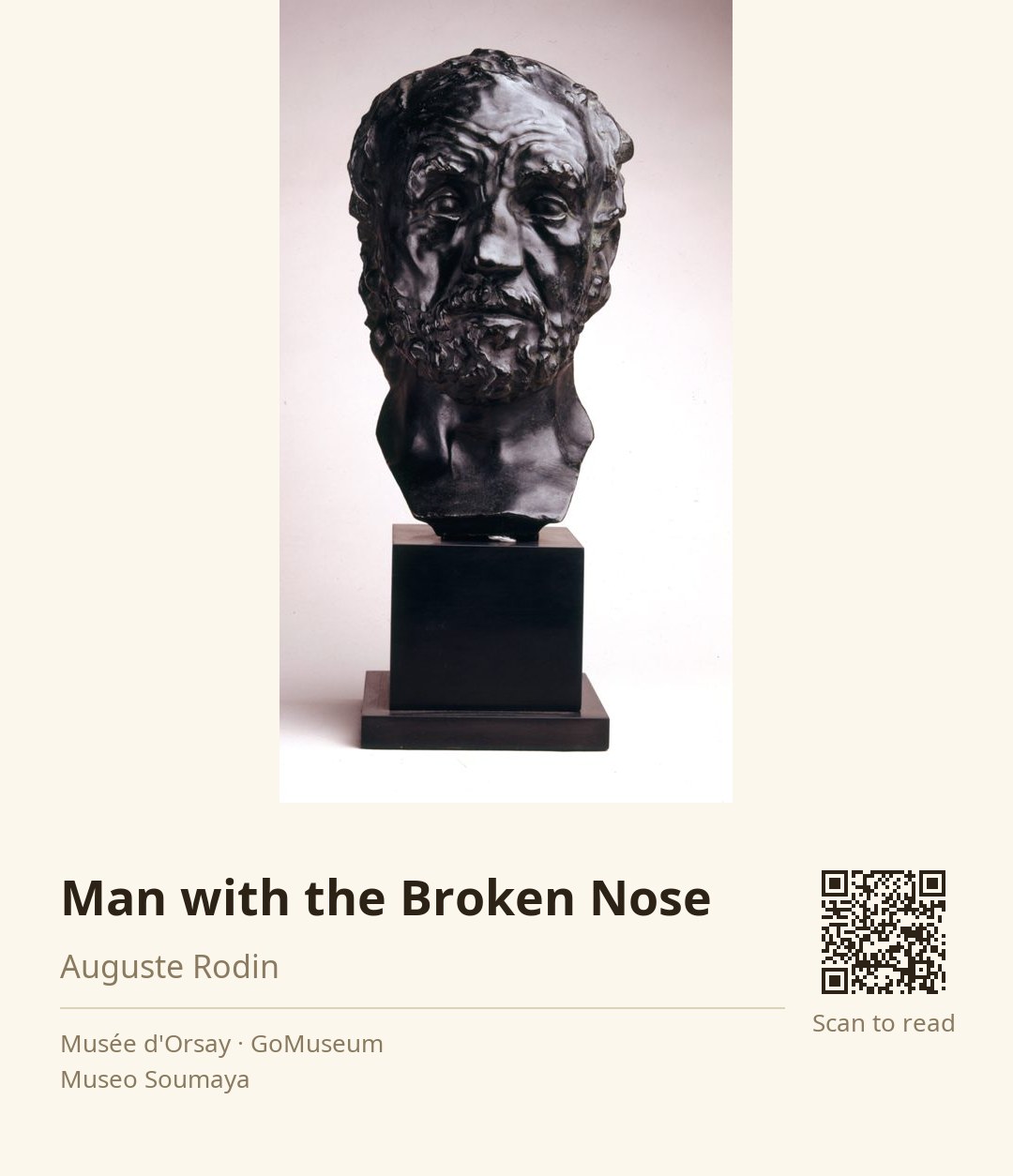
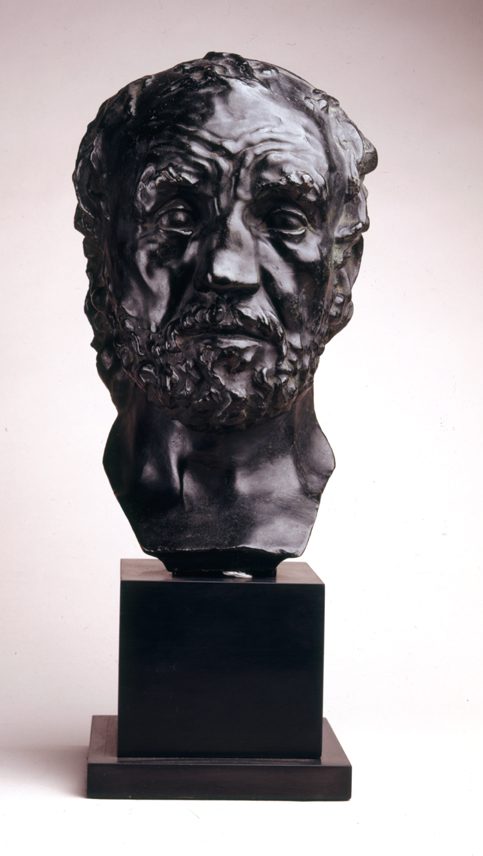
🎧 This work has audio narration — listen in the appTake a moment to really look at the "Man with the Broken Nose." Notice how the deep wrinkles and sharp contours of his face seem to tell a story of hardship and resilience. The way the light plays off the bronze surface highlights every imperfection, making it feel alive, almost as if he’s about to speak. This sculpture, created by Auguste Rodin between 1863 and 1864, was revolutionary for its time. Rodin chose to represent a man who, rather than embodying classical beauty, showcases the raw, unfiltered essence of humanity. The broken nose and intense expression challenge the conventions of beauty that dominated the art world, pushing against the norms of the academic style that favored idealized forms. Rodin himself referred to this piece as pivotal in his artistic journey, stating it shaped all his future work. It was his first major piece that moved away from traditional aesthetics, embracing the imperfections that make us human. The model, known as "Bibi," was a laborer, and through this sculpture, Rodin immortalized the dignity found in everyday struggle. As you stand here, think about how this piece invites you to reconsider what beauty means. Can you see the strength in his vulnerability? What stories do you think this man could tell if he had the chance?
François Auguste René Rodin, born on November 12, 1840, in Paris, is celebrated as a pioneer of modern sculpture. His artistic journey began in a working-class family, where he developed a passion for drawing at an early age. Despite facing rejections from prestigious art schools, Rodin honed his skills through self-education and apprenticeships, notably under the influential sculptor Antoine-Louis Barye.
Rodin's work is characterized by a remarkable ability to capture the human form with naturalism and emotional depth, diverging from the decorative and formulaic styles of his contemporaries. His iconic pieces, such as The Thinker and The Kiss, reflect a profound exploration of human experience, blending elements of romanticism and impressionism. His innovative approach often sparked controversy, yet he remained steadfast in his vision.
Throughout his life, Rodin formed significant relationships, notably with sculptor Camille Claudel, who was both his student and muse. He eventually married his lifelong partner, Rose Beuret, shortly before their deaths. By the turn of the 20th century, Rodin had achieved international acclaim, becoming a sought-after artist among the elite. Although his popularity waned after his death in 1917, his legacy endured, solidifying his status as one of the most influential sculptors in art history.
As you take a closer look at the 'Man with the Broken Nose,' pay attention to the texture of the bronze. Rodin's technique is all about capturing the raw essence of his subject. Notice how the surface is not smooth but rather has a rugged quality, with deep grooves and sharp edges that reflect light in a way that brings the sculpture to life. This wasn't just a simple casting; Rodin meticulously modeled the original in plaster before moving to bronze, emphasizing the contours of the face. The choice of bronze allowed for a rich patina, with hints of black, brown, and green, enhancing the sculpture's emotional depth. Can you feel the weight of the material, almost as if it carries the stories of the man it represents?
The journey of this sculpture began in 1864 when Rodin first created a plaster model, working in a makeshift studio he adapted from a stable. His model, affectionately known as 'Bibi,' was a laborer whose face bore the marks of a hard life. Initially, Rodin faced rejection; the piece was turned down at the Salon of 1865 for its unconventional portrayal of beauty. He reworked the piece and submitted it again, eventually gaining acceptance at the Salon of 1875. This marked a significant turning point in his career, as it was the first major piece to showcase his departure from traditional aesthetics. The sculpture's acceptance was a victory not just for Rodin but for a new vision of art that embraced the imperfect and the real. The original plaster model was lost, but a bronze cast made in 1880 survives, along with a marble version created by a friend, Léon Fourquet, which further solidified its place in art history.
Created between 1863 and 1864, it marked Rodin's departure from the idealized forms of academic sculpture, embracing instead the raw, unfiltered essence of human emotion. This piece was revolutionary, influencing countless artists who followed, as it challenged the norms of beauty and representation. Rodin himself said this mask determined all his future work, pushing him to explore the complexities of human expression. The profound wrinkles and the stark, asymmetrical features of the face invite you to look deeper, to see the beauty in imperfection. Remember, this was a time when art was expected to adhere to strict ideals; Rodin's work opened the door for modern sculpture, celebrating individuality and the truth of the human experience.
Did you know that the original title of this sculpture was 'Portrait of M. It was initially rejected because it was deemed too unconventional, presenting a man with a broken nose and strong features that many considered unattractive. This rejection didn't deter Rodin; instead, it fueled his determination to challenge the norms of beauty in art. The story of its acceptance at the Salon of 1875 is a testament to Rodin's resilience and vision, proving that true art often lies in the eyes of the beholder.
Rodin adapted a stable into his atelier, showcasing his resourcefulness and determination to create art despite limited means.
The rejection fueled Rodin's commitment to challenge traditional notions of beauty, leading him to embrace the raw and imperfect in his subsequent pieces.