Femme à l'ombrelle tournée vers la droite
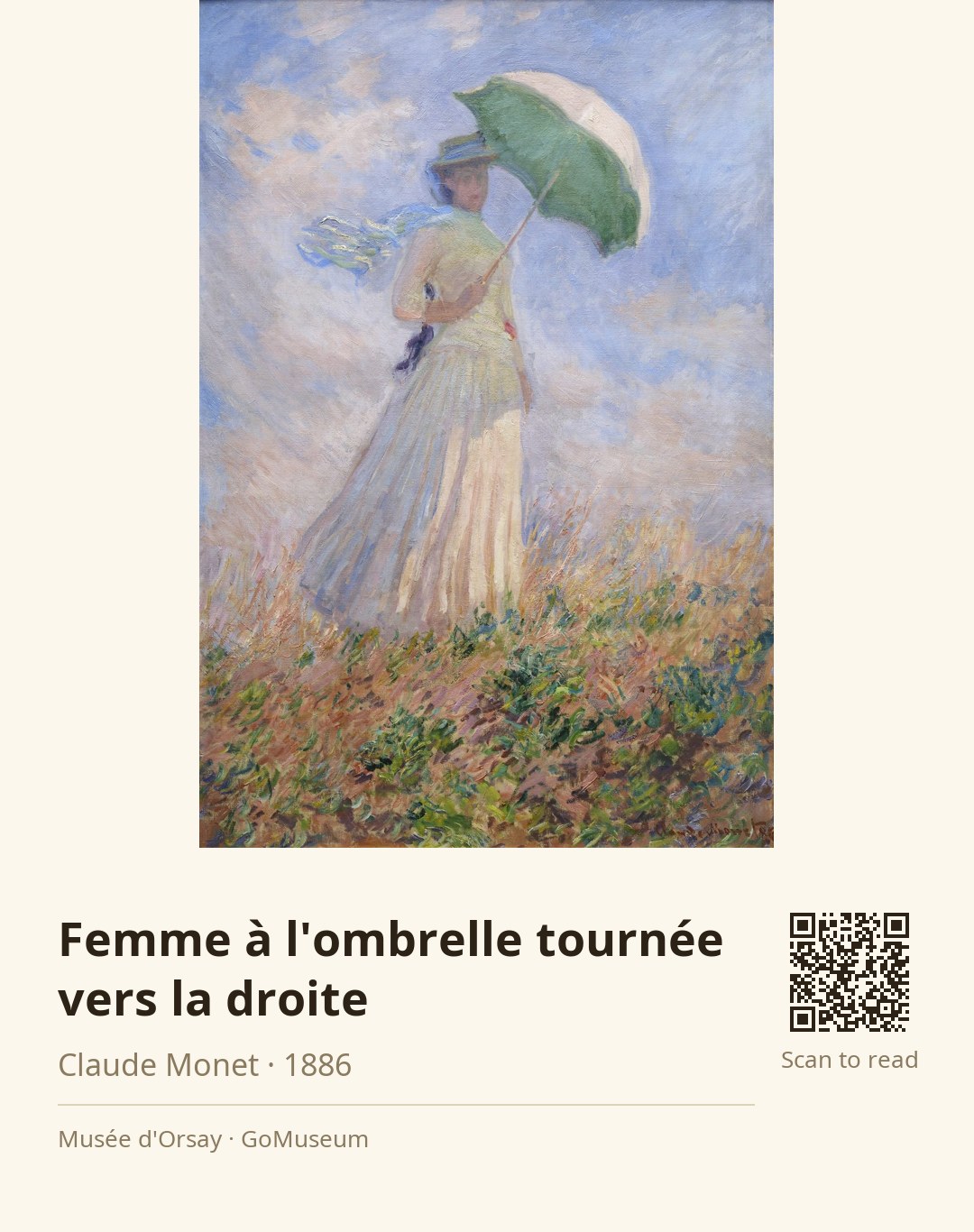
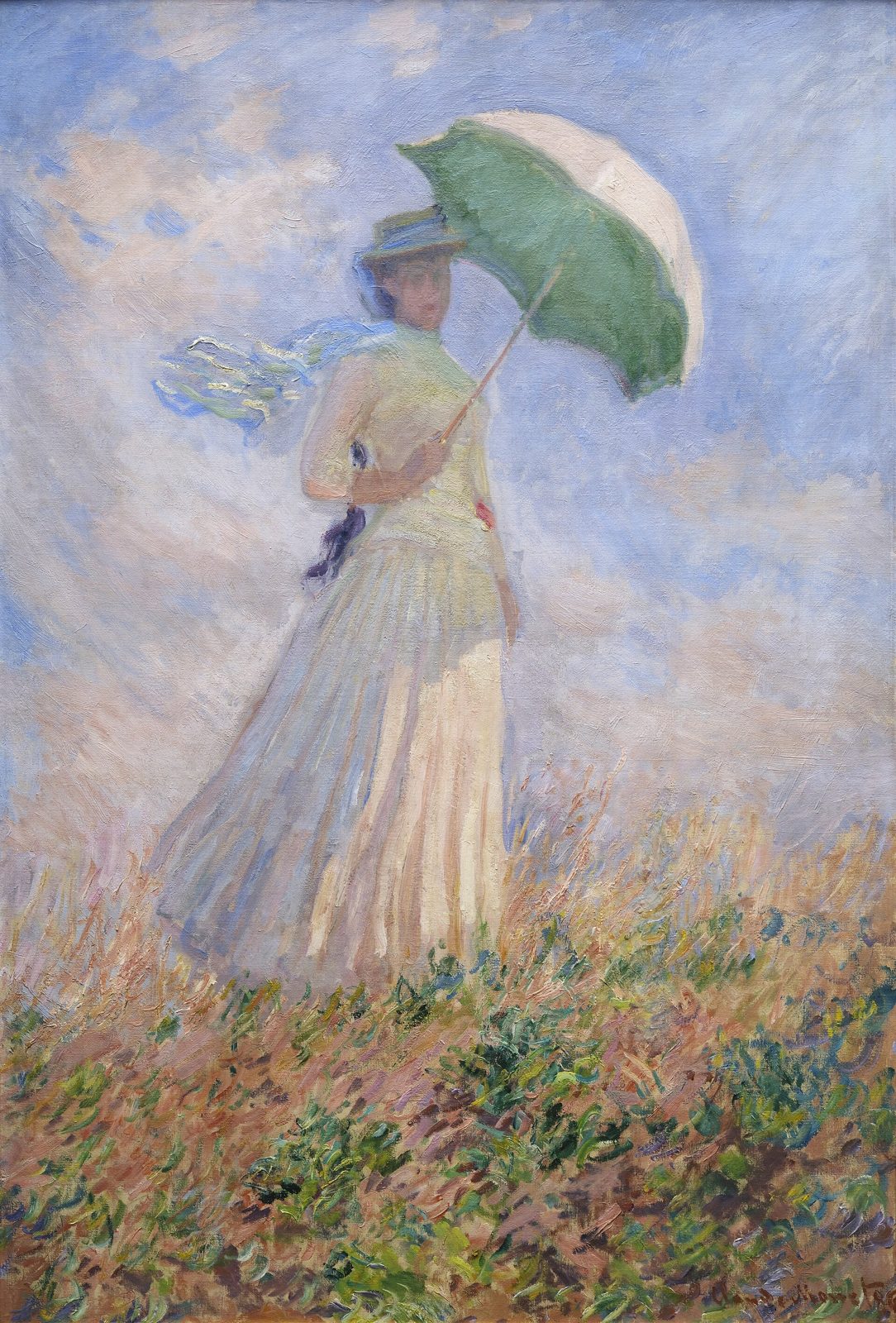
🎧 This work has audio narration — listen in the appTake a moment to really look at "Femme à l'ombrelle tournée vers la droite." Notice how the sunlight dances across the woman's dress and the delicate fabric of her parasol. The way Monet captures this fleeting moment is nothing short of magical. These details matter because they embody the essence of Impressionism—it's all about capturing light and movement in a way that feels alive. Monet painted this in 1886, and you can almost feel the warmth of that sunny day as you gaze at the vibrant colors and soft brushstrokes. This painting features Suzanne Hoschedé, a frequent model for Monet, and it’s a perfect example of his plein air technique, where he painted outdoors to capture the true essence of his subjects. Monet was fascinated by the way light changes everything, and here, he invites you to experience that transformation. As you stand here, think about the moment Monet froze in time. What do you think the woman is thinking, standing there in the sun? What stories might she hold? Let your imagination wander as you take in this beautiful piece of art.
Oscar-Claude Monet, born on November 14, 1840, in Paris, was a pioneering French painter and a founder of Impressionism, a movement that transformed the art world. Raised in Le Havre, he developed a passion for nature and painting early on, encouraged by his mother, while his father hoped he would pursue a business career. After his mother's death in 1857, Monet moved in with his aunt, who supported his artistic ambitions.
Monet's career began with caricatures, but he soon sought formal training, studying under Eugène Boudin, who introduced him to plein air painting. His breakthrough came in 1866 with "La Femme à la robe verte," which garnered attention at the Salon. The term "Impressionism" originated from his work "Impression, Sunrise," exhibited in 1874, marking a shift away from traditional art.
Throughout his life, Monet focused on capturing the essence of light and color in nature, creating series of paintings that depicted the same scenes under varying conditions, such as his famous haystacks and water lilies. He settled in Giverny in 1883, where he cultivated a beautiful garden that became his muse. Despite personal hardships, including the loss of loved ones and health issues, Monet's relentless dedication to his craft solidified his place in art history as a master of modernism, influencing countless artists and leaving a lasting legacy. He died on December 5, 1926, in Giverny, celebrated as one of the most significant figures in art.
The painting was first exhibited in 1891 at the prestigious Durand-Ruel Gallery in Paris, where it caught the attention of art enthusiasts and critics alike. Monet's work was part of the Impressionist movement, which was still finding its footing in the art world. The reception was mixed; while some praised its innovative approach to light and color, others were skeptical of its departure from traditional techniques. Over the years, the painting changed hands and is now housed in the Musée d'Orsay, a testament to its enduring appeal and significance in Monet's oeuvre.
Notice the way he uses loose, fluid brushwork to create a sense of movement; the strokes seem to dance across the canvas, mimicking the gentle sway of the woman's dress in the breeze. The color palette is vibrant yet harmonious, with soft greens and yellows that evoke the warmth of sunlight filtering through the parasol. Monet's choice to paint en plein air allowed him to observe the changing light conditions directly, resulting in a dynamic interplay of shadows and highlights. The composition is carefully structured, with the figure placed slightly off-center, drawing your eye across the canvas and inviting you to explore the surrounding landscape. This technique not only enhances the sense of depth but also immerses you in the scene, making you feel as if you are standing right there with her.
Created in 1886, this work showcases Monet's mastery of light and color, hallmarks of the Impressionist movement he helped to pioneer. By capturing a fleeting moment of a woman with an umbrella in a sun-drenched landscape, Monet influenced countless artists who followed, encouraging them to explore their perceptions of nature and everyday life. This painting exemplifies the shift from traditional, rigid techniques to a more spontaneous, expressive style, paving the way for modern art. Remember, Monet's approach to painting outdoors, or 'en plein air,' changed how artists interacted with their environment, making this piece a cornerstone of Impressionism's legacy.
Interestingly, there exists another version of this painting, where the woman is turned to the left. This variation showcases Monet's fascination with the same subject from different angles, reflecting his desire to explore the nuances of light and form in a single moment.