Camille Monet on her deathbed
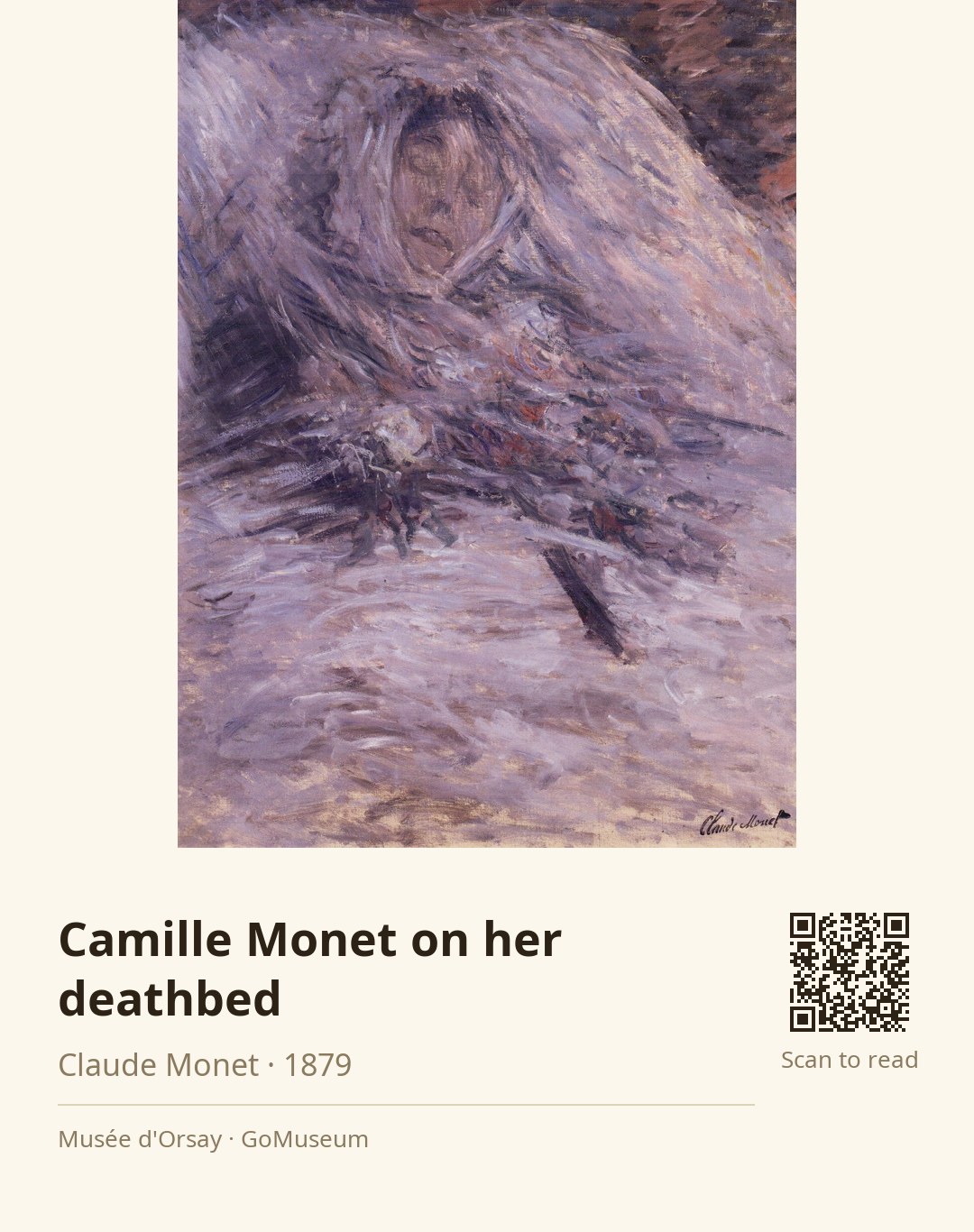
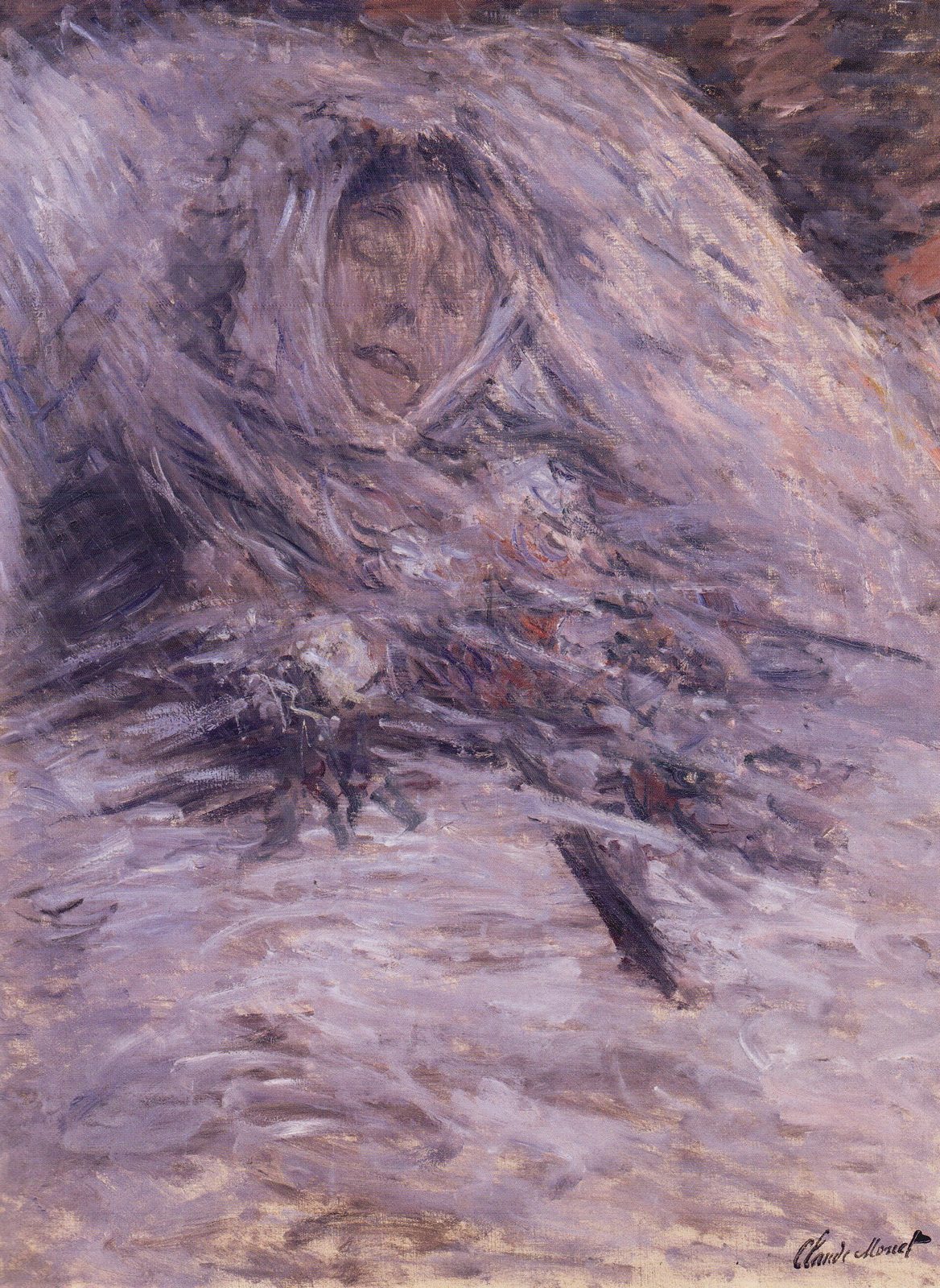
🎧 This work has audio narration — listen in the appTake a moment to really look at this poignant scene. Here, Claude Monet captures the final moments of his beloved wife, Camille, as she lies on her deathbed. Notice the gentle way he portrays her face, almost ethereal, bathed in soft light. The delicate brushwork conveys both tenderness and sorrow, creating an intimate atmosphere that draws you in. What’s striking is the small, dark smudge near his signature, shaped like a heart. This isn’t just a random detail; it symbolizes Monet’s deep love for Camille, a love that transcended even her passing. It’s a reminder of the personal connection he had to this moment, making the painting not just a portrait, but a heartfelt tribute. Painted in 1879, this work reflects a period of profound grief for Monet, who had lost his partner and muse. Camille was not only his wife but also a significant influence on his artistic journey. Her presence in his life and work is undeniable, and this painting stands as a testament to their bond. As you stand here, consider the emotions Monet must have felt while creating this piece. What memories does it evoke for you? How does it make you reflect on love and loss?
Oscar-Claude Monet, born on November 14, 1840, in Paris, was a pioneering French painter and a founder of Impressionism, a movement that transformed the art world. Raised in Le Havre, he developed a passion for nature and painting early on, encouraged by his mother, while his father hoped he would pursue a business career. After his mother's death in 1857, Monet moved in with his aunt, who supported his artistic ambitions.
Monet's career began with caricatures, but he soon sought formal training, studying under Eugène Boudin, who introduced him to plein air painting. His breakthrough came in 1866 with "La Femme à la robe verte," which garnered attention at the Salon. The term "Impressionism" originated from his work "Impression, Sunrise," exhibited in 1874, marking a shift away from traditional art.
Throughout his life, Monet focused on capturing the essence of light and color in nature, creating series of paintings that depicted the same scenes under varying conditions, such as his famous haystacks and water lilies. He settled in Giverny in 1883, where he cultivated a beautiful garden that became his muse. Despite personal hardships, including the loss of loved ones and health issues, Monet's relentless dedication to his craft solidified his place in art history as a master of modernism, influencing countless artists and leaving a lasting legacy. He died on December 5, 1926, in Giverny, celebrated as one of the most significant figures in art.
In 1879, Claude Monet painted 'Camille Monet on her Deathbed,' a deeply personal work capturing the final moments of his beloved wife, Camille Doncieux. This oil on canvas piece was created during a tumultuous time in Monet's life, as he faced the impending loss of the woman who had been his muse and partner. Today, it resides in the Musée d'Orsay in Paris, where it continues to evoke strong emotions from viewers. The painting's signature features a dark blot that resembles a heart, symbolizing Monet's enduring love for Camille, even in her final moments. This intimate portrayal of grief and love was not just a reflection of Monet's artistic prowess but also a testament to the profound bond they shared.
Monet's technique in this painting is a masterclass in emotional expression through brushwork and color. The soft, almost ethereal light that bathes Camille's face is achieved through delicate layering of paint, creating a sense of warmth and intimacy. Notice how the brushstrokes are both tender and restless, reflecting the turmoil of grief. The composition is intimate, with Camille positioned centrally, drawing your eye directly to her serene yet sorrowful expression. The use of muted colors, particularly the soft blues and whites, enhances the somber mood, while the subtle contrasts create depth and a sense of presence. Monet's choice to depict Camille in this vulnerable state, surrounded by flowers, speaks volumes about his love and the beauty he saw in her, even in death.
One intriguing detail about this painting is hidden in Monet's signature. If you take a closer look at the bottom right corner, you'll notice a dark spot that clings to the branches of the letter 'T.' This isn't just a smudge; Monet intentionally painted it to resemble a heart. It's a tender symbol of his deep love for Camille, even in her final moments. This small detail adds a layer of emotion to the artwork, reminding us of the personal connection between the artist and his subject.
Near Monet's signature, there is a small dark smudge shaped like a heart, which he intentionally painted as a symbol of his enduring love for Camille. This detail adds a layer of personal significance to the artwork, making it not just a portrayal of loss but also a tribute to their bond.