La Gare Saint-Lazare
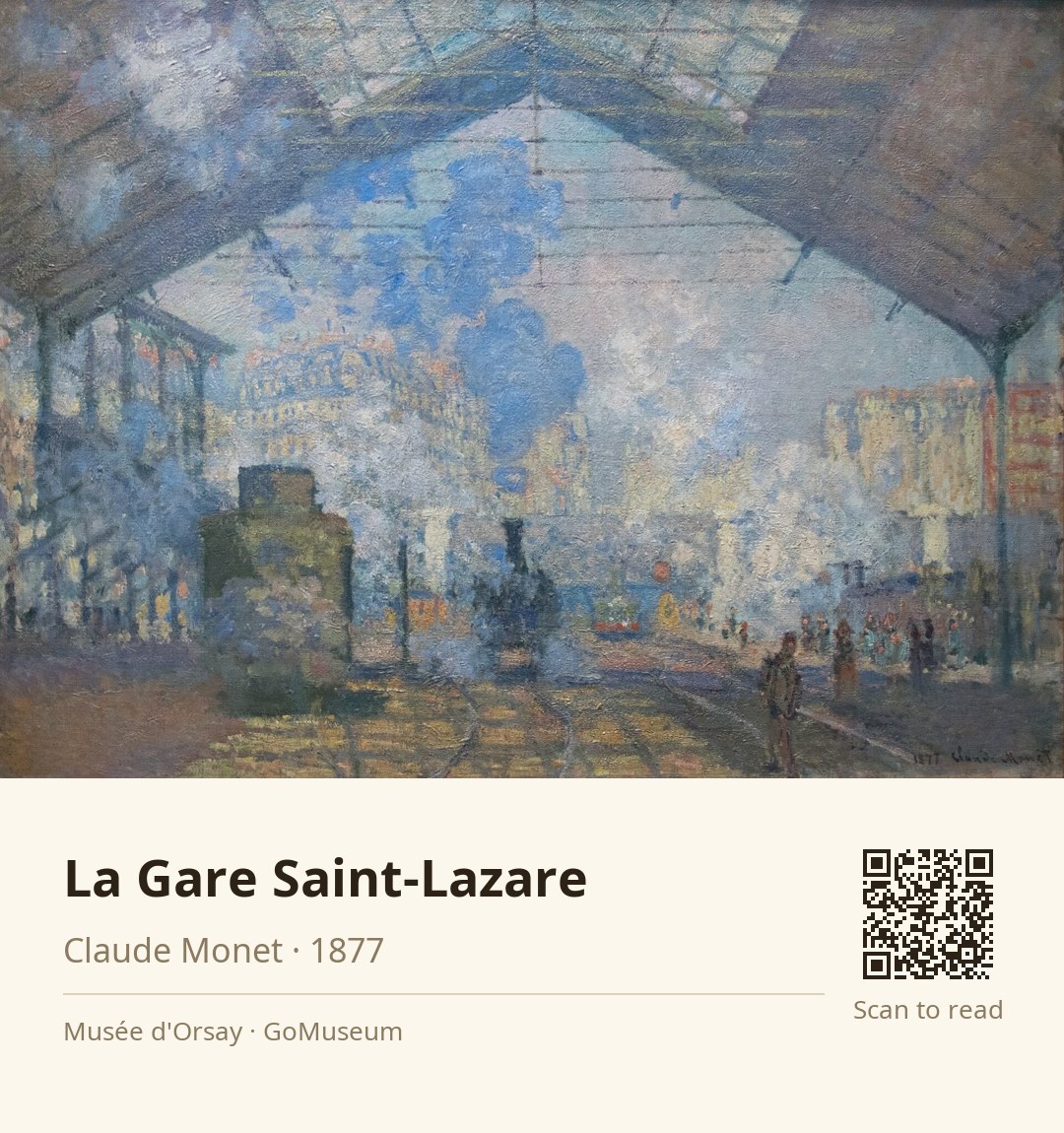
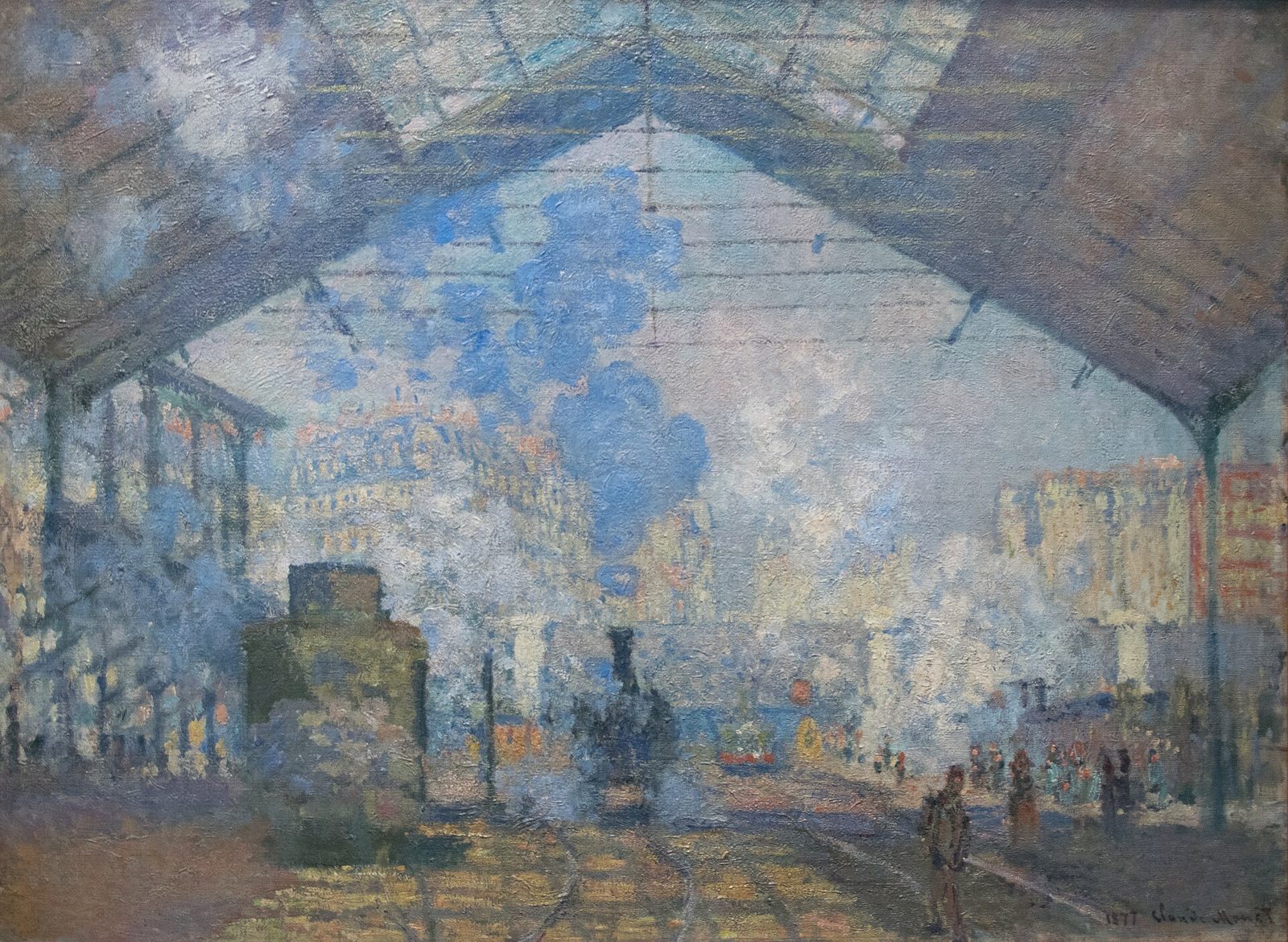
🎧 This work has audio narration — listen in the appAs you stand before Monet's "La Gare Saint-Lazare," take a moment to really absorb the scene. Notice how the steam from the locomotives swirls and dances through the air, almost like a living entity. And look closely at the way the light filters through the glass roof, casting a soft glow on the bustling figures below. These details are crucial because they capture the very essence of modern life in 19th-century Paris—a city on the move, alive with energy and transformation. Monet was fascinated by this new industrial age, and in this painting, he immortalizes the thrill of travel and the beauty of the everyday. Created in 1877, during the height of the Impressionist movement, this piece reflects Monet's innovative approach to capturing light and atmosphere, a departure from traditional techniques. He wanted to portray not just what he saw, but how it felt to be there, enveloped in the sights and sounds of the station. So, as you take in this vibrant moment frozen in time, think about the hustle and bustle of your own life. What scenes of modernity and movement resonate with you today?
Oscar-Claude Monet, born on November 14, 1840, in Paris, was a pioneering French painter and a founder of Impressionism, a movement that transformed the art world. Raised in Le Havre, he developed a passion for nature and painting early on, encouraged by his mother, while his father hoped he would pursue a business career. After his mother's death in 1857, Monet moved in with his aunt, who supported his artistic ambitions.
Monet's career began with caricatures, but he soon sought formal training, studying under Eugène Boudin, who introduced him to plein air painting. His breakthrough came in 1866 with "La Femme à la robe verte," which garnered attention at the Salon. The term "Impressionism" originated from his work "Impression, Sunrise," exhibited in 1874, marking a shift away from traditional art.
Throughout his life, Monet focused on capturing the essence of light and color in nature, creating series of paintings that depicted the same scenes under varying conditions, such as his famous haystacks and water lilies. He settled in Giverny in 1883, where he cultivated a beautiful garden that became his muse. Despite personal hardships, including the loss of loved ones and health issues, Monet's relentless dedication to his craft solidified his place in art history as a master of modernism, influencing countless artists and leaving a lasting legacy. He died on December 5, 1926, in Giverny, celebrated as one of the most significant figures in art.
La Gare Saint-Lazare, painted by Claude Monet in 1877, is a striking representation of the bustling Parisian train station. This piece was showcased at the Troisième exposition impressionniste in Paris that same year, where it contributed to the growing recognition of the Impressionist movement. The painting later traveled across the ocean to be part of the 'Impressionists of Paris' exhibition in American art galleries in New York in 1886, further cementing its place in art history. Today, the painting is celebrated for its dynamic depiction of light and movement, encapsulating the spirit of modernity in 19th-century Paris.
Take a closer look at the brushwork in "La Gare Saint-Lazare." Monet employs quick, loose strokes that create a sense of movement, almost as if the steam and figures are swirling around you. The way he layers paint gives depth to the scene, with the steam from the locomotives blending seamlessly into the atmosphere. Notice how he captures light filtering through the glass roof; the play of light and shadow is masterful, creating a dynamic interplay that draws your eye across the canvas. The composition is structured yet fluid, guiding you from the foreground of busy travelers to the background of the station's architecture. The scale of the painting, at nearly 76 by 104 centimeters, invites you to step into the scene, making you feel the energy of the station. Monet's choice to focus on this industrial setting reflects his desire to portray not just the physical space, but the very essence of modern life.
Interestingly, Monet painted several versions of this scene, each capturing different times of day and varying light conditions. This practice of creating multiple interpretations of the same subject was a hallmark of his work, showcasing his obsession with how light changes perception. It’s a testament to his dedication to exploring the nuances of the moment, a concept that would resonate deeply with future generations of artists.
Monet's quick, loose brushstrokes not only create a sense of movement but also allow the viewer to experience the atmosphere of the scene, as if the steam and figures are swirling around them.
Monet faced significant personal challenges, including the death of his mother and financial struggles, which shaped his dedication to capturing the essence of modern life and his desire to innovate in his art.
By painting the same subject under different light conditions and times of day, Monet demonstrated his obsession with the changing nature of light and its impact on perception, a practice that would influence many future artists.